 Pin it
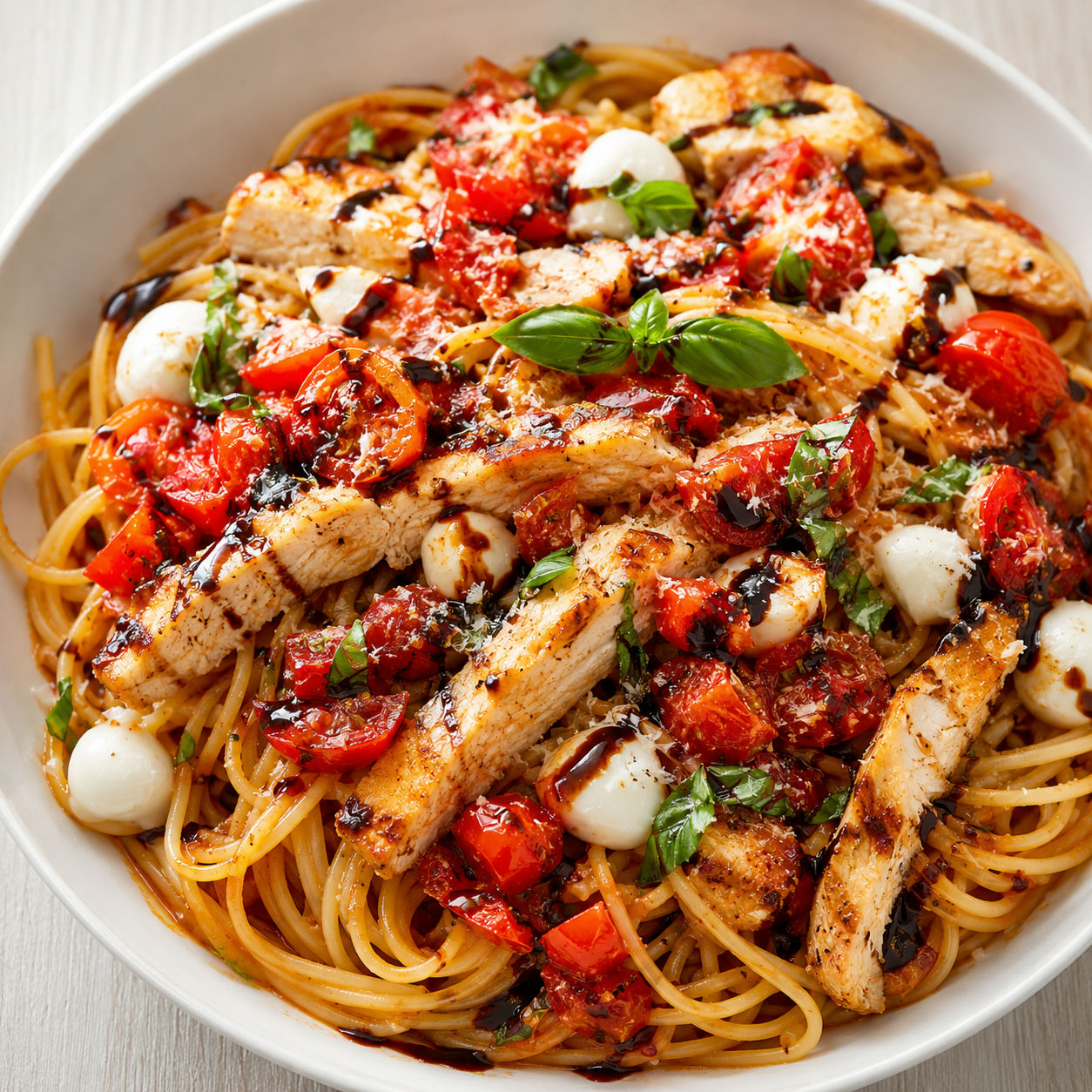
Bruschetta Chicken Pasta Stack is what I make when I want pasta to feel fresh instead of heavy. The warm noodles catch olive oil and garlic, the chicken stays juicy, and the tomato basil topping gives every forkful that clean bruschetta bite.
The stack part is simple. Twirl the pasta into shallow bowls, lay sliced chicken over the top, then spoon on the tomato mixture so the juices run down into the noodles.
Fresh Layers For The Stack
Use ripe cherry tomatoes, fresh basil, and chicken cutlets that are thin enough to cook quickly. The dish is simple, so watery tomatoes or rubbery chicken will show.
- Chicken cutlets. Thin pieces cook fast and slice neatly for layering over the pasta.
- Spaghetti or linguine. Long noodles twirl into a sturdy base for the stack.
- Cherry tomatoes. They make the juicy bruschetta topping and add sweetness without needing a cooked sauce.
- Fresh basil. It gives the tomato topping its clean herbal finish.
- Garlic. A little goes into the pasta and the tomatoes for that classic bruschetta flavor.
- Fresh mozzarella. Small pearls or diced mozzarella soften against the warm chicken.
- Parmesan. It adds salty depth to the pasta base.
- Balsamic vinegar and glaze. Vinegar wakes up the tomatoes, while the glaze finishes the stack with a glossy sweet-tart drizzle.
- Olive oil. It carries the garlic and keeps the pasta from tasting dry.
Stack The Bruschetta Chicken Pasta
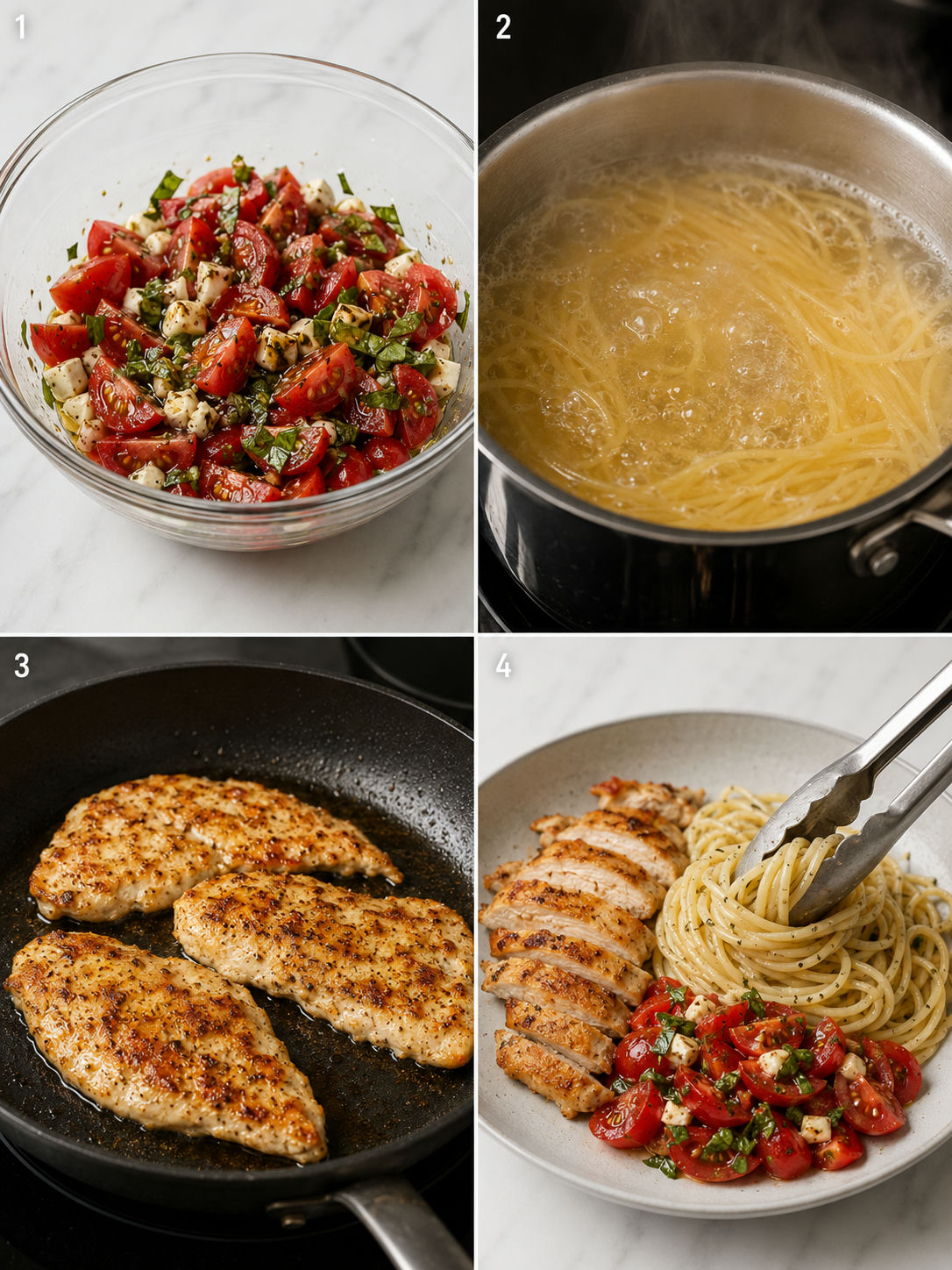
- Mix the tomatoes. Stir tomatoes, basil, garlic, balsamic vinegar, olive oil, salt, and pepper together first so the juices have time to collect.
- Boil the pasta. Cook the noodles in well-salted water until al dente, then save a cup of pasta water before draining.
- Sear the chicken. Season thin cutlets and cook them in a hot skillet until golden and 165°F in the center, then rest before slicing.
- Gloss the noodles. Warm olive oil and garlic in the skillet, add pasta, parmesan, and splashes of pasta water, then toss until lightly coated.
- Build each stack. Twirl pasta into bowls, layer on sliced chicken, spoon tomatoes and mozzarella over the top, then finish with balsamic glaze.
Bruschetta Chicken Pasta Stack Timing
The tomato topping should be made first, not last. Ten to fifteen minutes with salt is enough time for the tomatoes to release their juices. That liquid becomes part of the sauce once it hits the warm pasta. The idea is close to the fresh tomato basil topping used on classic bruschetta chicken, which is why this pasta feels lighter than a cream-based dinner. For another version with similar flavors, try Bruschetta Chicken Pasta with Fresh Ingredients.
Cook the pasta while the tomatoes sit, then sear the chicken right before serving. If the chicken rests for five minutes before slicing, it stays cleaner and juicier on the stack.
Getting The Chicken Right
Chicken breasts work best when cut into thin cutlets. Thick pieces take longer to cook and can dry around the edges before the center is safe. The safe internal temperature for chicken is 165°F according to FoodSafety.gov safe temperature guidance. Use a thermometer if the pieces are uneven.
A quick seasoning of salt, pepper, Italian seasoning, and garlic powder is enough. If you enjoy grilled flavor, the same chicken can go on an outdoor grill like the style used for Hawaiian Huli Huli Chicken Stack, but keep the bruschetta topping fresh and uncooked.
Why The Pasta Stays Glossy
This is not a heavy sauced pasta. The coating comes from olive oil, parmesan, tomato juice, and a little starchy pasta water. Add the water slowly and toss until the noodles look shiny. Stop before they look wet.
If the pasta waits too long, it will tighten as it sits. Fix it with another splash of warm pasta water or chicken broth. This trick also helps with richer chicken pastas like Crispy Parmesan Chicken with Creamy Lemon Pasta, where timing matters just as much.
Smart Swaps And Add-Ins
Use grilled chicken thighs if you like darker meat. They stay tender and bring a little more richness. For cheese, mozzarella pearls are easy, but diced fresh mozzarella or thin shaved parmesan both work. Add baby spinach to the warm pasta if you want greens. It wilts fast and does not fight the tomatoes.
For a picnic-style version, cool the pasta and serve the same flavors as a chilled layered bowl. The structure is similar to Layered Pasta Salad Stack, but this recipe is best warm because the mozzarella softens against the chicken.
Storing Without Soggy Tomatoes
Store the pasta and chicken in one container and the tomato topping in another. The pasta keeps for up to 3 days in the refrigerator. The tomatoes are best within 24 hours because basil darkens and the juices keep building.
Reheat the pasta and chicken gently in a skillet with a splash of water. Add the tomato topping after the heat is off. If you microwave the whole stack with the tomatoes on top, the basil wilts and the mozzarella can turn rubbery.
Summary
This layered chicken pasta is best served right after stacking, while the pasta is warm and the tomatoes still taste fresh.
FAQs
- What makes this a pasta stack?
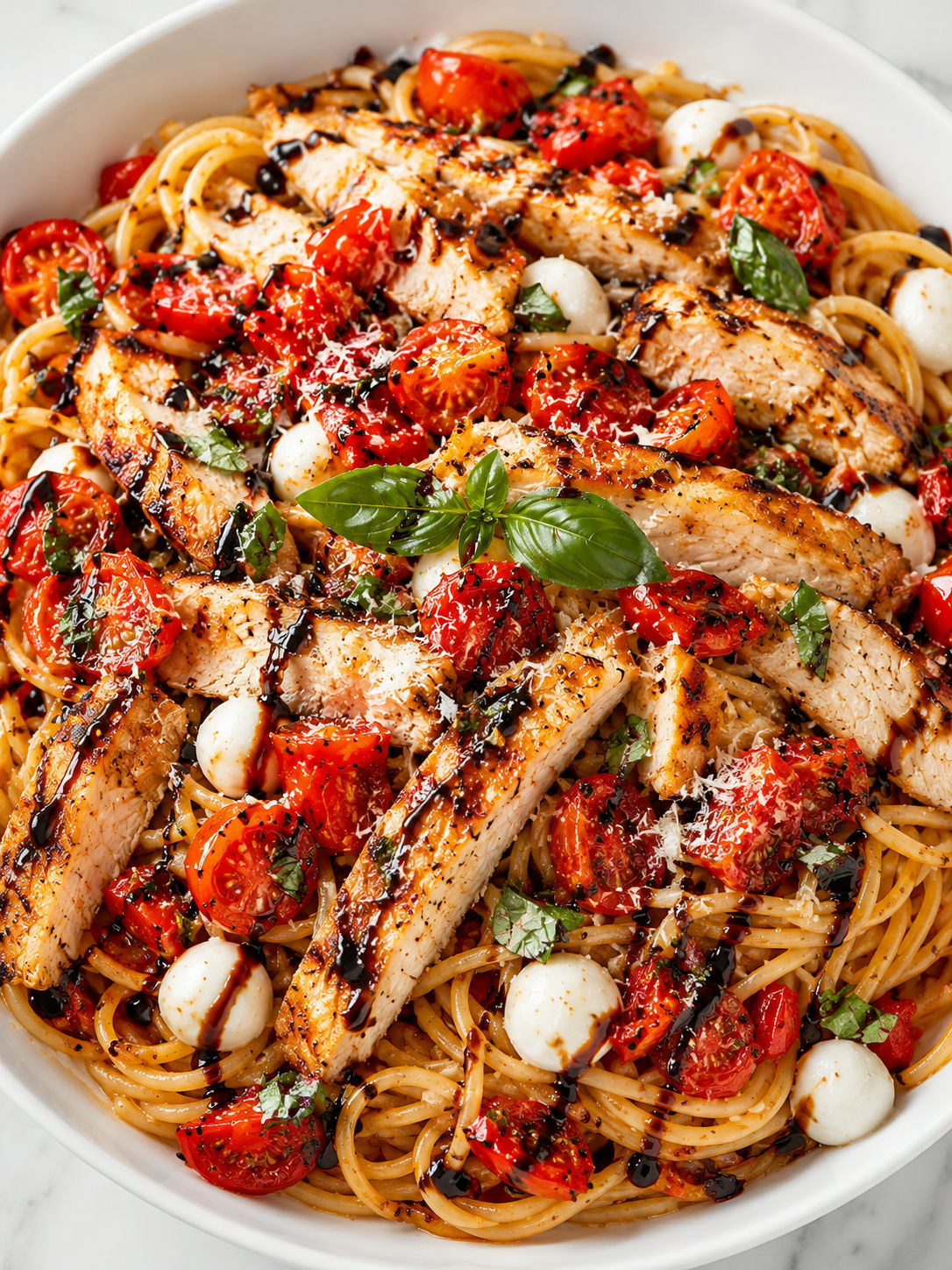
The pasta is twirled or mounded first, then topped with sliced chicken, mozzarella, tomato basil bruschetta, and balsamic glaze. It eats like pasta but plates with the layers and height of a stacked dinner bowl.
- Can I use rotisserie chicken?
Yes. Warm sliced rotisserie chicken gently in a skillet with a little olive oil and garlic, then stack it over the pasta. It will not have the same seared edges, but it makes the recipe much faster.
- What pasta shape works best?
Spaghetti, linguine, and fettuccine are easiest to twirl into a stack. Short pasta works too, but it plates more like a bowl than a layered mound.
- Can I make the tomato topping ahead?
You can chop the tomatoes and stir them with garlic, oil, vinegar, salt, and basil up to 2 hours ahead. Keep it at cool room temperature if serving soon, or refrigerate it and let it sit out for 20 minutes before using.
- How do I keep the chicken juicy?
Slice the chicken into thin cutlets and cook over medium-high heat just until done. Pull it from the pan at 165°F and rest it before slicing so the juices settle back into the meat.
- Can this be gluten-free?
Yes. Use your favorite gluten-free spaghetti or linguine and cook it just until tender. Toss it with a little extra olive oil because some gluten-free pastas absorb sauce quickly.
- What should I serve with it?
A crisp green salad or garlic bread is enough. If you want a lighter plate, serve smaller pasta stacks with extra tomato topping and a side of roasted zucchini.
