 Pin it
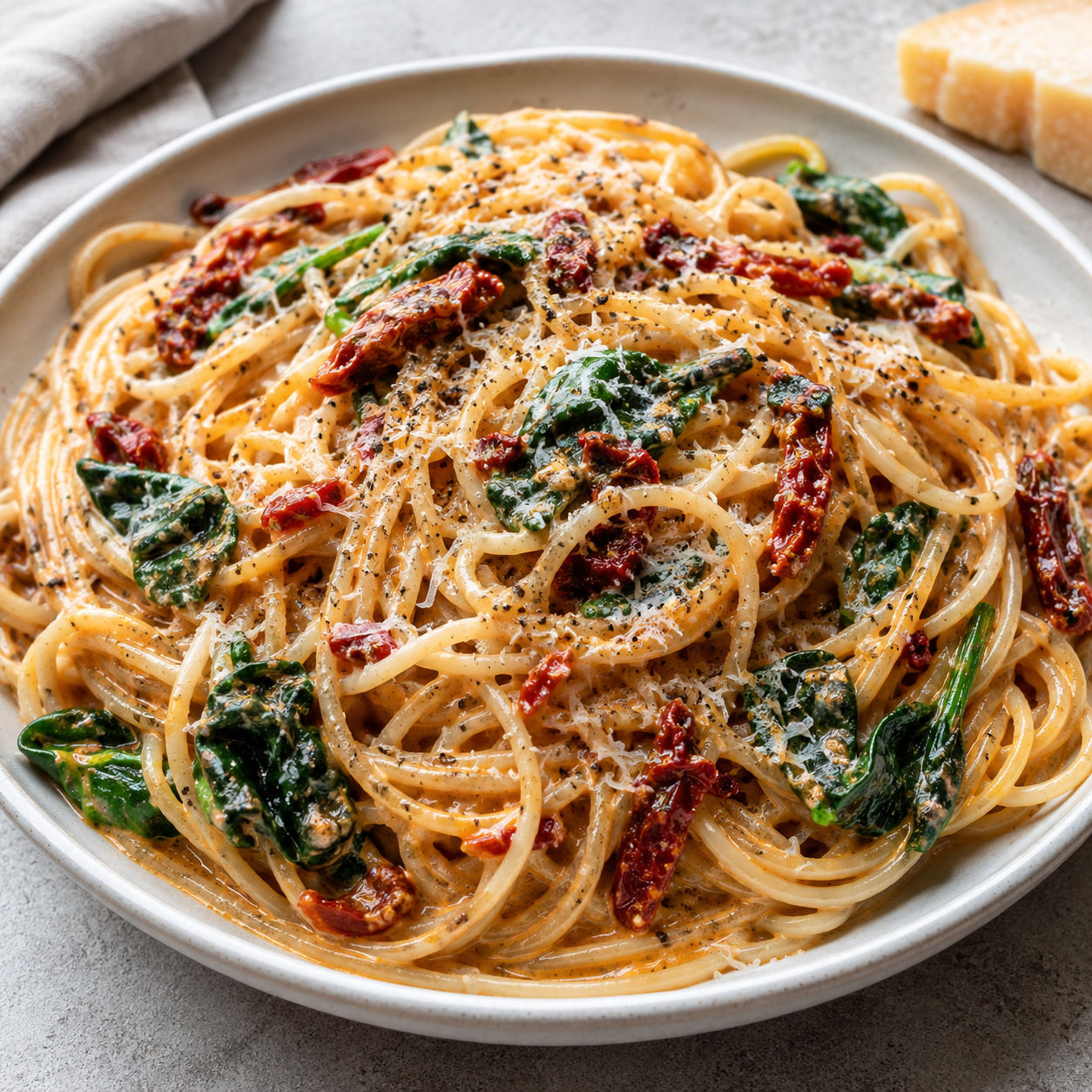
Spaghetti with Spinach and Sun-Dried Tomato Cream Sauce is the kind of pasta I make when I want dinner to feel cozy without dragging out every pan in the kitchen. The sauce tastes slow and savory, but it comes from garlic, tomato oil, cream, Parmesan, and a short simmer.
The spinach wilts right into the hot pasta, so it stays bright instead of turning muddy. Sun-dried tomatoes bring a sweet, tangy chew that keeps the cream sauce from feeling flat.
Creamy strands need these
Use oil-packed sun-dried tomatoes here, because their oil gives the sauce a deep tomato flavor before the cream even goes in. Fresh baby spinach is easiest, but mature spinach works if you chop away tough stems.
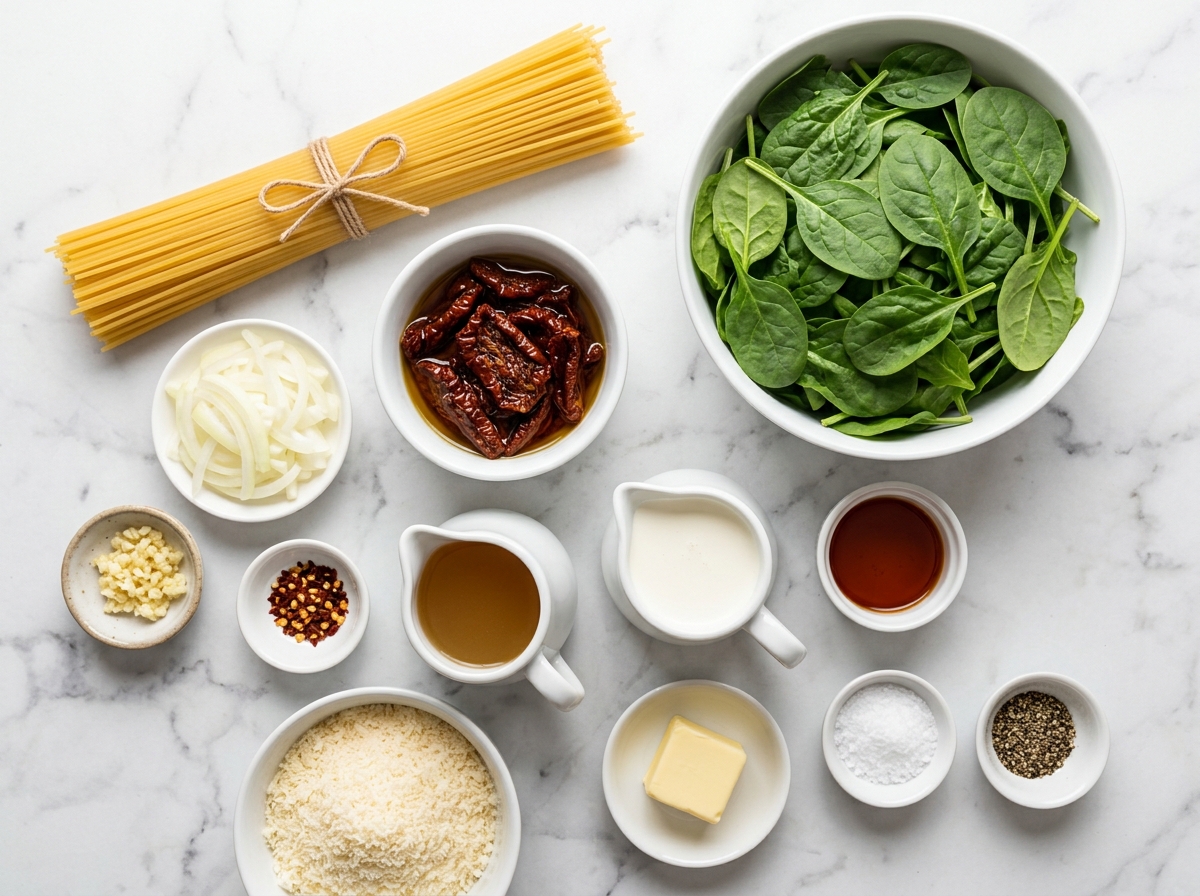
- Spaghetti. Long strands catch the sauce and make each bite feel full and silky.
- Baby spinach. Wilts quickly into the hot pasta and adds color without much prep.
- Oil-packed sun-dried tomatoes. Bring concentrated tomato flavor, a little sweetness, and chewy texture.
- Tomato jar oil. Starts the sauce with more flavor than plain olive oil.
- Garlic and onion. Build the savory base so the cream does not taste plain.
- Vegetable broth. Loosens the sauce and gives it a lighter finish.
- Heavy cream. Makes the sauce smooth and rich without a long simmer.
- Parmesan. Adds salt, body, and a nutty finish.
- Red pepper flakes. Add gentle heat that balances the cream.
Sun-Dried Tomato Cream Sauce
- Cook the spaghetti. Boil it in well-salted water until just shy of al dente. Scoop out some pasta water before draining.
- Wilt the spinach. Put the spinach in the colander and drain the hot pasta over it. Toss once so the leaves soften but keep their color.
- Start the tomato base. Warm the tomato jar oil in a skillet. Cook the onion and sun-dried tomatoes until the onion softens and the tomato edges look glossy.
- Add aromatics. Stir in garlic, red pepper flakes, salt, and black pepper. Cook just until the garlic smells sweet, about 30-60 seconds.
- Make the cream sauce. Add broth and simmer until slightly reduced. Lower the heat, then stir in cream, Parmesan, and butter until smooth.
- Toss and finish. Add the spaghetti and spinach. Toss with small splashes of pasta water until the sauce clings to the noodles.
Why tomato oil matters
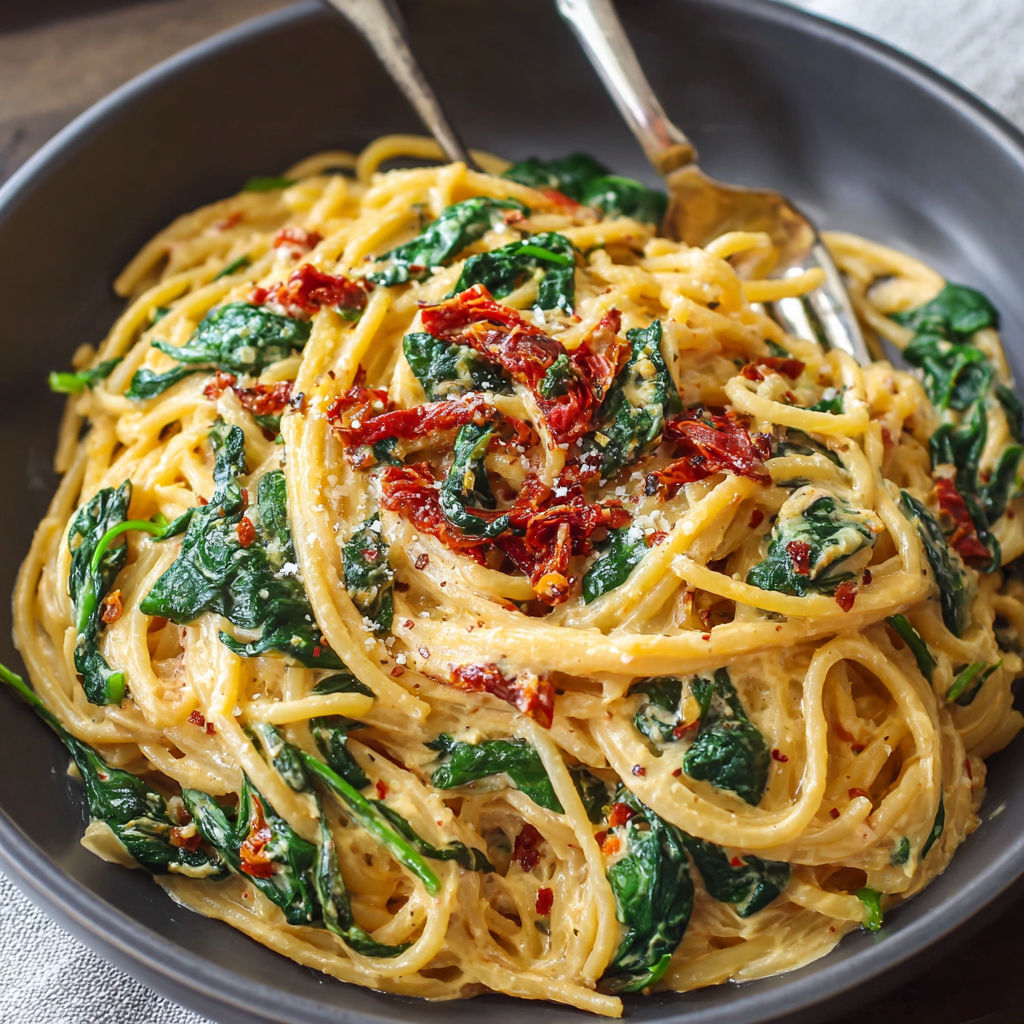
The oil in the tomato jar is not just extra fat. It has already picked up tomato flavor, herbs, and a little acidity, so it gives the sauce a head start. Cook the onion and sun-dried tomatoes in that oil until they soften and darken a shade. That short step makes the finished pasta taste rounded, not like cream with chopped tomatoes stirred in.
If you like the same tangy tomato-and-spinach lane, try the site's spinach and sun-dried tomato burrata risotto. For a heartier version with poultry, creamy sun-dried tomato chicken with ravioli uses the same flavor family in a richer dinner.
Keep the sauce glossy
Once the cream and Parmesan are in the skillet, lower the heat. A hard boil can make dairy sauces look grainy. Toss the pasta off to the side of the burner if your stove runs hot. The spaghetti should look shiny, not soupy, and the sauce should collect lightly at the bottom of the pan.
Pasta water is your fix in both directions. If the sauce looks too thick, add a splash and toss. If it looks loose, keep tossing over low heat for another minute. EatingWell uses a similar fast approach in its sun-dried tomato pasta recipe, where the hot pasta helps wilt the greens quickly.
Smart swaps for dinner
Regular spaghetti, whole-wheat spaghetti, linguine, and fettuccine all work. Short pasta is fine too, but choose something with ridges or curves so the cream sauce has places to sit. For vegetables, mushrooms are the easiest add-in. Brown them before the onion so they do not water down the pan.
To add protein, fold in cooked rotisserie chicken, grilled shrimp, white beans, or flakes of salmon at the end. The sauce also pairs naturally with Tuscan salmon pasta flavors, especially if you add a squeeze of lemon before serving. For a brighter pasta night, chicken spaghetti with burrata and lemon butter garlic sauce is another good match.
Serving it without fuss
Serve this spaghetti right after tossing, while the sauce is loose and glossy. I like a small shower of Parmesan, black pepper, and a few extra slivers of sun-dried tomato on top. A crisp green salad or roasted broccoli keeps the plate from feeling too rich.
If the pasta waits for guests, cover the skillet off the heat and save extra pasta water. Warm it gently right before serving and toss in a tablespoon at a time. Cream sauce thickens as it sits, so that little bit of water is the difference between silky noodles and a stiff tangle.
Leftovers that still taste good
Leftovers are best within 3 days. The sauce will tighten in the fridge, so do not judge it cold. Reheat in a skillet over low heat with a splash of water, broth, or milk. Stir gently until the sauce loosens and the spinach warms through.
The microwave works in a pinch, but use short bursts at lower power and stir between each one. FoodSafety.gov has a helpful cold food storage chart if you want general timing for cooked leftovers. I do not freeze this pasta, because cream sauces often thaw with a broken texture.
Summary
This spaghetti is rich, quick, and easy to adjust with chicken, salmon, mushrooms, or whole-wheat pasta.
FAQs
- Can I use frozen spinach instead of fresh?
Yes, but thaw it first and squeeze it very dry. Frozen spinach holds a lot of water, and that water can loosen the cream sauce until it tastes thin.
- Can I make this pasta without heavy cream?
Half-and-half works if you keep the heat gentle after adding it. Sour cream also works, but stir it in off the heat so it does not split.
- How do I keep the sauce creamy and not oily?
Add the pasta water in small splashes and toss hard. The starch helps the tomato oil, cream, and cheese come together into a glossy sauce that coats the spaghetti.
- Is this recipe vegetarian?
It is meatless as written. For strict vegetarian cooking, use vegetable broth and a Parmesan-style cheese made without animal rennet.
- How should I store leftovers?
Cool the pasta, then store it in an airtight container in the fridge for up to 3 days. Reheat it in a skillet over low heat with a splash of water or broth to bring the sauce back.
- What protein goes well with this spaghetti?
Grilled chicken, seared salmon, shrimp, or white beans all fit the sauce. Add cooked protein at the end so it warms through without overcooking.
