 Pin it
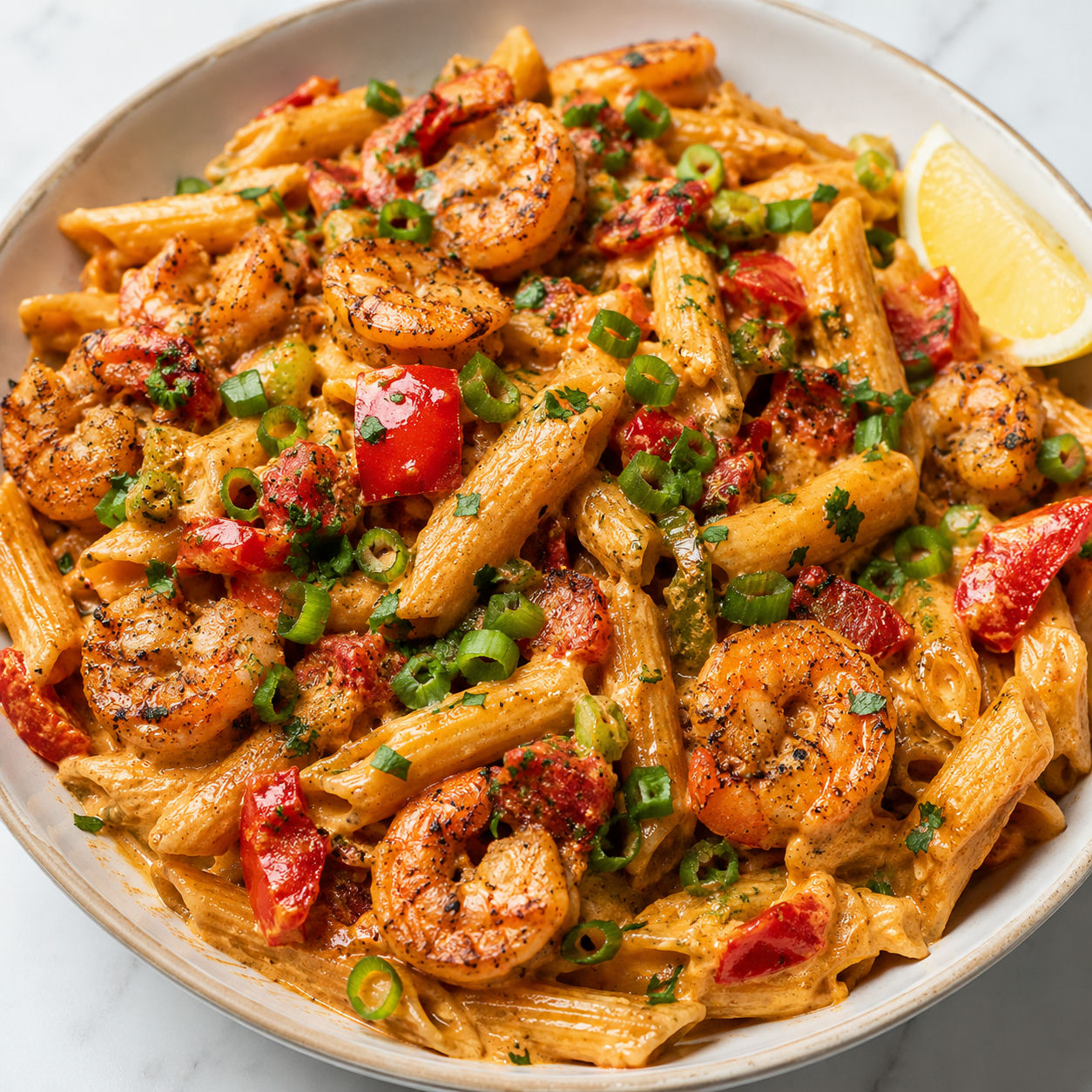
Cajun Shrimp Pasta is the kind of skillet dinner that smells good before the sauce is even finished. The shrimp hit the hot pan with Cajun seasoning, garlic follows, and the cream picks up all those browned bits.
I like this version creamy but not heavy. Bell peppers, tomatoes, lemon, and scallions keep it bright enough for a weeknight bowl, while parmesan gives the sauce enough grip to cling to every piece of pasta.
Cajun Shrimp Pasta Pantry
Use large shrimp if you can. They stay juicier in the pan and give you a better bite against the creamy sauce. A balanced Cajun seasoning matters too. Taste yours before adding extra salt because some blends are already salty.
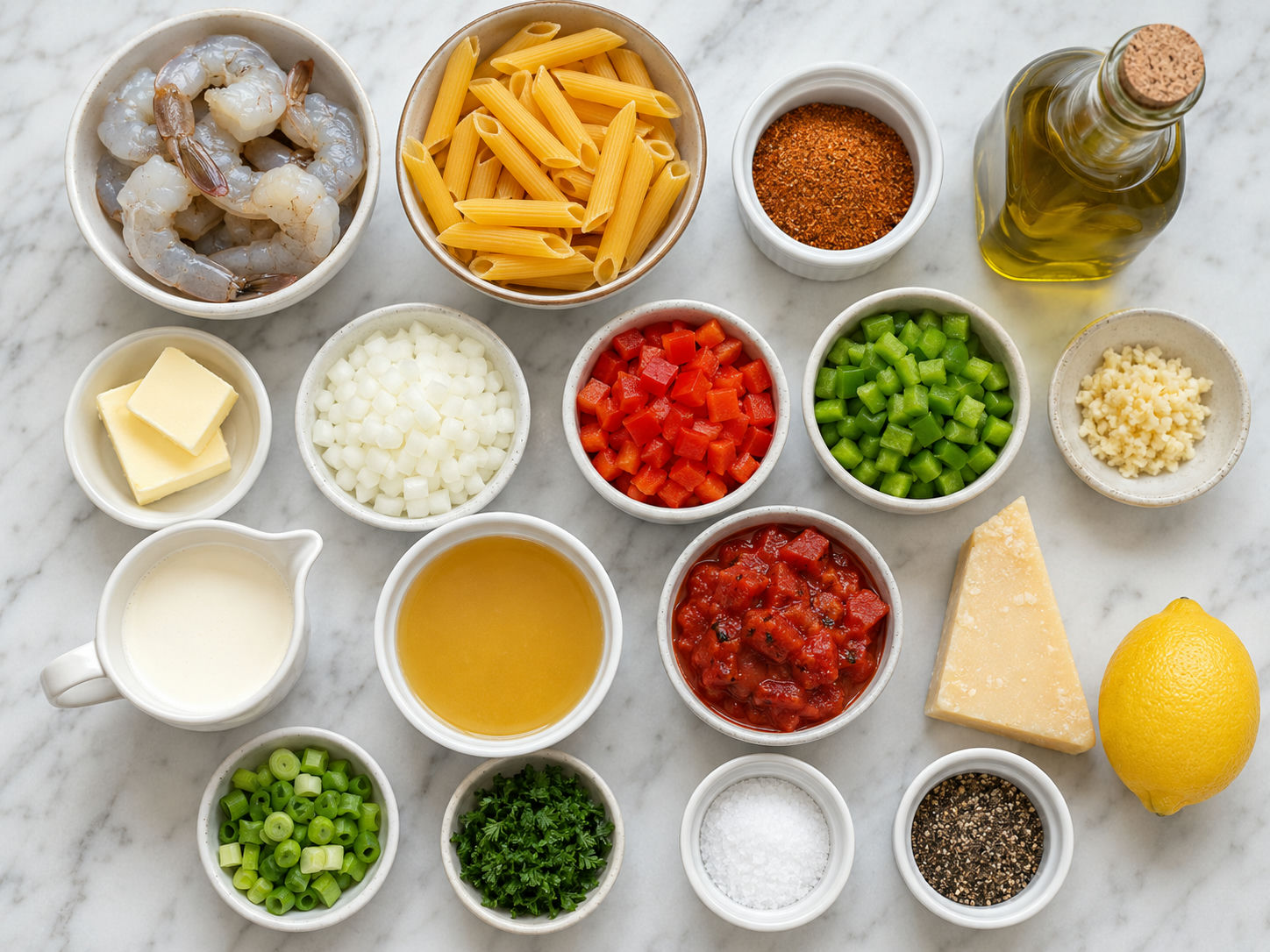
- Large shrimp. The main protein, sweet and quick-cooking with a firm snap when seared well.
- Cajun seasoning. Brings paprika, garlic, herbs, pepper, and heat in one spoonful.
- Penne pasta. Holds the creamy sauce inside the tubes and stays sturdy in the skillet.
- Bell peppers and onion. Add sweetness and color so the sauce tastes rounded.
- Garlic. Gives the cream sauce its savory base without needing a long simmer.
- Fire-roasted tomatoes. Add acidity and a little smoky depth.
- Heavy cream. Turns the pan juices into a silky sauce.
- Parmesan. Thickens the sauce and gives it a salty finish.
- Lemon and scallions. Wake up the rich sauce right before serving.
Cook Cajun Shrimp Pasta Right
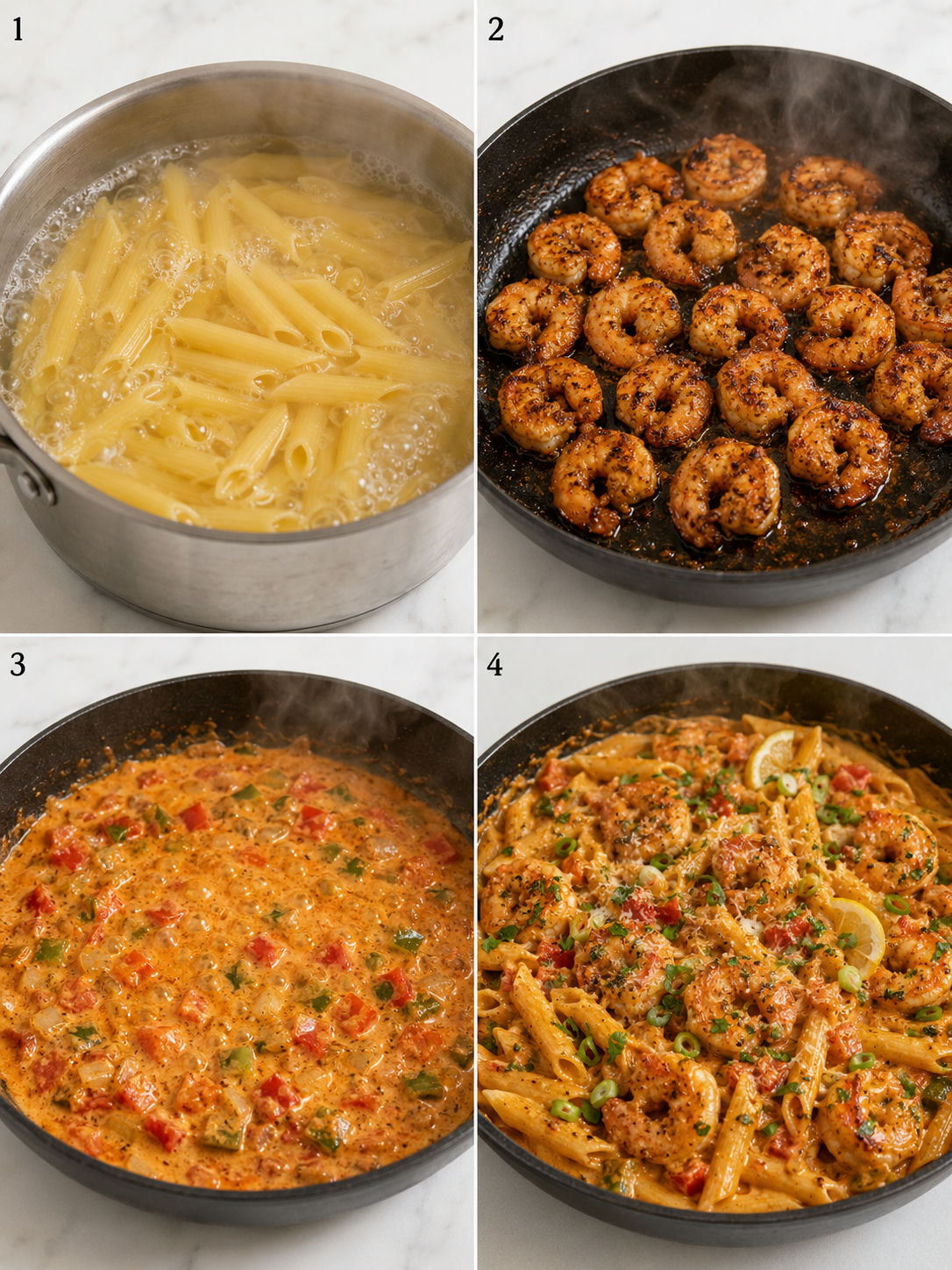
- Boil the pasta. Cook penne in well-salted water until just shy of al dente. Save a cup of pasta water before draining.
- Season the shrimp. Pat the shrimp dry, then coat with Cajun seasoning and a little oil. This helps the spices bloom in the pan.
- Sear fast. Cook shrimp in a hot skillet for 1-2 minutes per side until pink and opaque. Move them to a plate before they tighten.
- Soften the vegetables. Add butter, onion, and bell peppers to the same skillet. Cook until the edges soften and the browned spice bits loosen.
- Build the sauce. Stir in garlic, tomatoes, cream, and a splash of stock. Simmer gently until slightly thickened.
- Toss and finish. Add pasta, parmesan, and pasta water as needed. Return the shrimp, then finish with lemon, scallions, and parsley.
Why the Shrimp Stays Tender
Shrimp is done quickly. The goal is a hot sear and a short cook, not a long simmer in cream. The FDA seafood guide says shrimp should turn firm, pearly, and opaque. Pull it from the skillet as soon as it gets there.
That short rest on a plate is not wasted time. The shrimp juices collect and can go back into the sauce later. If you enjoy the shrimp-and-cream combination, the same quick-cook idea shows up in Creamy Shrimp Alfredo Pasta, just with a milder seasoning profile.
Getting the Cream Sauce Smooth
Once the cream goes into the skillet, lower the heat. A hard boil can make the sauce look greasy and rough. Let it bubble gently, then use parmesan and a little pasta water to bring it together. Starchy water is the small detail that makes the sauce cling instead of sliding to the bottom of the bowl.
Modern versions of this dish often lean on seasoned shrimp, peppers, tomatoes, and a light cream sauce, including Epicurious Cajun Shrimp Pasta. This version keeps the same spirit but uses dried pasta and a one-skillet sauce for a simpler home-cook rhythm.
Easy Add-Ins That Fit
Andouille is the obvious add-in if you want a heartier skillet. Brown sliced sausage first, scoop it out, then sear the shrimp in the seasoned fat left behind. For a bigger dinner with that same smoky Cajun feeling, pair this with Creamy Cajun Shrimp and Sausage Pasta or Cajun Shrimp Chicken Pasta with Andouille Sausage.
You can also add spinach at the end, swap penne for rigatoni, or stir in a spoonful of tomato paste with the garlic for a deeper sauce. If your seasoning blend is very hot, skip the cayenne and finish with extra lemon instead.
Serving and Leftovers
This pasta is best served right from the skillet. The sauce is glossy, the shrimp are still tender, and the scallions taste fresh. Garlic bread is useful for the sauce, but a crisp salad keeps the bowl from feeling too rich. For a less creamy shrimp pasta night, Garlic Shrimp Pasta with Butter and Herbs is a cleaner, brighter option.
Leftovers keep well for up to 3 days in the refrigerator. Warm them slowly with a splash of milk, cream, or water. Do not crank the heat. Shrimp gets tough when reheated too aggressively.
Summary
Serve this pasta right away while the sauce is glossy and the shrimp are tender. A green salad or garlic bread is all it needs.
FAQs
- Can I use frozen shrimp for Cajun Shrimp Pasta?
Yes. Thaw frozen shrimp in the refrigerator overnight or in a sealed bag under cold water. Pat them very dry before seasoning so they sear instead of steaming.
- What pasta shape works best?
Penne, rigatoni, and fettuccine all work well. Short tubes hold the sauce and bits of pepper, while long noodles give you a richer twirl. Cook the pasta just shy of al dente because it finishes in the skillet.
- Can I make it less spicy?
Use a mild Cajun seasoning and skip the cayenne or red pepper flakes. You can also add a little more cream or parmesan at the end to soften the heat.
- How do I keep the sauce from separating?
Lower the heat before adding the cream and do not boil it hard. Add reserved pasta water in small splashes and toss until the sauce looks glossy.
- How long do leftovers keep?
Store leftovers in an airtight container in the refrigerator for up to 3 days. Reheat gently in a skillet with a splash of water or milk. The shrimp will stay more tender that way than in a hot microwave.
- Can I add sausage or chicken?
Yes. Brown sliced andouille before the shrimp, or use cooked chicken at the end. For a bigger Cajun pasta bowl, try the same skillet approach used in recipes like shrimp and sausage pasta.
