 Pin it
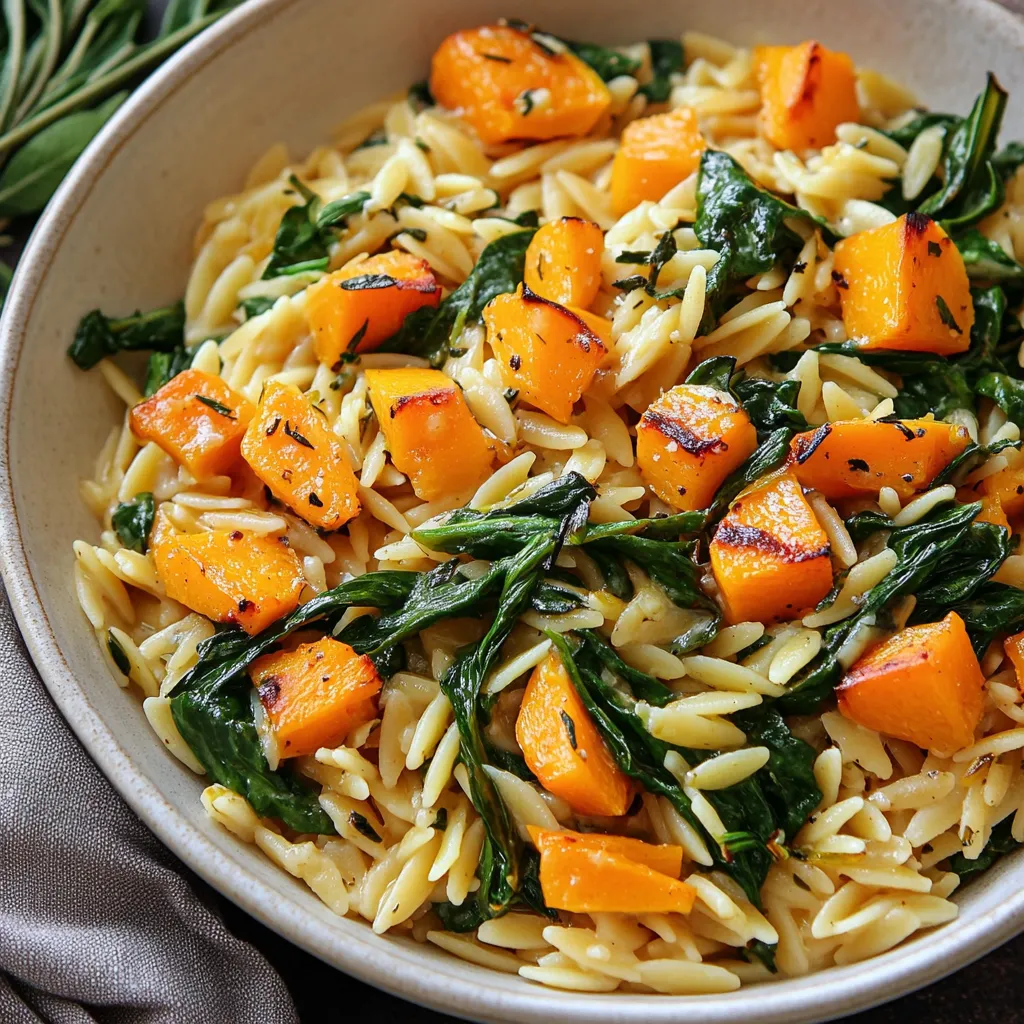
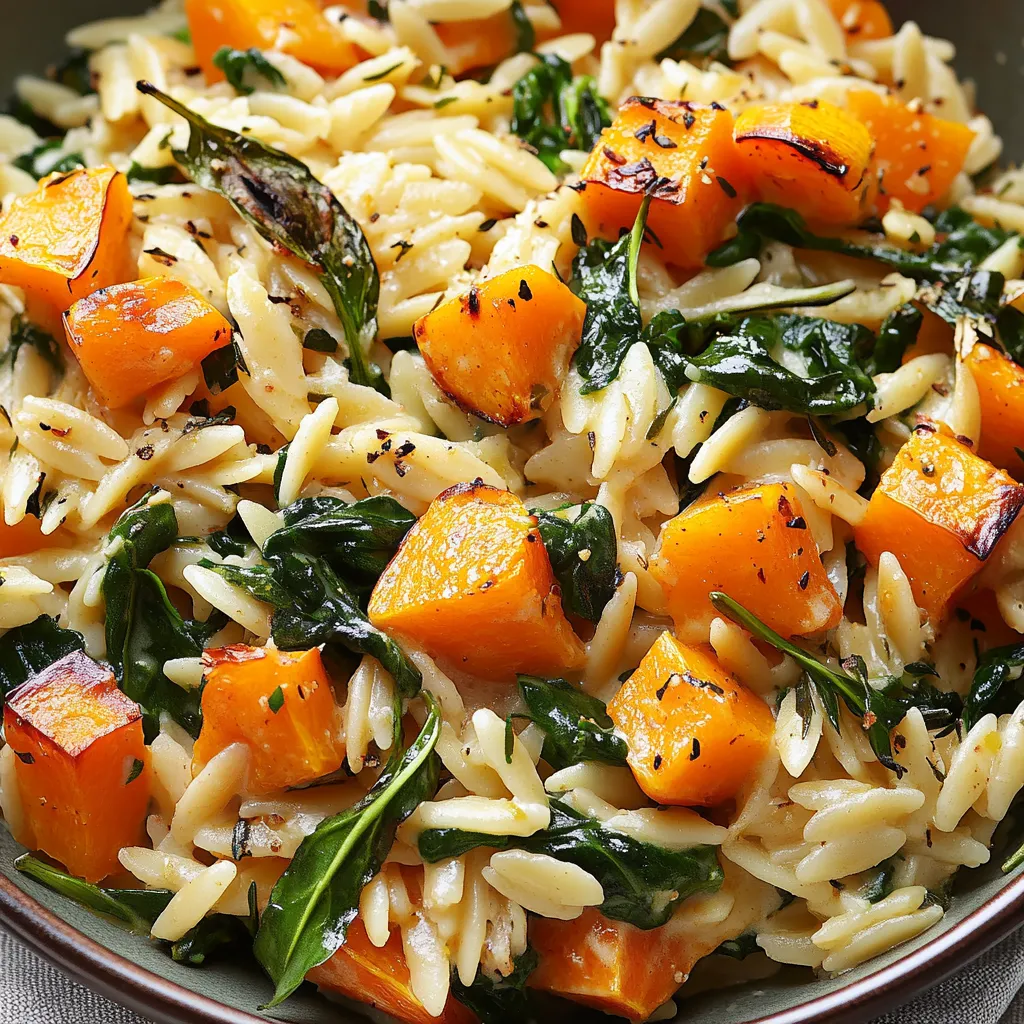
Easy Creamy Orzo with Roasted Butternut Squash and Spinach is the kind of dinner that feels slow and cozy, even though most of the work happens on one sheet pan and in one skillet. The squash gets sweet and browned in the oven while the orzo turns silky in broth.
I like this as a meatless main because it has real body. The orzo cooks almost like risotto, the spinach wilts right at the end, and the parmesan pulls everything together without burying the roasted squash.
Creamy Orzo Squash Lineup
Choose a firm butternut squash with a heavy feel and matte skin. Pre-cut squash is fine for a weeknight, but check that the cubes look dry and bright orange, not wet around the edges.
- Butternut squash. Roasting concentrates its sweetness and gives the dish those caramelized orange bites.
- Orzo. This small pasta releases starch as it simmers, which makes the sauce creamy without constant work.
- Baby spinach. It folds into the hot orzo in minutes and adds color, freshness, and a gentle earthy note.
- Shallot and garlic. They build a soft savory base that does not overpower the squash.
- Vegetable broth. The cooking liquid for the orzo. Use low-sodium broth so the parmesan does not make the dish too salty.
- Half-and-half. A small splash rounds out the sauce and keeps it silky.
- Parmesan cheese. Freshly grated parmesan melts into the orzo and adds salty depth.
- Sage, thyme, and nutmeg. These warm seasonings make the squash taste fuller and more savory.
- Lemon juice. A little at the end wakes up the cream and cheese.
Make It Creamy And Tender
- Roast the squash. Toss the cubes with olive oil, salt, pepper, sage, and thyme, then roast until tender with browned edges. This gives the finished orzo more flavor than simmered squash.
- Start the skillet. Cook the shallot in olive oil until glossy, then add the garlic for the last minute. Keep the heat moderate so the garlic does not scorch.
- Toast the orzo. Stir the dry orzo into the aromatics for about a minute. It should smell nutty, but it should not brown hard.
- Simmer in broth. Add broth and cook, stirring often, until the orzo is tender and the liquid turns glossy. Add an extra splash of broth if the skillet tightens too quickly.
- Finish the sauce. Stir in spinach until wilted, then add half-and-half, parmesan, nutmeg, and lemon. Fold in the roasted squash last so the cubes stay mostly intact.
Why The Orzo Gets Silky
Orzo behaves differently from boiled pasta because it cooks right in the skillet with the broth. As you stir, starch moves into the liquid and thickens it around each grain. That is why the sauce feels creamy before the half-and-half even goes in.
The trick is steady heat and enough liquid. If the skillet is too hot, the broth evaporates before the orzo softens. If the heat is too low, the pasta can turn gummy before it has a chance to absorb flavor. A gentle simmer is the sweet spot.
If you already like the cozy squash and pasta pairing in creamy orzo with butternut squash, this version adds spinach and lemon for a fresher finish.
Roast Squash For Better Flavor
Roasting is worth the extra pan. Butternut squash has a lot of moisture, and the oven drives some of it off while the edges brown. Those browned edges bring a nutty sweetness that would be missing if the squash cooked only in broth.
Cut the cubes about 1/2 inch so they finish around the same time the orzo does. Spread them out on the pan. Crowded squash steams, and steamed squash can collapse when you fold it into the pasta.
For another way to use the same vegetable, save roasted butternut squash with cranberries and pecans for a holiday side. The USDA MyPlate guide also has a helpful overview of vegetables and variety at MyPlate vegetables.
Swaps That Taste Right
Parmesan is easy to find, but pecorino romano works if you like a sharper finish. Fontina melts beautifully and makes the orzo softer and richer. If you want to keep it vegetarian, check that your cheese is made with vegetarian rennet, or use a vegetarian hard cheese.
You can swap the spinach for chopped kale, Swiss chard, or arugula. Kale needs a few extra minutes. Arugula needs almost no time and gives the finished skillet a peppery bite.
For protein, stir in white beans with the spinach or top each bowl with roasted chickpeas. Cooked chicken also works, especially if you like dishes such as Mediterranean creamy chicken orzo.
Serving It Without Fuss
This orzo is best served right away, while it is loose and glossy. Spoon it into shallow bowls and add extra parmesan, black pepper, and a few toasted pumpkin seeds if you want crunch. A small drizzle of olive oil makes it look polished without adding much work.
As a side dish, it pairs well with roasted chicken, salmon, or mushrooms. As a main, I usually add a crisp salad with vinegar in the dressing. The acid helps balance the sweet squash and cream.
If your table leans toward vegetable-heavy pasta, orzo with butternut squash spinach is a natural next recipe to try.
Leftovers Need Extra Liquid
Orzo keeps absorbing sauce after it cools. That is normal. Store leftovers in a sealed container in the fridge, then reheat them gently with a splash of broth, milk, or water until the sauce loosens again.
I do not love freezing this dish. The squash softens and the orzo can turn pasty after thawing. If you want to prep ahead, roast the squash and grate the cheese earlier in the day. Cook the orzo right before serving.
For general leftover timing and safe reheating, the USDA has a clear guide at Leftovers and Food Safety.
FAQs
- Can I use frozen butternut squash?
Yes. Roast it from frozen on a preheated sheet pan at 425°F so the edges brown before the centers get too soft. Break apart any clumps first and expect it to cook a little faster than fresh squash.
- Can I make this creamy orzo without heavy cream?
You can use half-and-half, whole milk, or skip the dairy liquid and rely on parmesan plus starchy orzo. If using milk, keep the heat low after adding it so it stays smooth.
- What can I use instead of spinach?
Chopped kale works well, but add it a few minutes earlier because it needs more time to soften. Arugula is another option if you want a peppery finish, and it only needs a quick stir at the end.
- How do I stop orzo from sticking to the pan?
Use a deep skillet and stir often once the broth goes in. Keep the heat at a steady simmer, not a hard boil, and add a splash more broth if the pan looks dry before the orzo is tender.
- How long do leftovers keep?
Store leftovers in an airtight container in the fridge for up to 4 days. Reheat gently with a splash of broth or water because the orzo thickens as it sits.
- What should I serve with butternut squash orzo?
It is filling enough as a vegetarian main. For a bigger meal, add a crisp green salad, roasted vegetables, or simple baked chicken on the side.
