 Pin it
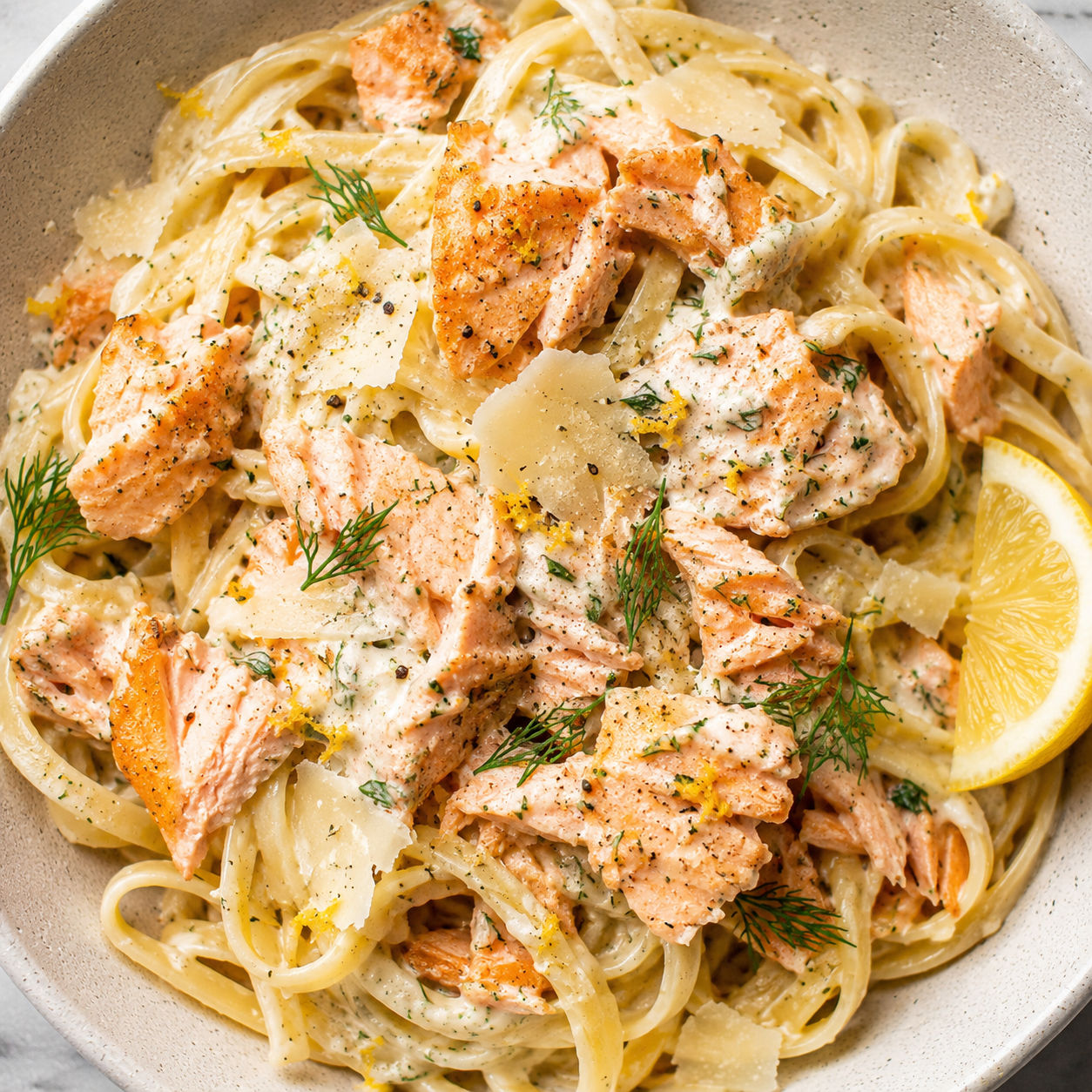
Lemon Dill Salmon with Creamy Pasta is the kind of dinner that feels calm and special without asking much from you. The salmon gets a quick golden sear, the sauce picks up all those browned bits, and fresh dill keeps the cream from feeling heavy.
I like this with linguine because the strands catch the sauce well. The lemon zest goes in early for fragrance, while the juice goes in gently so the sauce stays smooth.
Creamy Lemon Dill Lineup
Choose salmon that smells clean and looks moist, with no dull gray edges. Fresh dill matters here because it gives the sauce a soft herbal lift that dried dill cannot fully match.
- Salmon fillets. Rich, tender fish that flakes into the creamy pasta without disappearing.
- Linguine. Long strands hold the lemon dill sauce and make the dish feel generous.
- Heavy cream. Gives the sauce body and helps it stay smooth around the lemon.
- Fresh dill. Adds a clean, grassy flavor that pairs naturally with salmon.
- Lemon zest and juice. Zest brings fragrance, while juice cuts the richness at the end.
- Shallot and garlic. Build a savory base without overpowering the fish.
- Chicken broth or white wine. Loosens the pan and adds depth before the cream goes in.
- Parmesan. Optional, but a small handful makes the sauce more rounded and salty.
Lemon Dill Salmon Method
- Boil the pasta. Cook linguine in well-salted water until just shy of al dente. Save a cup of pasta water before draining.
- Sear the salmon. Pat the fillets dry, season them, and cook in a hot skillet until golden outside and just flaky inside.
- Soften the aromatics. Lower the heat, add butter, shallot, and garlic, then cook until fragrant and glossy.
- Make the sauce. Add broth or wine, scrape the pan, then stir in cream, lemon zest, Dijon, and dill. Simmer gently until lightly thickened.
- Toss and finish. Add pasta and a splash of pasta water. Flake the salmon into large pieces, fold it in, and finish with lemon juice and parmesan.
Keep The Sauce Smooth
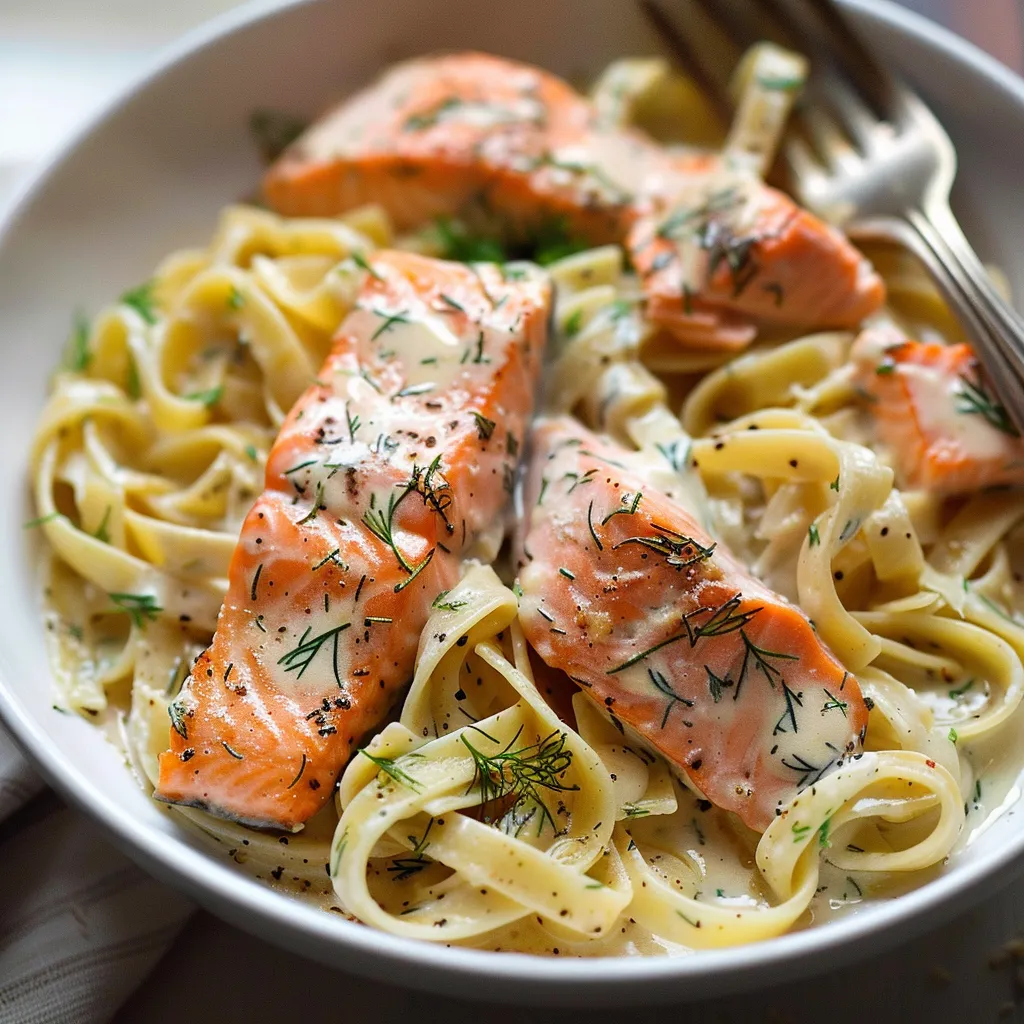
Cream sauce and lemon need a little care. Add the zest while the sauce simmers because it releases flavor without shocking the dairy. Add the lemon juice near the end, off high heat, and stir it in gradually. That keeps the sauce glossy instead of grainy.
If the skillet looks too thick after the pasta goes in, do not add more cream right away. Use reserved pasta water. The starch helps the sauce cling to the noodles. For another salmon dinner with a creamier, tomato-rich direction, try Creamy Tuscan Salmon Pasta.
Salmon That Stays Tender
The best texture comes from cooking the salmon almost all the way, then letting it finish in the pasta. A thick fillet may need 3-4 minutes per side. Thin tail pieces cook faster, so pull them as soon as they flake. The FDA seafood safety guide lists 145°F as the safe internal temperature for fish.
I leave the flakes fairly large when folding them into the pasta. Tiny bits make the sauce taste good, but bigger pieces give you those tender salmon bites. If you want a similar skillet idea without pasta, Quick One Skillet Salmon with Lemon Orzo has the same bright lemon comfort.
Swaps Worth Making
No linguine in the pantry? Fettuccine, spaghetti, bowties, or penne all work. Creme fraiche can replace heavy cream and gives a subtle tang. If you only have dried dill, start with 1 teaspoon and taste before adding more. Dried herbs can turn dusty fast.
For a sharper sauce, add 1 tablespoon capers with the garlic. For more vegetables, stir in baby spinach at the end and let it wilt in the hot pasta. If you like lemony pasta with a different protein, Crispy Parmesan Chicken with Creamy Lemon Pasta is a good next dinner.
Serving It Well
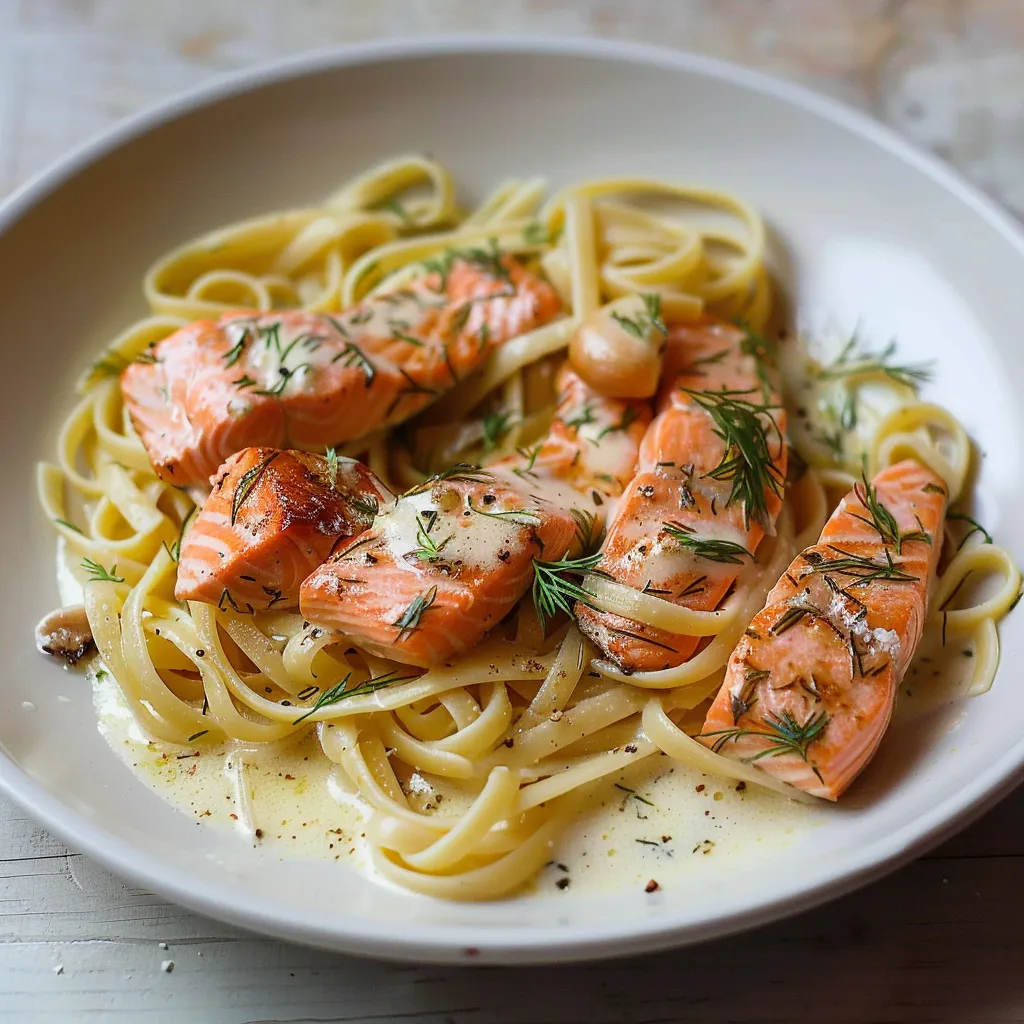
This pasta is rich enough that it does not need a heavy side. A crisp green salad, roasted asparagus, or steamed broccoli keeps the plate balanced. I like extra lemon wedges at the table because some people want that final bright squeeze.
Serve it as soon as the sauce coats the noodles. Creamy pasta thickens as it sits, and salmon is at its best when it is warm and just cooked. For a simpler creamy salmon route, Easy Creamy Salmon Pasta stays close to this same comfort zone.
Storage And Reheat Notes
Store leftovers in an airtight container in the fridge for up to 2 days. Seafood leftovers are better sooner than later, and the USDA leftovers guide is a useful reference for cooling and reheating cooked food safely.
Reheat on low with a splash of water, broth, or cream. Stir slowly and stop when the pasta is hot. Freezing is not worth it here because the cream sauce can separate and the salmon loses its soft texture.
Summary
This creamy salmon pasta is best served right away, with extra dill, lemon, and parmesan at the table.
FAQs
- Can I use frozen salmon for this pasta?
Yes. Thaw it overnight in the fridge, then pat it very dry before seasoning. Extra surface moisture makes salmon steam instead of brown.
- Can I make Lemon Dill Salmon with Creamy Pasta without heavy cream?
Creme fraiche is the best swap because it handles lemon well and stays smooth. Half-and-half can work if you keep the heat low, but milk is more likely to split.
- What pasta shape works best?
Linguine, fettuccine, and tagliatelle are my favorites because they hold the cream sauce evenly. Short pasta like penne also works, especially if you flake the salmon into larger pieces.
- How do I know when the salmon is cooked?
The salmon should flake easily and look opaque at the thickest part. The FDA recommends cooking fish to 145°F, but carryover heat can finish thin pieces after they leave the skillet.
- Can I make it ahead?
You can chop the shallot, garlic, dill, and zest the lemon ahead of time. Cook the pasta and salmon just before serving because the sauce is silkiest fresh.
- How should I reheat leftovers?
Warm leftovers in a covered skillet over low heat with a splash of water or broth. Stir gently and stop as soon as the sauce loosens, since salmon dries out quickly.
