 Pin it
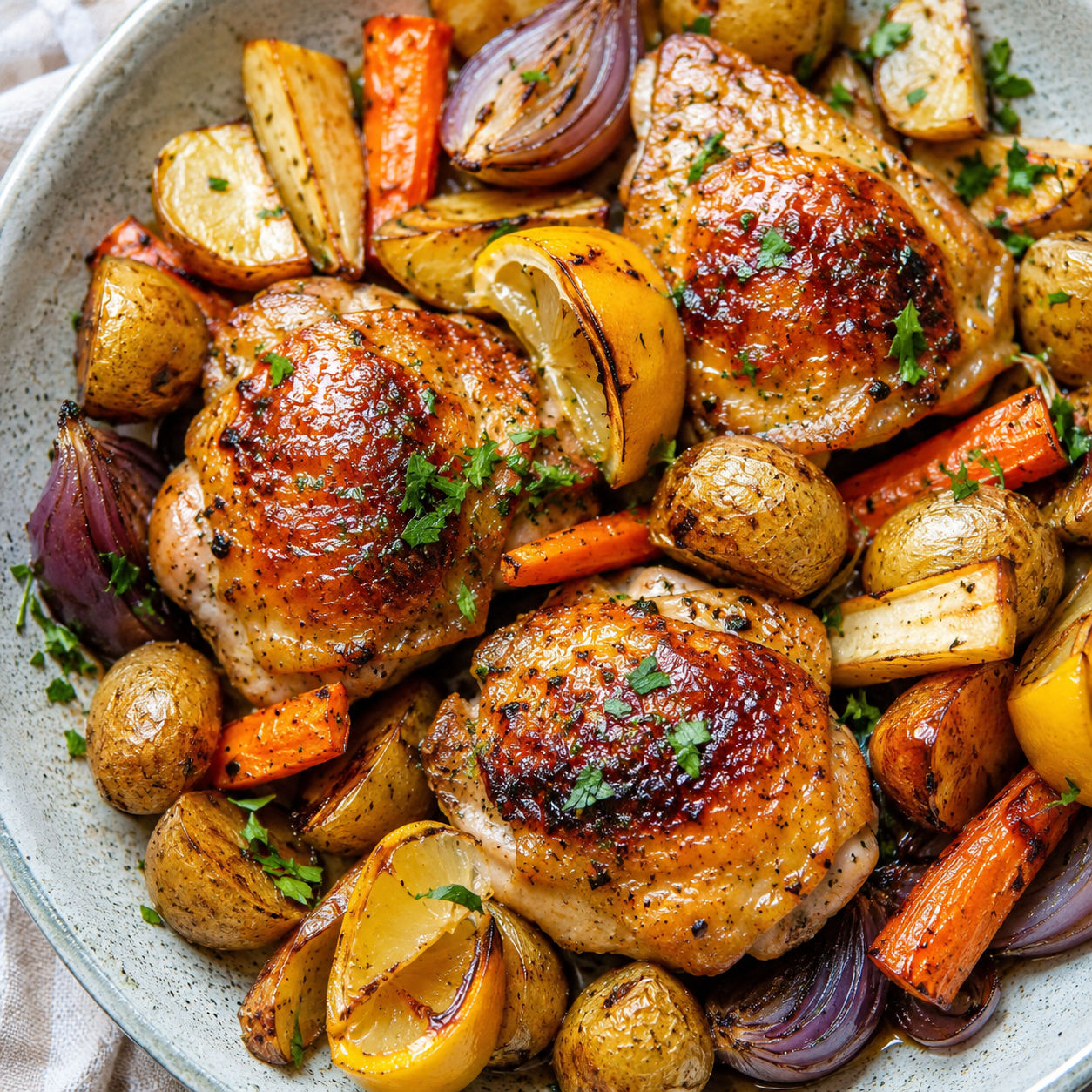
Honey Lemon Chicken with Roasted Vegetables is the kind of dinner that smells good before it even hits the oven. The marinade is sharp from lemon, mellow from honey, and just savory enough from Dijon and garlic.
I like this with bone-in chicken thighs because they stay juicy while the potatoes and carrots roast underneath. The pan juices run into the vegetables, so every bite tastes like it cooked longer than it really did.
Bright Pan Staples
This dinner leans on sturdy vegetables and a short glaze that tastes bigger than its ingredient list. Choose chicken thighs that are close in size and cut the vegetables into even pieces so the pan roasts at the same pace.
- Chicken thighs. Bone-in, skin-on thighs stay juicy during the longer roast and give the vegetables rich pan drippings.
- Lemons. Fresh juice sharpens the honey and roasted wedges add a deeper citrus flavor.
- Honey. Sweetens the glaze and helps the chicken brown into a glossy finish.
- Dijon mustard. Adds gentle bite and helps the marinade cling to the chicken.
- Garlic. Rounds out the sweet-tart sauce with a savory base.
- Baby potatoes. Roast tender in the middle and pick up the honey lemon pan juices.
- Carrots and parsnips. Bring earthy sweetness that fits the glaze without turning mushy.
- Red onion. Softens in the oven and adds sweet, browned edges.
- Parsley. Freshens the finished pan right before serving.
Sheet Pan Flow
- Mix the glaze. Whisk lemon juice, honey, Dijon, garlic, olive oil, salt, and pepper until smooth so the honey does not sit at the bottom of the bowl.
- Marinate the chicken. Coat the thighs well and let them sit for 20-30 minutes while you cut the vegetables.
- Start the vegetables. Toss potatoes, carrots, parsnips, and red onion with oil, salt, and pepper, then spread them on a large sheet pan.
- Add chicken and lemon. Nestle the chicken skin-side up among the vegetables and tuck lemon wedges around the pan.
- Roast until done. Bake at 425°F until the vegetables are tender and the chicken reaches 165°F, about 40-45 minutes.
- Finish the pan. Spoon pan juices over the chicken, sprinkle with parsley, and rest for 5 minutes before serving.
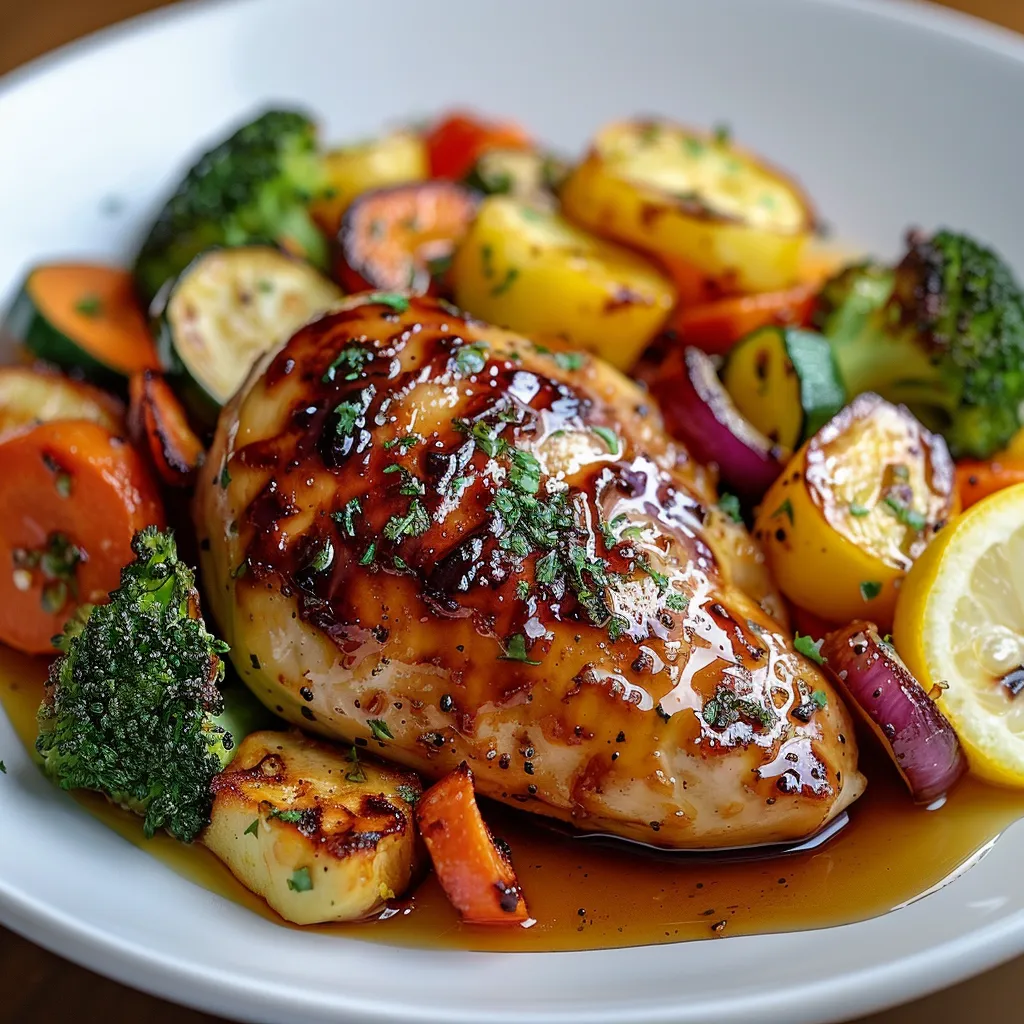
Honey Lemon Chicken With Roasted Vegetables
The timing works because the vegetables are cut for the chicken, not the other way around. Bone-in thighs need enough oven time to render the skin and cook around the bone. That same window is just right for bite-size potatoes, thick carrot coins, parsnip chunks, and onion wedges.
Spread everything in one layer. Crowding is the fastest way to get pale vegetables and soft chicken skin. If your pan looks packed, use two pans and rotate them halfway through. For a quicker lemon-forward chicken dinner, try this Honey Lemon Chicken. If you want a skillet meal with green vegetables, Lemon Chicken Asparagus Stir-Fry keeps the same bright flavor in less time.
Why thighs stay juicy
Chicken thighs are forgiving, which is exactly what a sheet pan dinner needs. The darker meat can handle the time required for potatoes and roots to soften. The skin also protects the top while the underside sits near the steam and juices from the vegetables.
Still, do not guess at doneness. A thermometer is better than cutting into the meat and losing juices. The USDA safe temperature chart lists 165°F as the minimum internal temperature for poultry, and it is worth checking in the thickest part near the bone. If the chicken is done before the vegetables, move it to a plate and return the vegetables to the oven for a few more minutes.
Vegetable cuts that roast evenly
The vegetables should not all be the same shape, but they should be the same cooking speed. Halve small baby potatoes, cut carrots and parsnips into thick diagonal pieces, and keep onion wedges big enough that they do not burn at the tips.
Beets are delicious here, but they stain the whole pan pink. If you use them, keep them to one side or roast them on a small separate tray. Sweet potatoes work too, though they brown faster because of their natural sugars. For a side dish with the same lemony roast flavor, these Greek Lemon & Garlic Roasted Potatoes fit right next to the chicken.
Swaps that make sense
You can bend this recipe without losing the point of it. Swap parsnips for sweet potatoes, Brussels sprouts, or cauliflower florets. Add rosemary or thyme to the marinade if you want a woodsy note. A pinch of chili flakes is good when you want heat against the honey.
If you prefer a stronger mustard flavor, take a look at Easy Baked Honey Mustard Chicken for a similar sweet-savory idea. For a more citrus-heavy sheet pan dinner, Baked Greek Lemon Chicken leans into lemon, garlic, and herbs.
Storing the leftovers well
Store the chicken and vegetables in an airtight container for up to 3 days. I like to keep any pan juices too, since they help the meat reheat without tasting flat. If you have a lot of vegetables left, chop them smaller and warm them in a skillet until the edges crisp again.
For meal prep, marinate the chicken in the morning and cut the vegetables ahead. Keep them separate until roasting so the potatoes do not soak up lemon juice. Leftover chicken is good sliced over salad, tucked into rice bowls, or served with warm couscous and an extra squeeze of lemon.
Summary
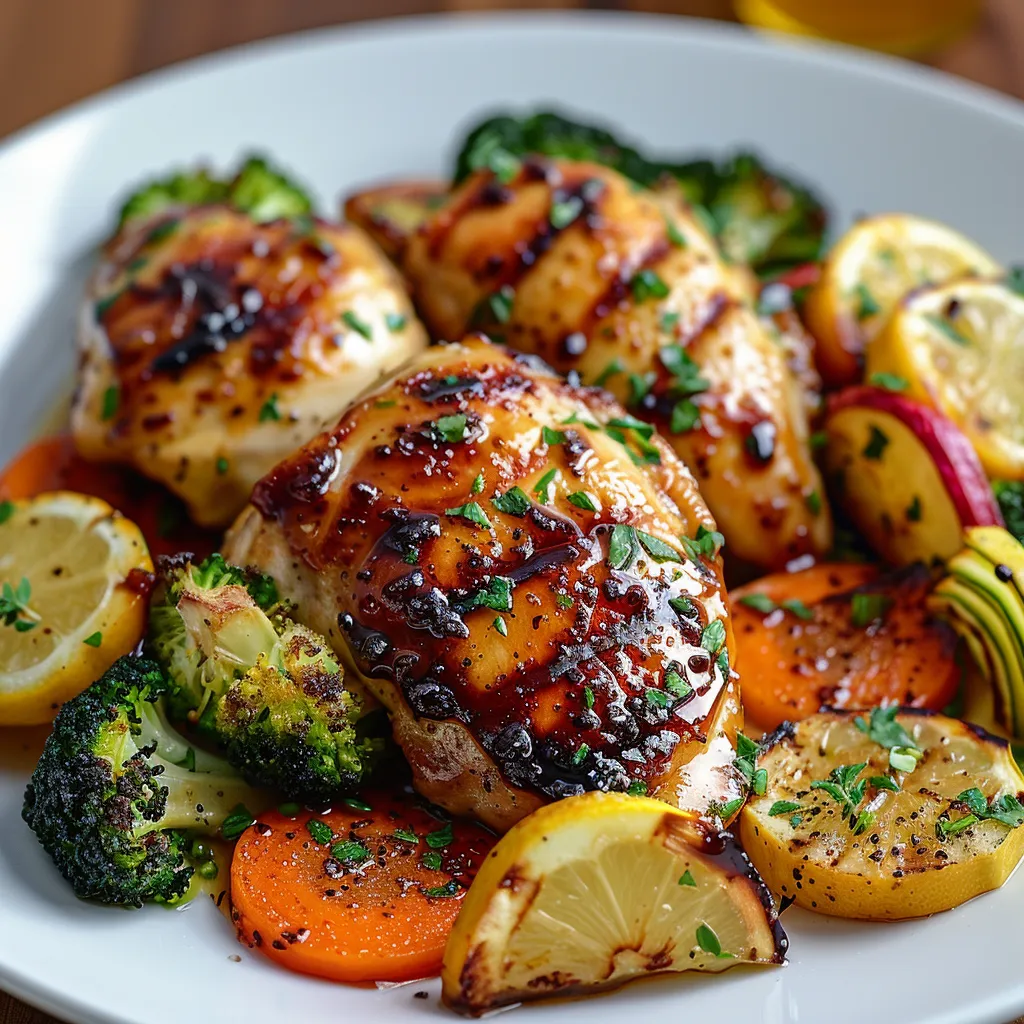
This one-pan chicken dinner is best served hot from the oven with the vegetables spooned around the glossy thighs and a little extra parsley on top.
FAQs
- Can I use boneless chicken instead of bone-in thighs?
Yes, but it will cook faster. Boneless thighs usually need 25-30 minutes at 425°F, while boneless breasts may be done closer to 22-25 minutes depending on thickness. Use a thermometer so the chicken does not dry out.
- What vegetables work best with honey lemon chicken?
Firm vegetables are the easiest choice because they can roast for the same amount of time as bone-in chicken thighs. Potatoes, carrots, parsnips, red onion, sweet potatoes, and Brussels sprouts all work well. Cut dense vegetables small enough so they finish on time.
- Can I marinate the chicken overnight?
You can marinate it up to 8 hours. Longer than that can make the surface of the chicken a little soft because of the lemon juice. If you need to prep earlier, mix the marinade without lemon juice and add the lemon 30 minutes before roasting.
- How do I know when the chicken is done?
The safest check is an instant-read thermometer in the thickest part of the thigh without touching bone. Chicken should reach 165°F. The skin should look browned and the juices should run clear.
- Is this recipe gluten-free?
Yes, the recipe is gluten-free as written. Check your Dijon mustard label if you are cooking for someone with celiac disease or a serious sensitivity, since brands can vary in processing.
- How should I reheat leftovers?
Reheat leftovers in a 350°F oven until warm, about 12-15 minutes. Add a spoonful of water or broth to the pan and cover loosely with foil so the chicken does not dry out. The vegetables can go in uncovered for the last few minutes if you want crisp edges.
