 Pin it
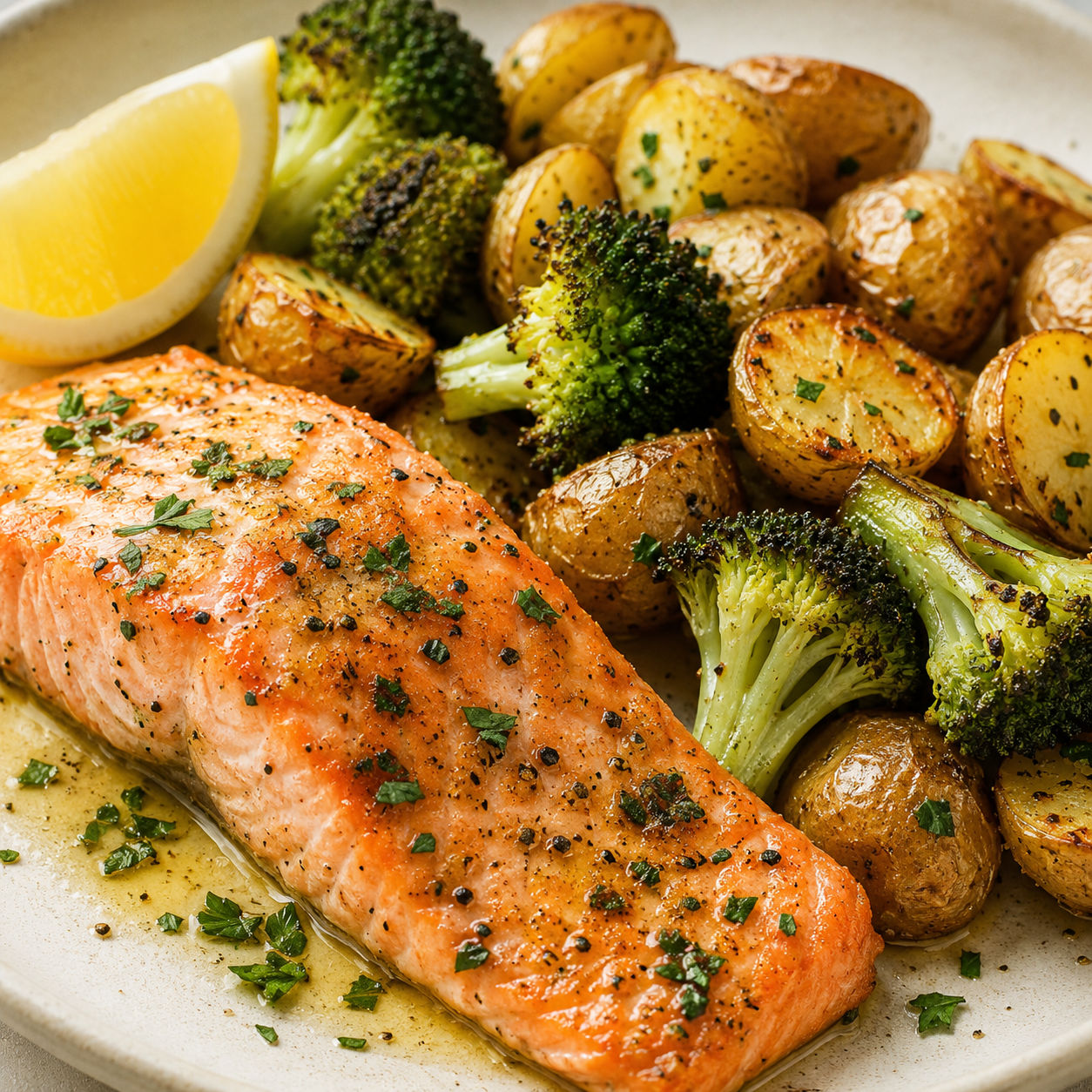
Easy Salmon with Broccoli and Potatoes is the kind of dinner I make when I want real food without turning the kitchen upside down. The potatoes get a head start, the broccoli roasts at the edges, and the salmon stays tender because it only goes in for the last stretch.
The flavor is clean and familiar. Garlic, lemon, paprika, parsley, and a little butter make the fish taste rich without hiding it. You get a full plate from one pan, which is the whole point on a busy night.
What Goes On The Pan
Pick salmon fillets that are close in thickness so they cook evenly. Small baby potatoes and tight broccoli florets matter here because they can finish in the same oven cycle without turning mushy.
- Salmon fillets. Center-cut pieces stay juicy and give each serving a clear main portion.
- Baby potatoes. Their thin skins roast tender inside with golden edges.
- Broccoli florets. Small florets caramelize at the tips while the stems stay crisp-tender.
- Olive oil. Helps the vegetables brown and carries the seasonings across the pan.
- Garlic powder and paprika. Give quick savory flavor without burning like fresh garlic can in a hot oven.
- Lemon. Brightens the salmon and keeps the butter from tasting heavy.
- Butter. Melts over the hot salmon at the end for a simple sauce.
- Parsley. Adds a fresh finish and a little color.
Roast It In Stages
- Heat the oven. Set the oven to 425 F and line a large rimmed sheet pan with parchment for easier cleanup.
- Start the potatoes. Toss halved or quartered baby potatoes with olive oil, salt, pepper, garlic powder, and paprika. Spread them out and roast for 15 minutes.
- Season the salmon. Pat the fillets dry, then season with salt, pepper, paprika, garlic powder, and lemon zest if you have it.
- Add broccoli and fish. Push the potatoes to one side. Add broccoli tossed with oil and seasoning, then set the salmon in the open space.
- Finish roasting. Bake for 10-12 minutes, until the salmon flakes easily and the broccoli tips are browned.
- Add lemon butter. Top each hot fillet with a little butter, squeeze lemon over the pan, and scatter parsley before serving.
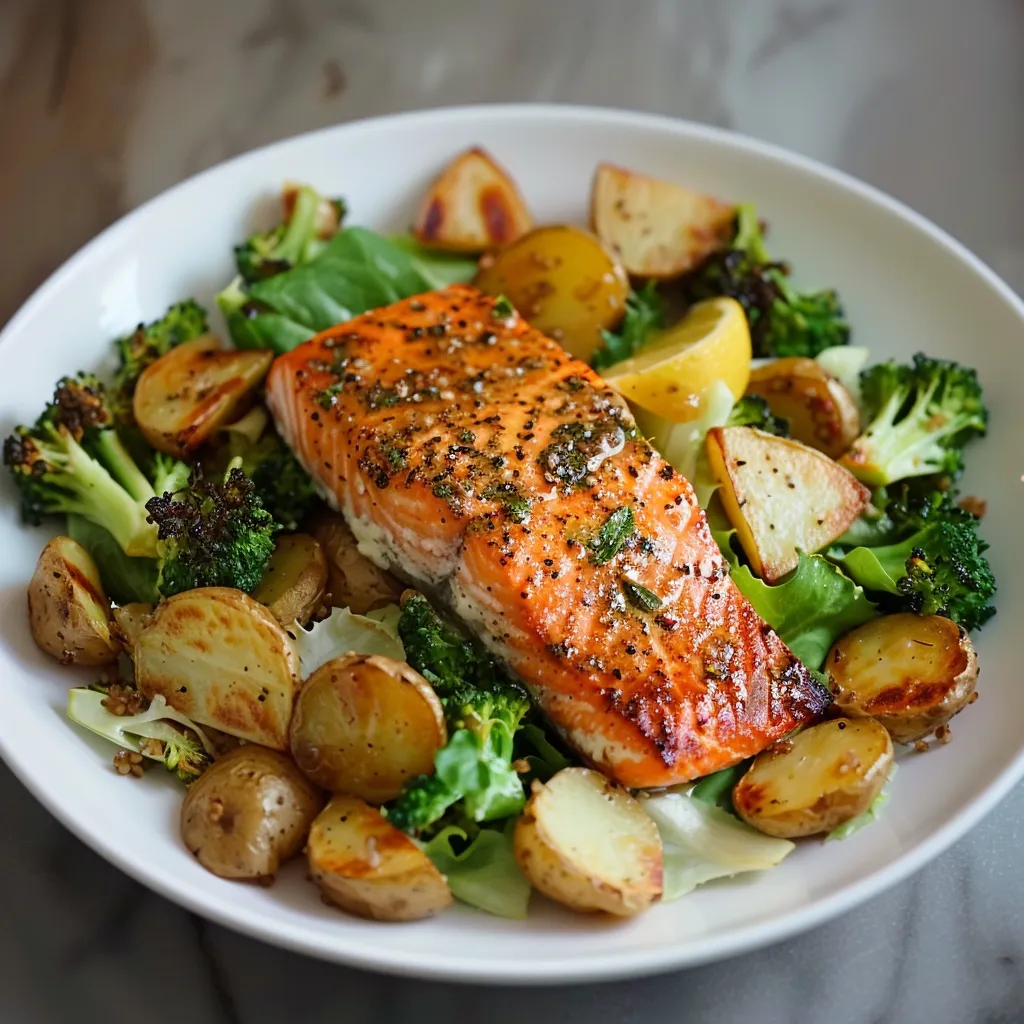
Easy Salmon With Broccoli and Potatoes
The timing is the main thing. Potatoes need more time than salmon, so they go in first and get a strong head start. Once their edges look a little dry and lightly browned, the broccoli and salmon can join the pan.
Do not crowd the vegetables. If broccoli is piled on top of itself, it steams and turns dull. Give the florets a little room and keep the salmon fillets spaced apart. This same sheet-pan habit helps with heartier dinners like garlic butter steak bites and potatoes.
How To Read Doneness
Salmon is done when the thickest part flakes with a fork and the center looks satin-like, not raw. If you cook by temperature, the FDA seafood-safety guide lists 145 F for fish. Many cooks pull salmon just before that and let carryover heat finish the last bit.
Thin tail-end pieces cook faster than thick center cuts. If your fillets are uneven, tuck thinner pieces toward the cooler edge of the pan or check them a few minutes early.
Smart Swaps That Fit
Use sweet potatoes if you want a softer, sweeter side, but cut them small. Yukon gold chunks work too. For the seasoning, Italian seasoning, Cajun spice, lemon pepper, or a mild herb blend can replace the paprika and garlic powder.
If broccoli is not your favorite, try asparagus or green beans. For a different salmon dinner with brighter Mediterranean flavors, try Mediterranean baked salmon. If you want a cozy vegetable side on another night, cheesy broccoli baked potatoes use the same broccoli-potato pairing in a richer way.
Serving The Whole Plate
This dinner does not need much beside it. A spoonful of yogurt sauce, a simple green salad, or extra lemon wedges are enough. If the salmon fillets are small, add bread or rice for bigger appetites.
I like to serve the salmon skin-side down if the skin is still attached. It helps protect the fish from direct heat, and the flesh lifts away easily at the table.
Leftovers Without Dry Fish
Leftover salmon is best reheated gently. Cover it loosely and warm it in a 300 F oven until just heated through. The potatoes can handle more heat, so you can crisp them in a skillet while the salmon warms separately.
Cold leftovers are good too. Flake the salmon over greens with the broccoli and potatoes, then add lemon and olive oil. It turns into a quick lunch without making the fish tough.
Summary
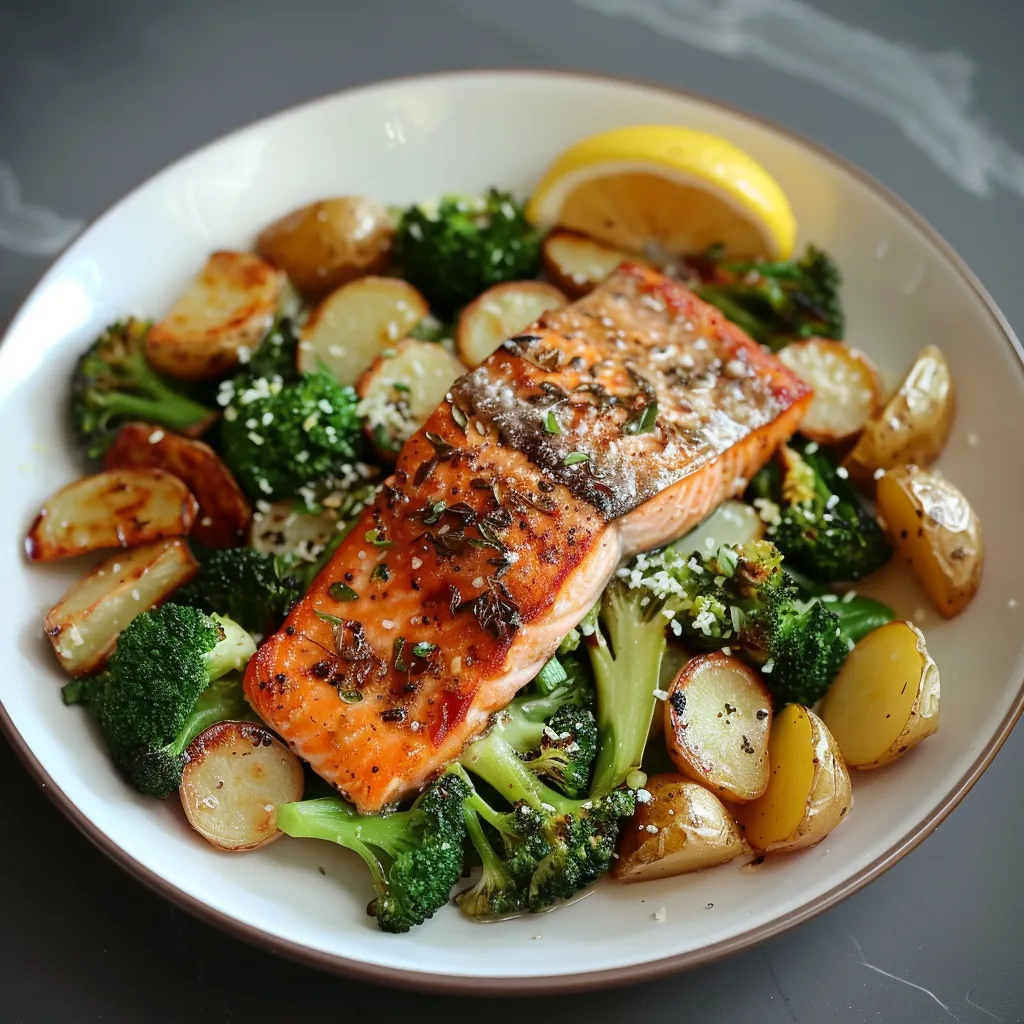
This sheet pan salmon dinner keeps the method simple. Start the potatoes first, add broccoli and salmon later, and finish with lemon butter for a full meal from one pan.
FAQs
- Can I use frozen salmon fillets?
Yes. Thaw them overnight in the fridge or in a sealed bag under cold running water. Pat them very dry before seasoning so the spices cling and the fish roasts instead of steaming.
- How do I keep the salmon from overcooking?
Add the salmon after the potatoes have roasted for 15 minutes. Most center-cut fillets need 10-12 minutes at 425 F. Pull the pan when the salmon flakes with gentle pressure and still looks moist in the thickest part.
- Can I swap the broccoli?
Yes. Asparagus, green beans, or zucchini all work, but they cook fast. Cut them into medium pieces and add them with the salmon, not with the potatoes.
- What kind of potatoes work best?
Baby gold or red potatoes are easiest because the skins are thin and the pieces roast quickly. If you use russet potatoes, peel them if you like and cut them into small 1/2-inch chunks so they finish on time.
- How should I store leftovers?
Store salmon, broccoli, and potatoes in an airtight container for up to 3 days. Reheat gently at 300 F or in a covered skillet with a teaspoon of water. The microwave works, but use short bursts so the salmon does not dry out.
- Is this recipe gluten-free?
Yes, the recipe is naturally gluten-free as written. Check your spice blend if you use a store-bought seasoning mix, since some blends include fillers or anti-caking ingredients.
