 Pin it
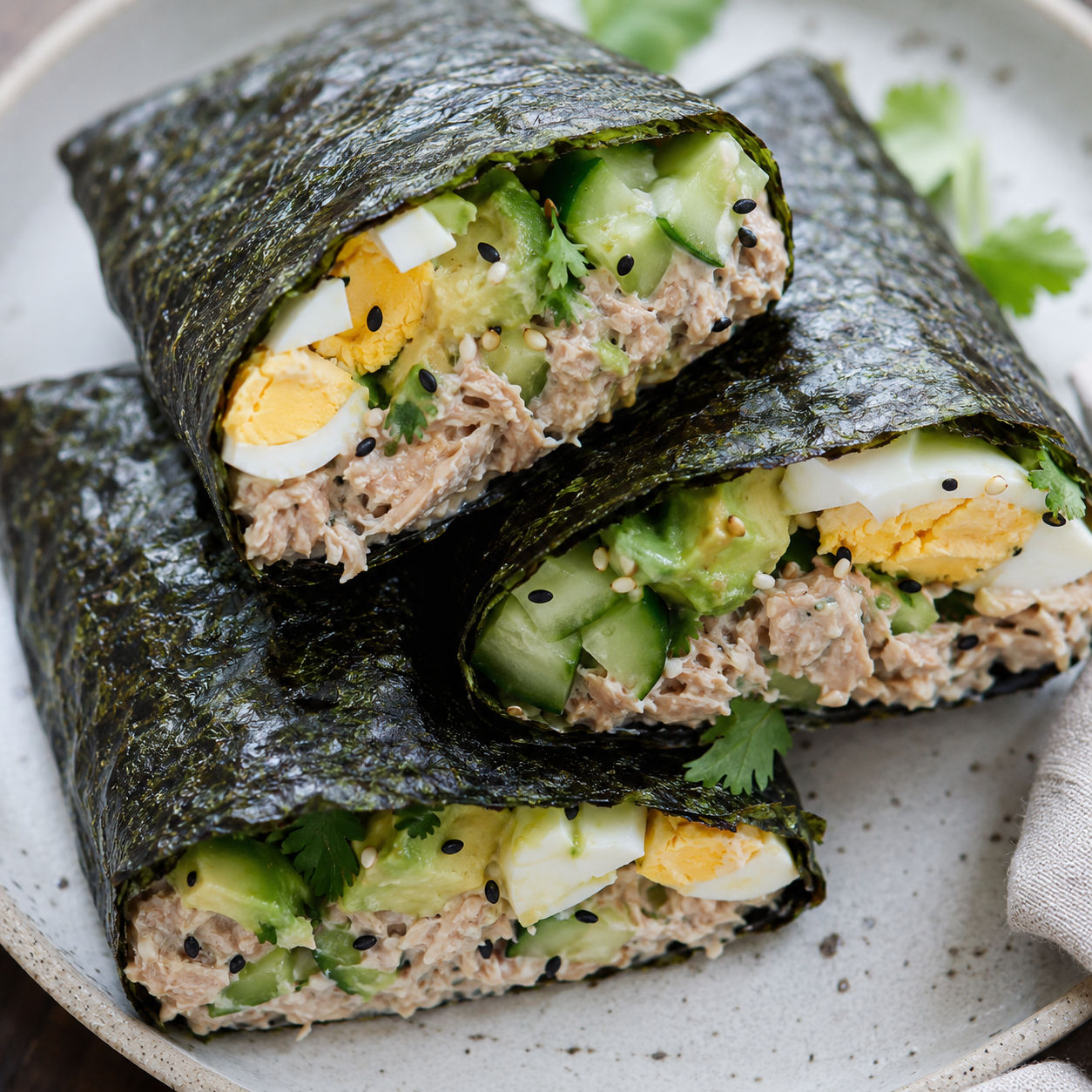
Delicious Paleo Nori Wraps with Tuna are what I make when I want sushi-shop flavors without rice, rolling mats, or much cleanup. The nori gives you that savory seaweed snap, while tuna and avocado make the wrap filling enough for lunch.
The key is restraint. Thin layers fold cleanly. A little paleo mayo and lime keep the tuna moist, and crisp cucumber stops the wrap from tasting heavy.
The crisp tuna lineup
Choose sturdy toasted nori sheets and tuna you like enough to eat plain. Since this is a no-cook wrap, every ingredient should taste fresh before it goes inside.
- Toasted nori sheets. They make the wrap and bring a salty, roasted sea flavor.
- Canned tuna. A fast protein base that works best when drained and lightly flaked.
- Paleo mayonnaise. Binds the tuna without dairy or grain-based fillers.
- Lime juice. Brightens the tuna and keeps the wrap from tasting flat.
- Coconut aminos. Adds a gentle savory note while keeping the recipe paleo.
- Avocado. Adds creamy richness and helps the layers hold together.
- Cucumber. Gives the wrap clean crunch and freshness.
- Hard-boiled eggs. Add protein and a soft bite that balances the crisp vegetables.
- Sesame seeds. Bring nutty texture and a little sushi-style finish.
Fold them without fuss
- Mix the tuna. Drain the tuna well, then stir it with paleo mayo, lime juice, coconut aminos, salt, pepper, and a little hot sauce if you want heat.
- Prep the sheets. Place each nori sheet shiny side down. Fold it gently in half both ways to mark four squares, then cut one slit from the bottom edge to the center.
- Layer thinly. Add avocado to one square, cucumber to the next, tuna to the third, and egg to the last. Keep the edges mostly clear.
- Fold and press. Fold one section over the next until you have a compact square. Press lightly so the avocado and tuna help hold it together.
- Serve right away. Slice in half if you like, then eat while the nori is still crisp and the filling is cool.
Why thin layers matter
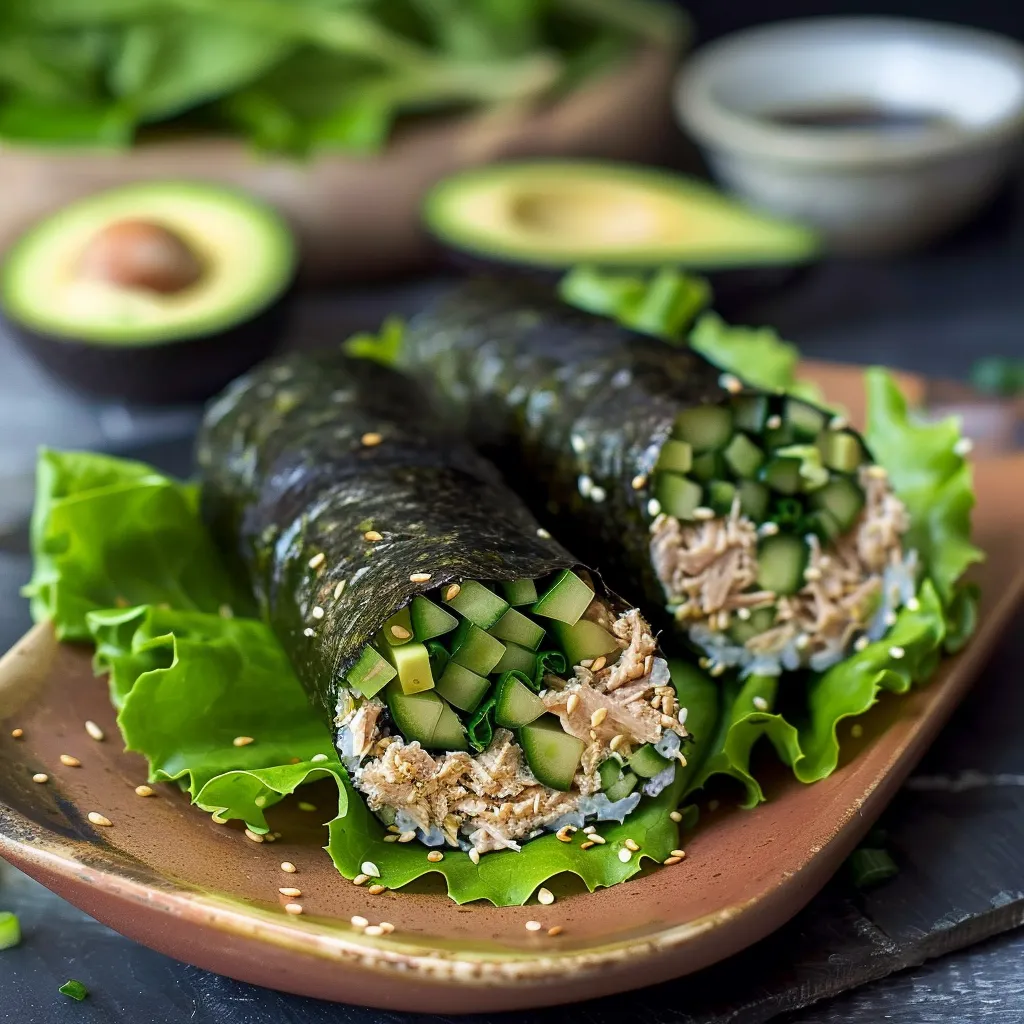
Nori wraps look simple, but the filling thickness decides whether they eat cleanly or fall apart. A nori sheet is sturdy when dry, then turns flexible as soon as it touches tuna, mayo, or avocado. That is useful for folding, but too much moisture makes it chewy.
Spread each filling into a thin, even layer. Flake the tuna instead of leaving it in big chunks. Slice the cucumber and egg thin enough that the corners can bend without cracking. If you want more food, make two wraps instead of stuffing one.
This is also why the avocado matters. It acts like a soft binder without turning the filling soupy. The same idea shows up in these tuna avocado boats, where avocado keeps the tuna rich without needing much else.
Getting the tuna right
Good canned tuna makes this recipe feel fresh instead of pantry-only. Oil-packed tuna gives the fullest flavor, but water-packed tuna is fine if you drain it thoroughly. Press the lid against the tuna or use a small strainer. Watery tuna is the quickest way to lose the crisp nori texture.
The dressing should coat the fish, not drown it. Start with two tablespoons of paleo mayo, then add more only if the tuna looks dry. Lime juice does more work than you might expect. It sharpens the filling and makes the avocado taste cleaner.
If tuna is already a staple in your fridge, the classic tuna salad ideas on this site are useful for changing the seasoning without changing the prep. For fish choices and serving advice, the FDA fish guidance is a helpful reference.
Smart paleo swaps
These wraps are flexible as long as you keep the filling dry and sliceable. Swap cucumber for radish, carrot ribbons, shredded cabbage, or drained pickled vegetables. Replace the egg with more avocado if you want a simpler lunch. Canned salmon also works well with the same lime mayo.
For heat, use a paleo-friendly hot sauce with a clean ingredient list. A pinch of crushed red pepper works too. Coconut aminos add a little depth, but skip them if your tuna is already salty. Taste before adding more salt because canned fish and nori both bring seasoning.
If you like this folded wrap style, try the related nori wraps tuna salad paleo for another version, or the tuna avocado egg wrap when you want a softer wrap without seaweed.
Storage and lunch prep
Finished nori wraps are best eaten within minutes. They will not hold like a tortilla wrap in a lunchbox because the seaweed keeps absorbing moisture. If you need to pack lunch, store the tuna mixture in one container and the sliced vegetables in another. Keep nori sheets sealed in their original packet or a zip-top bag with the air pressed out.
Avocado browns after cutting, so slice it right before you eat or rub it with a little lime juice. Hard-boiled eggs can be cooked a few days ahead. The tuna mixture keeps for up to two days in the refrigerator when stored airtight. For seafood handling basics, the FDA seafood safety guide is worth bookmarking.
Serving ideas that fit
Two wraps make a light but satisfying lunch. Add fruit, a cup of broth, or a crunchy salad if you want more volume. For dinner, I like them beside roasted sweet potatoes or a simple cabbage slaw with lime. The soft avocado, cool tuna, crisp cucumber, and roasted nori already give plenty of contrast.
Serve the wraps whole for a hand-held meal, or slice each square in half with a sharp knife. Wipe the blade between cuts so the nori edges stay neat. If the wrap opens slightly, press the cut side down on the plate for a minute. The filling settles, and it becomes easier to pick up.
Summary
Assemble these wraps right before eating, and keep extra nori sealed tightly so it stays crisp for next time.
FAQs
- Can I make paleo nori wraps with tuna ahead of time?
Prep the tuna salad, cucumber, egg, and avocado separately if you want a head start. Assemble the wraps right before eating because nori softens fast once it touches moisture.
- What kind of tuna works best?
Use solid or chunk tuna packed in olive oil for the richest flavor. Water-packed tuna also works, but drain it very well and add a little extra paleo mayo or mashed avocado.
- Are these tuna nori wraps gluten-free?
Yes, the recipe is gluten-free as written. Check the labels on nori, hot sauce, and coconut aminos because flavored seaweed snacks and some sauces can include wheat-based ingredients.
- Can I skip the egg?
Yes. Replace the hard-boiled egg with extra avocado, shredded carrot, sliced radish, or a few strips of cooked sweet potato. Keep the replacement thin so the wrap still folds neatly.
- How do I keep nori from tearing?
Use dry hands and do not overfill the sheet. If the nori feels brittle, fold it gently to mark the sections instead of pressing hard. Once filled, fold with both hands and support the corners.
- What can I serve with tuna nori wraps?
They are great with cucumber salad, fruit, broth, or a small bowl of pickled vegetables. For a bigger paleo meal, add roasted sweet potato wedges or a simple green salad.
