 Pin it
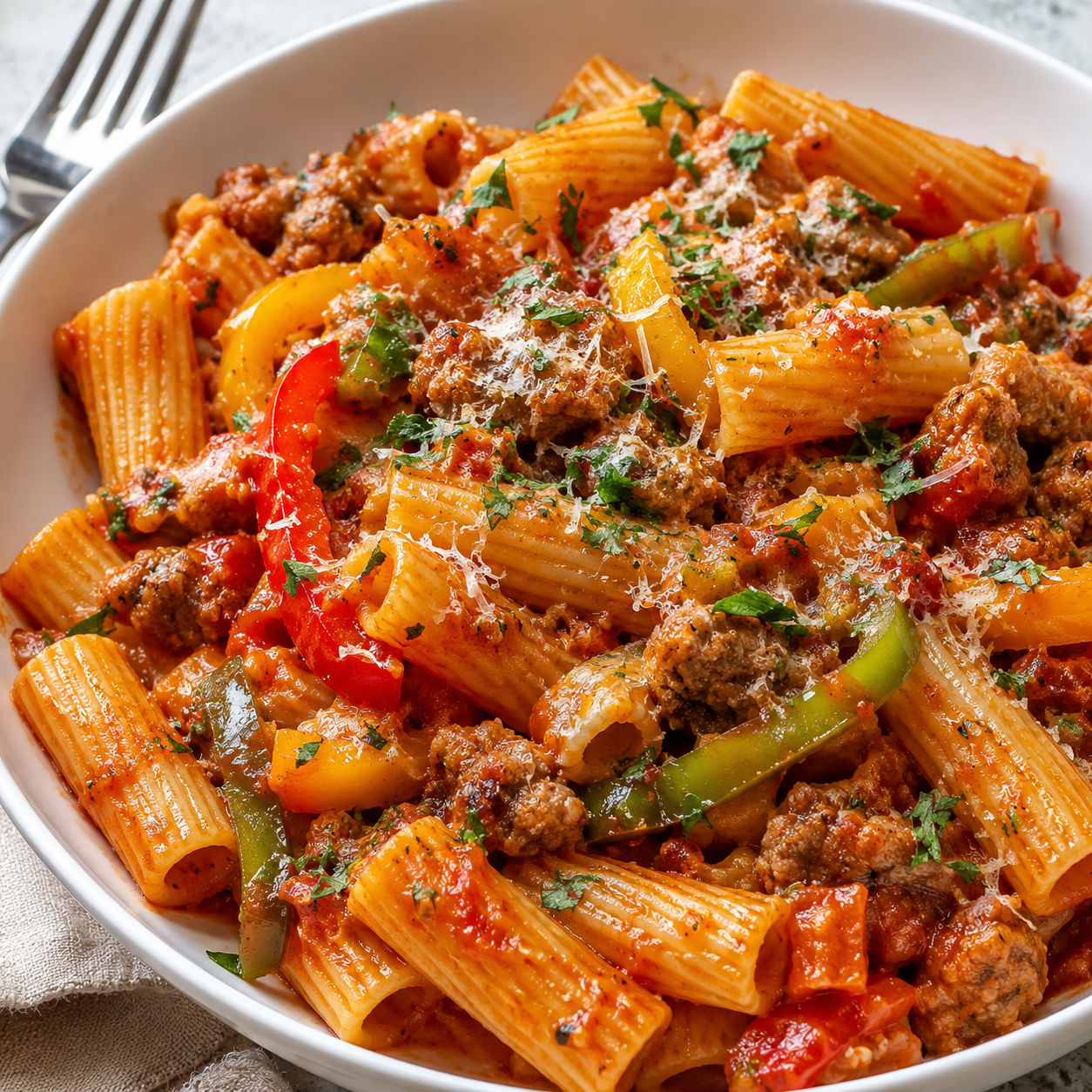
Tasty Sausage and Pepper Pasta Delight is the kind of dinner that smells good before the sauce even goes in. The sausage leaves browned bits in the pan, the peppers soften around the edges, and the tomato sauce pulls everything together without needing a long simmer.
I like this with rigatoni or penne because the short tubes catch little pieces of sausage. A handful of parmesan at the end makes it richer, but the real backbone is the pepper-onion-sausage mix.
Peppers, Sausage, And Pasta
Choose sausage with enough fat to brown well and peppers that feel firm and heavy for their size. Red and yellow peppers bring sweetness, while green pepper keeps the dish from tasting too soft.
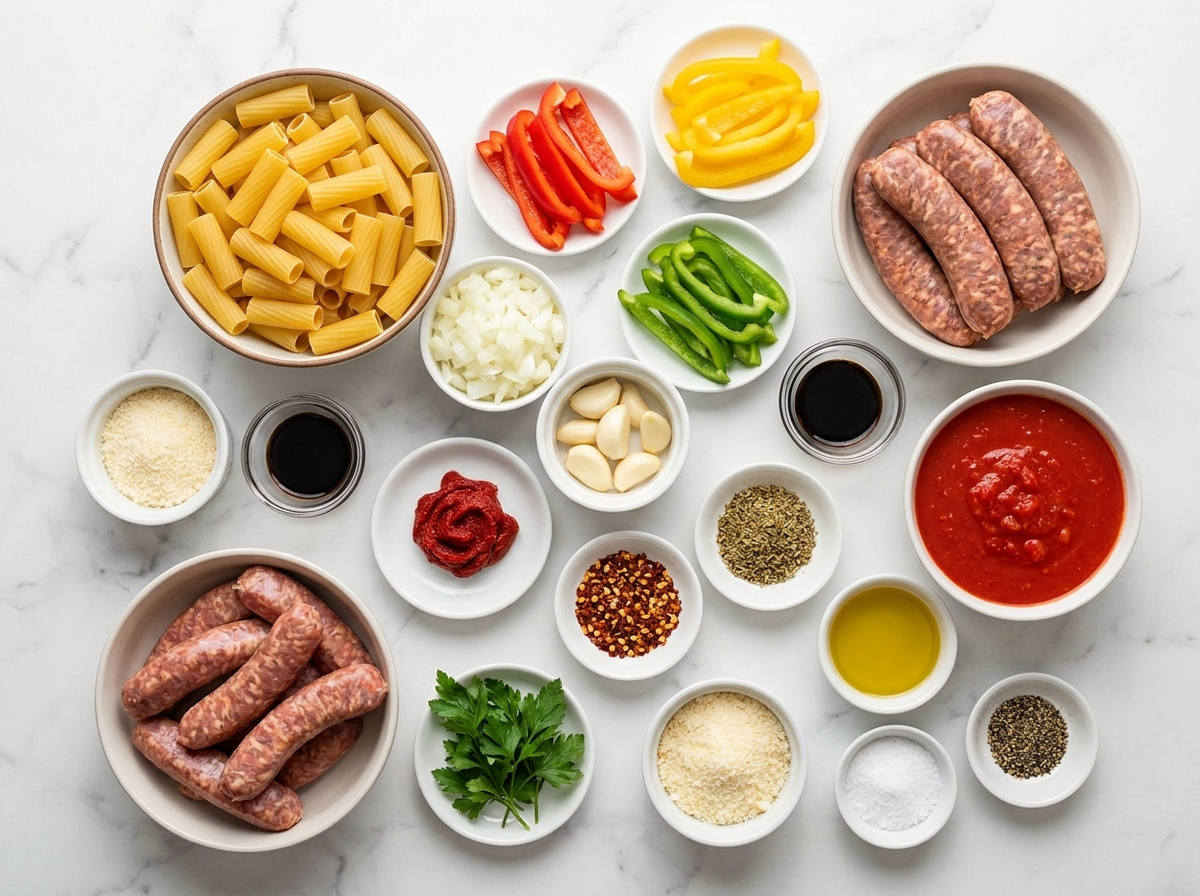
- Italian sausage. Browns into savory crumbles and seasons the sauce from the start.
- Rigatoni or penne. Short pasta holds the chunky sauce and catches bits of sausage inside the tubes.
- Bell peppers. Add sweetness, color, and a tender bite that makes the skillet feel fresh.
- Yellow onion. Softens into the sauce and gives the peppers a better base.
- Garlic. Adds sharp aroma, but it only needs a short cook so it does not burn.
- Tomato paste. Deepens the sauce and helps it cling to the pasta.
- Crushed tomatoes. Make a quick sauce that still tastes full after a short simmer.
- Balsamic vinegar. Adds a small tangy note that wakes up the peppers and tomatoes.
- Parmesan and parsley. Finish the pan with saltiness, freshness, and a little shine.
Build The Skillet Flavor
- Boil the pasta. Cook the rigatoni in salted water until just shy of al dente. Reserve 1 cup of pasta water before draining.
- Brown the sausage. Heat olive oil in a wide skillet and cook the sausage, breaking it into small chunks, until browned and cooked through.
- Soften the vegetables. Add peppers and onion to the sausage drippings. Cook until the onion turns glossy and the peppers start to relax.
- Add garlic and tomato paste. Stir them into the hot skillet for about 1 minute. The tomato paste should darken slightly and smell sweet.
- Simmer the sauce. Add crushed tomatoes, balsamic vinegar, oregano, chili flakes, salt, and pepper. Let it bubble gently until it thickens.
- Toss and finish. Add pasta, a splash of pasta water, parmesan, and parsley. Toss until the sauce coats every piece.
Brown The Sausage Well
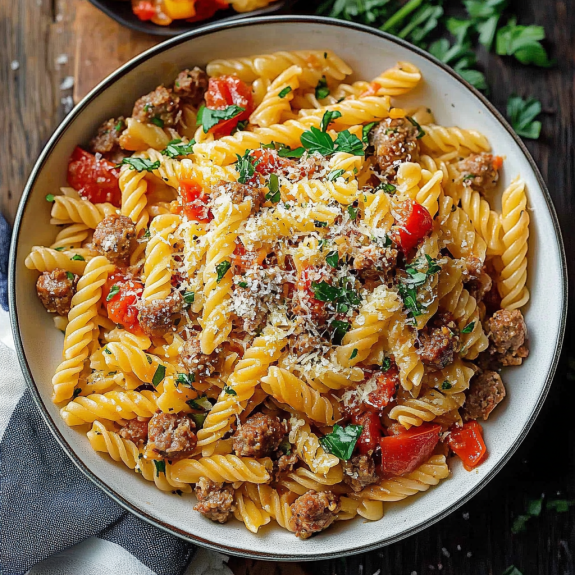
The best flavor in this pan starts before the tomatoes. Give the sausage time to brown in spots, not just turn gray. Those dark bits dissolve into the sauce later and make the whole skillet taste like it cooked longer than it did.
Use a wide skillet so moisture can escape. If the pan is crowded, the sausage steams and the flavor stays flat. Once the meat is browned, leave the fat in the pan unless there is a large puddle. A tablespoon or two helps the peppers and onions cook evenly. For a creamier sausage dinner, the same browning step helps in Cheesy Sausage Pasta Skillet.
Keep The Peppers Lively
Peppers are easy to overcook in pasta sauce. I like them soft at the edges with a little body left in the center. That texture gives the pasta a fresher bite and keeps the sauce from feeling heavy.
Cut the peppers into strips or thick half-moons instead of tiny dice. They will stay visible and taste sweeter. Add the garlic after the peppers have had a few minutes in the pan because garlic burns faster than onion. If you love pepper-forward meals, Shrimp and Bell Pepper Stir-Fry is another quick dinner built around that same crisp-sweet balance.
Sauce That Clings
Tomato paste is small but important here. Stir it into the sausage and peppers before adding crushed tomatoes so it can toast against the skillet. That quick minute gives the sauce a deeper flavor and helps it coat the pasta instead of sliding to the bottom of the bowl.
Reserved pasta water finishes the job. Add it a few tablespoons at a time when the pasta goes into the skillet. The starch loosens the sauce and helps the fat, tomatoes, and parmesan come together. For food safety, cook fresh pork sausage to 160°F as listed in the USDA safe temperature chart.
Easy Swaps That Work
Hot Italian sausage makes the pasta spicier without changing the method. Turkey Italian sausage works too, though it is leaner, so add an extra drizzle of olive oil when browning. For a saucier pan, use 28 ounces of crushed tomatoes instead of 20 ounces.
Rigatoni, penne, ziti, and rotini all fit the sauce. Long pasta works, but short shapes are easier with the sausage and peppers. You can add a handful of spinach at the end or stir in a splash of cream for a softer tomato sauce. If garlic butter flavors are more your style, try Garlic Butter Sausage Parmesan Pasta next.
Store And Reheat Gently
Leftovers keep in an airtight container in the fridge for up to 4 days. Reheat them in a skillet over medium-low heat with a splash of water or broth. Stir often and stop as soon as the sauce loosens and the pasta is hot.
The microwave works for a single bowl, but cover it and stir halfway through. If the pasta looks dry, add a spoonful of water before heating. This dish also freezes better as sauce only. Freeze the sausage and pepper sauce for up to 2 months, then cook fresh pasta when you are ready to serve.
Summary
Serve this pasta hot from the skillet with extra parmesan, parsley, and a simple green salad.
FAQs
- What kind of sausage works best for sausage and pepper pasta?
Sweet or mild Italian sausage gives the sauce a rounded flavor without too much heat. Hot Italian sausage works well if you want more bite. If using fully cooked smoked sausage, slice it and brown it first, then shorten the simmer because it does not need to cook through.
- Can I use jarred marinara instead of crushed tomatoes?
Yes. Use about 2 cups of marinara in place of the crushed tomatoes and tomato paste. Taste before adding much salt because jarred sauces are already seasoned.
- How do I keep the peppers from getting mushy?
Cook them until they bend easily but still hold their shape. Five to seven minutes is usually enough before the tomatoes go in. Thin slices cook faster, so cut the peppers a little thicker if you like more texture.
- Can this sausage pepper pasta be made ahead?
The sauce can be made up to 2 days ahead and refrigerated. Cook the pasta fresh if you can, then warm the sauce in a skillet and toss everything together with pasta water. Fully assembled leftovers still reheat well, but the pasta will soften as it sits.
- What can I serve with this pasta?
A crisp green salad, garlic bread, or roasted broccoli keeps the meal simple. If the sausage is spicy, a cool cucumber salad or a little extra parmesan on top balances the heat.
- Can I make it gluten-free?
Yes. Use a sturdy gluten-free short pasta and check that the sausage is labeled gluten-free. Gluten-free pasta can break if it is overcooked, so drain it while it still has a firm bite.
