 Pin it
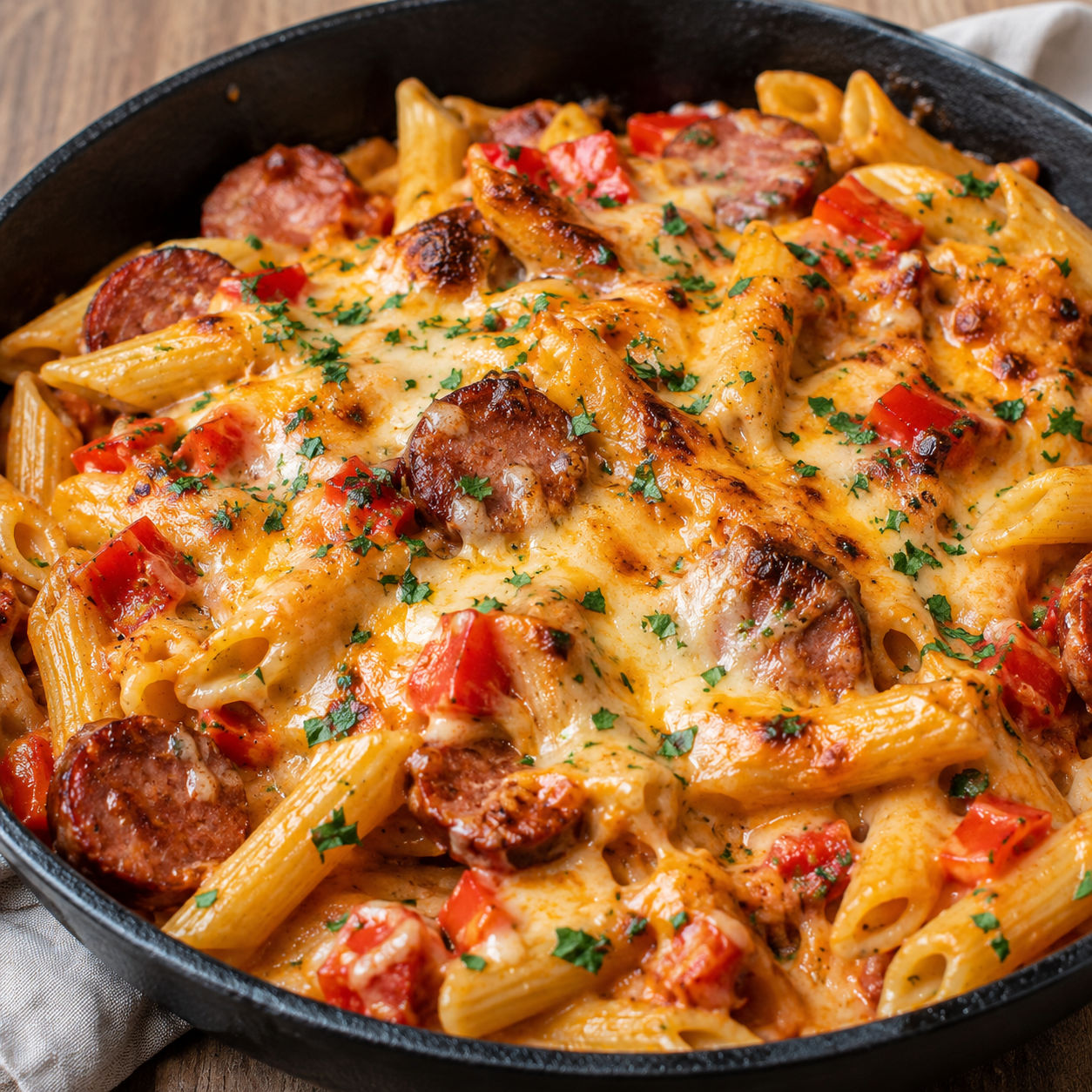
Cheesy Skillet with Sausage and Pasta is the kind of dinner that buys you time on a busy night. The pasta cooks in the same pan as the sausage and sauce, so it soaks up more flavor than a separate pot ever gives it.
I like smoked sausage here because it browns fast and adds a savory edge without much fuss. Bell peppers keep the skillet from feeling too heavy, and the cheese melts into a creamy sauce that clings to every piece of pasta.
Sausage Pasta Skillet Staples
This recipe works best with ingredients that bring strong flavor quickly. Use a smoked sausage you like eating on its own, and choose a short pasta shape that can simmer without breaking apart.
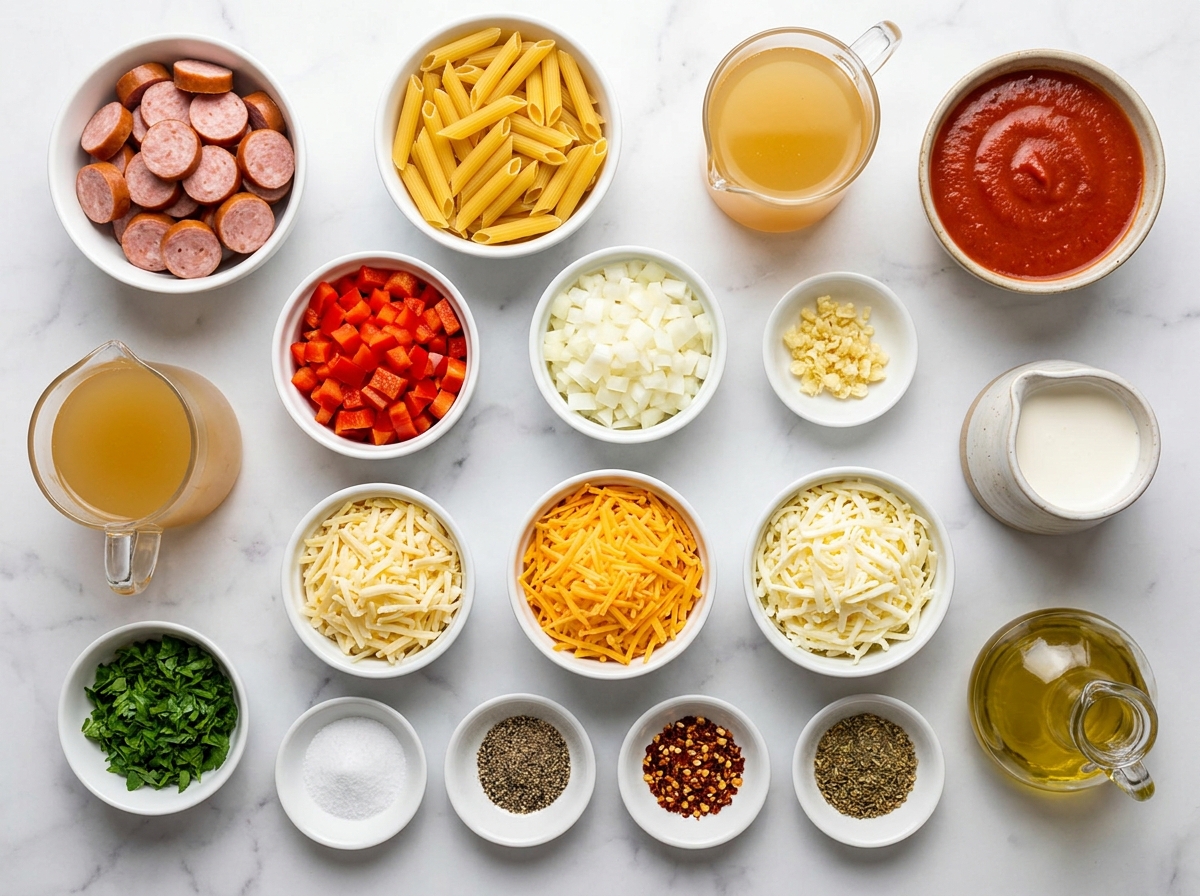
- Smoked sausage. Browns quickly and gives the skillet a savory, smoky base.
- Short pasta. Penne or rotini cooks evenly in the sauce and holds the cheese in its ridges.
- Bell pepper and onion. Add sweetness and a little texture against the creamy pasta.
- Garlic. Rounds out the sausage and tomato sauce without needing a long simmer.
- Chicken broth. Cooks the pasta and builds a deeper sauce than water.
- Tomato sauce. Gives the skillet body, color, and a gentle tang.
- Heavy cream. Softens the tomato and helps the cheese melt smoothly.
- Cheddar and mozzarella. Cheddar brings flavor, while mozzarella gives that stretchy finish.
- Parsley. Adds a fresh finish right before serving.
How The Skillet Cooks
- Brown the sausage. Sear the slices in a hot skillet until the edges are golden. This gives the sauce more flavor before anything liquid goes in.
- Soften the vegetables. Add onion and bell pepper to the same pan. Cook until the onion looks glossy, then stir in the garlic for the last minute.
- Simmer the pasta. Add dry pasta, broth, tomato sauce, and seasoning. Cover and simmer, stirring every few minutes so the pasta cooks evenly and does not stick.
- Make it creamy. When the pasta is tender, stir in the cream. Let it bubble for a minute so the sauce thickens slightly.
- Melt the cheese. Turn the heat low and fold in cheddar and mozzarella. Rest the skillet for a few minutes so the sauce settles and clings.
Cheesy Skillet Sauce Control
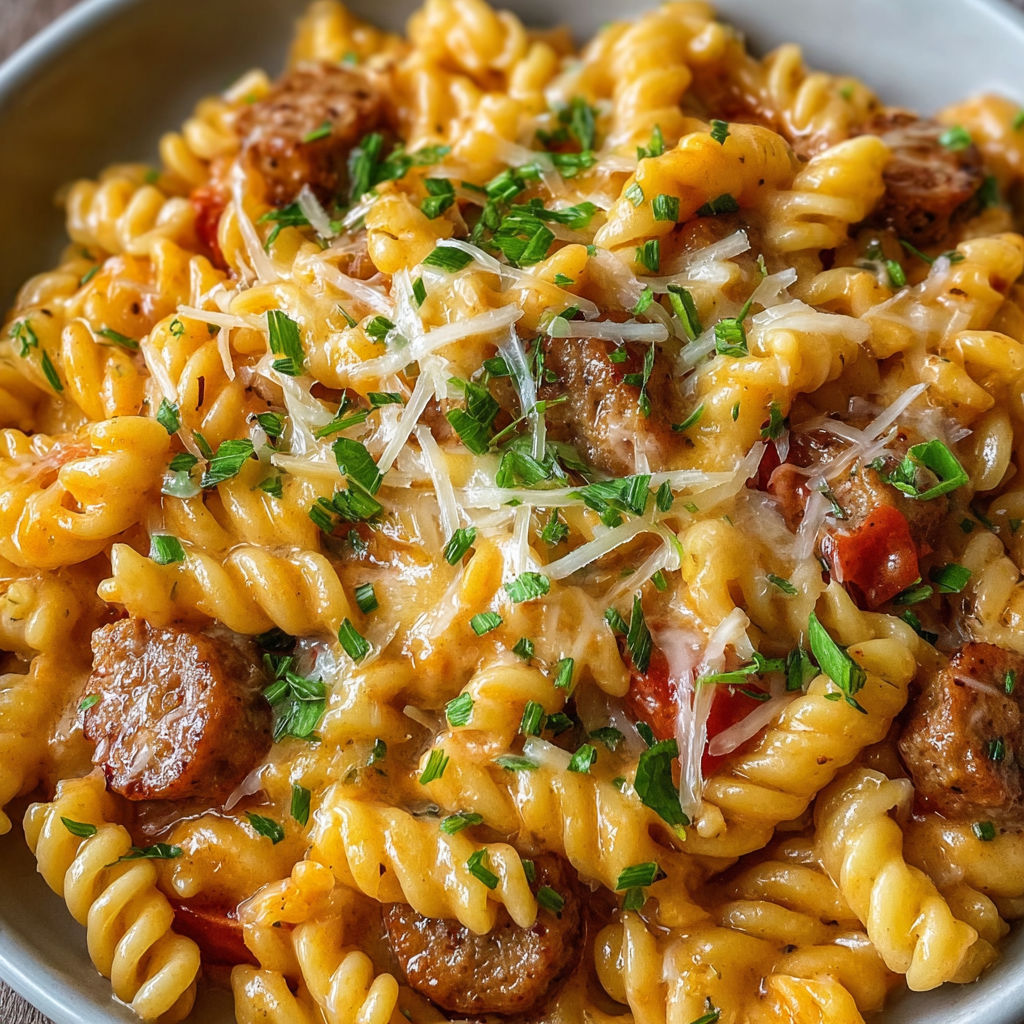
The sauce should look loose when the pasta first turns tender. That is correct. It thickens as the cheese melts and as the skillet rests. If you keep cooking until it looks thick in the pan, it can tighten up before it reaches the table.
Stir often once the pasta goes in. The starch released from the pasta helps the sauce turn creamy, but it also likes to settle on the bottom of the skillet. A wide, heavy pan makes this easier. If you enjoy one-pan pasta dinners, the same idea shows up in Cheesy Sausage Pasta Skillet and Garlic Butter Sausage with Parmesan Pasta.
Best Sausage Choices
Fully cooked smoked sausage is the easiest choice because it only needs browning. Kielbasa, beef smoked sausage, turkey sausage, and chicken sausage all work. Cut it into coins about 1/4 inch thick so the edges caramelize while the centers stay juicy.
If you use raw Italian sausage, treat it as a different ingredient. Cook it fully first, break it into small pieces, and drain excess grease if the skillet looks oily. For a spicier dinner, use hot Italian sausage or add crushed red pepper with the garlic. For a softer, creamier version, look at Smoked Sausage Alfredo Pasta.
Pasta That Cooks Evenly
Short, sturdy shapes are your friend. Penne, rotini, medium shells, cavatappi, and bow ties give the sauce places to hide. They also handle the covered simmer better than spaghetti or angel hair.
If the pasta is almost tender but the pan looks dry, add a small splash of broth. If the pasta is tender but the sauce is thin, uncover the skillet for 1-2 minutes before adding cheese. The goal is saucy, not soupy. Cheese needs a little liquid to melt into instead of clumping.
Easy Add-Ins And Swaps
This skillet is flexible, but add-ins need good timing. Mushrooms can go in with the onion because they need a few minutes to release moisture. Spinach should go in at the end because it wilts fast. Frozen peas can be stirred in with the cream.
For more heat, use pepper jack in place of mozzarella. For a milder family-style pan, use all mild cheddar and skip crushed red pepper. A handful of parmesan gives the sauce a saltier finish. If you like sausage with a bigger vegetable presence, try Autumn Dinner with Sausage, Pasta and Roasted Vegetables next.
Storage And Reheating
Leftovers keep well, but pasta keeps absorbing sauce as it sits. Store cooled portions in an airtight container and refrigerate for up to 3 days. The cold food storage chart at FoodSafety.gov is a helpful reference for cooked leftovers.
Reheat in a skillet over low heat with a splash of broth, milk, or water. Stir slowly until the sauce turns creamy again. The microwave works for lunch portions, but cover the bowl and stop to stir halfway through.
Summary
This skillet is best served hot, while the sauce is loose and the cheese is still stretchy.
FAQs
- Can I use Italian sausage instead of smoked sausage?
Yes. Remove it from the casing, crumble it into the skillet, and cook it until no pink remains before adding the onion and peppers. You may need to drain a little fat before building the sauce.
- What pasta shape works best in this skillet?
Short pasta is easiest because it cooks evenly in the shallow liquid. Penne, rotini, shells, and bow ties all work well. Avoid very thin pasta, which can soften before the sauce reduces.
- Can I make it less creamy?
Use milk instead of cream and reduce the cheese by a quarter cup. The sauce will be lighter, but still flavorful because the pasta cooks in broth, tomato sauce, and sausage drippings.
- How do I store leftovers?
Cool leftovers, then refrigerate them in an airtight container for up to 3 days. Reheat gently in a skillet with a splash of broth or milk to loosen the sauce.
- Why is my pasta still firm after simmering?
The skillet may be too wide, the heat may be too low, or the lid may not be tight. Add 1/4 cup broth or water, cover again, and cook a few more minutes until the pasta is tender.
- Can I add vegetables?
Yes. Spinach, zucchini, mushrooms, peas, or broccoli florets all fit here. Add quick-cooking vegetables near the end so they stay bright and do not water down the sauce.
