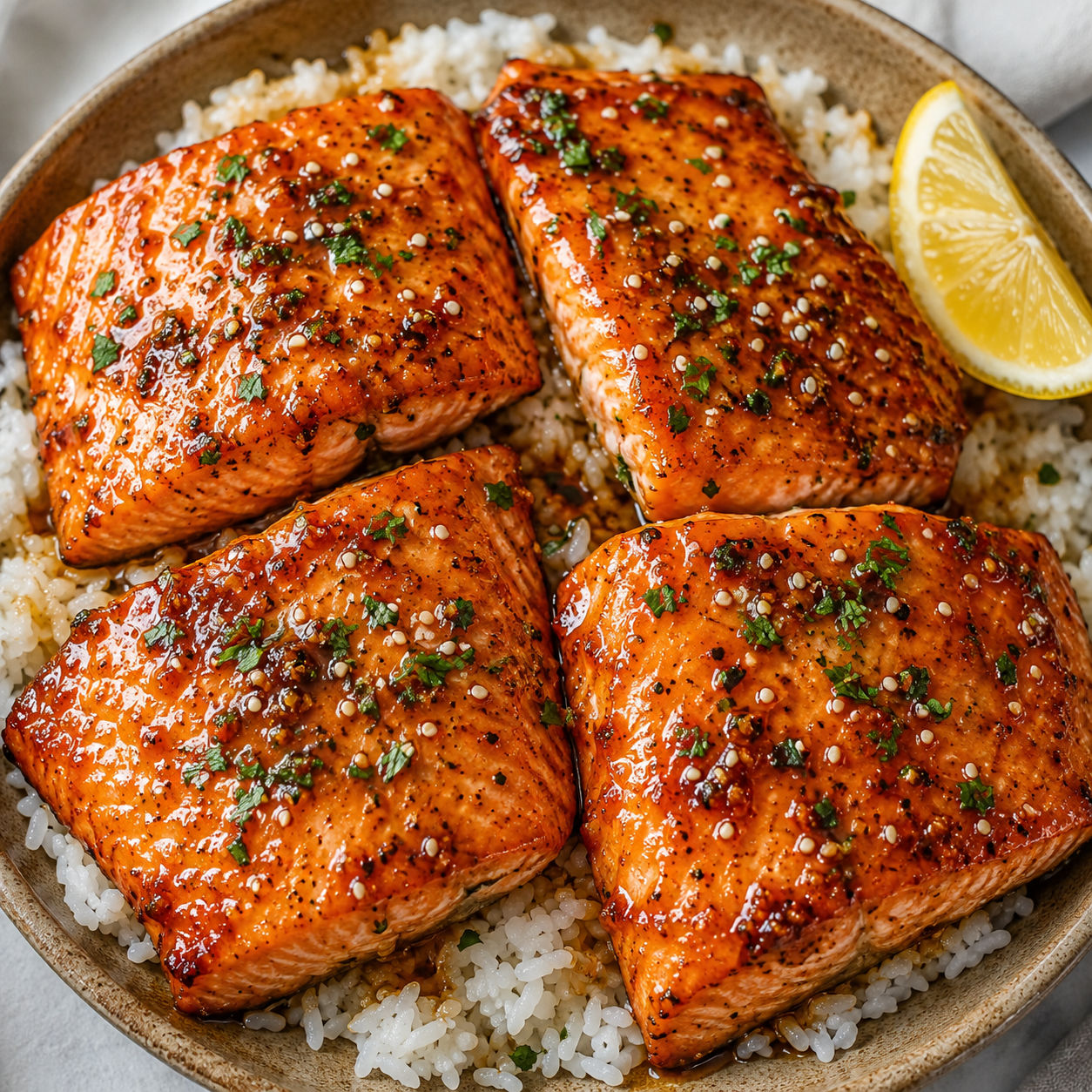
 Pin it
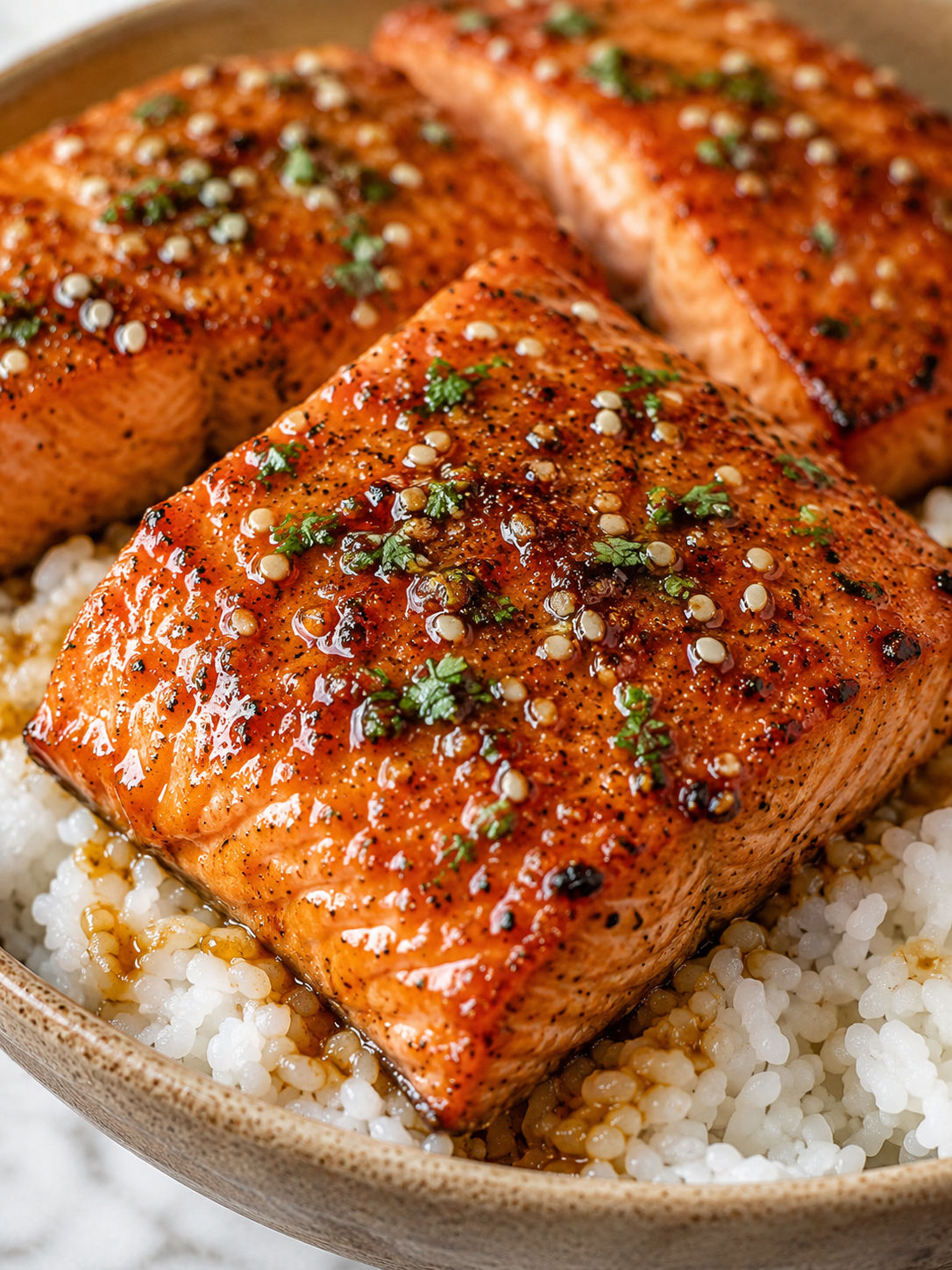
Honey Glazed Salmon is one of those dinners that feels far nicer than the work it asks from you. The sauce bubbles into a shiny glaze, the edges of the fish caramelize, and the whole pan smells like garlic, lemon, and warm honey.
I like this version for weeknights because it does not need a long marinade. The glaze is bold enough to season the salmon as it cooks, and a quick finish under the broiler gives you that sticky top without drying out the center.
Honey Glazed Salmon Lineup
Use center-cut salmon fillets if you can, since they cook evenly and stay moist. The glaze is simple, so fresh garlic, real lemon juice, and a honey you like make a difference.
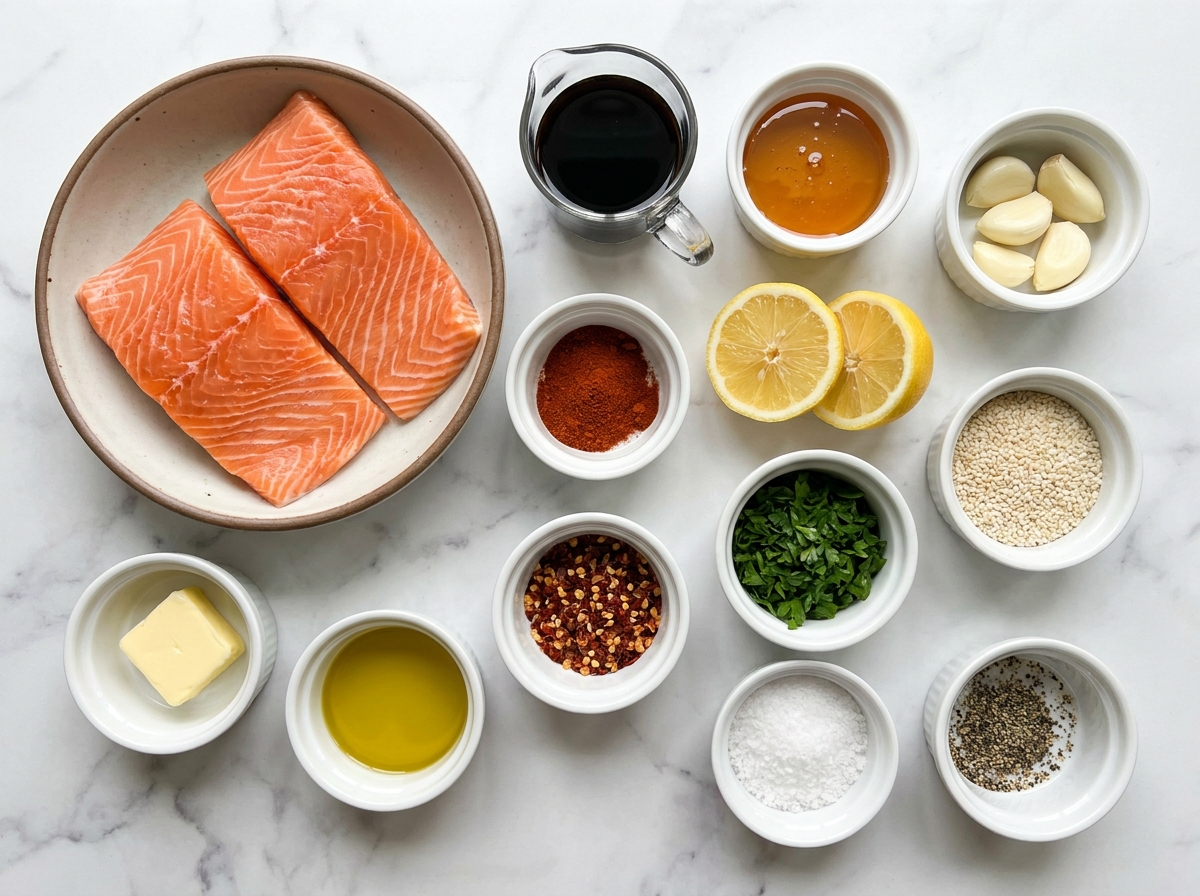
- Salmon fillets. Thick 6-ounce pieces give you tender flakes and enough surface for the glaze to caramelize.
- Honey. Sweetens the sauce and helps it turn sticky in the hot skillet.
- Low-sodium soy sauce. Balances the honey with salt and deep savory flavor.
- Fresh garlic. Adds sharp warmth that keeps the glaze from tasting flat.
- Butter and olive oil. Butter rounds out the sauce while oil helps keep it from scorching.
- Lemon juice. Brightens the glaze and cuts through the richness of the fish.
- Chili flakes. Add gentle heat without taking over the dish.
- Parsley and sesame seeds. Finish the salmon with fresh color and a little nutty crunch.
Skillet To Sticky Finish
- Dry and season. Pat the salmon until the surface feels dry, then season both sides with salt, pepper, and paprika. This gives the fish better color and keeps the glaze from watering down.
- Mix the glaze. Whisk honey, soy sauce, lemon juice, and chili flakes in a small bowl. Keep it nearby because the pan moves quickly once the garlic hits the heat.
- Start the sauce. Melt butter with olive oil in an oven-safe skillet over medium heat. Add the garlic and cook just until fragrant, about 30 seconds.
- Baste the salmon. Pour in the glaze, let it bubble for 1 minute, then nestle in the salmon skin-side down if using skin-on fillets. Spoon sauce over the tops as the fish cooks for 3-4 minutes.
- Broil and serve. Move the skillet to a middle oven rack and broil 3-5 minutes, until the top is glossy and the thickest part flakes. Spoon on extra glaze and finish with parsley and sesame seeds.
Keep The Glaze Glossy
The glaze needs a steady bubble, not a hard boil. Honey can go from syrupy to scorched quickly, especially once it mixes with butter. If the sauce darkens too fast, pull the skillet off the heat for a few seconds and keep basting. The salmon should look lacquered, not dry or crusted.
A wide skillet helps here because the sauce reduces evenly. If you love this sticky garlic style, the site's Honey Garlic Salmon Fillets follow the same sweet-savory idea with a slightly different glaze.
Salmon Doneness Without Guessing
Salmon keeps cooking after it leaves the oven, so do not wait until every flake looks dry. Check the thickest part with a fork. It should separate with light pressure and still look juicy. An instant-read thermometer is useful if your fillets are thick or uneven.
The FoodSafety.gov temperature chart lists 145 F for fish. The FDA seafood guide is also helpful if you are buying fresh or frozen fillets.
Swaps For Your Pantry
Tamari can replace soy sauce if you want a gluten-free option. Coconut aminos work too, though the sauce will taste sweeter and lighter. For more heat, stir in a teaspoon of chili garlic sauce or sriracha with the honey. For a brighter finish, add a little orange zest at the end.
If you want the same quick glaze treatment on another fish, try Easy Honey-Soy Glazed Cod. Cod is milder and more delicate, so cook it gently and skip the aggressive basting.
What To Serve Alongside
Rice is the easy answer because it catches every spoonful of sauce. I also like roasted asparagus, steamed broccoli, or a crisp cucumber salad with rice vinegar. The sweet glaze can handle something sharp on the plate.
For a fresher salmon dinner with herbs and grains, the Lemon Herb Grilled Salmon Quinoa is a good next recipe. For a richer oven-baked option, Garlic Butter Baked Salmon leans buttery instead of sweet.
Leftovers That Stay Moist
Leftover glazed salmon is easy to overheat. Warm it low and slow in a covered skillet with a splash of water, just until the glaze loosens. The microwave works if you use 50 percent power in short bursts, but stop before the center gets hot and dry.
Cold leftovers are often better than reheated ones. Flake the salmon over rice, tuck it into lettuce cups, or add it to a grain bowl with cucumber and avocado.

FAQs
- Can I make Honey Glazed Salmon without broiling?
Yes. Keep the skillet on medium-low heat after the salmon goes in, cover it loosely, and spoon glaze over the top until the fish flakes. You will get less caramelized color, but the sauce will still thicken and coat the fillets.
- Can I use frozen salmon fillets?
Frozen salmon works well if it is fully thawed first. Let it thaw overnight in the fridge, then pat it very dry before seasoning so the glaze clings instead of sliding off.
- What can I use instead of soy sauce?
Tamari is the easiest swap and gives a similar savory flavor. Coconut aminos also work, but they are sweeter, so reduce the honey by a tablespoon if you use them.
- How do I know when salmon is cooked?
The salmon should flake at the thickest part and still look moist in the center. For food safety, the FDA recommends cooking seafood to 145 F, though many cooks pull salmon a little earlier and let carryover heat finish it.
- How long do leftovers keep?
Store leftover salmon in an airtight container in the fridge for up to 3 days. Reheat gently in a covered skillet with a teaspoon of water, or eat it cold over rice or salad.
- What should I serve with honey glazed salmon?
Steamed rice, roasted broccoli, green beans, cucumber salad, and mashed sweet potatoes all work well. Anything simple is good because the glaze is rich and sticky.
