 Pin it
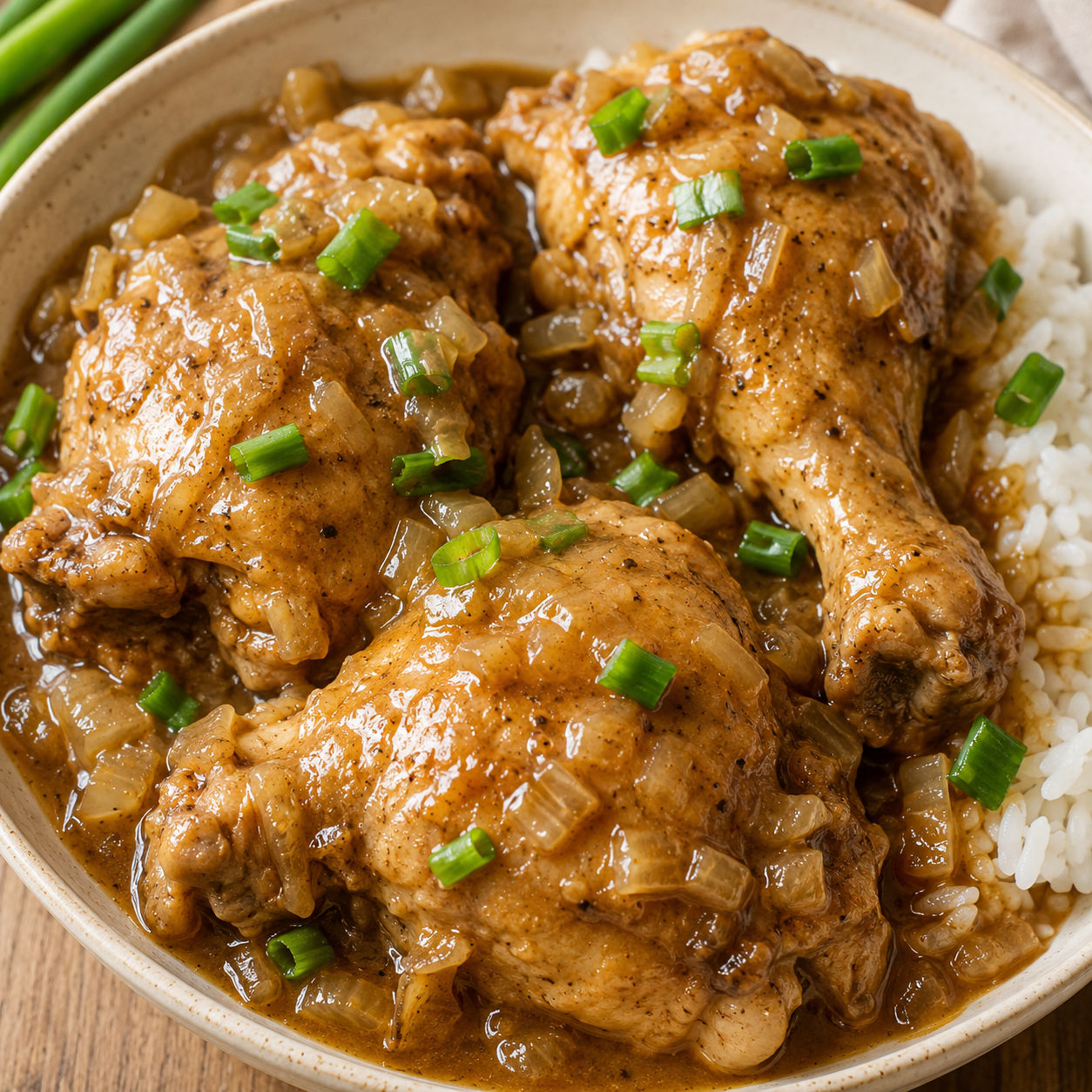
Southern Smothered Chicken is the kind of dinner that asks for a spoon, not just a fork. The chicken browns first, then finishes low and slow in a skillet of onion gravy until the skin softens and the meat pulls away from the bone.
I like it best with thighs and drumsticks because they stay juicy while the gravy thickens. The pan drippings, flour, broth, onions, garlic, and thyme do the heavy lifting.
The Gravy-Building Lineup
This recipe is simple, so use chicken pieces with good skin and a broth that tastes clean. The onions should soften into the gravy rather than stay sharp or crunchy.
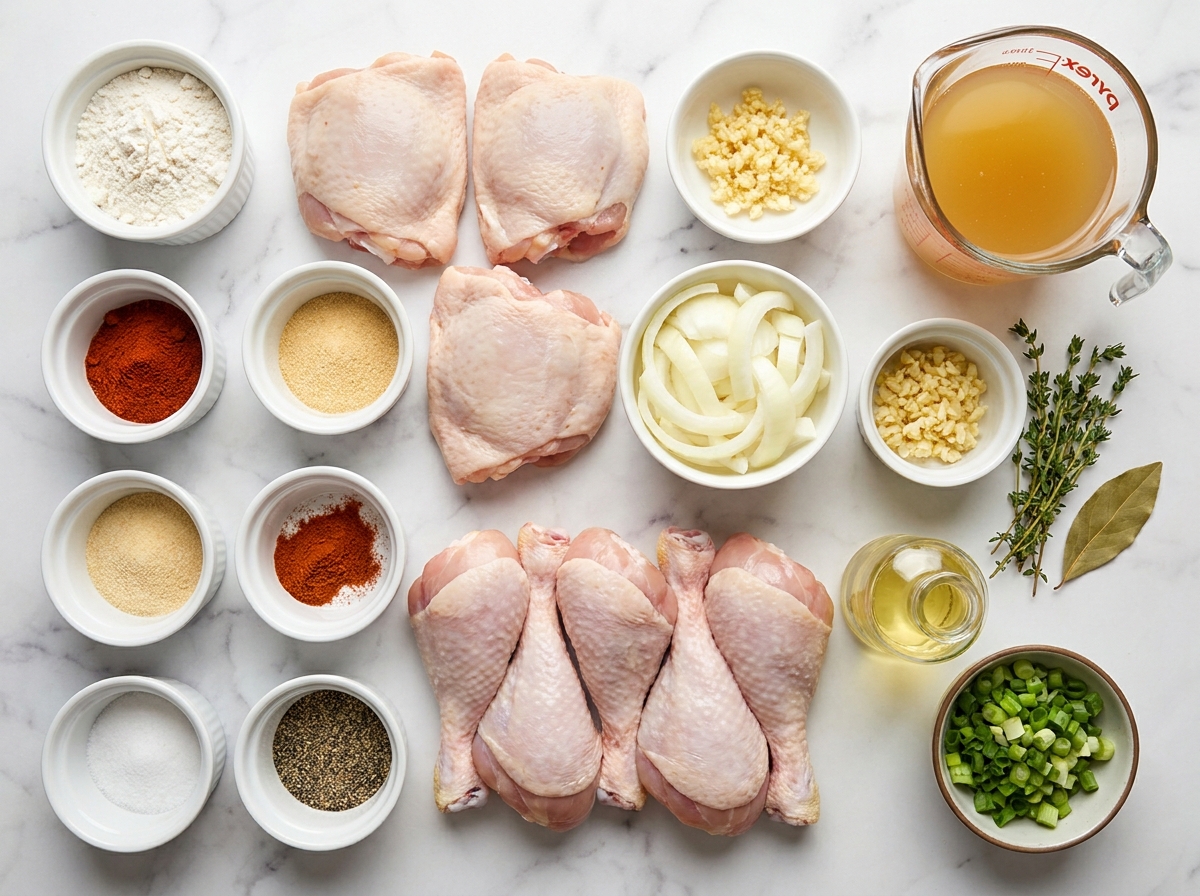
- Bone-in chicken thighs and drumsticks. Dark meat stays juicy during the covered simmer and gives the gravy a deeper flavor.
- All-purpose flour. Coats the chicken for browning and thickens the pan gravy.
- Paprika, garlic powder, and onion powder. Season the crust and give the gravy a warm Southern backbone.
- Cayenne pepper. Adds a small bit of heat without making the dish spicy.
- Yellow onions. Cook down into soft, sweet strands that make the gravy taste full.
- Garlic. Goes in after the onions so it stays fragrant instead of bitter.
- Chicken broth. Turns the browned flour and pan drippings into a spoonable gravy.
- Fresh thyme and bay leaf. Add a slow-cooked flavor during the simmer.
- Green onion or parsley. Freshens the finished skillet right before serving.
Southern Smothered Chicken Method
- Season the flour. Mix flour with paprika, garlic powder, onion powder, cayenne, salt, and pepper. Scoop out 2 tablespoons of the seasoned flour and keep it clean for the gravy.
- Dredge the chicken. Pat the chicken dry, coat it lightly in the seasoned flour, and shake off the extra. A thin coating browns better than a heavy one.
- Brown the pieces. Heat oil in a large skillet and brown the chicken for 2-3 minutes per side. Work in batches so the pan stays hot.
- Soften the onions. Pour off excess oil, leaving about 2 tablespoons in the skillet. Cook the onions until golden at the edges, then stir in the garlic.
- Make the gravy. Sprinkle in the reserved seasoned flour and stir for 1 minute. Slowly whisk in the broth until smooth, scraping up the browned bits.
- Smother and simmer. Return the chicken to the skillet with thyme and bay leaf. Cover and simmer gently for 30-35 minutes, turning once, until the chicken is tender and reaches 165°F.
- Finish the skillet. Remove the bay leaf, taste the gravy, and adjust salt and pepper. Spoon gravy over the chicken and finish with green onion or parsley.
Why Browning Matters
The first few minutes in the skillet set up the whole dish. You are not trying to cook the chicken through at this stage. You are building browned bits on the bottom of the pan, and those bits become the base of the gravy.
Give every piece room. Crowding the skillet traps steam and turns the flour coating soft before it can brown. If your pan is smaller, brown in two batches and be patient. The gravy will taste deeper for it.
For another version with the same comfort-food feel, try smothered chicken thighs with gravy. If wings are more your style, these baked smothered chicken wings hit the same onion-gravy notes.
Getting Tender Chicken
Once the gravy is made, lower the heat until the skillet barely bubbles. A hard boil can toughen the outside of the chicken and make the gravy reduce too fast. A covered gentle simmer gives the connective tissue time to relax.
The USDA lists 165°F as the safe minimum internal temperature for poultry in its safe temperature chart. With thighs and drumsticks, I often let them go a little longer if the gravy is still loose. Dark meat becomes more tender as it cooks past the minimum, as long as the heat stays gentle.
Gravy Fixes That Work
If the gravy tastes flat, it usually needs salt or more time with the onions. Let it simmer uncovered for a few minutes, then taste again. If it gets too thick, splash in warm broth and whisk until it loosens.
If it seems greasy, skim the surface with a spoon before serving. Too much oil left after browning can make the gravy feel heavy. You only need enough fat in the skillet to cook the onions and toast the flour.
For a richer plate, serve this beside classic Southern chicken fried steak at a family supper. The gravy style is familiar, but the chicken stays a little lighter.
Swaps And Serving Ideas
Use all thighs, all drumsticks, or a mixed pack. Boneless chicken works for a quicker dinner, but reduce the simmer time and watch the temperature closely. For a dairy-style finish, stir in a splash of cream at the end, but the recipe does not need it.
Rice is the classic choice because it soaks up the gravy without competing. Mashed potatoes are just as good when you want a heavier plate. Biscuits work too, especially if you like dragging the last spoonful of gravy through the soft middle.
If you want another cozy chicken dinner with a creamy sauce, creamy baked chicken mushroom is a good next recipe.
Storing The Leftovers
Store leftover chicken and gravy together in an airtight container for up to 3 days. The gravy will thicken in the fridge, so reheat it in a covered skillet over low heat with a splash of broth or water.
You can freeze it for up to 2 months, though the gravy may look a little separated after thawing. Warm it slowly and whisk the gravy around the chicken until it comes back together. Remove the meat from the bones before freezing if you want faster reheating later.
Summary
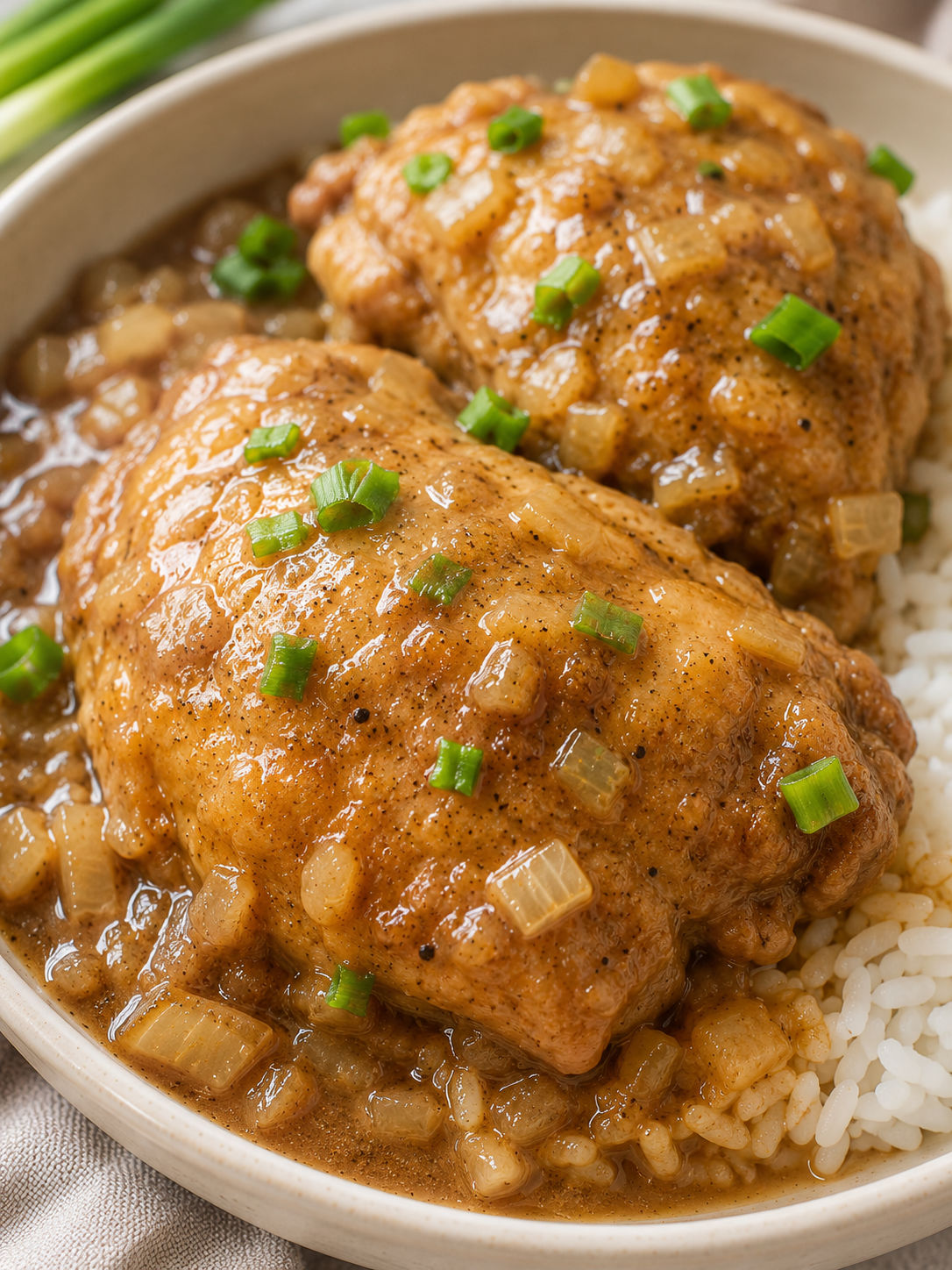
This skillet Southern Smothered Chicken is built on browned chicken and a proper pan gravy. It is rich, practical, and made for a plate of rice or potatoes.

FAQs
- What is Southern Smothered Chicken?
Southern Smothered Chicken is browned chicken that finishes cooking in gravy. The gravy usually starts with pan drippings, onions, flour, broth, and simple seasonings.
- Can I use boneless chicken breasts?
Yes, but they cook faster and can dry out. Brown them, then simmer gently for about 12-16 minutes, or until they reach 165°F in the thickest part.
- How do I keep the gravy from getting lumpy?
Whisk the broth in slowly after the flour coats the onions. Start with a small splash to loosen the flour, then add the rest while scraping the browned bits from the skillet.
- Can I make smothered chicken ahead of time?
Yes. It reheats well because the gravy protects the chicken. Warm it covered over low heat with a splash of broth until the gravy loosens and the chicken is hot.
- What should I serve with Southern Smothered Chicken?
White rice, mashed potatoes, buttered noodles, collard greens, green beans, and biscuits all work. You want something that can catch the onion gravy.
- Can I make it gluten-free?
Use a good cup-for-cup gluten-free flour blend for both dredging and thickening. Check that your chicken broth is gluten-free too, since some brands include hidden wheat ingredients.
