 Pin it
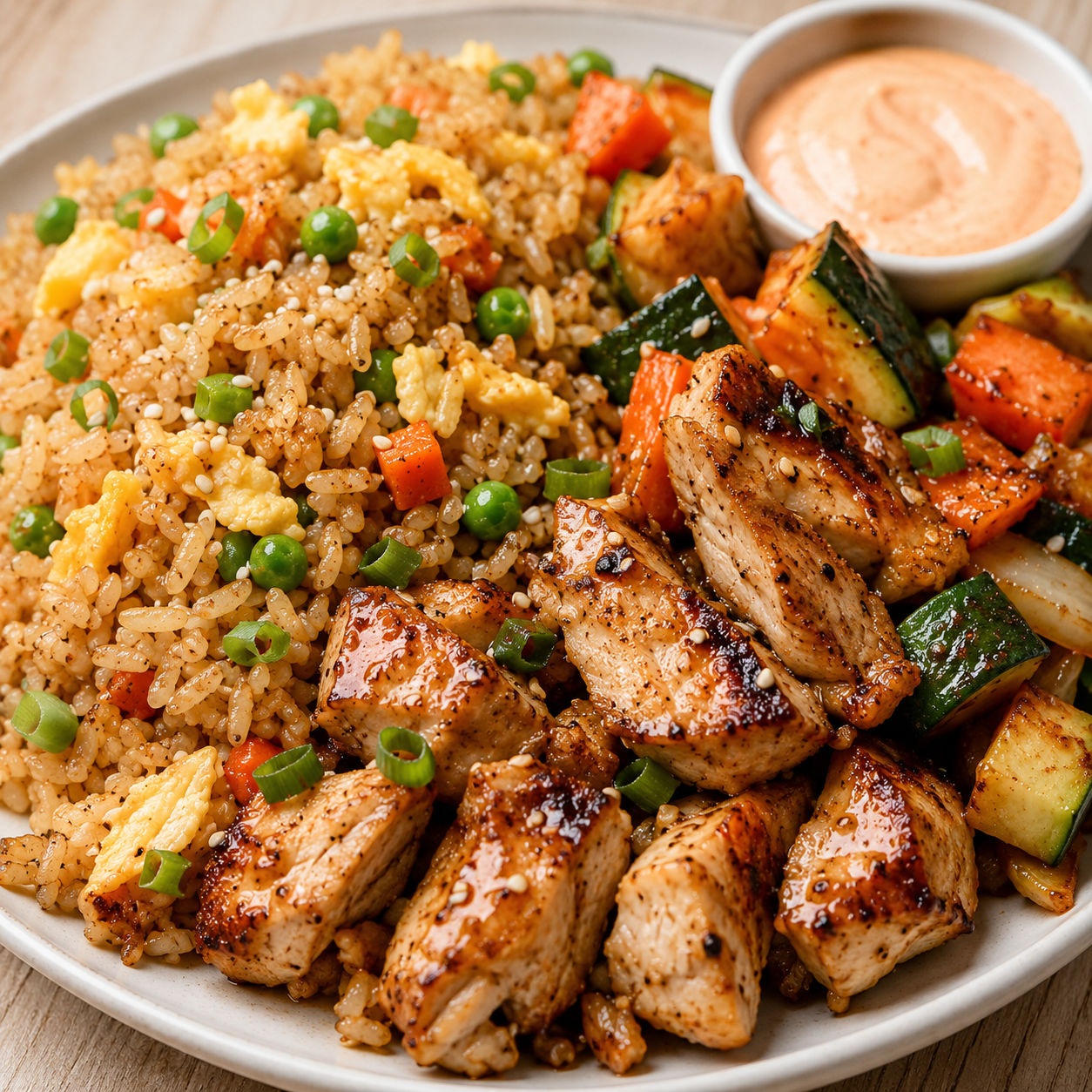
Classic Hibachi Chicken With Fried Rice is the meal I make when everyone wants takeout but I want dinner to feel fresh from the pan. The chicken gets a quick soy-garlic sear, the rice turns buttery and savory, and the creamy pink sauce makes it feel like the restaurant version.
You do not need a flat-top grill. A wide skillet or griddle pan works as long as it gets hot and you cook in batches. The biggest trick is using cold rice, because warm rice turns sticky before it gets a chance to fry.
Chicken, Rice, Sauce
The ingredient list is simple, so the small details matter. Use cold cooked rice, fresh garlic and ginger, and chicken cut into even pieces so everything cooks fast.
- Boneless chicken thighs. They stay juicy under high heat and pick up a deep savory edge from soy sauce and garlic.
- Cold cooked rice. Dry, chilled grains fry cleanly and keep the rice from clumping.
- Eggs. They add richness and the soft yellow bits you expect in hibachi fried rice.
- Butter and neutral oil. Oil helps with high heat while butter gives the rice that steakhouse flavor.
- Soy sauce. It seasons the chicken and rice with salt and umami.
- Garlic and ginger. Fresh aromatics make the pan smell right within seconds.
- Zucchini, onion, peas, and carrots. They add sweetness, color, and a crisp-tender bite.
- Yum yum sauce. A creamy, lightly tangy sauce for spooning over the chicken at the table.
- Scallions and sesame seeds. They finish the bowl with freshness and a little crunch.
Make It On High Heat
- Mix the sauces. Stir the yum yum sauce first so it can chill while you cook.
- Season the chicken. Toss the chicken with soy sauce, garlic, ginger, pepper, and a little sesame oil.
- Sear the chicken. Cook it in a hot skillet until browned and cooked through, then move it to a plate.
- Scramble the eggs. Push them around just until softly set, then remove them so they do not turn rubbery.
- Fry the rice. Add butter, rice, vegetables, and soy sauce. Press the rice into the pan for a minute before tossing.
- Bring it together. Return the chicken and eggs to the skillet, fold in scallions, and serve with yum yum sauce.
Cold Rice Works Hard
Fresh rice has too much steam trapped inside. Once it hits the skillet, that moisture makes the grains stick together and the pan cools down. Cold day-old rice is drier, so it fries instead of turning soft. Break up any clumps with your fingers before it goes in the pan.
If you forgot to cook rice ahead, make it early in the day and spread it on a sheet pan. Chill it uncovered until the surface feels dry. This same habit is useful for flavor-packed chicken fried rice and quick skillet rice dishes like easy egg fried rice.
Classic Hibachi Chicken Heat
The chicken should sizzle the moment it touches the pan. That sound means the surface is browning before the inside overcooks. Cut the pieces about 1 inch wide so they cook evenly. Leave them alone for the first minute, then turn them as they develop color.
Chicken thighs are forgiving, but chicken breast works if you watch the timing. The safe internal temperature for chicken is 165 F, which you can confirm with the FoodSafety.gov temperature chart. Once the chicken reaches that point, get it out of the pan while you finish the rice.
Yum Yum Sauce Balance
The sauce should taste creamy, lightly sweet, and a little tangy. Mayo gives it body, ketchup gives it color, and rice vinegar keeps it from tasting flat. Add water one teaspoon at a time until it drizzles easily from a spoon.
For a stronger hibachi-night spread, set out extra sauce with hibachi steak shrimp rice or a seafood rice skillet like easy shrimp fried rice. Keep the sauce off the skillet. It is better cool and creamy than hot and oily.
Vegetables That Fit
Zucchini and onion give this recipe the familiar hibachi feel, but you can change the vegetables without changing the method. Mushrooms, broccoli florets, cabbage, or bell pepper all work. Keep the pieces thin so they cook quickly and stay crisp at the edges.
If you like a lighter bowl, add more vegetables and reduce the rice by a cup. For a bigger family dinner, double the chicken and cook it in two rounds. The vegetables can wait on a plate while the rice fries, then everything gets folded together at the end.
Leftovers Stay Better
Cool leftovers quickly, then store them in a shallow airtight container. The rice keeps best when it is not packed down hard. Reheat it in a skillet over medium heat with a small pat of butter or a splash of water, then stir until hot throughout.
The yum yum sauce should stay separate in the fridge. If it thickens, whisk in a teaspoon of water before serving. Leftover chicken and rice are good for quick lunches, but the texture is best within 3 days.
Summary
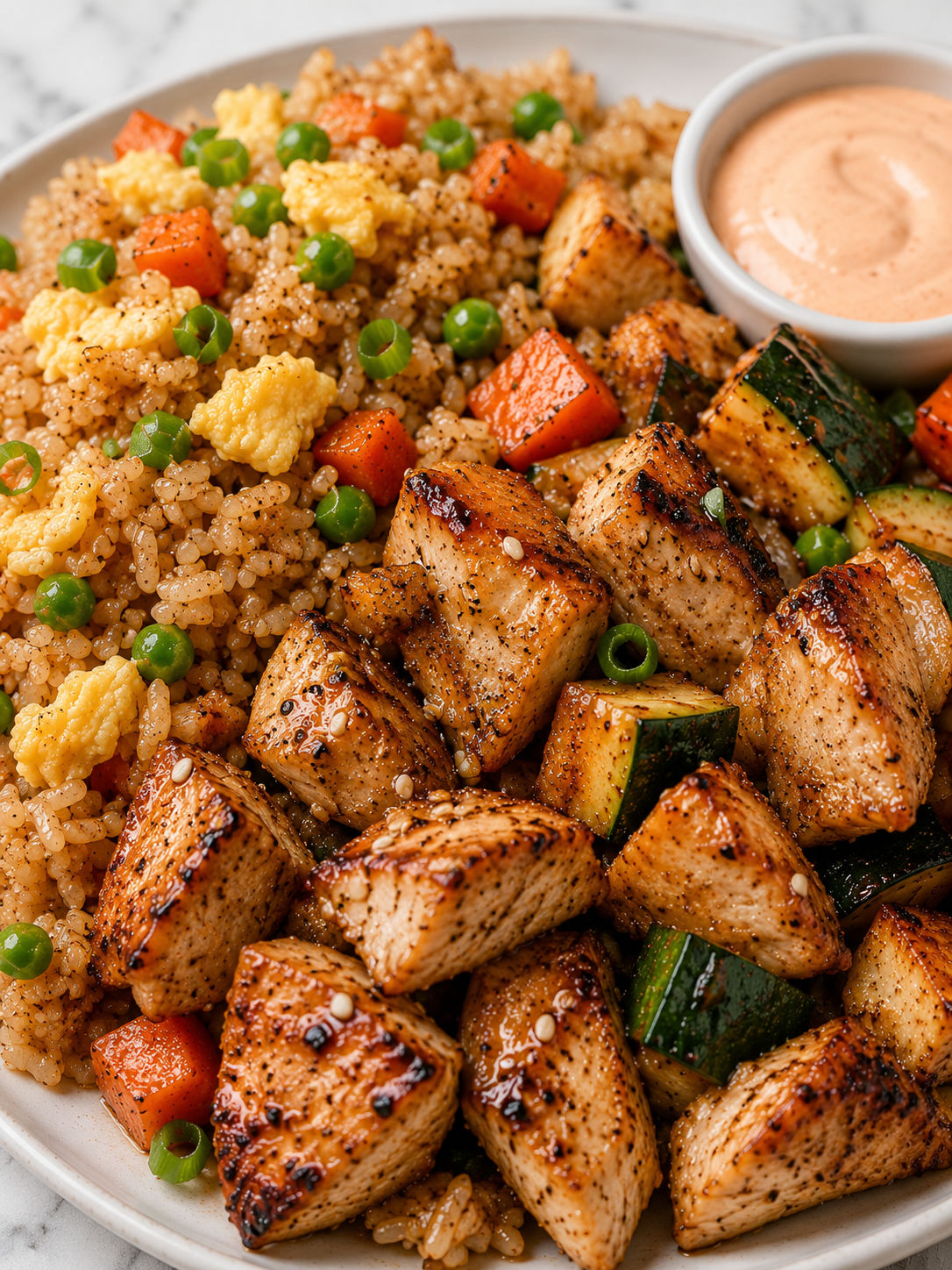
This homemade hibachi chicken keeps the restaurant-style flavor without needing special equipment. Cold rice, high heat, and a simple sauce do most of the work.
FAQs
- Can I make hibachi chicken without a flat-top grill?
Yes. Use the widest skillet you own and let it heat well before adding the chicken or rice. Cook in batches so the food sears instead of steaming.
- What rice is best for hibachi fried rice?
Cold day-old white rice works best because the grains are dry and firm. If you only have fresh rice, spread it on a baking sheet and chill it uncovered for at least 30 minutes.
- Can I use chicken breast instead of thighs?
Yes. Chicken breast works well if you cut it into even bite-size pieces and pull it from the heat as soon as it reaches 165 F. Thighs are a little more forgiving and stay juicy longer.
- How do I make this gluten-free?
Use certified gluten-free tamari instead of regular soy sauce. Check the mayonnaise and ketchup for the yum yum sauce too, since packaged sauces can vary.
- How long do leftovers keep?
Store leftovers in an airtight container in the fridge for up to 3 days. Reheat in a skillet with a teaspoon of water or butter to loosen the rice.
- What can I serve with hibachi chicken fried rice?
It is filling on its own, but cucumber salad, steamed edamame, or extra sauteed zucchini and mushrooms fit nicely. Add extra yum yum sauce or ginger sauce at the table.
