 Pin it
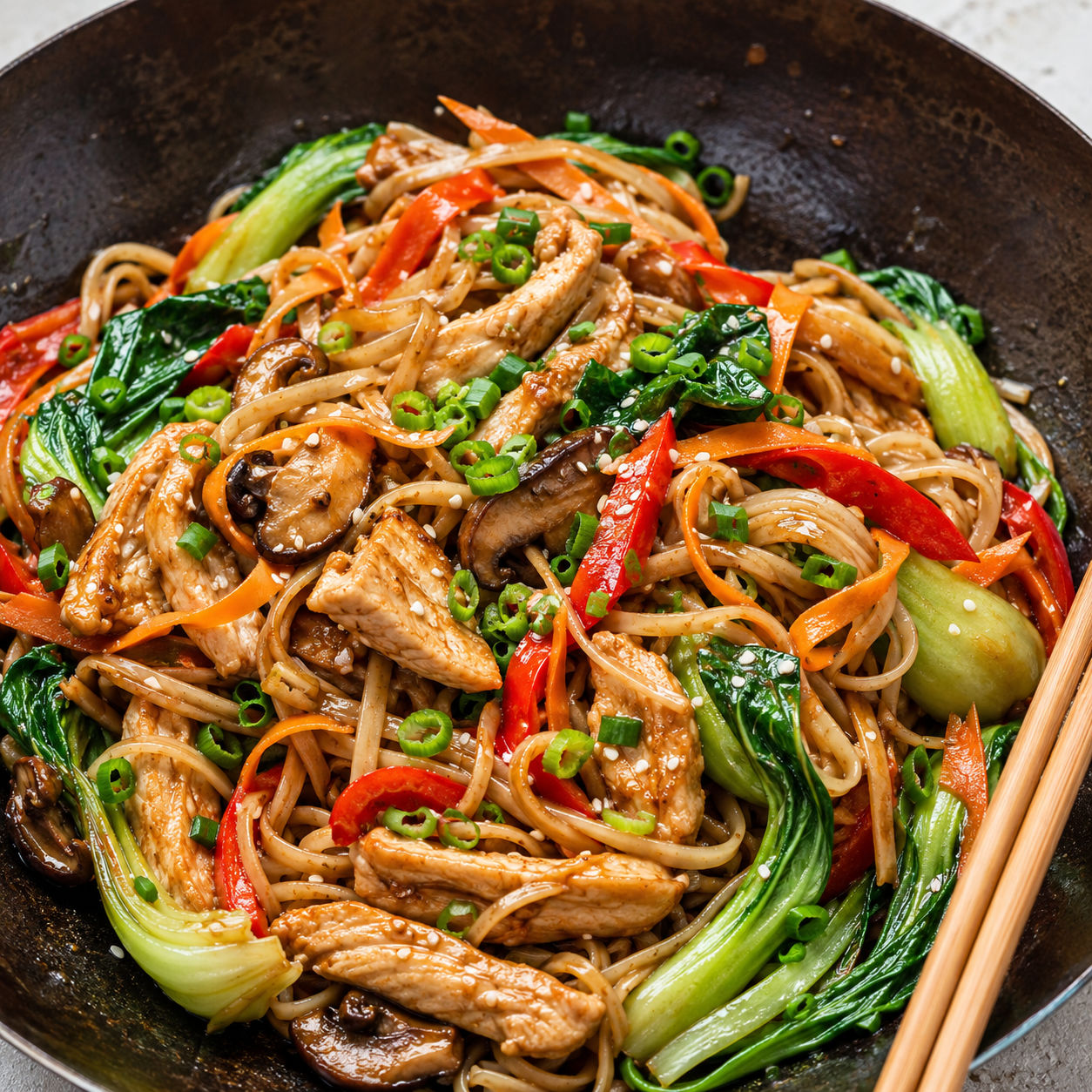
Flavorful Chicken Stir Fry With Rice Noodles is the kind of dinner that saves a busy night without feeling like a backup plan. The noodles are slippery and glossy, the chicken stays tender, and the vegetables keep a little snap.
The real trick is pacing. Rice noodles do not need much time in the pan, so the chicken, vegetables, and sauce should be ready before the noodles go in. Once you start cooking, the whole dish moves quickly.
What Builds The Flavor
The best stir fry starts with a short list that is ready before the pan gets hot. Choose rice noodles that still have some body after soaking, and slice the chicken thin so it cooks in minutes.
- Chicken breast. Thin strips cook quickly and soak up the savory sauce without weighing down the noodles.
- Rice noodles. They turn soft and springy after soaking, then finish in the pan with the sauce.
- Soy sauce or tamari. Gives the stir fry its salty base and deep color.
- Oyster sauce. Adds body, gloss, and a quiet savory sweetness.
- Garlic and ginger. They hit the hot oil first and make the whole kitchen smell like dinner is close.
- Bell pepper and carrot. They bring color, crunch, and a little natural sweetness.
- Bok choy and mushrooms. The greens wilt quickly while the mushrooms add a meaty bite.
- Sesame oil and green onions. A small finish that makes the noodles taste rounded and fresh.
Cook It Fast And Hot
- Soak the noodles. Cover the rice noodles with hot water until bendable but still slightly firm, then drain well. They will finish cooking in the sauce.
- Mix the sauce. Stir soy sauce, oyster sauce, rice vinegar, brown sugar, sesame oil, water, and cornstarch in a small bowl so it is ready to pour.
- Coat the chicken. Toss thin chicken strips with cornstarch, salt, and pepper. This helps the surface brown and keeps the meat tender.
- Sear the chicken. Cook it in a hot wok or skillet until just cooked through, then move it to a plate before the vegetables go in.
- Stir fry the vegetables. Cook the firmer vegetables first, then add the quick greens and mushrooms so they stay bright.
- Toss the noodles. Return the chicken, add the noodles and sauce, then toss for 1-2 minutes until glossy. Stop before the noodles start to snap.
Why Noodles Break
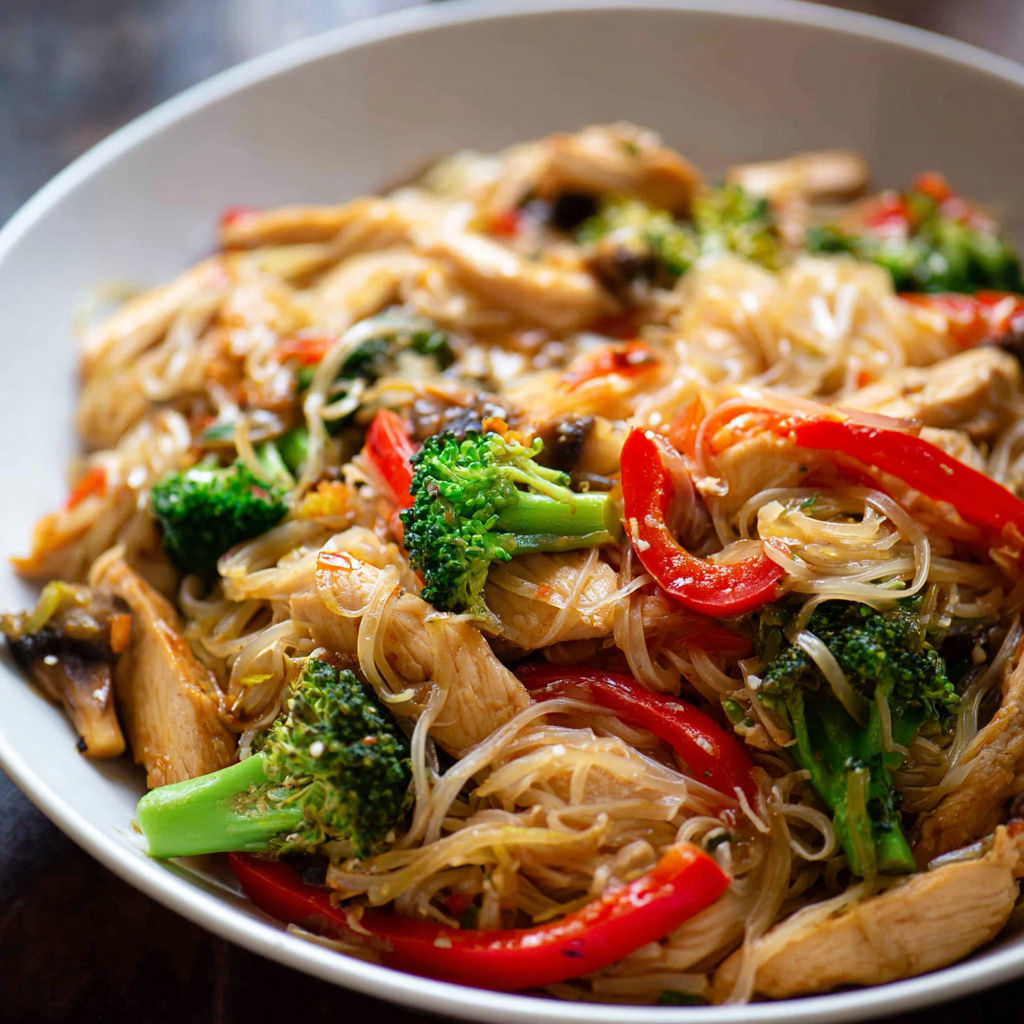
Rice noodles are less forgiving than wheat noodles once they hit a hot pan. If they are soaked until fully soft, they can turn fragile before the sauce even arrives. I like them bendable with a pale firm center when I drain them.
The other problem is over-tossing. You want to lift and turn the noodles rather than jab at them with a spoon. If you already love the ease of Chicken Stir Fry Rice Noodles, this version uses the same quick finish with a brighter garlic ginger sauce.
The Chicken Stays Tender
Thin slices and a quick cornstarch coating make a big difference. Cornstarch gives the sauce something to cling to and keeps the chicken from drying out during the hard sear. Do not crowd the pan. If the chicken piles up, it steams and turns pale instead of picking up those browned edges.
Chicken is done when it reaches 165°F. The USDA safe temperature chart is useful if you cook chicken often and want a quick reference.
Vegetables That Work Best
Use a mix of crisp and leafy vegetables. Carrots, bell peppers, snow peas, broccoli slaw, cabbage, bok choy, and mushrooms all fit the sauce. Cut everything small enough to cook in minutes. Thick broccoli florets or large carrot chunks will lag behind and force the noodles to sit too long.
If you want a lighter noodle swap, garlic chicken zucchini noodles stir-fry follows the same high-heat idea with zucchini instead of rice noodles.
Sauce Balance Matters
The sauce should be salty, a little sweet, lightly tangy, and glossy enough to coat the noodles. Oyster sauce gives it depth, soy sauce brings the salt, and rice vinegar keeps the whole pan from tasting flat. If your sauce tastes too sharp before cooking, do not worry. It mellows once it hits the hot wok and mixes with the noodles.
For an even quicker night, you can borrow the make-ahead idea from this all-purpose stir fry sauce and keep a jar mixed in the fridge.
Leftovers Without Mushy Noodles
This stir fry is best right from the pan, but leftovers are still good for lunch. Store them in a shallow airtight container for up to three days. Reheat in a skillet with a splash of water and loosen the noodles with tongs as they warm.
A microwave works in a pinch, but use short bursts and cover the bowl loosely. If you like this dinner style with a different protein, try shrimp stir fry with fresh vegetables next.
Summary
Serve this stir fry right away while the noodles are glossy and the vegetables still have bite.
FAQs
- What kind of rice noodles should I use?
Medium rice sticks work well because they hold sauce without turning mushy too fast. Thin vermicelli also works, but it needs a shorter soak and gentler tossing.
- Can I use chicken thighs instead of chicken breast?
Yes. Boneless skinless chicken thighs are a good swap and stay juicy in high heat. Slice them thinly so they cook at the same speed as the vegetables.
- How do I keep rice noodles from breaking?
Soak them until pliable, not fully soft, then add them near the end. Toss with tongs and stop as soon as the sauce coats the noodles.
- Is this chicken stir fry gluten-free?
It can be gluten-free if you use tamari instead of regular soy sauce and check the oyster sauce label. Rice noodles themselves are usually gluten-free, but packaged sauces vary.
- Can I make it ahead?
You can slice the chicken, chop the vegetables, and mix the sauce up to a day ahead. Cook the noodles and stir fry right before serving for the best texture.
- What vegetables work best here?
Use vegetables that cook quickly, like bell pepper, carrots, bok choy, mushrooms, snow peas, cabbage, or broccoli slaw. Cut firm vegetables thin so everything finishes at the same time.
- How should I reheat leftovers?
Warm leftovers in a skillet with a small splash of water. Use medium heat and toss gently until hot, since high heat can dry out the chicken and break the noodles.
