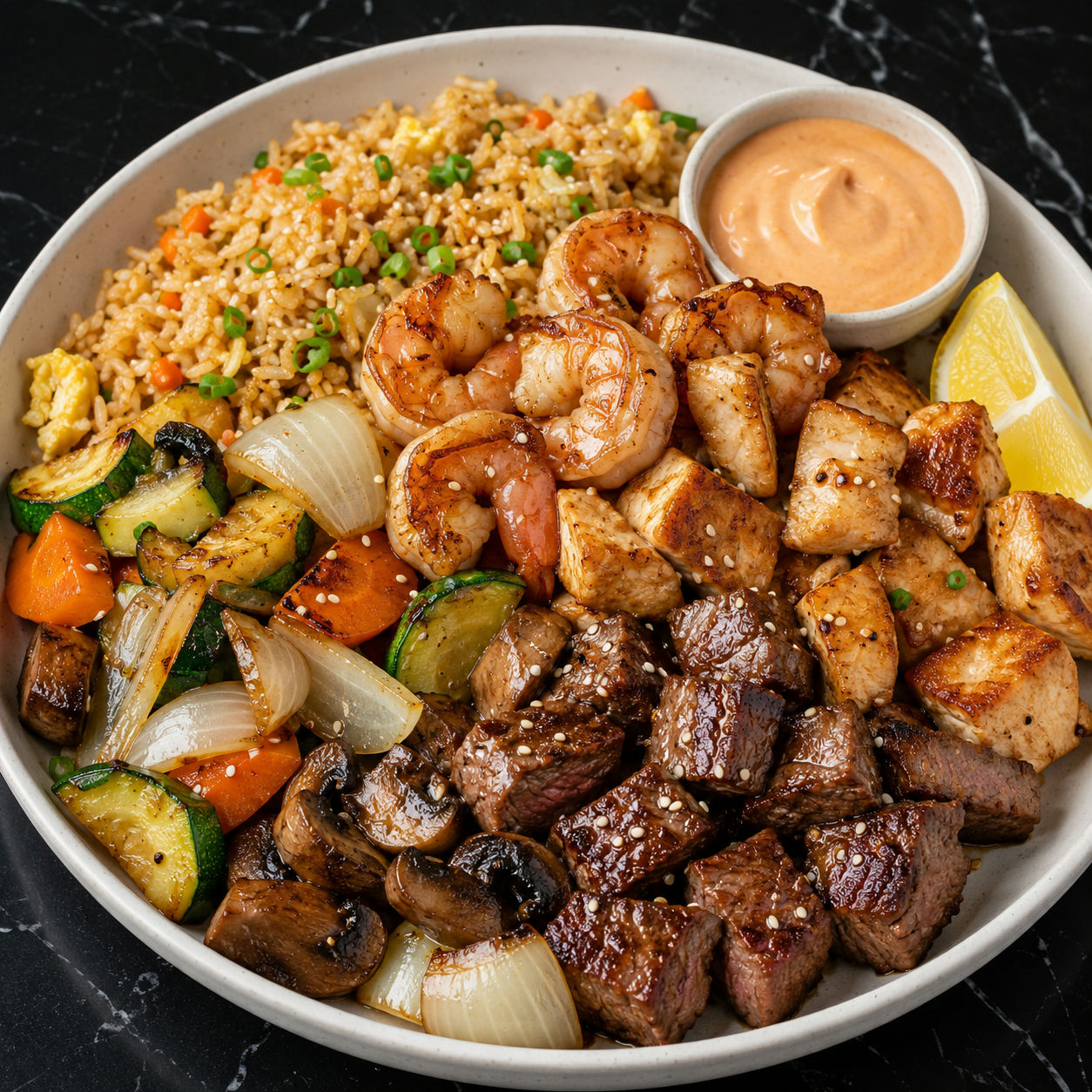
 Pin it
Hibachi at home is loud, fast, buttery, and a lot easier than it looks once everything is prepped before the pan gets hot. I make it when everyone wants restaurant food but I want control over the salt, the portions, and the bill.
The trick is not fancy knife work or flaming onions. It is order. Start with cold rice, cook the proteins in batches, and keep the vegetables crisp so the plate tastes fresh instead of heavy.
The Steakhouse Lineup
Use ingredients that can handle high heat and quick cooking. Cut everything before you start because the griddle moves fast once the butter hits the surface.
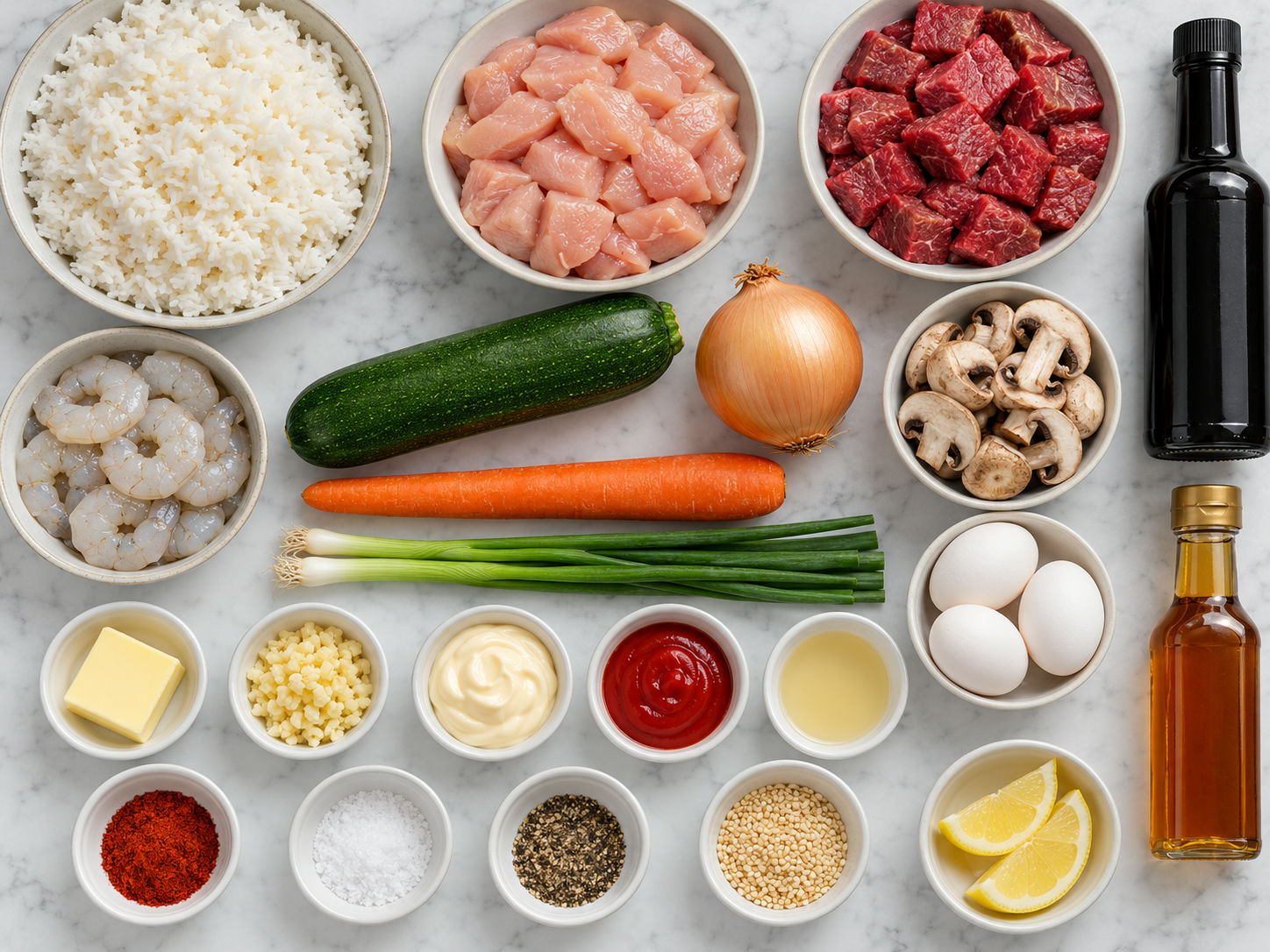
- Chicken breast. Lean, quick-cooking pieces give the plate a familiar hibachi base.
- Sirloin steak. It sears well and stays tender when cut into bite-size cubes.
- Large shrimp. Sweet shrimp cook in minutes and make the dinner feel generous.
- Cold cooked rice. Day-old rice fries cleanly and picks up butter, soy sauce, and egg without turning mushy.
- Zucchini, onion, mushrooms, and carrots. These are the classic vegetable mix, with sweetness, snap, and a little browned edge.
- Garlic butter. Butter carries the steakhouse flavor while garlic makes the whole griddle smell right.
- Soy sauce and sesame oil. Soy sauce seasons the rice and proteins, while sesame oil adds a toasted finish.
- Yum yum sauce. A creamy pink dipping sauce made with mayo, ketchup, seasonings, and a little water to thin it.
Cook It Hot And Fast
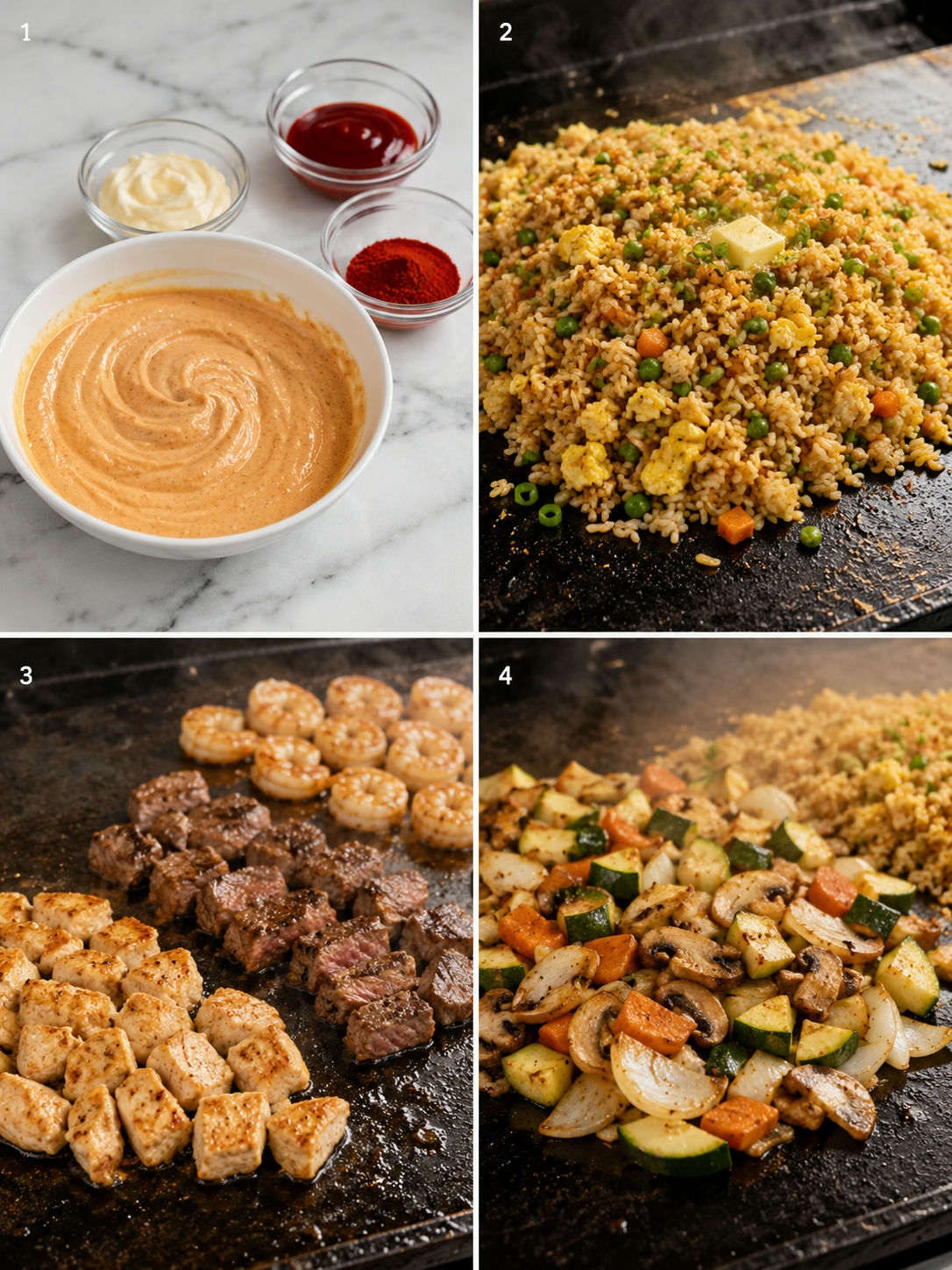
- Mix the sauce. Stir mayonnaise, ketchup, rice vinegar, sugar, paprika, garlic powder, and water until smooth, then chill it while you cook.
- Fry the rice. Scramble the eggs, add cold rice, peas, carrots, soy sauce, butter, and sesame oil, then toss until the grains are hot and lightly glossy.
- Sear the chicken. Cook seasoned chicken pieces in a thin layer until browned and cooked through, then finish with garlic butter and a splash of soy sauce.
- Cook the steak. Sear steak cubes hard and fast so the edges brown before the centers overcook.
- Add the shrimp. Cook shrimp just until pink and opaque, then move them off the heat.
- Finish the vegetables. Stir-fry zucchini, onion, mushrooms, and carrots until crisp-tender, then serve everything hot with sauce.
Hibachi At Home Timing
The easiest way to keep hibachi at home relaxed is to think like a short-order cook. Sauce first. Rice second. Proteins third. Vegetables last. The rice holds heat well, but shrimp and steak are best right after they leave the pan.
If you have a big outdoor griddle, you can keep two zones going. Use one hot zone for searing and one lower zone for holding rice. Indoors, a wide skillet works fine. Wipe the pan between batches if soy sauce or butter starts to darken too much. A little browning tastes good. Burnt garlic does not.
For a simpler dinner built around one protein, use the same rhythm as Classic Hibachi Chicken With Fried Rice. For a larger steakhouse plate, the flavors line up naturally with Hibachi Steak and Shrimp with Savory Fried Rice.
The Rice Needs Space
Fried rice fails when the pan is crowded. The grains need contact with hot metal so they toast instead of clumping. Use cold rice from the refrigerator if you can. If you only have fresh rice, spread it on a sheet pan and chill it uncovered for 20 minutes while you prep the rest.
Butter gives the rice that steakhouse richness, but too much can make it heavy. Start with a tablespoon, then add more only if the rice looks dry. Soy sauce goes in after the rice is hot, not before. That way it seasons the grains and sizzles off instead of soaking everything.
If noodles are always the table favorite, add a side of Hibachi Noodles. Keep the seasoning a little lighter on the rice when serving both so the plate does not taste salty.
Sauce Makes It Feel Familiar
Yum yum sauce is the detail that makes the plate taste like a Japanese steakhouse dinner in the United States. It is creamy, lightly sweet, and a little tangy. Southern Living notes its close tie to hibachi restaurants, and that tracks with how people use it at home.
Homemade sauce needs a short rest. Ten minutes in the fridge lets the paprika and garlic powder soften into the mayo. If it gets too thick, whisk in water a teaspoon at a time. Keep it pourable, not watery. I like a thin ribbon over the rice and a small bowl on the side for shrimp.
For extra vegetables without changing the dinner, add Garlic Butter Stir-Fried Vegetables beside the rice and proteins.
Switch The Proteins
This recipe is flexible as long as you respect the cook times. Chicken needs the longest time and should reach 165°F according to the USDA safe temperature chart. Steak can be cooked to your preferred doneness. Shrimp should be pink, opaque, and firm, and the FDA seafood guide is a useful reference for buying and handling it safely.
You can also use salmon cubes, scallops, sliced pork tenderloin, or tofu. Press tofu well and brown it before adding soy sauce so it does not stick. If you use only one protein, keep the amount close to 1 1/2 pounds total for four servings.
Leftovers Stay Best Separated
Store the rice, vegetables, proteins, and sauce separately if you have room. The rice reheats best in a skillet with a teaspoon of oil or butter. The vegetables only need a quick toss over medium heat. Shrimp should be warmed gently, just long enough to take the chill off.
Do not microwave the yum yum sauce with the food. Keep it cold and add it after reheating. If the rice tastes flat the next day, add a few drops of soy sauce and a tiny bit of butter while it warms. Leftover steak is also good sliced over a salad, and chicken can go into a quick lunch bowl with extra vegetables.
Turn Dinner Into A Spread
For a family-style hibachi night, put the rice in one big bowl and arrange the chicken, steak, shrimp, and vegetables on a warm platter. Set out yum yum sauce, soy sauce, sliced green onions, sesame seeds, and lemon wedges. Everyone can build a plate the way they like it.
If you want to stretch the meal, add cucumber salad, simple soup, or extra noodles. Keep dessert light because this dinner is rich. A bowl of pineapple or orange slices works better than something heavy. The whole point is a hot, fresh plate with buttery edges, crisp vegetables, and enough sauce for dipping.
Summary
This recipe gives you chicken, steak, shrimp, fried rice, vegetables, and yum yum sauce in one coordinated cook. Use a large griddle if you have one, or work in batches with your widest skillet.

FAQs
- What is the best pan for hibachi at home?
A flat top griddle gives you the most room and the best restaurant feel. A large cast iron skillet or stainless steel skillet also works, but cook in batches so the food sears instead of steaming.
- Can I make hibachi at home without steak?
Yes. Use all chicken, all shrimp, tofu, or extra vegetables. Keep the same seasoning method and adjust cook times so each protein stays tender.
- Why should the rice be cold?
Cold cooked rice is drier and separates more easily in the pan. Fresh rice is softer and wetter, so it can turn sticky before it gets lightly toasted.
- How do I store leftovers?
Store rice, proteins, vegetables, and sauce in separate airtight containers when possible. Keep them in the refrigerator for up to 3 days and reheat the hot items quickly in a skillet.
- Can I make this gluten-free?
Yes, use gluten-free tamari instead of regular soy sauce and check the mayonnaise, ketchup, and mustard in the sauce. Also make sure any bottled teriyaki or seasoning blend you add is labeled gluten-free.
- What should I serve with homemade hibachi?
The plate already has rice, protein, and vegetables, so it does not need much. Add noodles, ginger salad, miso soup, or extra yum yum sauce if you want the full steakhouse spread.
