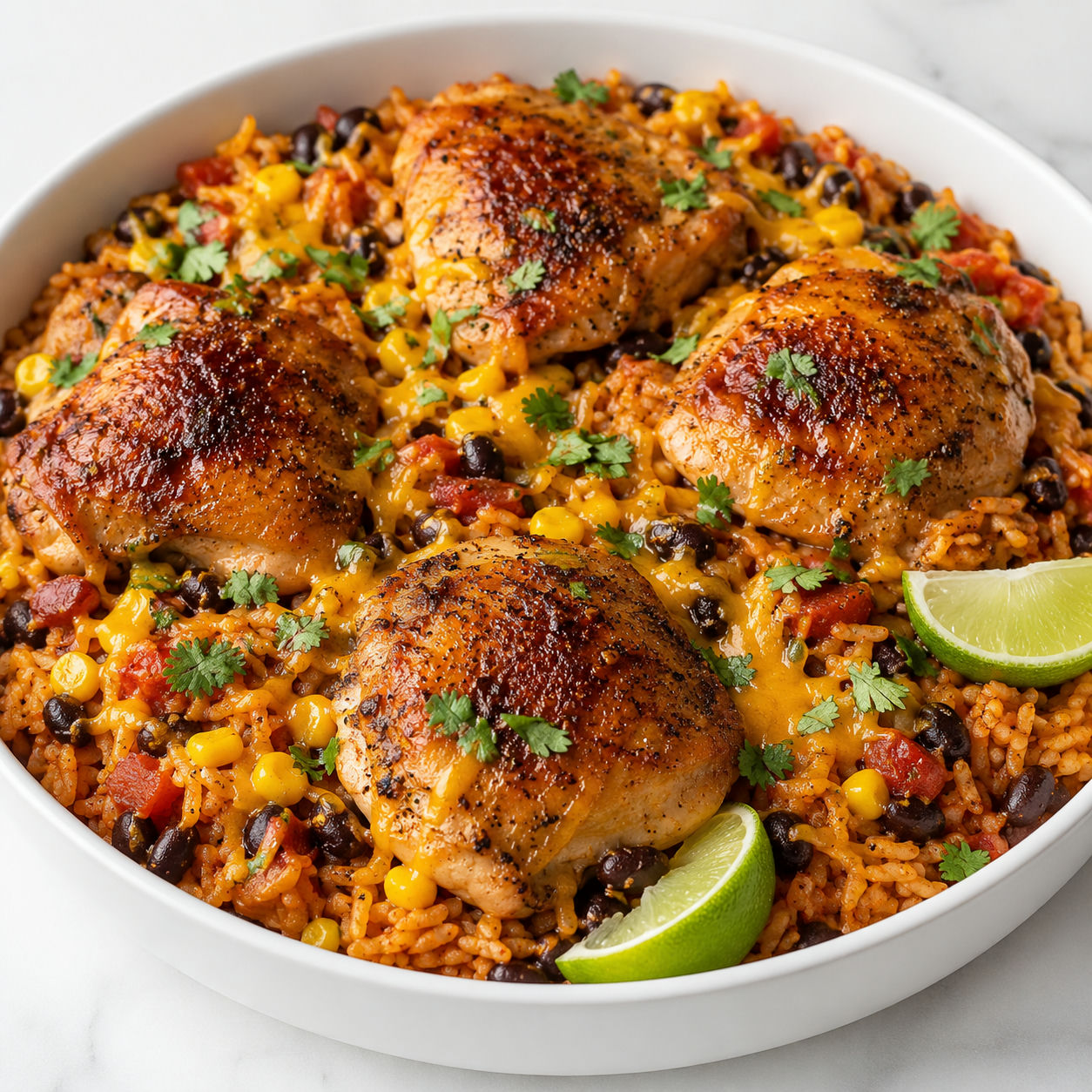
 Pin it
Ingredients do not have to be fancy to make a dinner people actually want to eat. This skillet leans on chicken thighs, rice, salsa, beans, corn, and cheese, then lets the pan do the heavy lifting.
I like it because the rice cooks right in the broth and salsa. It tastes like you did more than you did, which is exactly what I want on a busy night.
Ingredients That Earn Their Place
Choose a salsa you like enough to eat with chips, since it seasons the rice from the inside out. Boneless chicken thighs stay juicy while the rice finishes, which gives you more room for real-life timing.
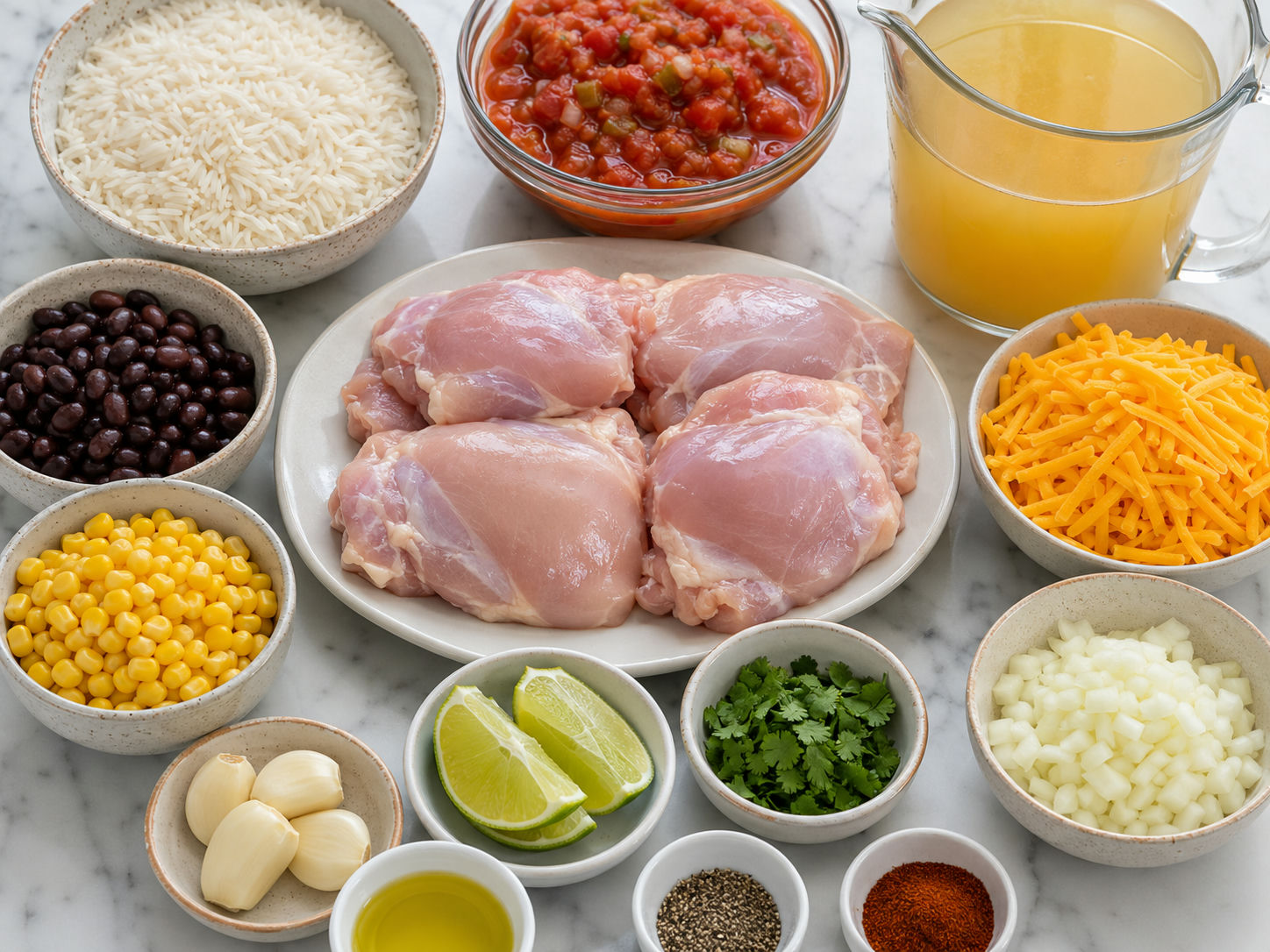
- Chicken thighs. They brown well and stay tender during the covered simmer.
- Long-grain white rice. It cooks evenly in the skillet and stays separate instead of sticky.
- Salsa. This brings tomatoes, chiles, onion, and acidity without extra chopping.
- Chicken broth. It gives the rice more flavor than water.
- Black beans. They add body, color, and a soft, creamy bite.
- Corn. Sweet kernels balance the salsa and make the skillet feel full.
- Cheddar cheese. A melted top pulls everything together at the end.
- Garlic and onion. These build a savory base before the rice goes in.
- Lime and cilantro. A fresh finish keeps the skillet from tasting heavy.
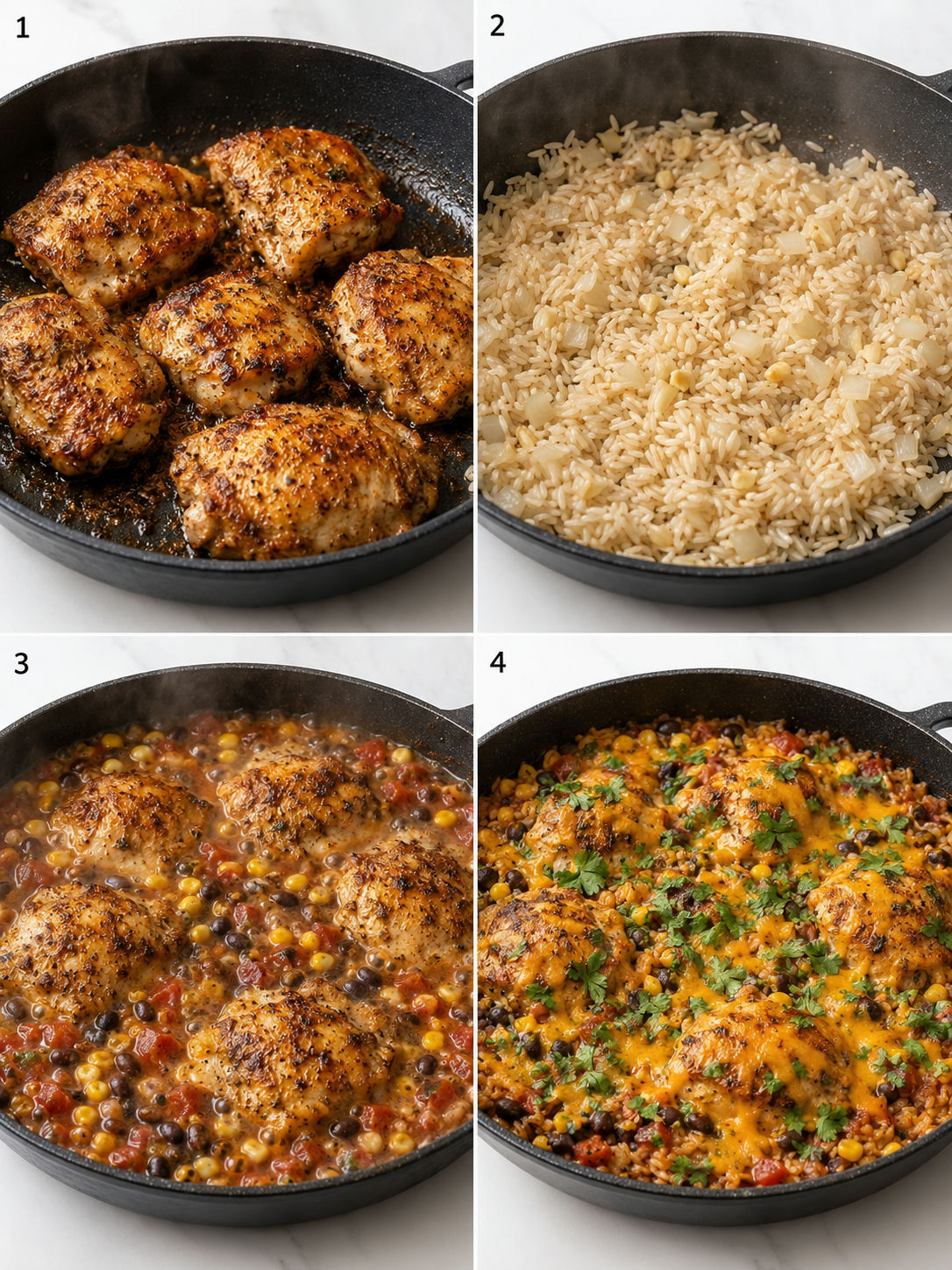
Build the Skillet
- Season the chicken. Pat the thighs dry, then season them with salt, pepper, and smoked paprika so they brown instead of steam.
- Sear for flavor. Brown the chicken in olive oil for 3-4 minutes per side. It will not be fully cooked yet, and that is fine.
- Soften the aromatics. Move the chicken to a plate, then cook the onion and garlic in the same skillet until they smell sweet and savory.
- Toast the rice. Stir in the rinsed rice for about 1 minute so the grains get coated in the pan juices.
- Simmer covered. Add broth, salsa, beans, and corn. Nestle the chicken back on top, cover, and cook gently until the rice is tender and the chicken reaches 165 degrees F.
- Melt and finish. Sprinkle cheese over the skillet, cover for a few minutes, then finish with lime and cilantro.
Why Thighs Behave Better
Chicken thighs are forgiving in this kind of skillet. They can sit above the rice while the grains finish cooking, and they still come out juicy. Breasts work, but they need closer watching. If you use them, cut each breast in half horizontally or use smaller pieces.
The only number I do not guess on is temperature. FoodSafety.gov lists 165 degrees F as the safe minimum temperature for poultry. Check the thickest piece with an instant-read thermometer. If you like easy chicken dinners with big flavor, save this next to Texas Roadhouse Butter Chicken Skillet.
Rice Needs Gentle Heat
The rice is the part that needs patience. Once the broth and salsa go in, bring the pan to a steady simmer, then lower the heat and cover it. You want small bubbles, not an angry boil. Too much heat scorches the bottom and leaves the center of the rice firm.
Do not stir the rice every few minutes. Lift the lid once near the end to check the liquid, then cover it again. If the skillet looks dry and the grains are still chalky, add 2-3 tablespoons of broth and keep cooking. For a vegetable side with the same easy skillet energy, try Garlic Butter Stir-Fried Vegetables.
Smart Pantry Swaps
This recipe is flexible, but swap with the cooking time in mind. Pinto beans can replace black beans. Frozen corn can go in straight from the freezer. Pepper Jack can stand in for cheddar if you want more heat.
If your salsa is very thin, reduce the broth by a few tablespoons. If it is thick and chunky, keep the liquid as written. You can also fold in a handful of baby spinach at the end, just long enough to wilt. For another dinner that leans on fresh, everyday ingredients, the Bruschetta Chicken Pasta with Fresh Ingredients is a good one to keep nearby.
Leftovers That Reheat Well
Spread leftovers into a shallow container so they cool quickly, then refrigerate. The FoodSafety.gov cold storage chart lists cooked poultry leftovers at 3-4 days in the fridge. I like reheating this in a covered skillet with a splash of broth. The rice softens, the cheese melts again, and the chicken warms without drying out.
You can freeze it, but the rice will be softer after thawing. If you plan to freeze portions, stop cooking as soon as the rice is tender and cool it fast.
Serve It Bright
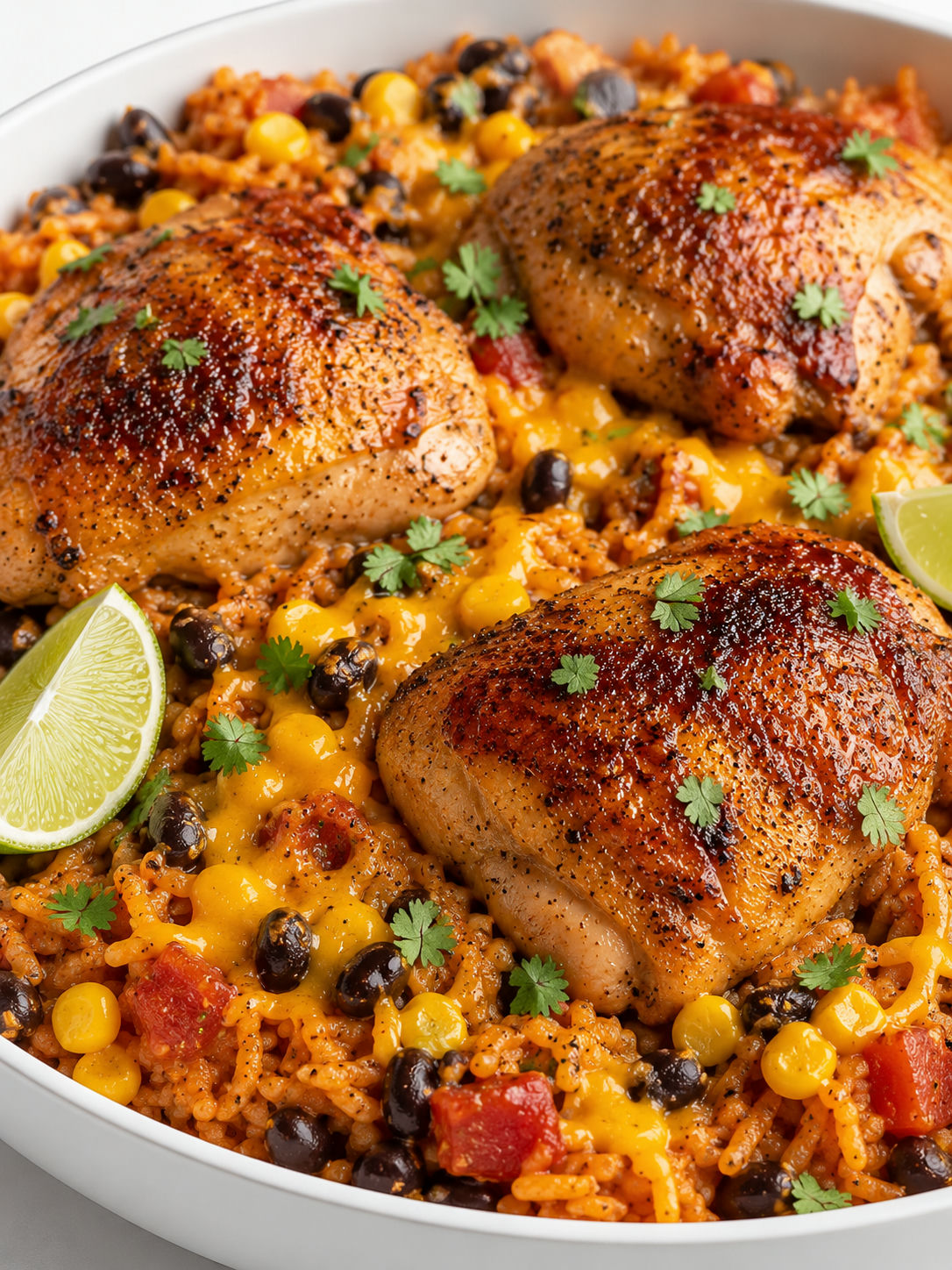
This skillet is cozy, so a fresh topping helps. Lime juice, cilantro, sliced scallions, diced avocado, or a spoonful of plain yogurt all work. Pickled vegetables are especially good because the tang cuts through the rice and cheese.
For a quick crunch on the side, I like a bowl of tortilla chips or cucumbers with salt and lime. If you already have a jar of Refrigerator Pickled Cherry Tomatoes, Red Onions, and Cucumbers, put it on the table. The cold bite makes the warm skillet taste even better.
FAQs
- Can I use chicken breasts instead of thighs?
Yes, but cut them into thick strips or smaller pieces so they cook evenly. Chicken breasts dry out faster than thighs, so check them early and pull them once they reach 165 degrees F.
- Can I make this with brown rice?
Brown rice needs more liquid and a longer cook time. Use about 2 cups broth for 1 cup brown rice and expect 40-45 minutes of simmering before the rice is tender.
- How do I keep the rice from getting mushy?
Rinse the rice until the water looks mostly clear, then keep the skillet at a gentle simmer. If the heat is too high, the bottom dries out before the center of the rice cooks.
- How long do leftovers keep?
Store leftovers in a shallow airtight container in the fridge for 3-4 days. Reheat with a splash of broth or water so the rice loosens instead of turning dry.
- Can I make it dairy-free?
Yes. Skip the cheddar or use a dairy-free shredded cheese that melts well. The skillet still has plenty of flavor from the salsa, garlic, chicken juices, beans, and corn.
- What should I serve with it?
It is filling on its own, but a crisp salad, pickled vegetables, or garlicky green beans work well beside it. Add lime wedges and cilantro at the table for a brighter finish.
