 Pin it
Classic Homemade Crab Bisque is the soup I make when I want dinner to feel quiet and special without turning the kitchen upside down. It has the sweet smell of crab, a soft orange color from tomato paste and paprika, and a finish that feels rich without being heavy.
The key is not rushing the base. Let the shallot, celery, and carrot soften before the flour goes in, then whisk the stock in slowly so the bisque turns silky instead of grainy.
Use good lump crab if you can. Save a little for the top, because those warm pieces of crab on the surface make the bowl feel like it came from a seafood restaurant.
Crab, Cream, and Sherry
This ingredient list is short, so each item matters. Use seafood stock that tastes clean, real lump crab, and heavy cream with enough fat to stay smooth.
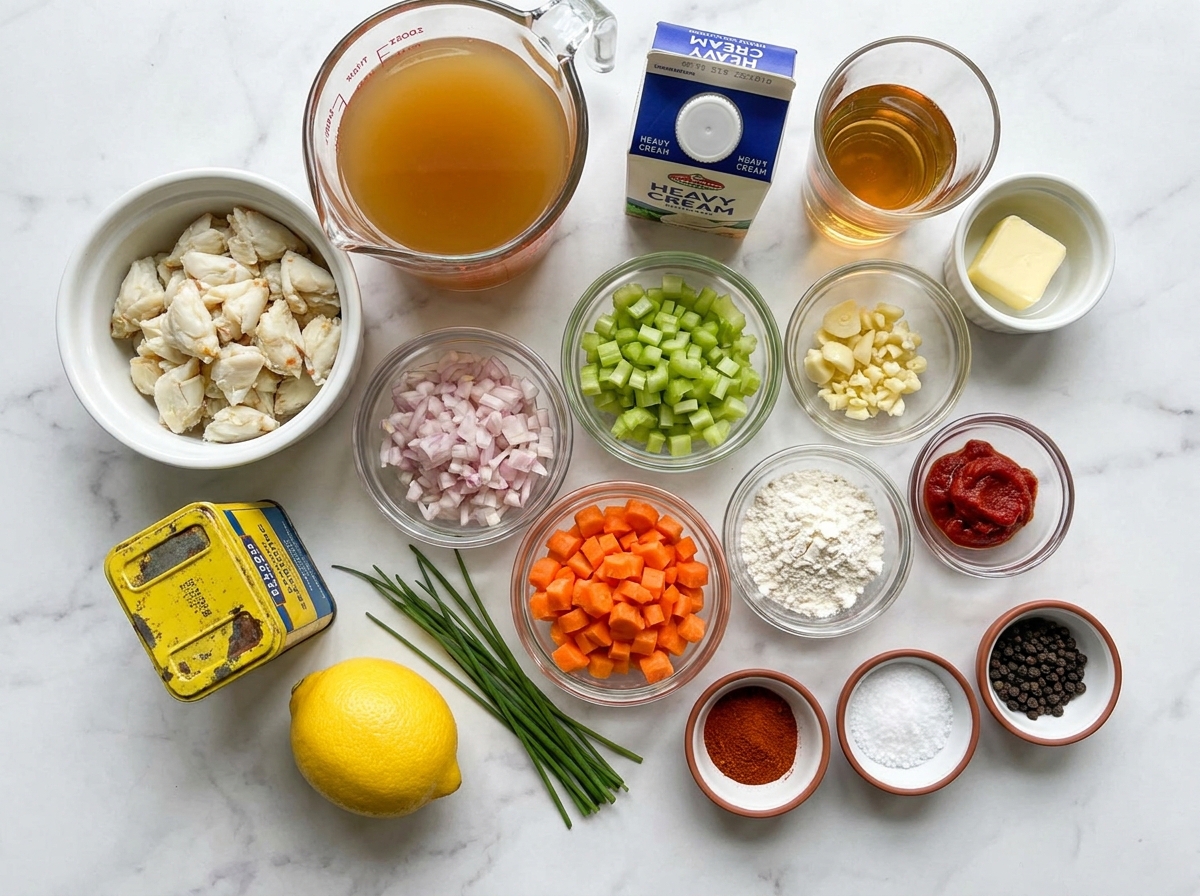
- Lump crab meat. Brings sweet, delicate pieces of crab through the whole bowl.
- Seafood stock. Gives the bisque its deep shellfish base without needing hours of simmering.
- Shallot, celery, and carrot. Build a gentle aromatic sweetness behind the crab.
- Butter and flour. Make a light roux that gives the soup body.
- Tomato paste. Adds color and a quiet savory note that keeps the cream from tasting flat.
- Dry sherry. Gives the bisque its classic warm finish.
- Heavy cream. Turns the stock into a smooth, velvety soup.
- Old Bay and paprika. Add familiar seafood seasoning without covering the crab.
- Lemon and chives. Brighten the final bowl and wake up the rich cream.
Build the Bisque Slowly
- Soften the vegetables. Cook shallot, celery, and carrot in butter until they smell sweet and look glossy. Do not brown them hard.
- Cook the roux. Stir in flour, tomato paste, Old Bay, and paprika. Give it two minutes so the flour loses its raw taste.
- Whisk in the liquids. Add sherry first, then slowly whisk in warm seafood stock. This keeps the base smooth.
- Simmer and blend. Let the soup bubble gently until the vegetables are tender, then blend until very smooth.
- Finish with cream. Lower the heat and stir in heavy cream. Warm it gently without boiling.
- Add the crab. Fold in most of the crab for just a minute or two. Serve with the rest of the crab, chives, and lemon.
Classic Homemade Crab Bisque Cues
The best cue is texture. Before the cream goes in, the soup should already look smooth and lightly thickened. If it looks thin, simmer it a few minutes longer. If it feels pasty, whisk in a splash more stock.
After blending, taste before you add the crab. Crab is naturally sweet and a little salty, so it is easy to over-season too early. I like a small squeeze of lemon at the end instead of extra salt. It sharpens the seafood flavor without making the soup taste sour.
Crab That Works Best
Fresh picked blue crab is wonderful here, but it is not the only choice. Pasteurized lump crab from the refrigerated seafood case is reliable and easy to find. Backfin is a good value if you want crab flavor throughout the soup. Jumbo lump is lovely for garnish, but it can feel expensive once it is stirred into the pot.
If you are starting with crab legs, save the shells for another day and simmer them into stock. That same shellfish depth is why recipes like Garlic Butter Crab Legs and Famous Crab Bombs Classic taste so full with a short ingredient list.
The Heat Matters
Once cream and crab are in the pot, the bisque needs gentle heat. A rolling boil can split the cream and toughen the crab. Keep it at a quiet steam, stir often, and pull the pot off the burner as soon as the crab is warm.
For seafood safety, the FDA advises cooking seafood to 145°F. You can read more in its seafood handling guide. Since most crab sold for this recipe is already cooked, your real job is reheating it gently.
Swaps Worth Making
No seafood stock? Use bottled clam juice mixed with low-sodium chicken broth. No sherry? Dry white wine works, or use more stock and finish with lemon. For a thicker bisque, add one extra tablespoon of flour to the roux. For a lighter bowl, replace half the cream with whole milk and simmer a little longer before adding the crab.
If you want a slightly different seafood soup, try Creamy Crab & Shrimp Bisque for a mixed-shellfish version or She-Crab Creamy Soup for a richer Southern-style bowl.
Storage and Gentle Reheating
Store crab bisque in an airtight container in the fridge for up to 3 days. Reheat it in a saucepan over low heat, stirring often. Add a splash of stock or milk if it thickened overnight.
I do not love freezing cream-based bisque. The flavor survives, but the texture can turn separated after thawing. If you need to work ahead, make and freeze the base before adding cream and crab, then finish it fresh.

Summary
A rich and creamy seafood soup that showcases the delicate flavor of crab, prepared with a homemade shellfish stock and finished with cream for a luxurious dining experience.

FAQs
- Can I make crab bisque with canned crab?
Yes, but choose refrigerated pasteurized lump crab if you can. Shelf-stable canned crab works in a pinch, though it is usually softer and less sweet. Drain it well and fold it in at the end so it does not break apart.
- What can I use instead of sherry?
Use dry white wine, a splash of brandy, or extra seafood stock with a teaspoon of lemon juice. Sherry gives the classic rounded flavor, but the bisque will still taste good without it.
- How do I keep cream from curdling?
Lower the heat before adding cream and do not let the soup boil afterward. A gentle simmer is enough to warm everything through. If your stove runs hot, move the pot partly off the burner while you stir.
- Can I make crab bisque ahead?
You can make the soup base one day ahead and refrigerate it without the crab. Reheat it gently, then stir in the crab just before serving. This keeps the meat sweet and tender.
- Is crab bisque gluten free?
This version uses flour for the roux, so it is not gluten free as written. To adapt it, use a gluten-free all-purpose flour blend or thicken lightly with cornstarch slurry after the stock has simmered.
- What should I serve with crab bisque?
Serve small bowls as a starter or larger bowls with crusty bread and a crisp salad. It also pairs well with crab appetizers, lemony vegetables, or a simple baked potato.
