 Pin it
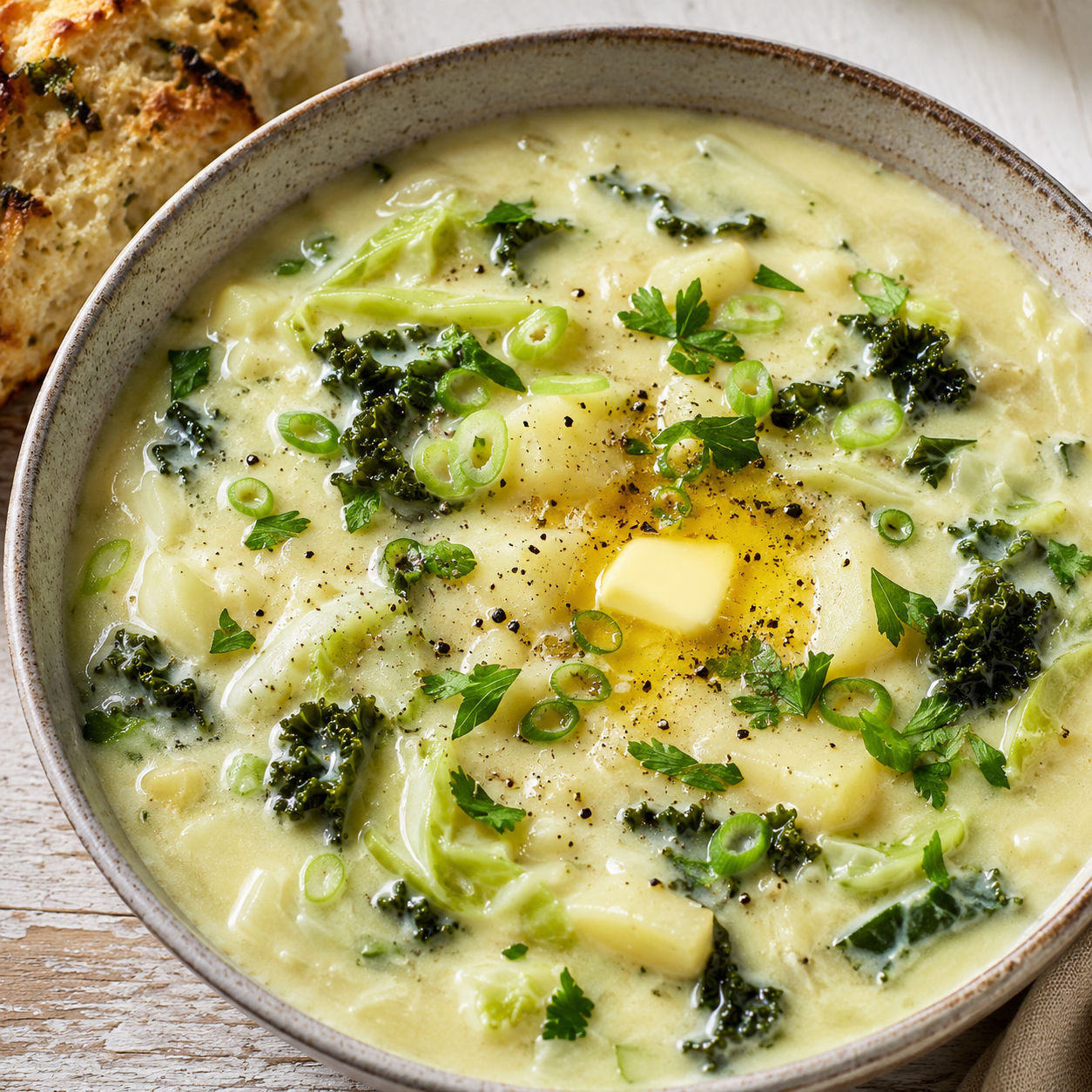
Creamy Colcannon Soup takes the comfort of Irish colcannon and turns it into a warm bowl you can eat with a spoon. It is thick with Yukon gold potatoes, sweet leeks, tender cabbage, and ribbons of kale.
I like it partly blended, not completely smooth. You get a creamy base, but still find soft bites of potato and greens in each spoonful. A small finish of cream and butter gives it the round, familiar taste of the mashed potato dish that inspired it.
Creamy colcannon soup staples
The best pot starts with simple ingredients that can carry a lot of comfort. Use waxy, buttery Yukon gold potatoes, fresh leeks, and greens that still look crisp at the edges.
This version is vegetarian and gluten-free as written. If you have leftover cabbage from another dinner, this is a useful way to turn it into something soft, rich, and filling.

- Yukon gold potatoes. They make the soup creamy without tasting heavy or pasty.
- Leeks. They bring a gentle onion sweetness that suits potatoes better than sharp onion alone.
- Yellow onion. A small amount gives the broth a rounder base.
- Garlic. It adds warmth, but stays in the background.
- Green cabbage. It softens into sweet, tender ribbons that make the soup feel like colcannon.
- Kale. It keeps color and a little texture after simmering.
- Vegetable broth. Use a good gluten-free broth since it makes up most of the liquid.
- Milk and cream. They finish the soup with body and a soft dairy richness.
- Butter. A small knob at the end gives the classic colcannon finish.
- Scallions and parsley. They wake up the bowl right before serving.
Simmer, blend, and finish
- Soften the leeks. Melt butter in a heavy pot, then cook the leeks and onion until glossy and soft. Do not rush this part because it builds the soup's sweetness.
- Add garlic and thyme. Stir them in for about 1 minute, just until fragrant. Garlic burns quickly in butter, so keep the heat moderate.
- Simmer the potatoes. Add potatoes, bay leaf, broth, salt, and pepper. Cover and simmer until the potatoes crush easily against the side of the pot.
- Wilt the greens. Stir in the cabbage and kale. Cook until the cabbage is tender and the kale turns deep green.
- Blend part of the soup. Remove the bay leaf, then blend about half the pot with an immersion blender. Leave some potato and greens whole for texture.
- Finish gently. Stir in milk and cream over low heat. Add scallions, parsley, and a final pat of butter, then adjust the salt before serving.
Keep some texture
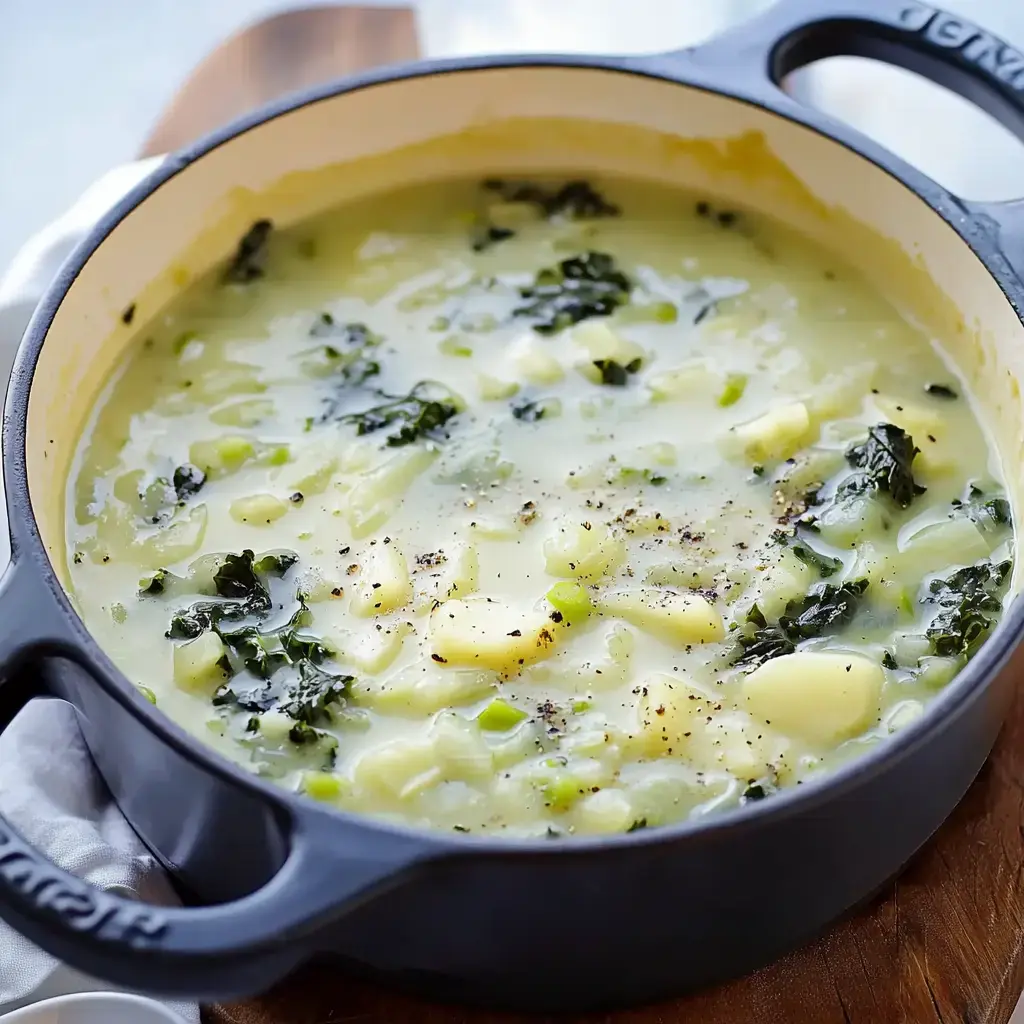
Colcannon is not meant to feel thin or fussy, so I do not blend this soup until it is completely smooth. A few visible potato pieces and soft greens make it taste closer to the dish that inspired it. If you prefer a thicker bowl, mash a few potatoes against the side of the pot before adding the dairy.
The main mistake is overworking the potatoes. An immersion blender is handy, but use short bursts and stop as soon as the broth turns creamy. If you like a chunkier potato soup, the site's Colcannon Soup is a good companion recipe with a more rustic feel.
Cabbage and kale choices
Green cabbage is easy to find and works well here, but savoy cabbage is even softer and sweeter if you have it. Slice it thin so it cooks in the same window as the kale. For the kale, remove the tough ribs and chop the leaves small enough to fit on a spoon.
You can use only cabbage if kale is not your thing. You can also use only kale, though the soup will taste a little earthier. The butter and cream keep the greens mellow. For another cozy cabbage bowl with a different direction, try Healthy Cabbage Ground Beef Soup.
Make it richer or lighter
For a richer soup, use half-and-half in place of the milk and add a handful of sharp white cheddar at the end. Keep the heat low so the dairy stays smooth. For a lighter bowl, use whole milk only and skip the final butter. It will still be creamy because the potatoes do much of the work.
I drew on the dairy-rich style of BC Dairy's creamy version, but kept this one flour-free and partly blended. That makes the soup naturally thick without needing a roux.
Storing the leftovers
Cool leftovers quickly, then refrigerate them in a covered container for up to 3 days. Potato soup thickens as it sits, so loosen each serving with a splash of broth or milk. Warm it over low heat and stir often. The microwave works, but use shorter bursts and stir between them.
If you are serving soup for a group, keep food safety in mind and refrigerate leftovers promptly. The FoodSafety.gov storage chart is a useful reference for cooked leftovers. For another creamy potato-style soup that holds well for dinner, see Slow Cooker Creamy Potato Bacon.
What to serve beside it
This soup is filling, but it loves something crisp or toasted on the side. Serve it with soda bread, sourdough toast, or a simple green salad with a sharp vinaigrette. The acidity cuts through the cream and butter.
For St. Patrick's Day, I keep the toppings simple with scallions, parsley, black pepper, and a small drizzle of melted butter. A little shredded cheddar is good too, but add it lightly so the cabbage and leeks still come through.

FAQs
- What is Creamy Colcannon Soup made of?
Creamy Colcannon Soup is usually made with potatoes, leeks or onions, cabbage, kale, broth, milk or cream, and butter. It takes the same basic flavors as colcannon mashed potatoes and loosens them into a hearty soup.
- Can I use cabbage instead of kale?
Yes. You can use all cabbage, all kale, or a mix of both. Cabbage turns sweeter as it cooks, while kale keeps a little more bite and color.
- How do I make this soup vegetarian?
Use vegetable broth instead of chicken broth and check that the broth is gluten-free if needed. The soup already gets plenty of depth from leeks, butter, potatoes, and thyme.
- Can I make Creamy Colcannon Soup ahead?
Yes. Make it up to 3 days ahead and reheat it gently on the stove. Add a splash of milk or broth as it warms because potato soup thickens in the fridge.
- Can I freeze colcannon soup?
You can freeze it, but dairy and potatoes can change texture after thawing. For best results, freeze the soup before adding milk and cream, then add the dairy when you reheat it.
- Why is my potato soup gluey?
It was likely blended too long. Potatoes release starch fast, so pulse only part of the soup until smooth. A potato masher also works well if you want more control.
