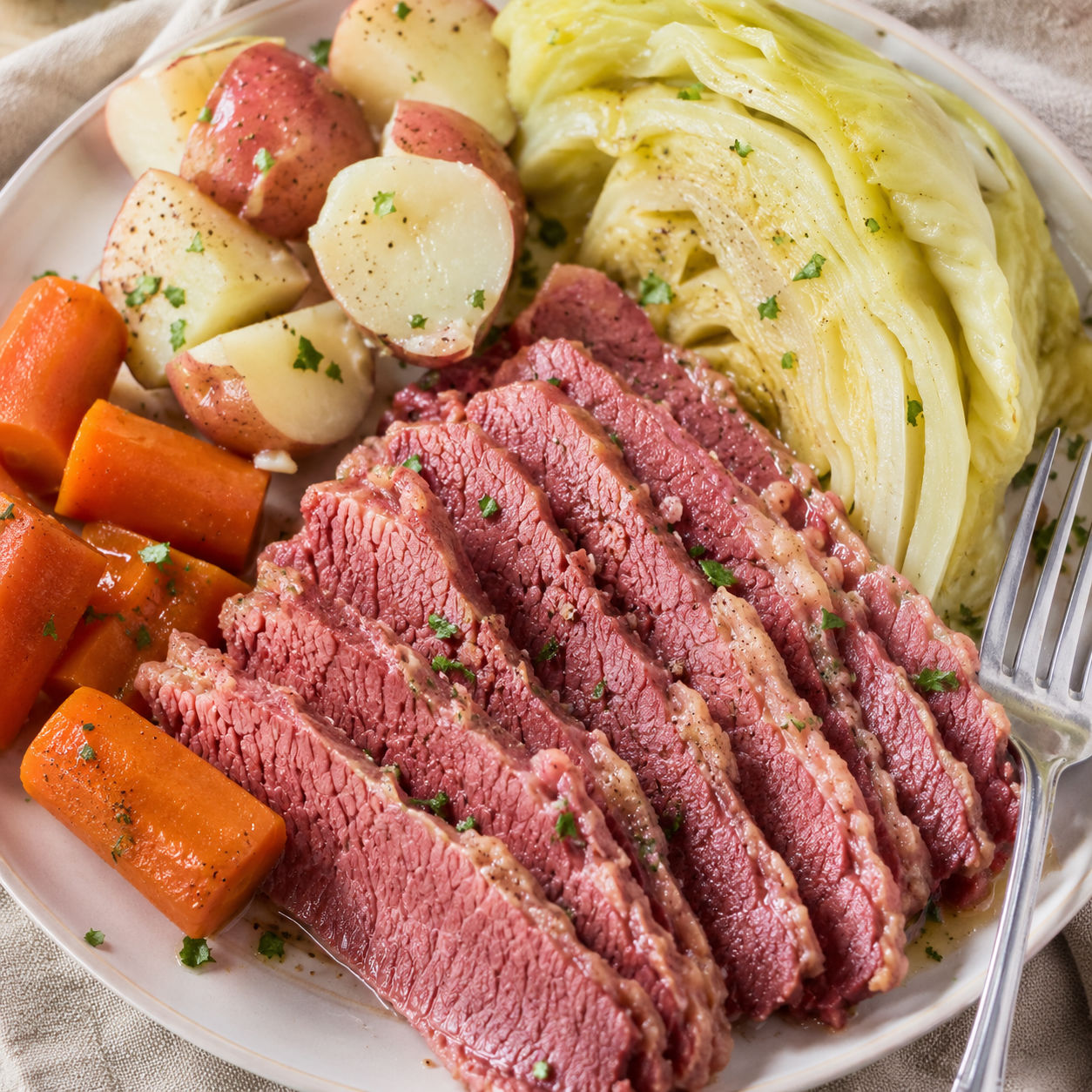
 Pin it
This is the dinner I grew up eating every March, though my family would happily make it year-round. A whole corned beef brisket simmers low and slow in one big pot until it practically falls apart, while the cooking liquid turns into a savory broth that cooks the potatoes, carrots, and cabbage.
The real secret is patience and timing. Rush the meat and it stays tough. Dump all the vegetables in at once and you end up with mushy cabbage and crumbly potatoes. Cook the brisket first, then add each vegetable at the right moment, and you get a real one-pot feast.
What goes into the pot
A good corned beef dinner starts at the meat counter. Look for a brisket that comes with its own spice packet. The meat has already been cured in brine, so the hard work is done. Beyond that, you need sturdy vegetables that can handle a long simmer without turning to mush.
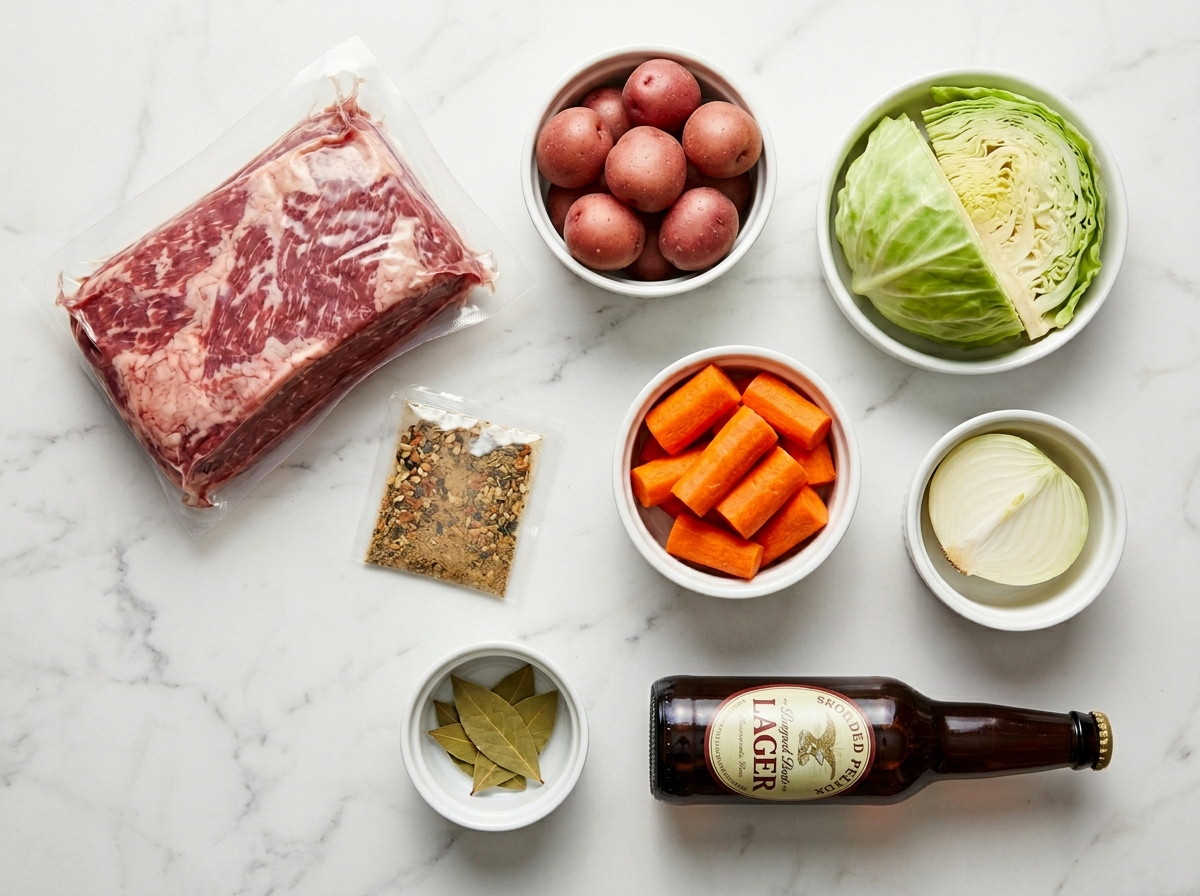
- Corned beef brisket. Usually 3 to 4 pounds, flat or point cut. The flat slices neatly. The point is fattier and more tender but shreds more easily.
- Pickling spice packet. Most briskets include one. It adds coriander, mustard seed, bay, and peppercorns to the broth.
- Small potatoes. Red or Yukon gold hold their shape best. Halve or quarter them so they cook evenly.
- Carrots. Cut into thick chunks so they stay intact through the simmer.
- Green cabbage. Cut into wedges through the core so the leaves stay together.
- Yellow onion and bay leaves. They build a savory backbone under the salted meat.
- Beer or water. Dark beer adds a subtle malt sweetness, but water works perfectly well.
How to simmer it right
- Rinse and start the brisket. Rinse the corned beef under cold water to remove excess surface brine. Place it in a large Dutch oven or stockpot with the spice packet, onion, and bay leaves. Cover with water or beer by about an inch.
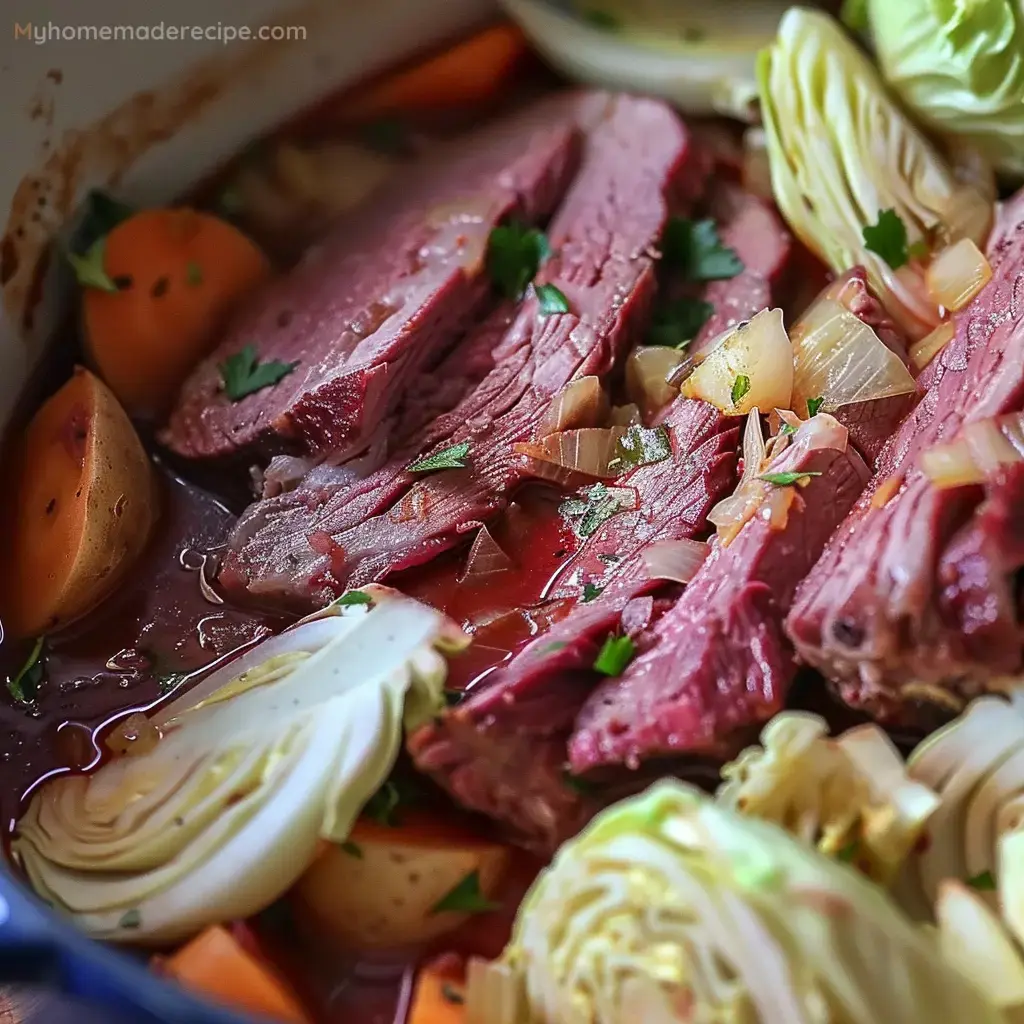
- Simmer until fork-tender. Bring to a gentle boil, then reduce to a low simmer. Skim any foam that rises in the first half hour. Cover and cook for 2.5 to 3 hours until a fork slides in with little resistance.
- Add potatoes and carrots. Nestle them into the liquid around the meat. Cover and simmer for 20 to 25 minutes until they are almost tender but still firm.
- Add cabbage last. Place the wedges on top of the meat and vegetables. Cover and simmer for 10 to 15 minutes until the cabbage is tender but still holds its shape.
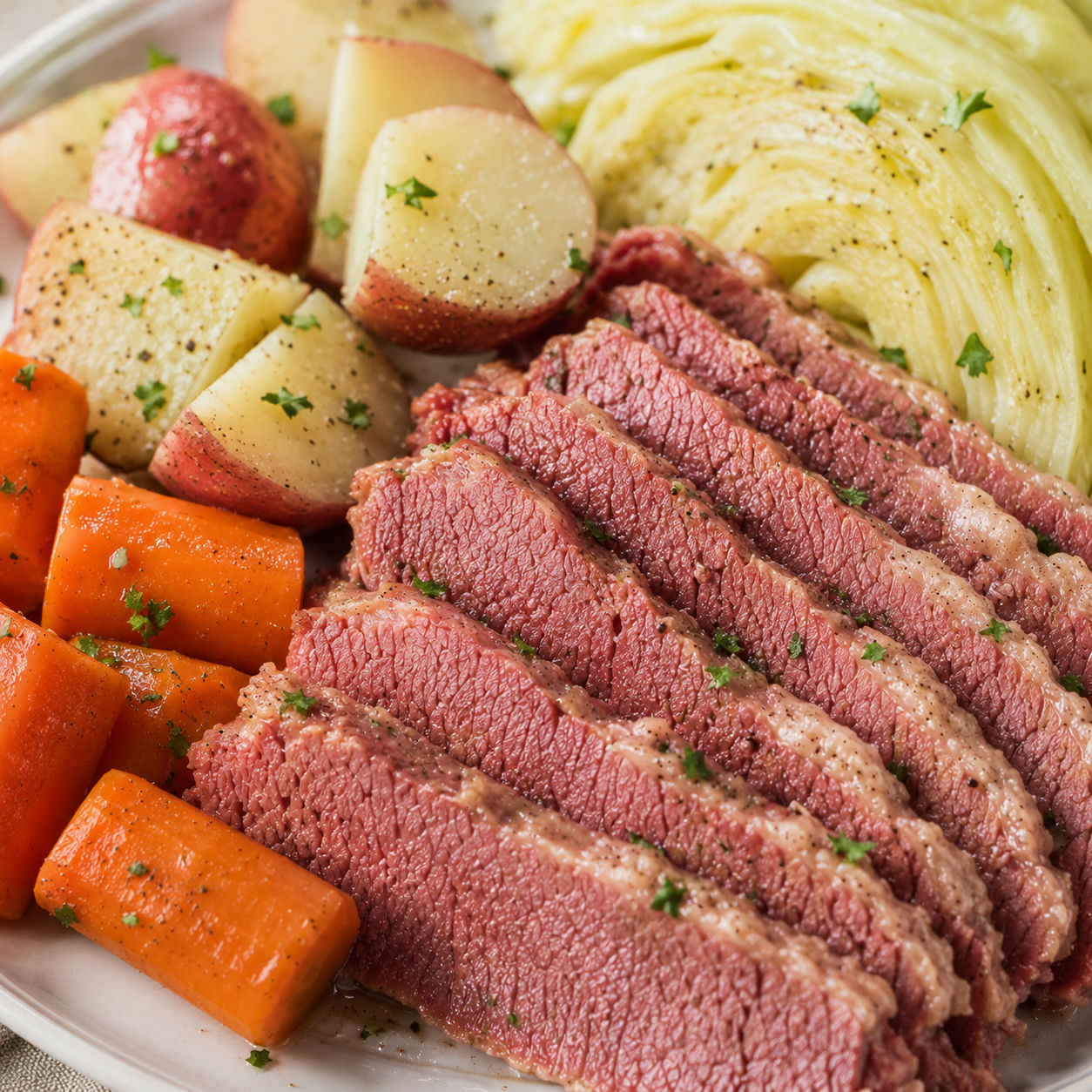
- Rest and slice. Transfer the brisket to a cutting board and let it rest for 10 minutes. Slice across the grain into thin pieces. Serve in shallow bowls with vegetables and a ladle of broth.
Flat cut versus point cut
The flat cut is leaner and slices into neat pieces. It is what most people picture when they think of plated corned beef. The point cut has more fat running through it, which makes it richer and more forgiving if you accidentally cook it a few minutes too long. Either one works. If you want clean slices for sandwiches the next day, choose the flat. If you want the most tender, shreddable meat for a casual dinner, the point is hard to beat.
The low simmer matters most
A rolling boil will toughen the brisket and squeeze moisture out of the meat. You want the liquid barely moving, with just a few small bubbles breaking the surface. That gentle heat breaks down the collagen without shocking the muscle fibers. The same low-and-slow logic drives recipes like slow cooker corned beef, where time does the tenderizing for you.
Staging the vegetables
Adding everything at once is the most common mistake. Potatoes need about 25 minutes. Carrots need about 20. Cabbage only needs 10 to 15. If you add cabbage at the start, it turns gray and limp. If you add potatoes too late, they stay crunchy. The staged approach keeps every vegetable distinct and colorful. If you enjoy one-pot meals, a cabbage and kielbasa skillet uses the same principle on a weeknight timeline.
Leftovers and next-day hash
Sliced corned beef keeps in the refrigerator for up to 4 days. Store it in a little broth so it stays moist. Reheat gently in a covered skillet with a splash of water. My favorite part of this meal is what happens the next morning. Chop the leftover meat and potatoes into small dice, crisp them in a hot pan with butter, and you have a diner-style corned beef hash that beats anything from a can.
Beer, broth, and other swaps
A dark Irish stout adds a roasted, malty depth that balances the salty meat. A lighter lager works too, or you can use half beer and half beef broth. Avoid hoppy IPAs, which can turn bitter after hours of simmering. No alcohol? Water with a tablespoon of brown sugar and a splash of apple cider vinegar mimics some of that complexity. If you want a completely different take on the cabbage-and-beef pairing, healthy cabbage ground beef soup is a lighter option that still delivers big flavor.
FAQs
- What is the difference between flat cut and point cut corned beef?
The flat cut is leaner and has a more uniform shape, which makes it ideal for neat slices. The point cut has more intramuscular fat, so it cooks up juicier and tends to shred rather than slice cleanly.
- Can I make this in a slow cooker instead?
Yes. Cook the brisket with the liquid and spices on low for 8 to 10 hours. Add the potatoes and carrots in the last 2 hours, and the cabbage in the last 30 to 45 minutes so it does not overcook.
- Do I need to rinse corned beef before cooking?
Rinsing is recommended. It washes away excess surface salt from the brine and keeps the broth from becoming overly salty. Pat the meat dry after rinsing.
- How do I keep cabbage from getting mushy?
Add cabbage only in the final 10 to 15 minutes of cooking. Wedges cut through the core hold together better than chopped leaves, which fall apart quickly in hot liquid.
- What beer is best for corned beef?
A dark stout or brown ale adds richness without bitterness. Avoid very hoppy beers like IPAs, which can become harsh during a long simmer. Non-alcoholic beer works too.
- How do I slice corned beef correctly?
Always slice against the grain. Look at the lines running through the brisket and cut perpendicular to them. Slicing with the grain produces stringy, chewy meat.
- How long do leftovers last?
Refrigerate sliced corned beef and vegetables in an airtight container for up to 4 days. Reheat gently with a splash of broth or water to restore moisture.
