 Pin it
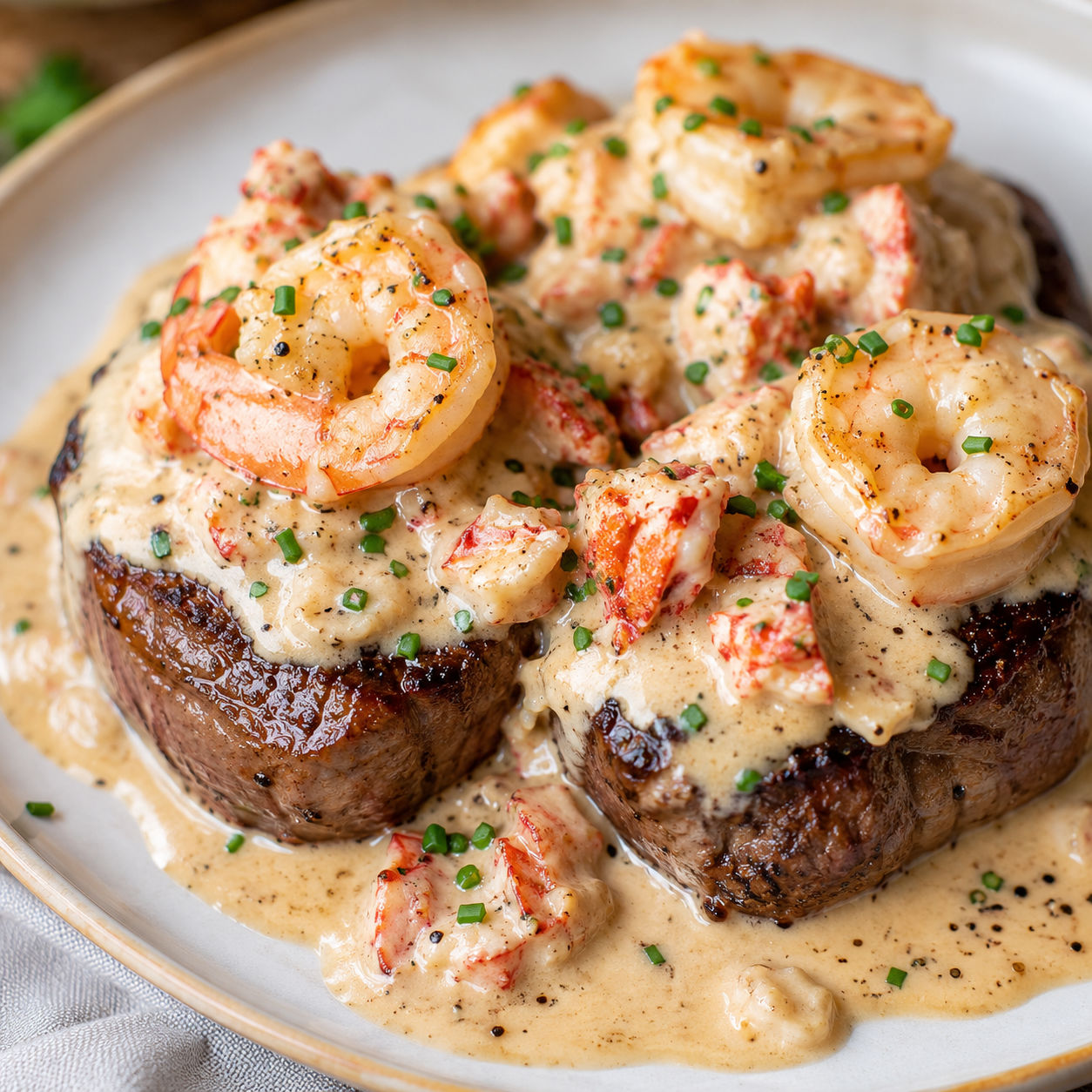
This luxurious filet mignon with shrimp and lobster cream sauce is the dinner I pull out when I want to make someone feel truly spoiled. A thick center-cut filet, a few plump shrimp, and a cream sauce built from real lobster meat turn a quiet evening into something memorable. The sauce is the star here. It is rich, silky, and deeply flavored with lobster, shallots, and a splash of brandy.
Do not let the word luxurious scare you. The cooking is straightforward. Sear the steaks, cook the shrimp, build the sauce in the same skillet, and spoon it over everything. The only real secret is timing. Pull the steaks a few degrees early and let them rest while you finish the sauce.
What builds the sauce
The sauce depends on actual lobster meat, not just shell or stock, for real texture and sweetness. Buy cooked lobster claws or tails from the fish counter, or use high-quality frozen. Heavy cream, shallots, brandy, and a little tomato paste create a base that tastes deep rather than just rich.
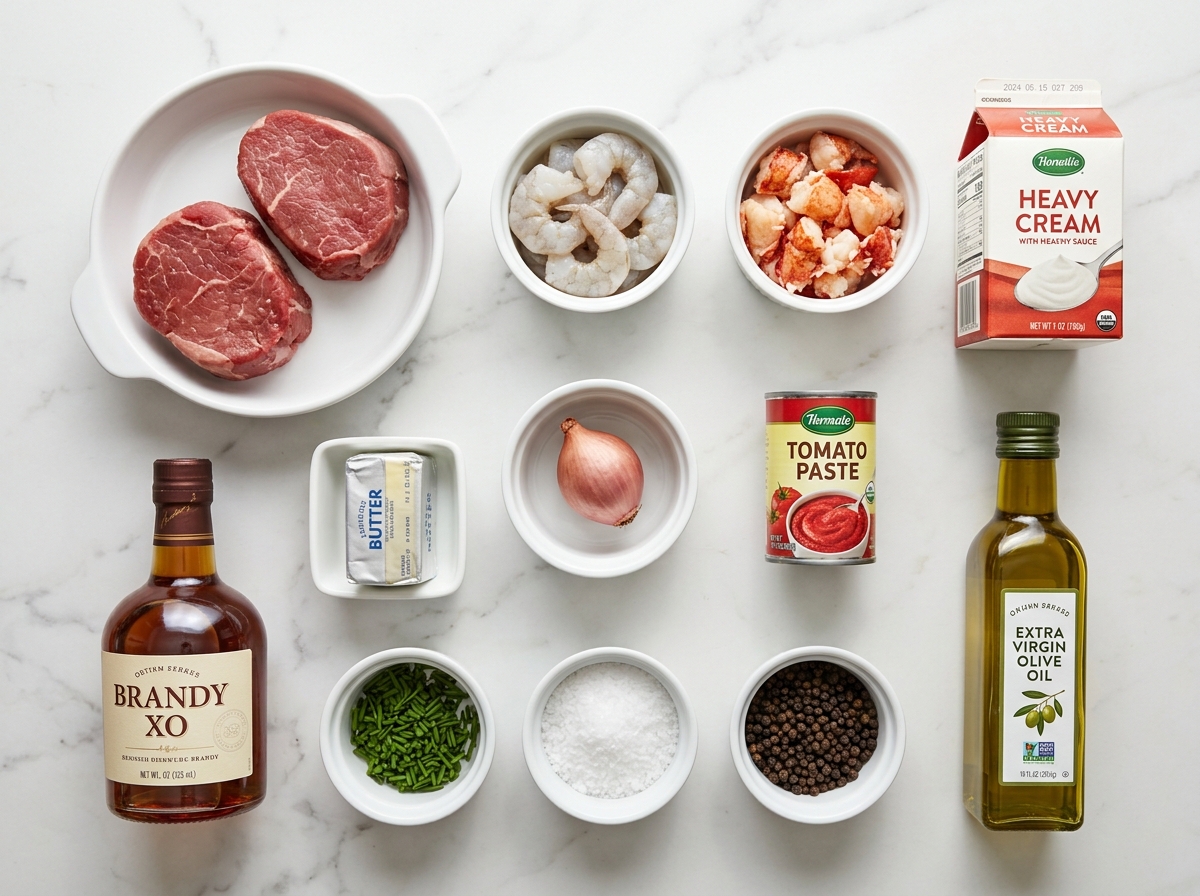
- Filet mignon. Two thick center-cut steaks, about 6 to 8 ounces each, for an even cook and a tender bite.
- Large shrimp. Peeled and deveined, they cook in minutes and add a second layer of sweetness to the plate.
- Cooked lobster meat. Real chunks of claw and tail meat give the sauce body and unmistakable flavor.
- Shallots. Milder than onion, they melt into the sauce and add a subtle sweetness without sharpness.
- Brandy. Deglazes the pan and adds a warm, complex note that lifts the cream.
- Heavy cream. The body of the sauce. It reduces to a velvety consistency that clings to both steak and shrimp.
- Tomato paste. Just a spoonful deepens the color and adds a gentle savory backbone.
- Butter and olive oil. For searing the steaks and finishing the sauce with a glossy sheen.
Sear then sauce
- Rest and season the steaks. Let the filets sit at room temperature for 20 minutes, then pat dry and season generously with salt and pepper. A dry surface is what creates the crust.
- Sear the filets. Heat a heavy skillet over high heat with olive oil until almost smoking. Sear the steaks 3 to 4 minutes per side for medium-rare, depending on thickness. Remove to a plate and tent loosely with foil.
- Cook the shrimp. In the same skillet over medium-high heat, add a little butter and cook the shrimp for 1 to 2 minutes per side until pink and curled. Remove and set aside.
- Build the lobster cream. Lower the heat to medium. Add shallots and cook until soft, about 2 minutes. Stir in tomato paste for 30 seconds, then deglaze with brandy and let it reduce by half. Pour in heavy cream and simmer gently for 4 to 5 minutes until slightly thickened. Fold in the lobster meat and warm through.
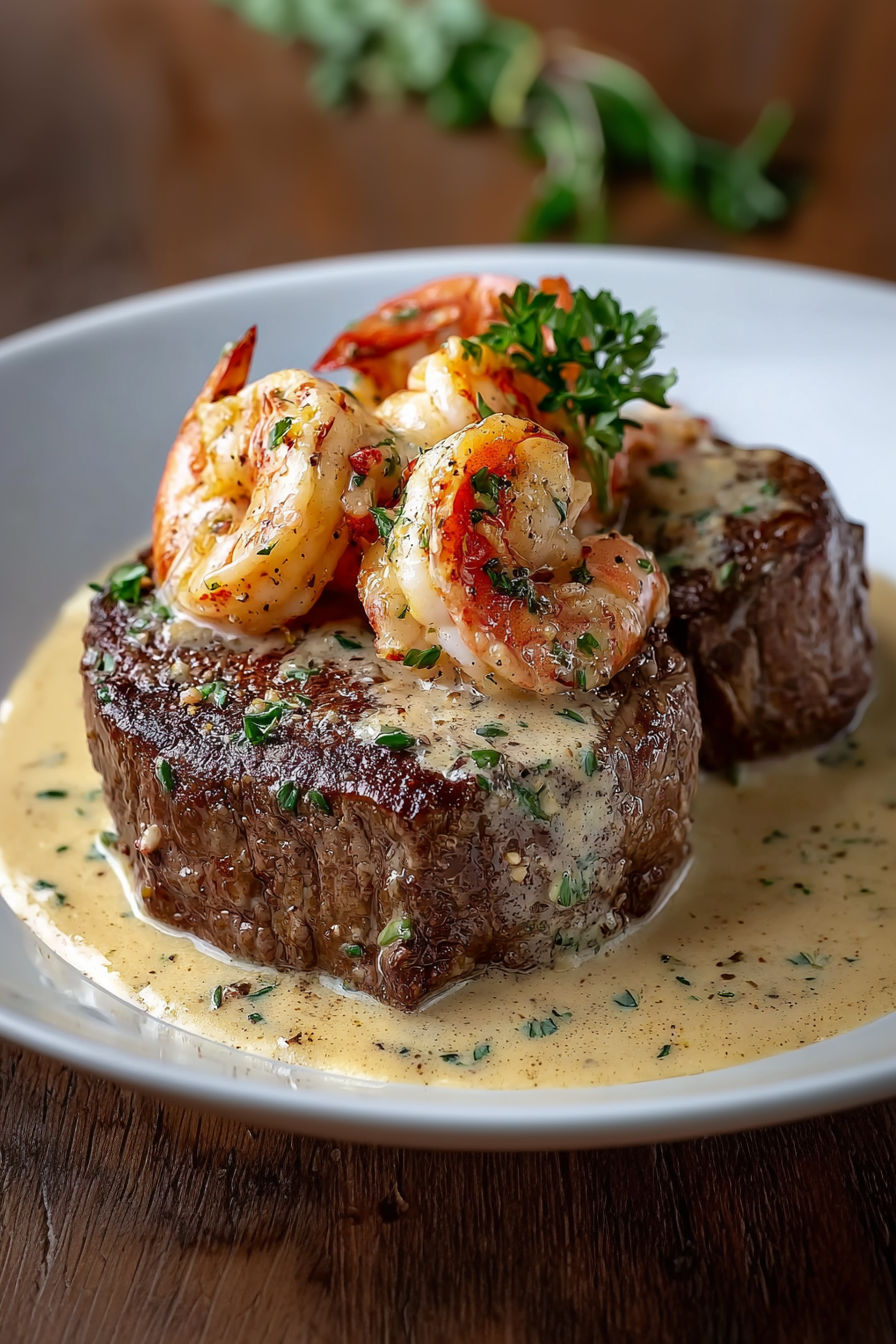
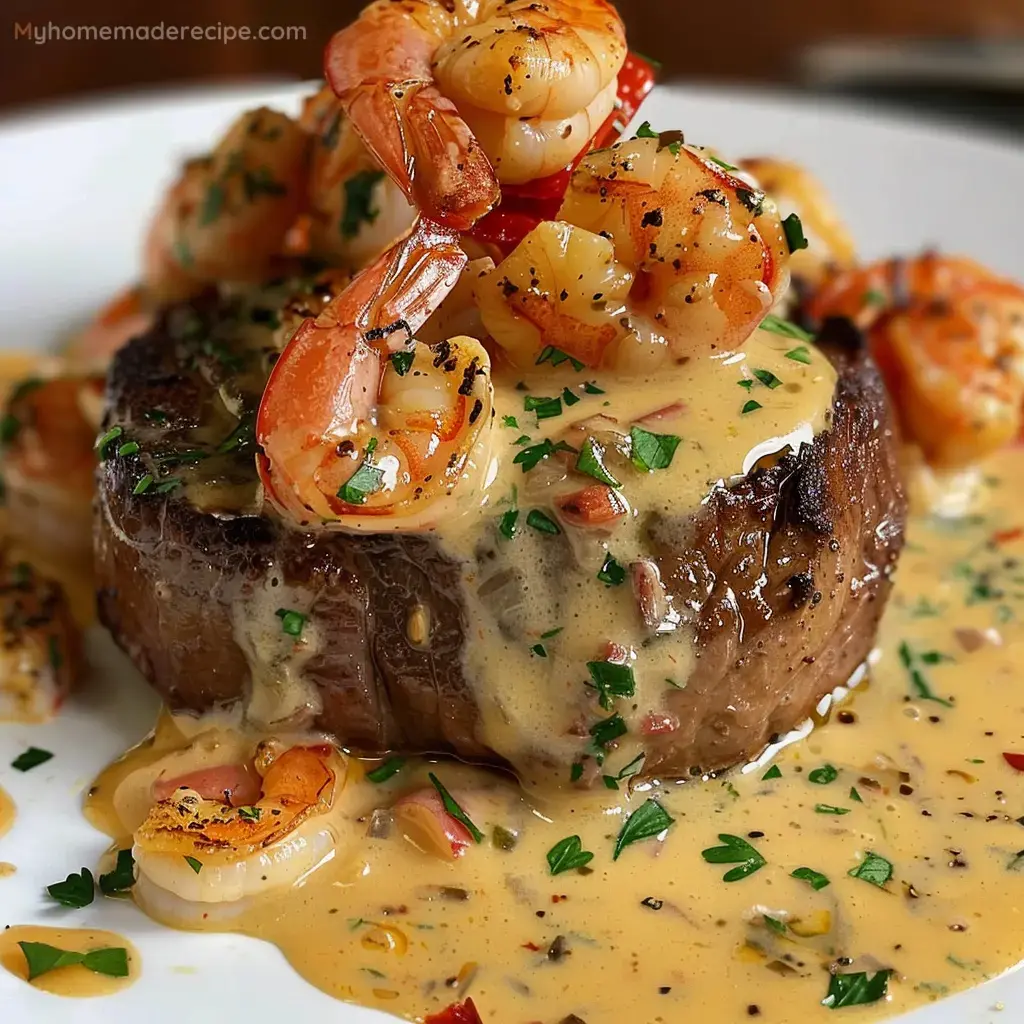
- Finish and plate. Return any accumulated steak juices to the sauce. Taste for salt and pepper. Place the filets on warm plates, arrange the shrimp on top, and spoon the lobster cream sauce over everything. Garnish with chopped fresh chives or parsley.
Why resting matters
A filet mignon straight from the pan is tight and tough. Resting it for 5 to 10 minutes lets the juices settle back into the meat so every slice stays rosy and moist. While it rests, the carryover heat pushes the internal temperature up by about 5 degrees, which is why I pull mine from the pan at 125°F for a final medium-rare of 130°F. The USDA recommends cooking beef steaks to a minimum internal temperature of 145°F with a 3-minute rest, though many cooks prefer lower for tenderness.
Choosing the lobster
Fresh cooked lobster from a reputable fishmonger is ideal, but frozen lobster meat works well if you thaw it slowly in the refrigerator and drain off excess water. Watery lobster dilutes the sauce. If you only have lobster shells, you can make a quick stock and reduce it before adding cream, but the sauce will be thinner and less luxurious. For another special-occasion steak dinner, try surf and turf lobster sauce or garlic butter steak bites with parmesan cream sauce.
Sides that balance the plate
This dish is rich, so the sides should be simple and bright. A lemon-dressed arugula salad, roasted asparagus, or fingerling potatoes roasted with rosemary all cut through the cream without competing. Keep the portions modest. The steak, shrimp, and sauce are the main event. If you want to stay in the surf-and-turf family, butter-seared lobster with garlic cream uses a similar flavor profile.
Storing and reheating
This is best eaten fresh, but leftovers keep in an airtight container in the refrigerator for up to 2 days. Reheat the sauce gently in a small pan over low heat with a splash of cream to loosen it. Reheat the steak and shrimp separately in a 300°F oven just until warm, about 10 minutes, to avoid overcooking.
FAQs
- Can I use frozen lobster meat for the sauce?
Yes. Thaw it slowly overnight in the refrigerator, then pat it very dry with paper towels. Excess moisture will thin the cream sauce, so drying is an important step.
- What temperature should filet mignon be cooked to?
For medium-rare, aim for an internal temperature of 130°F to 135°F after resting. I pull the steaks from the pan at about 125°F and let carryover heat finish the job while the meat rests.
- Can I make the lobster cream sauce ahead of time?
You can prepare the sauce up to 1 day ahead and refrigerate it in an airtight container. Reheat gently over low heat and stir in a splash of fresh cream to restore the silky texture before serving.
- What can I use instead of brandy?
Dry white wine or cognac both work well. If you prefer to avoid alcohol entirely, use additional seafood stock with a squeeze of lemon for brightness.
- How do I keep the shrimp from becoming rubbery?
Cook the shrimp quickly over medium-high heat for only 1 to 2 minutes per side until they turn pink and opaque. Remove them from the pan as soon as they curl into a loose C shape.
- Can I use a different steak cut?
Yes. New York strip or ribeye both work, though they cook slightly differently due to more marbling. Filet mignon is the most tender option and pairs best with a delicate cream sauce.
- What sides pair well with this dish?
Keep sides light and simple. Roasted asparagus, a crisp green salad with lemon vinaigrette, or buttered fingerling potatoes all complement the richness without overwhelming the plate.
