 Pin it
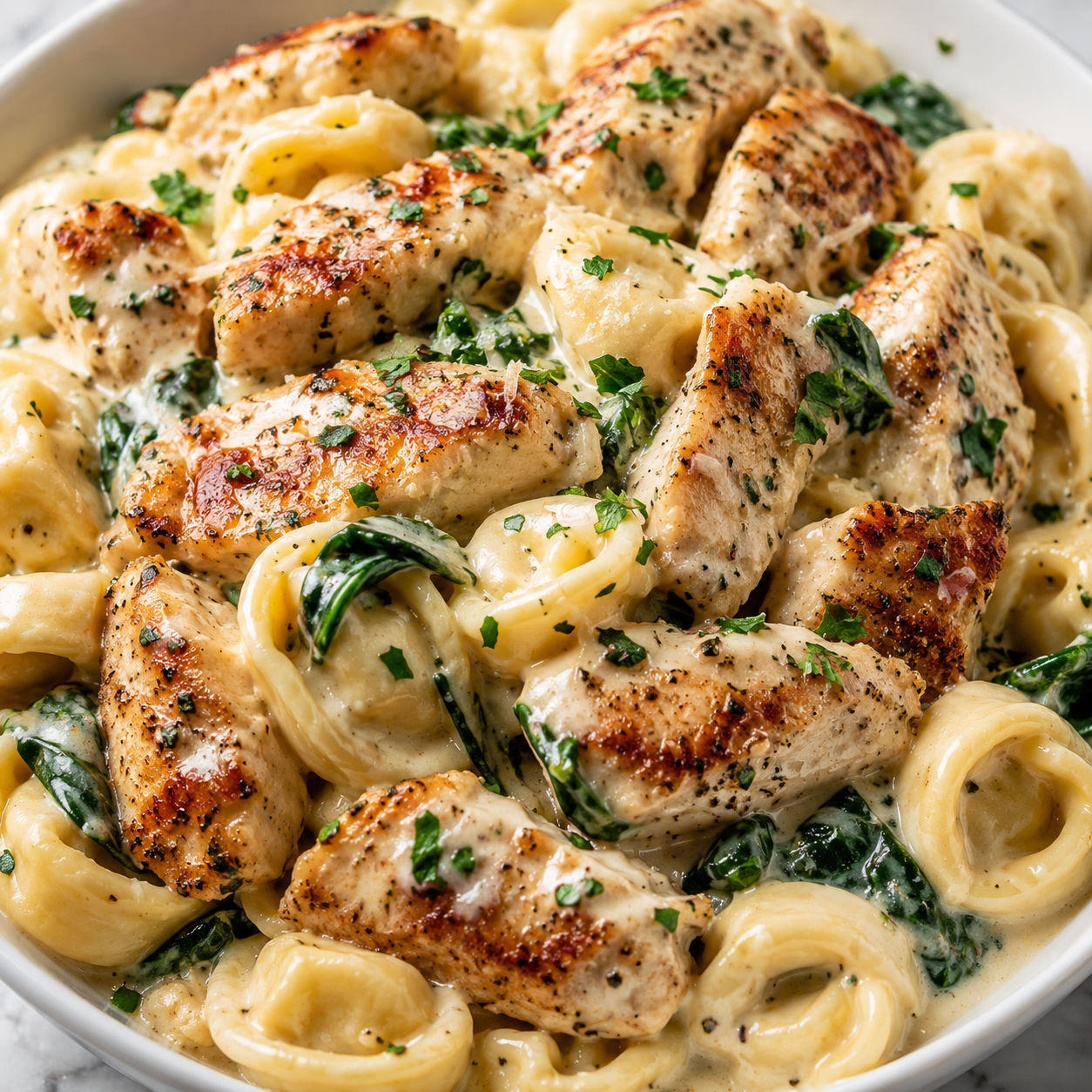
This is the kind of dinner that makes a Wednesday feel like a small occasion. Tender bites of chicken and cheese-filled tortellini get coated in a sauce built on real Asiago and Parmesan. It tastes indulgent but comes together in about half an hour with one skillet and a pot.
The trick is using Asiago in the Alfredo base. It melts smoothly and adds a nuttier, slightly sharper edge than Parmesan alone. Toss everything while the tortellini is still warm so the sauce clings to every ridge.
What builds the sauce
Fresh tortellini cooks in minutes, so the real work is the sauce. Buy a wedge of Asiago and grate it yourself. Pre-shredded cheese is coated with anti-caking agents that keep it from melting into a silky sauce.
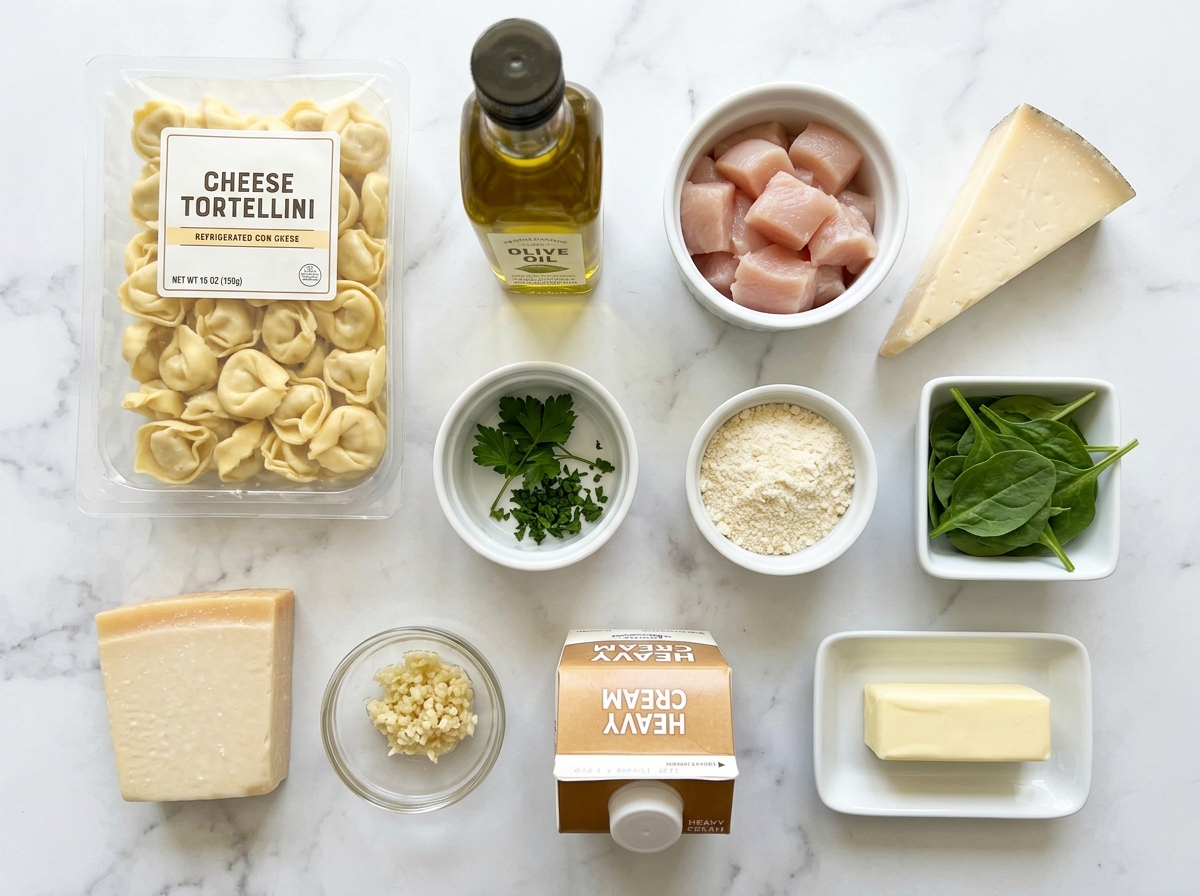
- Boneless chicken breasts. Cut into uniform bite-size pieces so they sear quickly and cook through at the same rate.
- Refrigerated cheese tortellini. The fresh kind cooks in 2-3 minutes and holds its shape better than frozen in a creamy sauce.
- Asiago cheese. Grated fresh, it gives the Alfredo a deeper, nuttier backbone than Parmesan alone.
- Heavy cream. The fat content is what lets the sauce reduce into something thick enough to coat a spoon.
- Garlic. Four cloves, minced fine, because this is a garlic Alfredo at heart.
- Baby spinach. Optional but smart. It wilts into the hot pasta in seconds and adds color.
- Fresh parsley. A bright chop at the end keeps the richness from feeling heavy.
How it all comes together
- Cook the tortellini. Boil in well-salted water until just al dente, usually 2-3 minutes for refrigerated. Reserve 1/2 cup of the starchy water, then drain.
- Sear the chicken. Season the pieces and brown them in a hot skillet with olive oil. You want golden edges and an internal temp of 165°F. Remove to a plate.
- Build the Asiago Alfredo. Melt butter in the same skillet, add garlic, and cook for 30 seconds until fragrant. Pour in the cream and simmer gently for 3-4 minutes. Stir in the Asiago and Parmesan off the heat so they melt without breaking.
- Toss and wilt. Add the tortellini and chicken back to the skillet. Splash in pasta water a tablespoon at a time until the sauce is loose enough to coat. Fold in the spinach and let it wilt for 30 seconds. Finish with parsley.
Why Asiago beats Parmesan alone
Asiago is the quieter cousin of Parmesan. It is a little sweeter and nuttier, and it melts into cream more willingly without turning grainy. Using a 50-50 blend of Asiago and Parmesan gives you the sharp funk you expect from Alfredo plus a smoother finish. If you want another weeknight win built on Asiago, try our creamy Asiago chicken skillet.
Sear the chicken in batches
Crowding the pan drops the temperature and the chicken simmers in its own juices instead of browning. Work in two batches if your skillet is smaller than 12 inches. Golden edges mean flavor. Let the pieces sit undisturbed for two minutes before you stir so they develop a crust.
The pasta water rescue
Alfredo tightens as it cools. The reserved pasta water is your insurance policy. Add it a splash at a time off the heat and toss hard. The starch in the water bonds with the cheese and cream so the sauce grips the tortellini instead of pooling at the bottom of the bowl. This same principle works in our homemade chicken Alfredo pasta.
Easy swaps and add-ins
No spinach? Use chopped kale or frozen peas stirred in at the last minute. Want more depth? Add a handful of sautéed mushrooms with the garlic. For heat, a pinch of red pepper flakes in the cream does the job. You can also swap the chicken for leftover rotisserie meat, though you will miss the seared flavor.
Storing and reheating
Keep leftovers in an airtight container in the fridge for up to three days. Reheat gently in a skillet over medium-low with a splash of milk or broth to bring the sauce back to life. The microwave works in a pinch, but stir every 30 seconds to keep the sauce from separating.
What to serve on the side
This is a rich plate, so balance it with something sharp and crisp. A simple lemon-dressed arugula salad or steamed broccoli with lemon zest cuts through the cream. If you love skillet tortellini dinners, our marry me chicken tortellini uses a similar one-pan approach with a sun-dried tomato cream. For a seafood twist, check out our shrimp Alfredo with tortellini.
FAQs
- Can I use frozen tortellini?
Yes. Add 2 to 3 minutes to the boil time and drain well so excess water does not thin the sauce. Fresh tortellini holds its shape best, but frozen works in a pinch.
- What can I use instead of Asiago?
Parmesan or Romano work, though the flavor will be sharper and less mellow. Pecorino is saltier, so taste before adding extra salt. For the smoothest melt, always grate from a wedge.
- How do I keep the sauce from breaking?
Melt the cheese off the heat or over the lowest flame. High heat causes the fat and dairy to separate. If the sauce tightens, loosen it with reserved pasta water a tablespoon at a time.
- Can I make this ahead?
You can prep the chicken and grate the cheeses up to a day ahead. The finished dish is best served immediately, but leftovers keep for three days.
- Is this gluten-free?
No. Standard tortellini is wheat-based. Use gluten-free tortellini if you need to adapt the recipe.
- How long do leftovers last?
Keep leftovers in an airtight container in the fridge for up to three days. Reheat gently with a splash of milk or broth.
- Can I add vegetables?
Yes. Spinach, peas, mushrooms, or broccoli all work. Add hardy vegetables earlier and leafy greens at the very end so they do not overcook.
- What wine pairs with this?
A dry Pinot Grigio or lightly oaked Chardonnay stands up to the cream without fighting the Asiago.
