 Pin it
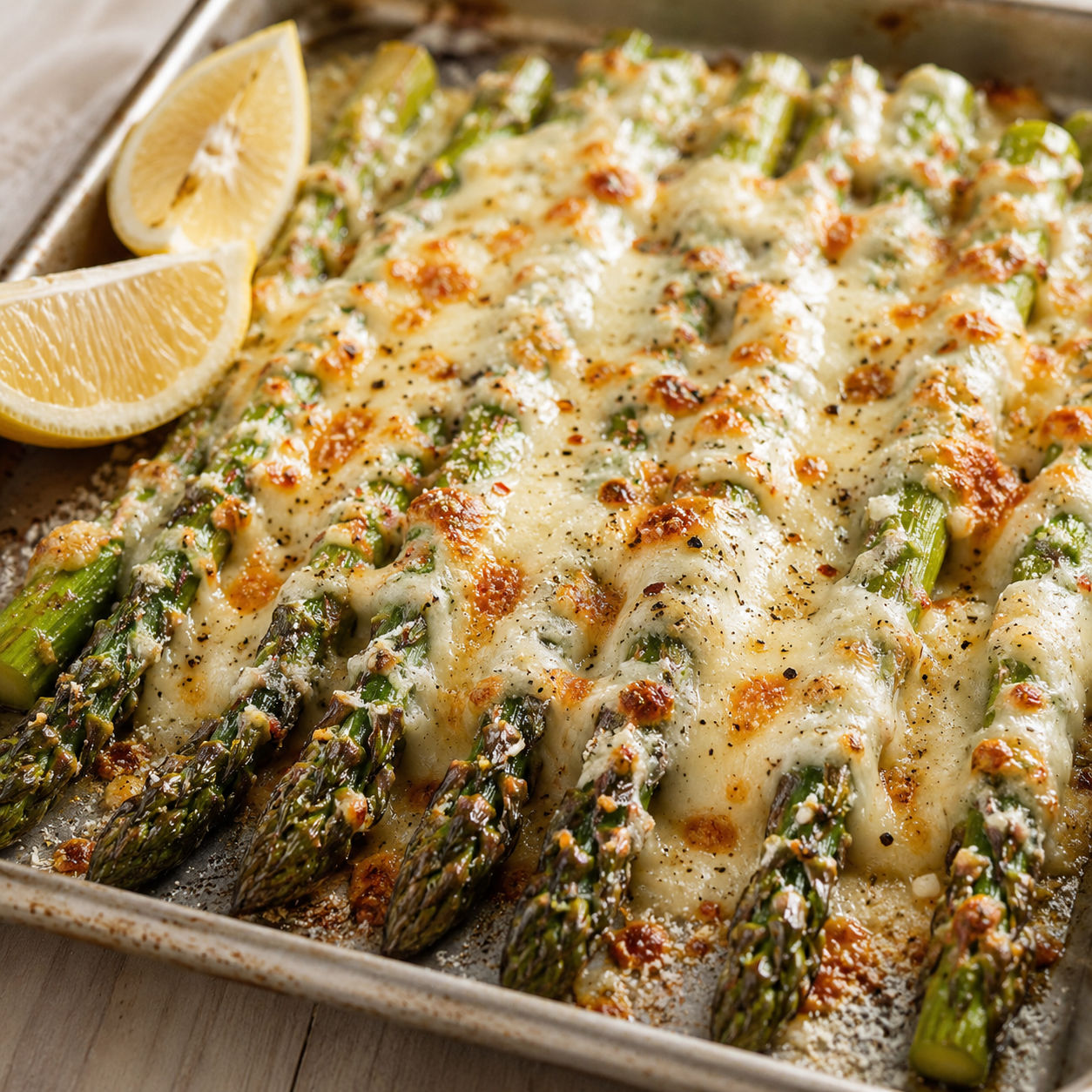
This is the recipe I pull out when I need a vegetable side that actually disappears before the main course. Asparagus on its own can be underwhelming, but a hot oven, a little garlic, and a blanket of bubbling cheese change everything.
The whole dish takes about twenty minutes from start to finish, and the ingredient list is short enough to memorize. The key is not to overbake the asparagus. You want it tender but still holding a little structure, with cheese that has just started to turn golden at the edges.
What goes on the sheet pan
Fresh asparagus is the star here, so look for stalks that are bright green with tight tips. The supporting cast is simple: good olive oil, a couple of garlic cloves, mozzarella for stretch, and parmesan for a salty, crispy lid.
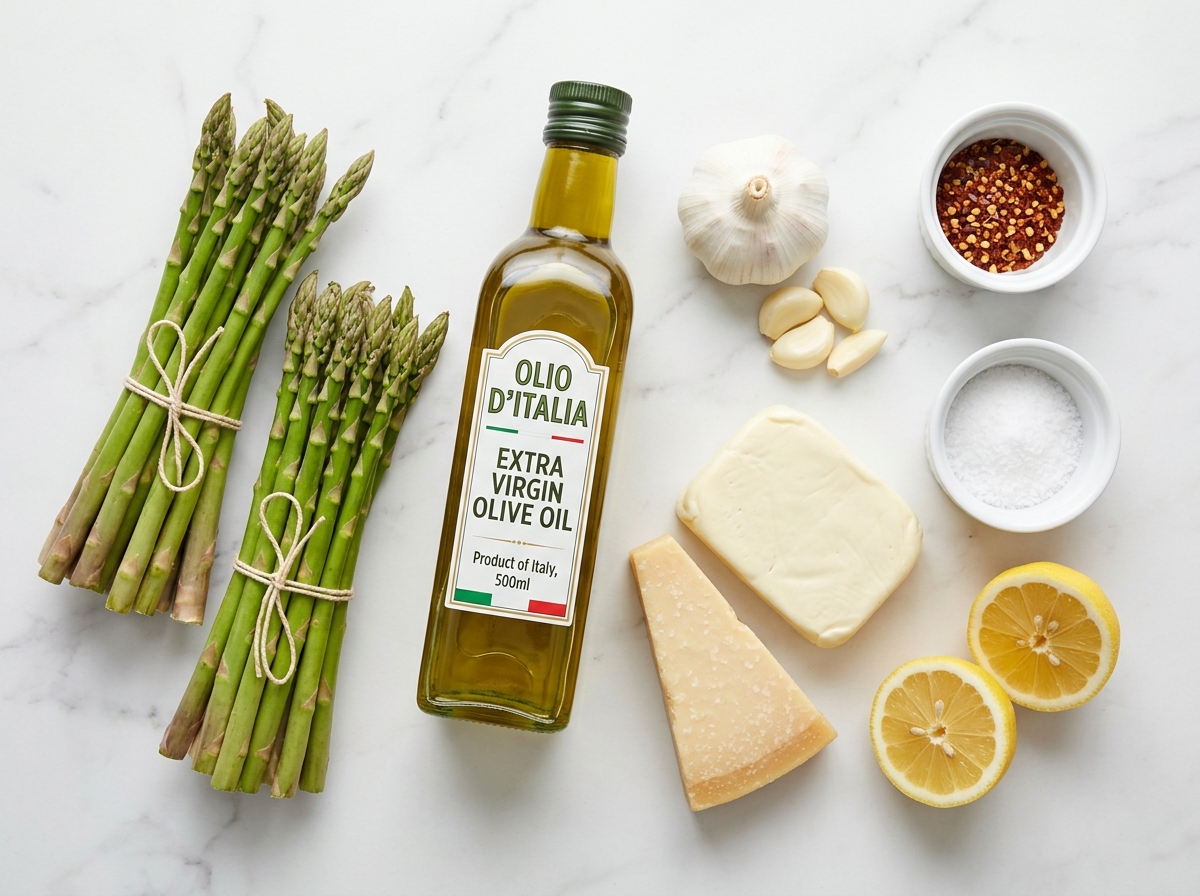
- Asparagus. Choose medium stalks that cook evenly without turning to mush. Two bunches feed four people as a side.
- Olive oil. Coats the stalks so they roast instead of steam in the oven.
- Garlic. Minced fine and tossed with the oil, it perfumes the whole dish without overpowering.
- Shredded mozzarella. The melt factor. Low-moisture part-skim works best here and browns nicely.
- Grated parmesan. Adds a savory, nutty crust that contrasts the tender spears beneath.
- Red pepper flakes. Optional, but a small pinch wakes everything up.
How to build the bake
- Trim the stalks. Hold each spear at both ends and snap off the woody bottom. It will break naturally where the tough part ends. Discard the bottoms.
- Toss with oil and garlic. Spread the asparagus on a rimmed baking sheet, drizzle with olive oil, add the minced garlic, salt, and pepper, and toss with your hands until every spear is glossy.
- Roast first. Bake at 400°F (200°C) for 8-10 minutes until the asparagus is just beginning to soften but still bright green.
- Add the cheese. Sprinkle mozzarella evenly, then dust with parmesan. Return to the oven for another 5-7 minutes until the cheese is fully melted and bubbling.
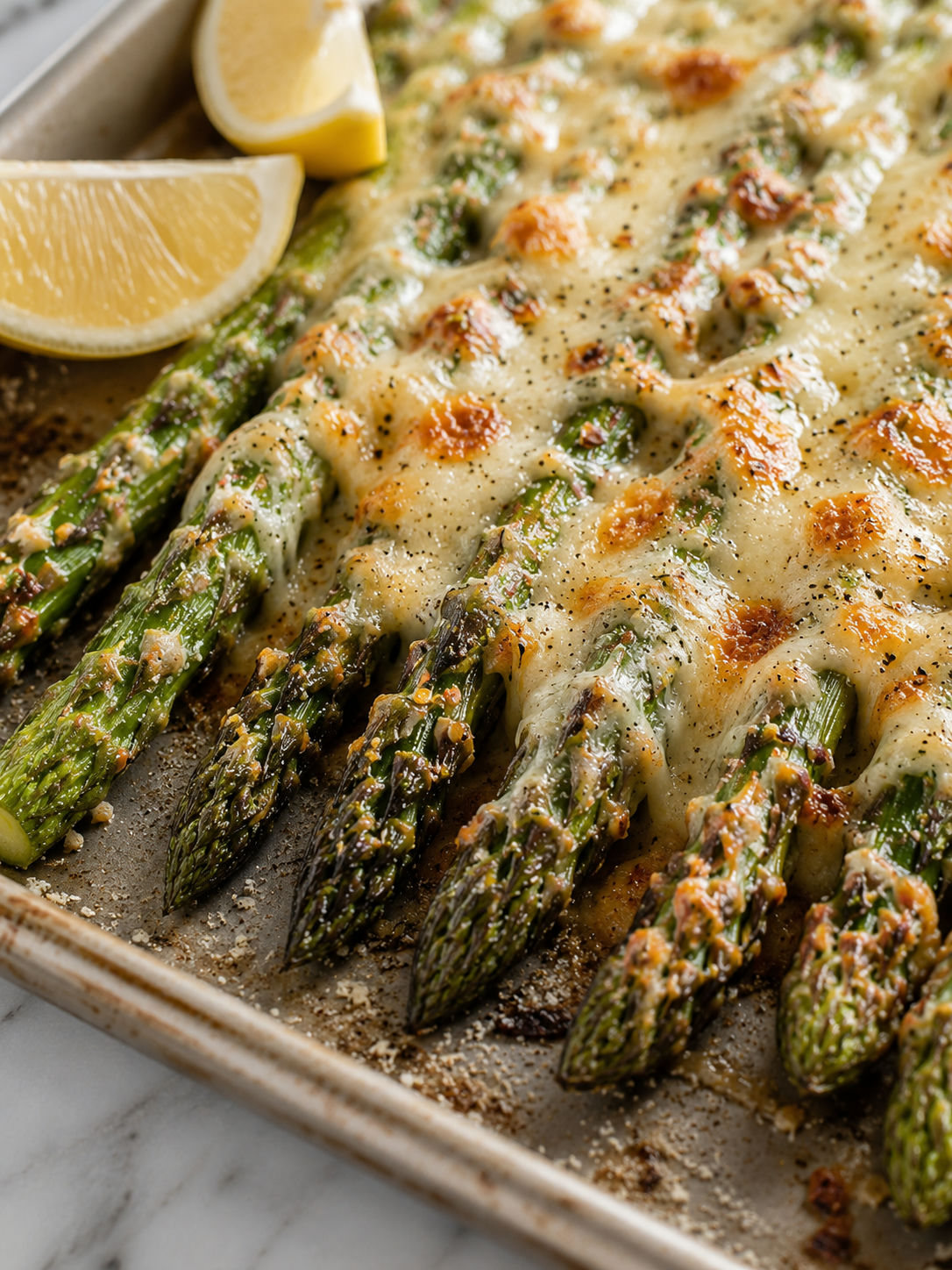
- Broil for color. Switch the oven to broil and watch closely for 1-2 minutes until the top is spotted golden. Pull it before it burns.
- Finish and serve. A squeeze of lemon over the top cuts the richness. Serve straight from the pan while the cheese is still stretchy.
The snap vs cut debate
Some cooks prefer to cut the bottom inch off every stalk with a knife. I still snap them one by one because the stalks tell you exactly where they turn tender. If you are feeding a crowd and need speed, line the bunch up and slice where the green starts to fade. Either way, remove the white woody ends or you will end up with chewy bites that no amount of cheese can save.
Cheese swaps that still melt
If you do not have mozzarella, young provolone or a mild fontina will melt similarly. For the crispy top, aged parmesan is hard to beat, but pecorino romano brings a sharper, saltier punch. I would avoid pre-shredded cheese sold in bags if you can. It is coated in anti-caking agents that prevent the smooth melt you want here. If you love this cheesy roasted approach, crispy baked cheesy onion uses the same technique on thick onion slices with equally good results.
Timing the tender-crisp sweet spot
Asparagus goes from crisp to overcooked fast. At 400°F, ten minutes is usually the turning point for medium stalks. Thinner stalks may need only six to eight minutes before the cheese goes on. Thicker ones can handle twelve. You are looking for a fork that slides in with just a little resistance. The FDA safe food handling guidelines recommend washing vegetables under running water before cooking, which is worth doing here since asparagus grows close to the ground.
What to serve alongside
This side pairs with anything roasted or grilled. Try it next to garlic butter chicken asparagus for a double asparagus dinner, or serve it with a simple grilled steak. It also works beautifully as a lighter companion to cheesy baked casserole on a holiday table when you want at least one vegetable that still feels indulgent.
Storing and reheating
Leftovers keep in an airtight container in the fridge for up to three days. The cheese will firm up and lose its stretch, but the flavor stays good. Reheat on a baking sheet at 375°F for about five minutes rather than the microwave, which softens the asparagus too much. I do not recommend freezing this one. The high water content in asparagus turns the spears mushy once thawed.

FAQs
- Can I use frozen asparagus?
Fresh is best here. Frozen asparagus releases too much water as it bakes, which pools under the cheese and prevents browning. If frozen is all you have, thaw it completely and pat it very dry before oiling.
- What kind of cheese melts best on asparagus?
Low-moisture mozzarella melts into a creamy layer without becoming greasy. Parmesan on top creates a salty, golden crust. Avoid high-moisture fresh mozzarella, which can make the dish watery.
- How do I keep asparagus from getting mushy?
Roast the stalks bare for the first eight to ten minutes so they start to tenderize and any surface moisture evaporates. Add the cheese only for the final few minutes, and serve promptly.
- Can I make this ahead for a dinner party?
Yes, up to a point. Trim, oil, and season the asparagus earlier in the day, then cover and refrigerate. Spread the cheese on just before you slide the pan into the oven.
- Is cheesy baked asparagus gluten-free?
Yes, as long as your cheese is not processed with any gluten-containing additives. Asparagus, oil, garlic, and natural cheeses are all naturally gluten-free.
- Can I add other vegetables to the same pan?
Halved cherry tomatoes or thin ribbons of zucchini can roast alongside, but add them after the asparagus has had its first five minutes alone. Dense vegetables like broccoli need smaller florets and a head start.
