 Pin it
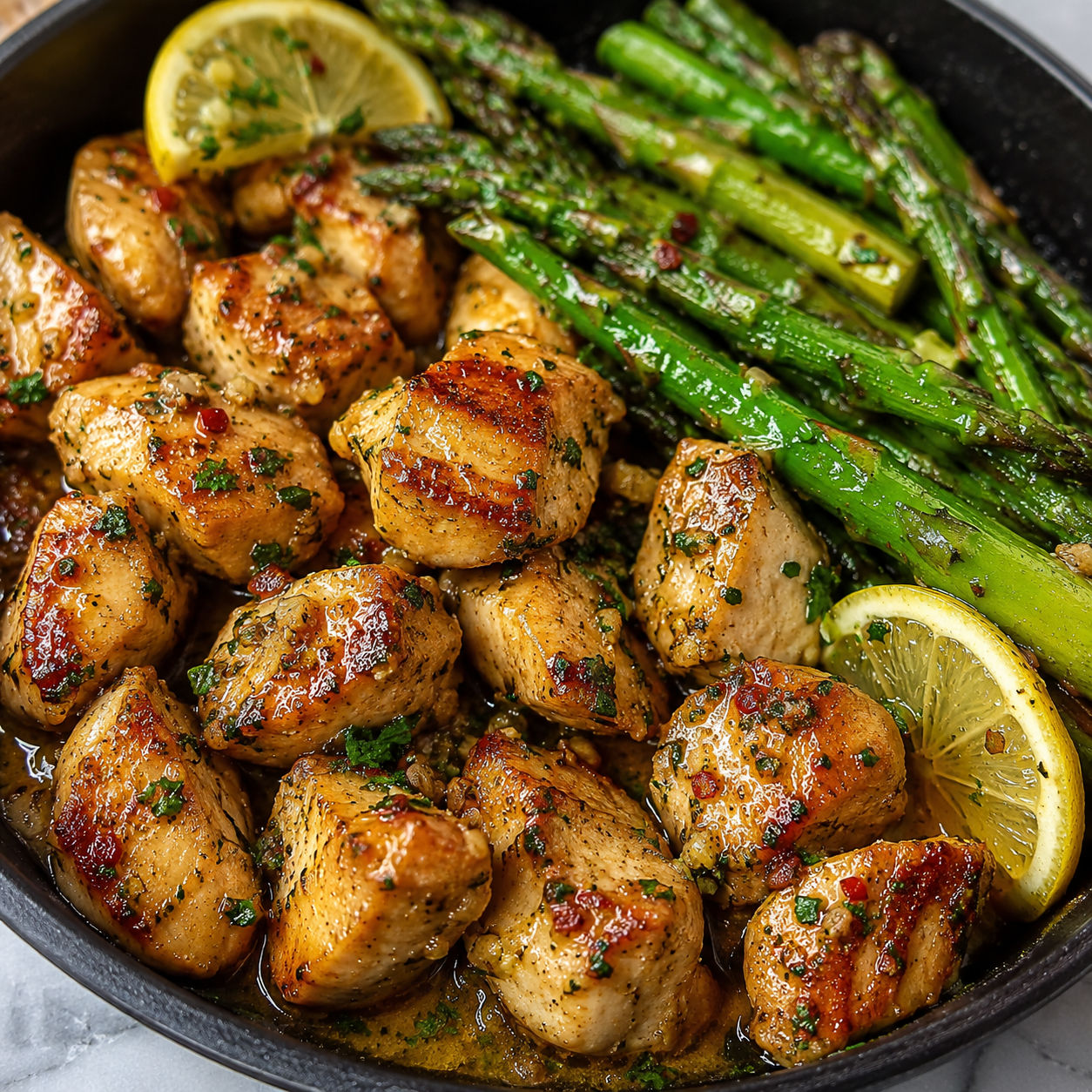
Tender Garlic Butter Chicken Bites with Asparagus is the kind of skillet dinner that feels bigger than the effort. The chicken gets browned at the edges, the asparagus stays bright, and the sauce tastes like garlic, butter, lemon, and all the good browned bits left in the pan.
I like this on nights when I want protein and vegetables without building a whole meal around side dishes. It is rich enough to serve as-is, but it also works over rice, pasta, mashed potatoes, or cauliflower rice if you want something to catch the sauce.
Skillet Staples That Matter
Use firm asparagus with tight tips and chicken pieces cut close to the same size. The sauce is simple, so fresh garlic, real lemon juice, and a little broth make a clear difference.
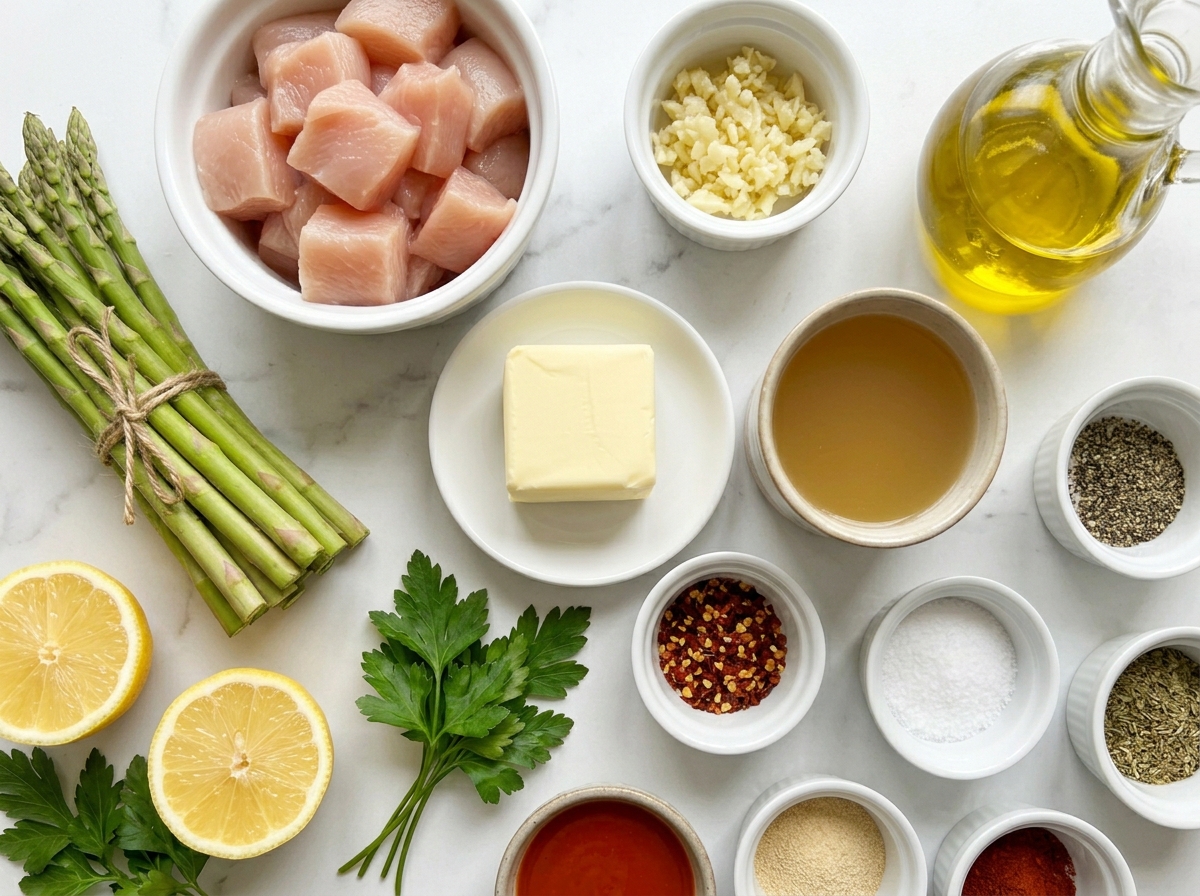
- Chicken breast. Lean pieces brown quickly and stay tender when cut evenly and cooked in a hot pan.
- Asparagus. Adds a fresh snap and balances the richness of the garlic butter.
- Butter. Gives the sauce body and a silky finish that clings to the chicken.
- Olive oil. Helps the chicken brown without the butter scorching too fast.
- Garlic. Adds the main savory flavor, but it needs gentle heat so it does not burn.
- Chicken broth. Lifts the browned bits from the pan and stretches the butter into a real sauce.
- Lemon juice. Brightens the skillet and keeps the butter from tasting heavy.
- Italian seasoning. Adds a quick herb base without a long ingredient list.
- Parsley and chili flakes. Finish the dish with fresh color and a little heat.
Brown, Blanch, Butter
- Season the chicken. Pat the chicken dry, then coat it with salt, pepper, onion powder, paprika, and Italian seasoning so every bite has flavor before it hits the pan.
- Prep the asparagus. Trim the woody ends. Blanch thick spears for 2 minutes and shock them in cold water, or skip this for thin spears.
- Sear in batches. Heat oil and part of the butter in a large skillet, then brown the chicken without crowding. Let the first side sit before turning so the edges get golden.
- Build the sauce. Lower the heat, add garlic, then pour in broth and scrape up the browned bits. Stir in the remaining butter, lemon juice, hot sauce, and parsley.
- Finish together. Add the asparagus and chicken back to the skillet. Toss until glossy and hot, then finish with parsley, chili flakes, and lemon slices.
The Tender Chicken Move
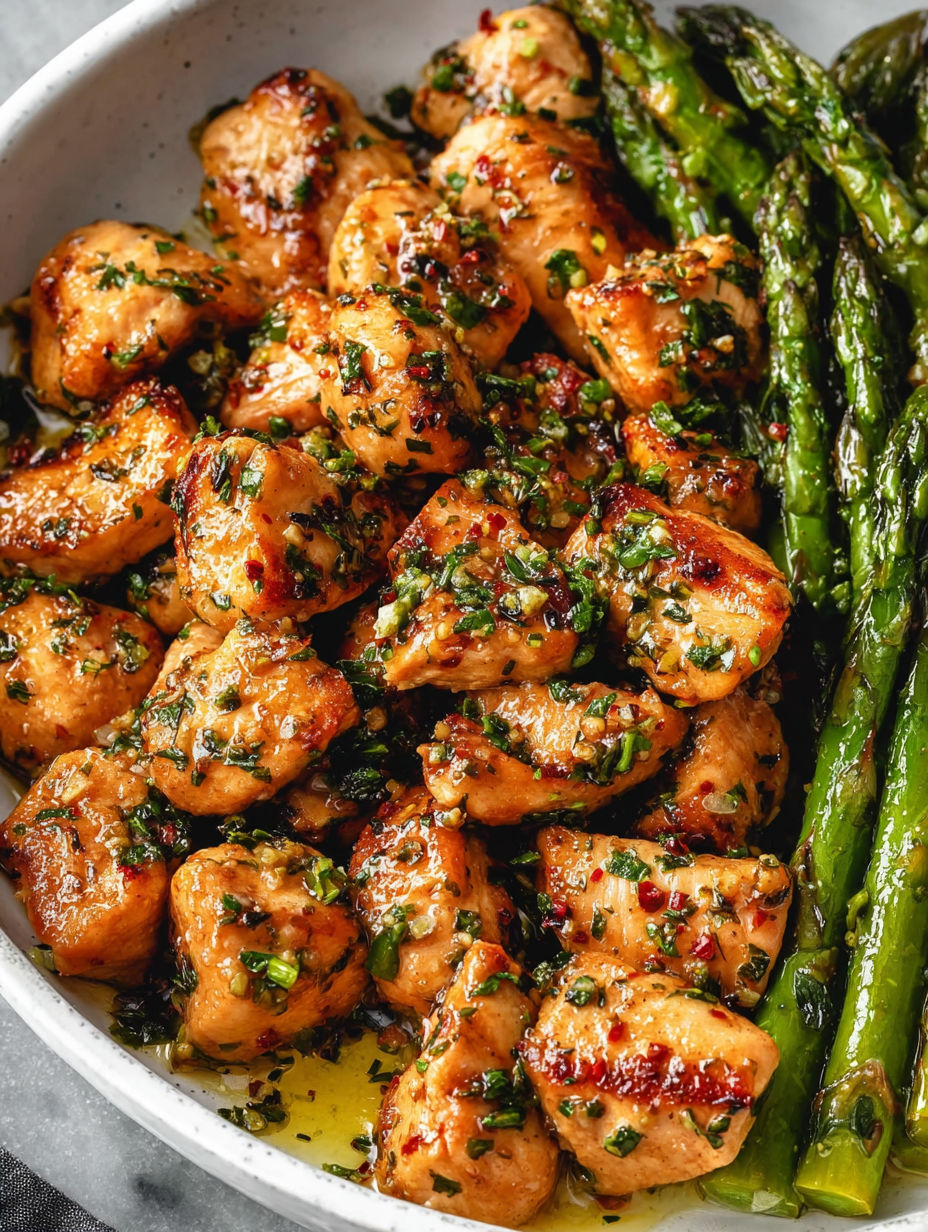
The main trick is not a secret ingredient. It is heat control. Chicken bites cook fast, and once the surface is dry they only need a few minutes to brown. Put them in the pan with space between pieces and leave them alone for the first minute or two. Stirring too soon tears the crust and cools the skillet.
I use an instant-read thermometer when the pieces are uneven. The USDA safe temperature for chicken is 165°F, and small bites can jump past that quickly. You can check the USDA safe temperature chart if you want a reliable reference. If you like this style of fast skillet dinner, the site already has garlic butter chicken with zucchini and corn with the same weeknight mood.
Keep Asparagus Crisp
Asparagus is best here when it bends a little but still has bite. Thick stalks benefit from a quick blanch because the tips and stems finish at the same time. Thin stalks can go right into the sauce for 2 to 3 minutes. Either way, trim the dry ends and rinse well. The FDA has a useful guide for safe produce handling.
If asparagus is not in season, green beans are the closest swap. Broccoli florets work too, but cut them small and expect a slightly softer skillet. For another asparagus-heavy dinner with a brighter lemon note, try lemon chicken asparagus stir-fry.
Sauce Without Burnt Garlic
Garlic butter sauce can turn bitter when the garlic hits a screaming hot pan. Brown the chicken first, then lower the heat before the garlic goes in. Thirty seconds is often enough. You want it fragrant, not dark.
The broth matters because it pulls up the browned bits stuck to the skillet. Those bits make the sauce taste savory instead of flat. Let the broth bubble briefly, then whisk in the butter and lemon. If the sauce looks separated, take the pan off the heat and swirl in a tablespoon of broth. That usually brings it back.
Ways To Serve It
This skillet is low-carb on its own, but it does not have to stay that way. Spoon it over rice if you want a simple dinner bowl. Toss it with short pasta for a quick garlic butter chicken pasta. Serve it beside garlic butter asparagus orzo when you want a fuller plate with the same lemony flavor.
For a richer meal, add a shower of parmesan at the end. For heat, use hot sauce in the pan sauce and a pinch of chili flakes at the table. If you are feeding someone who loves creamy garlic dinners, garlic butter chicken with creamy parmesan pasta is a good next recipe to make.
Leftovers That Stay Juicy
Leftovers keep well for 3 days in the fridge. The chicken is already cut small, so reheat it gently. A covered skillet over low heat with a splash of broth works better than blasting it in the microwave.
If you meal prep this, store the chicken and asparagus with the sauce spooned over the top. The butter will firm up when cold, then melt back into the skillet as it warms. I would not freeze it. Asparagus softens after thawing and loses the texture that makes this dish good.
Summary
Keep the pan hot, cook the chicken in batches, and add the garlic after the meat has browned so it stays sweet instead of bitter.
FAQs
- Can I use chicken thighs instead of chicken breast?
Yes. Boneless skinless thighs are a good swap and stay juicy. Cut them into similar bite-size pieces and cook until they reach 165°F in the thickest pieces.
- Do I have to blanch the asparagus first?
Only if the stalks are thick. Thin asparagus can go straight into the skillet. For thick spears, a quick 2-minute blanch helps them cook through without turning the chicken dry.
- How do I keep the chicken bites tender?
Cut the pieces evenly, dry them well, and give them space in the pan. Crowding traps steam, which makes the chicken pale and tougher. Pull the pieces as soon as they hit 165°F.
- Can I make this dairy-free?
You can use a good dairy-free butter substitute or a mix of olive oil and a splash of broth. The sauce will be lighter and less glossy, but the garlic, lemon, and herbs still carry the dish.
- How long do leftovers keep?
Store leftovers in an airtight container in the fridge for up to 3 days. Reheat gently in a skillet with a spoonful of broth or water so the sauce loosens and the chicken does not overcook.
- What should I serve with garlic butter chicken bites and asparagus?
For a low-carb meal, serve it with cauliflower rice or a simple salad. For something more filling, spoon the chicken and asparagus over rice, buttered noodles, or roasted potatoes.
