 Pin it
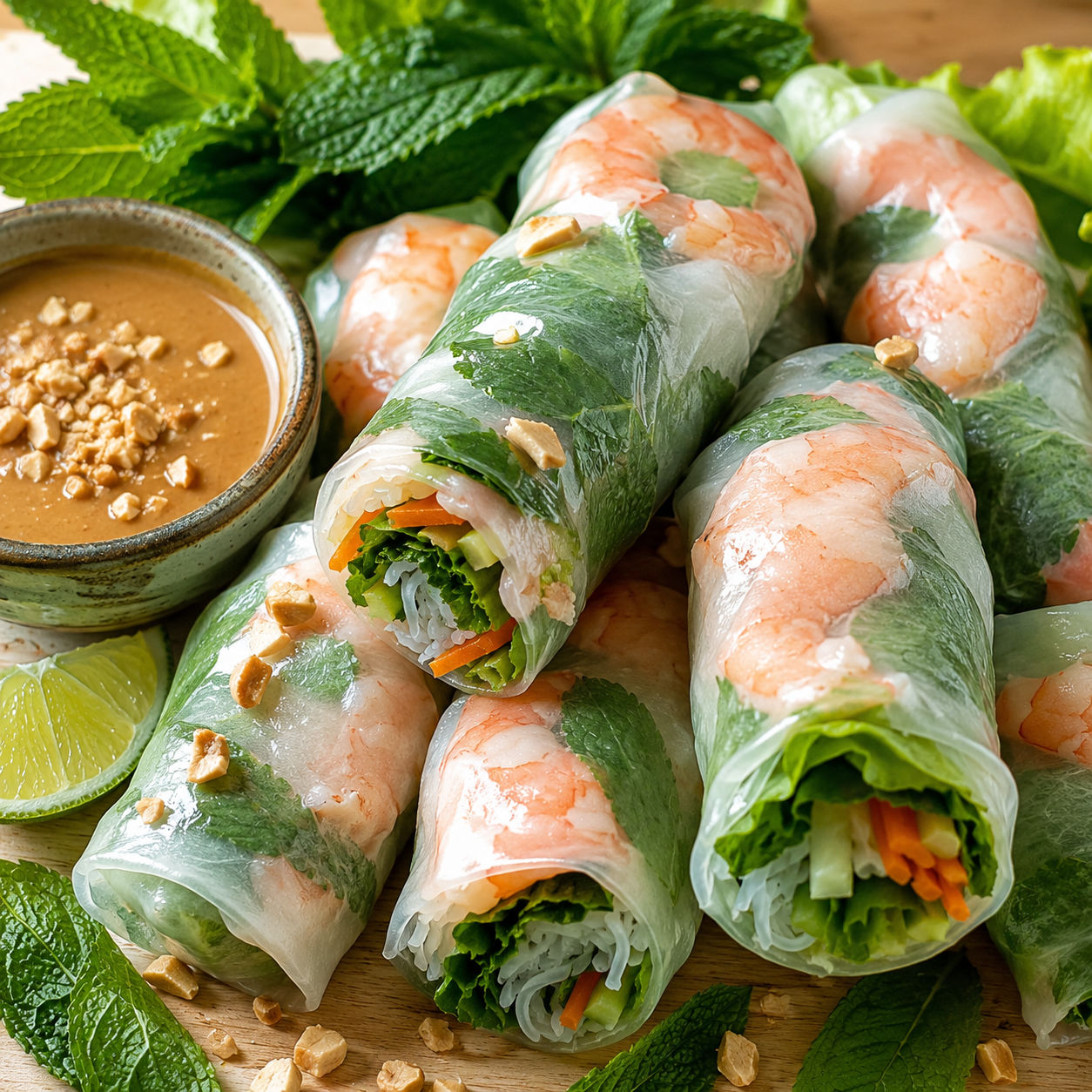
Easy Vietnamese Rice Paper Rolls with Peanut Sauce are the kind of meal that feels cool, crisp, and light but still satisfying. The rolls are packed with shrimp, tender rice noodles, lettuce, cucumber, carrot, mint, and cilantro, then dipped into a creamy peanut sauce with hoisin and lime.
The trick is not soaking the wrappers until they feel soft in the bowl. Dip them quickly, fill while they are still slightly firm, and they finish softening on the board. That one small habit keeps the rolls from tearing before you even start.
Fresh Filling Lineup
Good rice paper rolls are about contrast. You want soft noodles, sweet shrimp, cool herbs, crisp vegetables, and a sauce with enough body to cling.
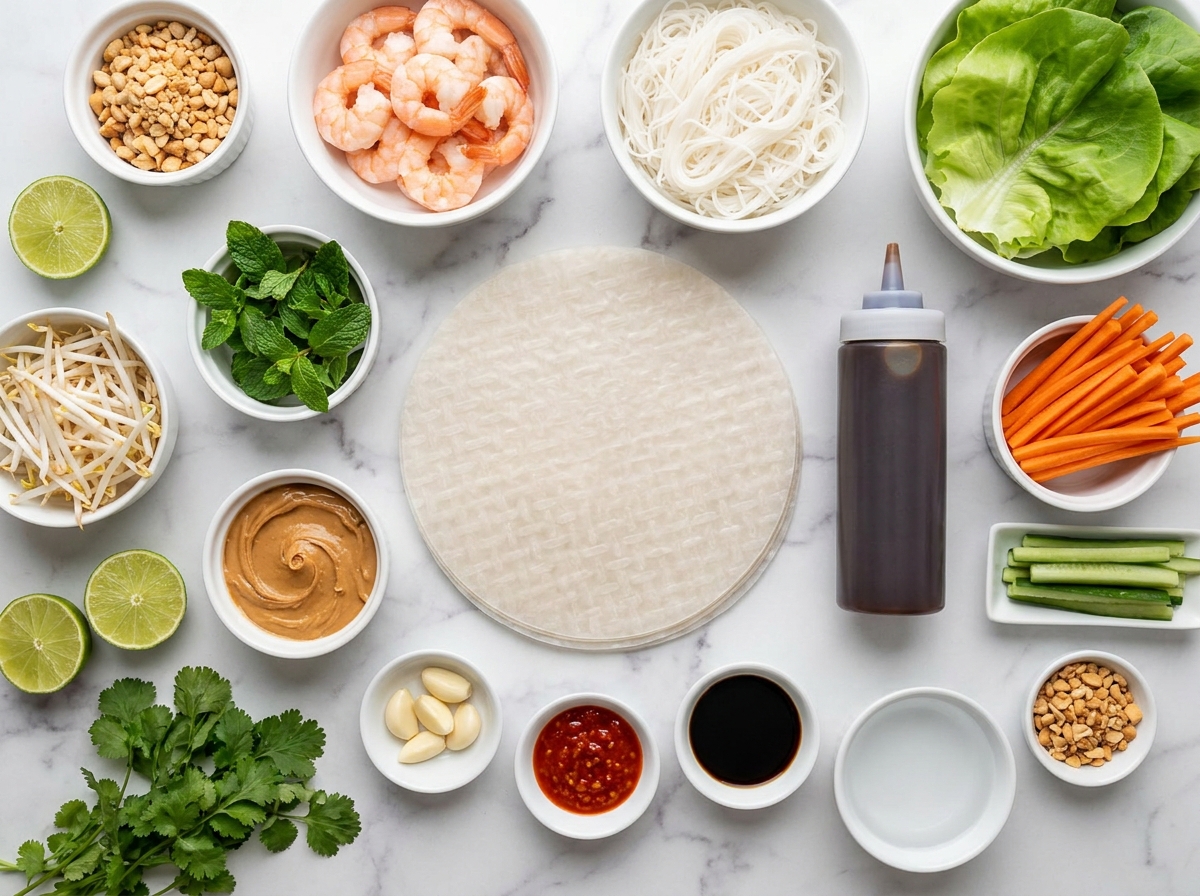
- Rice paper wrappers. They turn soft and translucent after a quick dip in warm water and hold the filling together.
- Cooked shrimp. Split shrimp look pretty through the wrapper and add clean, sweet flavor.
- Rice vermicelli. Thin noodles make the rolls more filling and give the sauce something to grab.
- Butter lettuce. Soft leaves cushion the filling and help stop sharp vegetables from poking through.
- Cucumber and carrot. These bring crunch, color, and a fresh bite.
- Mint and cilantro. Fresh herbs give the rolls their bright Vietnamese-style flavor.
- Bean sprouts. They add a snappy texture without making the rolls heavy.
- Peanut butter and hoisin. Together they make a creamy, savory-sweet dipping sauce.
- Lime, garlic, and chili sauce. These wake up the sauce so it tastes balanced instead of flat.
Roll Them Without Tearing
- Cook the noodles. Soak or boil the vermicelli according to the package, then rinse with cool water and drain well so the rolls do not get soggy.
- Mix the peanut sauce. Whisk peanut butter, hoisin, lime juice, warm water, garlic, and chili sauce until smooth. Thin it a spoonful at a time.
- Prep the filling. Slice the shrimp in half lengthwise and cut the vegetables into thin sticks. Keep everything close before you wet the first wrapper.
- Soften one wrapper. Dip rice paper in warm water for about 5 seconds. Lay it on a damp board while it is still a little firm.
- Layer the roll. Place shrimp and herbs near the top, then add lettuce, noodles, vegetables, and sprouts in the center.
- Fold and roll. Fold the bottom over the filling, tuck in both sides, then roll firmly toward the shrimp so they show through the outside.
The Wrapper Timing Matters
The biggest mistake is waiting until the rice paper feels fully soft in the water. By the time you lift it out, it keeps absorbing moisture and turns floppy on the board. A quick dip is enough. It should still feel slightly stiff when you start filling.
Work one wrapper at a time. A damp cutting board gives you a little grip without welding the wrapper to the surface. If you are new to rolling, use two sheets for the first few rolls. The ends will be a little chewier, but the roll is much easier to handle. For another fresh version already on the site, see these Vietnamese rice paper rolls.
Sauce With Real Balance
Peanut sauce needs salt, tang, and a little sweetness. Peanut butter gives it richness. Hoisin brings savory depth and sweetness. Lime cuts through both, and garlic keeps it from tasting like plain peanut butter.
Use warm water to loosen the sauce. Add it slowly because peanut butter can go from thick to thin fast. If it tastes too sweet, add lime. If it tastes dull, add a small splash of soy sauce or fish sauce. If you like peanut sauces with heat, the sauce on these rolls sits in the same comfort zone as spicy peanut chili oil noodles, just creamier and milder.
Shrimp Safety And Swaps
Cooked shrimp makes these rolls fast, but it still needs to be handled cold and clean. If you cook raw shrimp yourself, cook until the flesh is opaque and firm. The FDA seafood guide gives practical storage and serving advice for shrimp and other seafood at FDA seafood safety.
For swaps, try shredded rotisserie chicken, seared tofu, or thin omelet strips. You can also leave the protein out and add avocado, extra lettuce, or bell pepper. If you love shrimp appetizers, crispy rice with spicy salmon has a similar fresh seafood feel with a different texture.
Make-Ahead And Storage
Rice paper rolls taste best right after rolling, when the herbs are lively and the wrapper is soft but not gummy. If you need to prep ahead, wrap each roll individually in plastic wrap. Refrigerate for up to 6 hours and keep the sauce separate.
Do not cover a plate of rolls with a damp towel for long storage. The wrappers can absorb too much moisture and stick. Leftover peanut sauce keeps well in the fridge for 4 days. Loosen it with warm water before serving because it thickens as it sits.
Serving It As A Meal
For parties, set out a build-your-own roll board with warm water, wrappers, fillings, and sauce. It keeps the rolls from sitting too long, and people can choose their own herbs and crunch. Keep the shrimp chilled until serving.
For dinner, I like these with a simple rice dish or something warm from the skillet. Try them with easy shrimp fried rice when you want a fuller meal without losing the fresh, bright flavors.
Summary
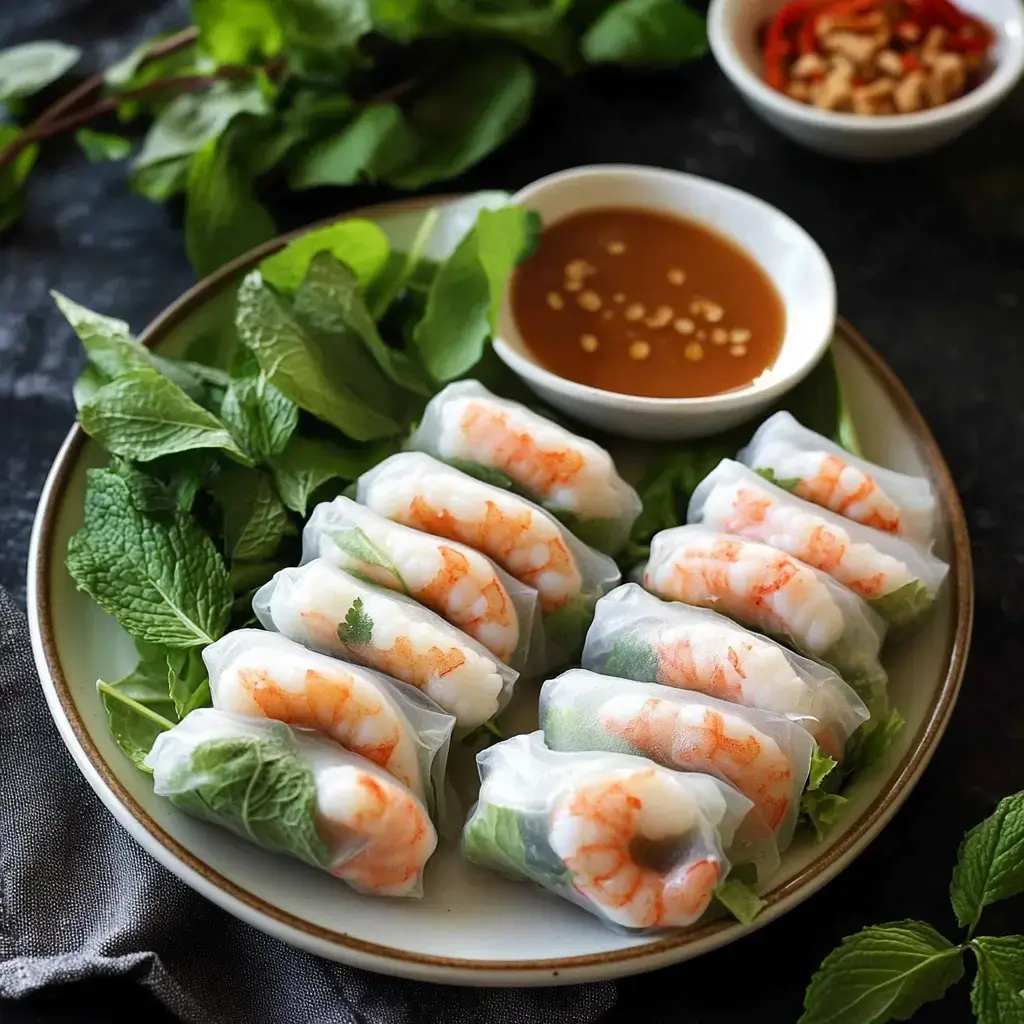
Serve these rolls as a fresh appetizer, light lunch, or make-your-own dinner spread with extra peanut sauce on the side.
FAQs
- What are Vietnamese rice paper rolls called?
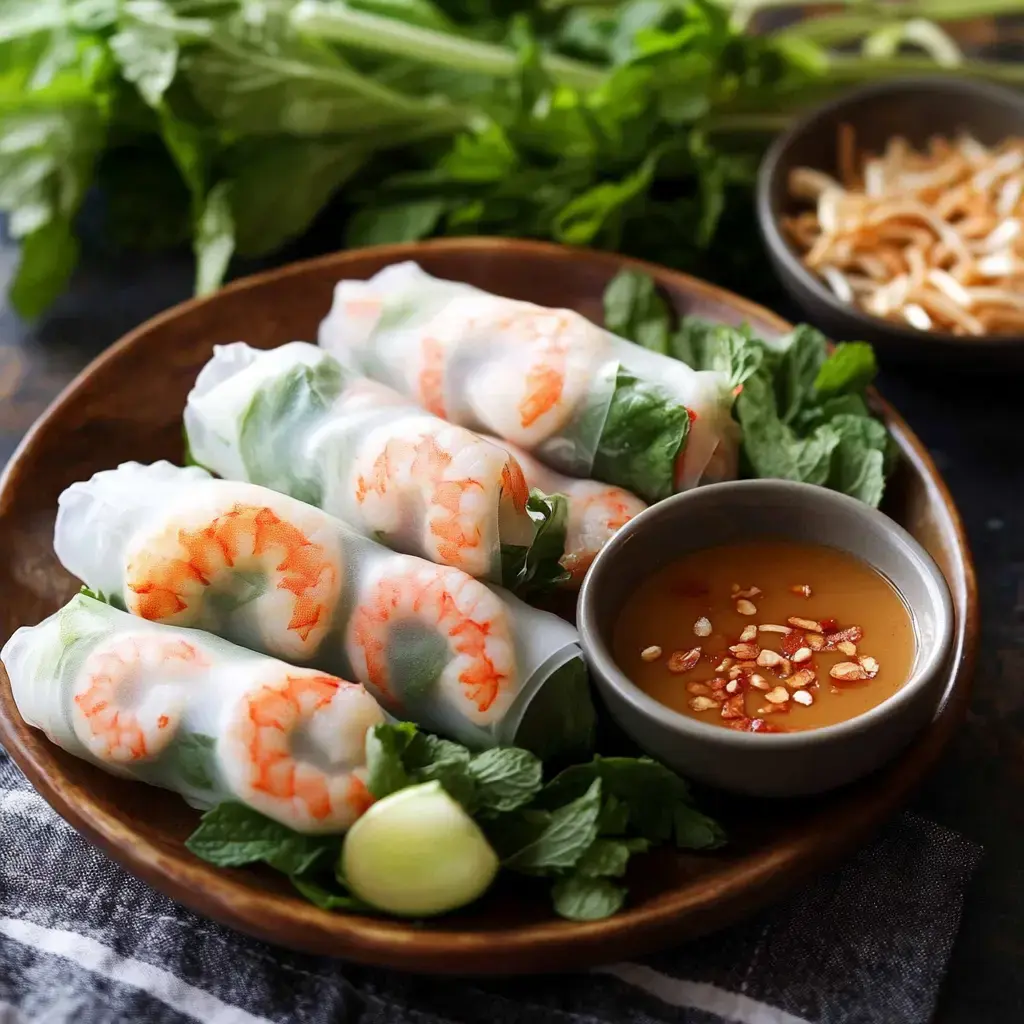
They are commonly called gỏi cuốn, fresh spring rolls, summer rolls, or rice paper rolls. They are not fried. The wrapper is softened in water and wrapped around fresh herbs, noodles, vegetables, and protein.
- Can I make rice paper rolls ahead of time?
Yes, but they are best within 4-6 hours. Wrap each roll tightly in plastic wrap so the rice paper does not dry out, then refrigerate. Do not stack unwrapped rolls because they stick together and tear.
- Can I make these without shrimp?
Yes. Use thin strips of cooked chicken, baked tofu, omelet strips, or extra vegetables. For a vegetarian version, use tofu and check that your hoisin sauce is vegetarian.
- Why are my rice paper rolls tearing?
The wrapper is usually too wet or the filling has sharp edges. Dip the rice paper for only a few seconds and use soft lettuce as a cushion around noodles, sprouts, and cut vegetables.
- Is peanut sauce traditional with gỏi cuốn?
Fresh Vietnamese rolls are often served with nước chấm or a hoisin peanut sauce, depending on the region and cook. This version uses the creamy hoisin peanut style that is common in many Vietnamese restaurants outside Vietnam.
- What should I serve with rice paper rolls?
Serve them with extra herbs, lime wedges, and a second dipping sauce if you like. For a bigger meal, pair them with fried rice, noodle salad, grilled chicken, or a crisp cucumber salad.
