 Pin it
Torshi Seer is the kind of kitchen project that asks very little on day one and gives back for months. You pack garlic into a clean jar, cover it with vinegar, and let the cloves slowly lose their bite.
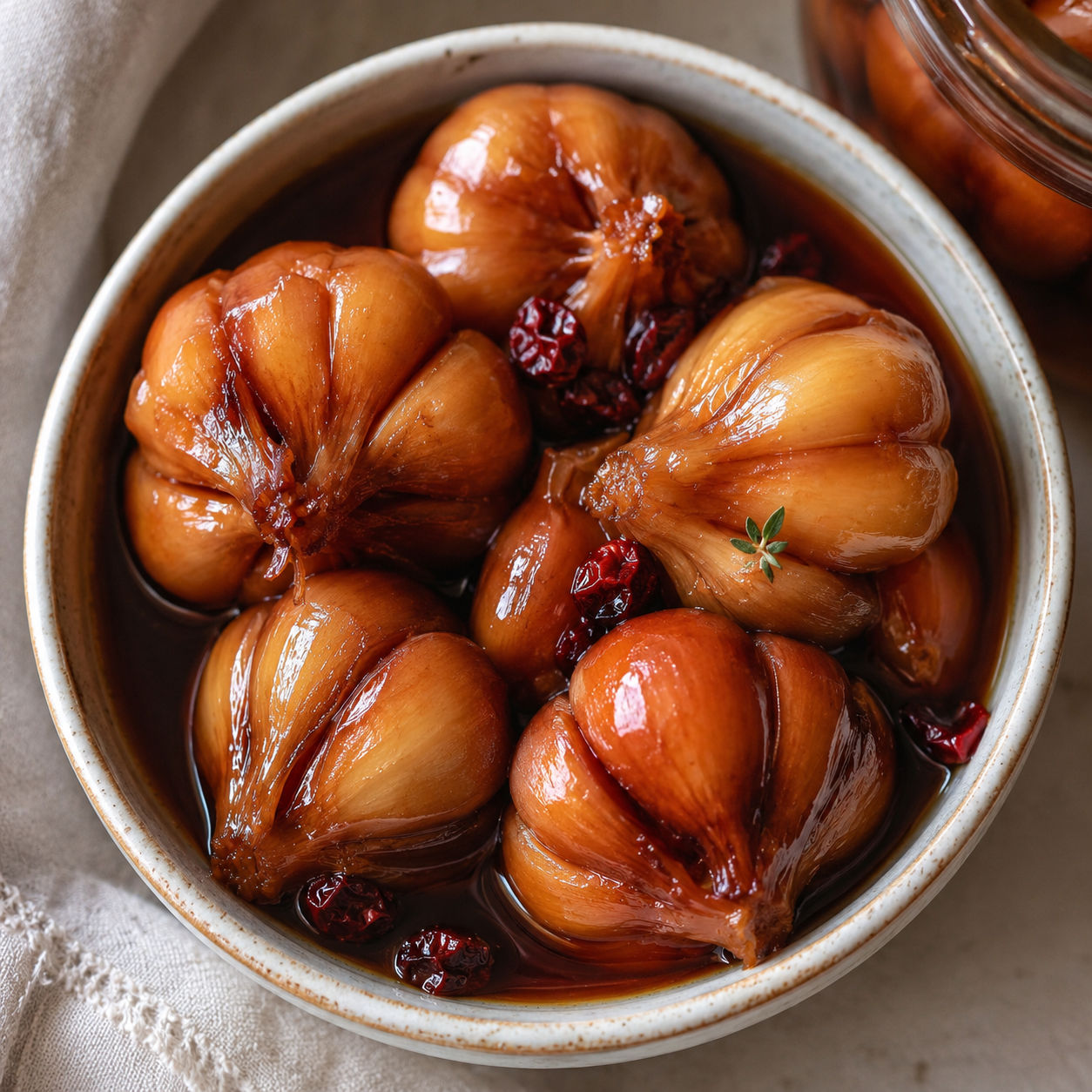
The young pickle is bright and punchy. Give it more time and it turns brown, soft, and almost jammy. I like a jar started with balsamic and red wine vinegar because it gets rich color early, while still leaving room for that old-school aged flavor.
The garlic and brine
Choose firm garlic heads with tight cloves and no green sprouts. The vinegar does most of the seasoning work, so use one you like enough to smell straight from the bottle.
- Whole garlic heads. They soften slowly and keep the pickle looking rustic in the jar.
- Loose garlic cloves. These fill the gaps and are usually ready to taste before the whole heads.
- Red wine vinegar. It brings clean acidity and keeps the brine from tasting heavy.
- Balsamic vinegar. It darkens the pickle sooner and adds a rounded sweetness.
- Sea salt. It seasons the garlic and helps the brine taste balanced.
- Date syrup or sugar. A small spoonful softens the vinegar edge without making the pickle sweet.
- Dried barberries. Optional, but they add a tart Persian accent and pretty color.
- Thyme. Optional, and best used lightly so it does not cover the garlic.
Pack the pickle jar
- Clean the jar. Wash a 1-quart glass jar and lid well, then rinse with very hot water and let them air dry.
- Trim the garlic. Cut away roots and loose papery skins. Leave the thin inner skins on the cloves so the heads hold together.
- Fill the jar. Pack the whole heads first, then tuck loose cloves into the open spaces. Add barberries and thyme if using.
- Warm the brine. Heat both vinegars with salt and date syrup just until steaming and dissolved. Do not boil hard.
- Cover completely. Pour the warm brine over the garlic until every clove is submerged. Tap the jar to release trapped air.
- Age and check. Close the jar, label it, and store it in a cool dark spot for at least 6 weeks. Refrigerate after opening.
Time changes everything
The first few weeks are all vinegar and raw garlic heat. That is normal. Around the 6-week mark, the cloves taste like a strong pickle and still have some snap. Months later, they start turning tan and softer. A year-old jar is the real prize. The garlic becomes mellow, tangy, and almost sweet. Some Persian cooks age jars for many years, and the oldest cloves can be mashed onto bread.
If you want the deeper color sooner, the balsamic helps. It will not fake a decade of aging, but it keeps a young jar from tasting thin. For a more traditional pale version, use wine vinegar or apple cider vinegar and wait longer.
Keep the cloves submerged
The only fussy part is the vinegar level. Garlic floats at first, especially if the heads have trapped air. Press them down with a clean spoon after the first day and top off with more vinegar if any cloves poke above the surface. A small glass pickle weight helps.
Use vinegar with 5% acidity for a reliable pickle. The National Center for Home Food Preservation has useful pickling guidance if you want the broader food-safety details. This recipe is a refrigerator-after-opening condiment, not a shelf-stable canning recipe.
Serve it with rich food
Torshi Seer belongs next to foods that can handle its punch. Put a clove beside rice, grilled chicken, salmon, kebabs, or a bowl of herbs and flatbread. It is especially good with buttery dishes because the vinegar cuts through the richness. Try it with garlic butter rice, garlic butter baked salmon, or Thai lime-garlic steamed fish.
Older cloves are softer and less sharp. Mash one into yogurt, smear it on bread, or chop it into a small spoonful of the brine for a quick relish.
Useful swaps
Red wine vinegar and balsamic make a rich, dark pickle. Apple cider vinegar gives a fruitier bite. White vinegar is sharper, so it benefits from a little date syrup or sugar. Barberries are lovely but optional. If you cannot find them, leave them out rather than adding cranberries, which can taste too sweet here.
You can use peeled cloves when you want a faster pickle for a small jar. They will not have the same old-fashioned look, but they soften sooner and are easy to spoon onto a plate. For another garlic condiment that is ready the same day, keep garlic white sauce in mind.
Storage and signs to watch
Store the unopened jar in a cool dark pantry or cupboard. Check it now and then during the first week to make sure the garlic stays under the brine. Bubbles can appear early. Blue or green garlic can also happen in acidic brines and often fades with time.
Once opened, move the jar to the refrigerator and use a clean fork each time. The pickle keeps for a long time when handled well, but trust your senses. Mold, slime, a bulging lid, or a rotten smell means the jar should go.
Summary
Start this garlic pickle now and open it when the cloves have softened to your taste. Keep every clove submerged, use good vinegar, and let the jar rest in a cool dark spot.
FAQs
- How long should Torshi Seer age before eating?
You can taste it after 6 weeks, but it will still be sharp and garlicky. After 6 months it starts to mellow. After a year or more, the cloves become darker, softer, and much sweeter.
- Can I use white vinegar instead?
Yes. Use a 5% acidity white vinegar, apple cider vinegar, or wine vinegar. If you use plain white vinegar, add a spoonful of date syrup or sugar so the pickle does not taste flat.
- Why did my garlic turn blue or green?
That color can happen when garlic meets an acidic brine. It is usually harmless and often fades as the pickle ages. If you see mold, a slimy surface, or a foul smell, discard the jar.
- Do I need to peel every clove?
No. For a traditional look, remove the outer papery layers but leave the thin skin around the cloves. Loose peeled cloves pickle faster, but whole heads hold together better and look beautiful in the jar.
- How do I serve Persian garlic pickle?
Serve one or two cloves beside rice, grilled meat, fish, stews, or a simple herb plate. Older cloves are soft enough to spread on flatbread. They are strong, so start small.
- Does Torshi Seer need refrigeration?
While the sealed jar ages, keep it in a cool dark place and make sure the garlic stays covered by vinegar. Once opened, refrigerate it. Use clean utensils each time so the pickle keeps well.
