 Pin it
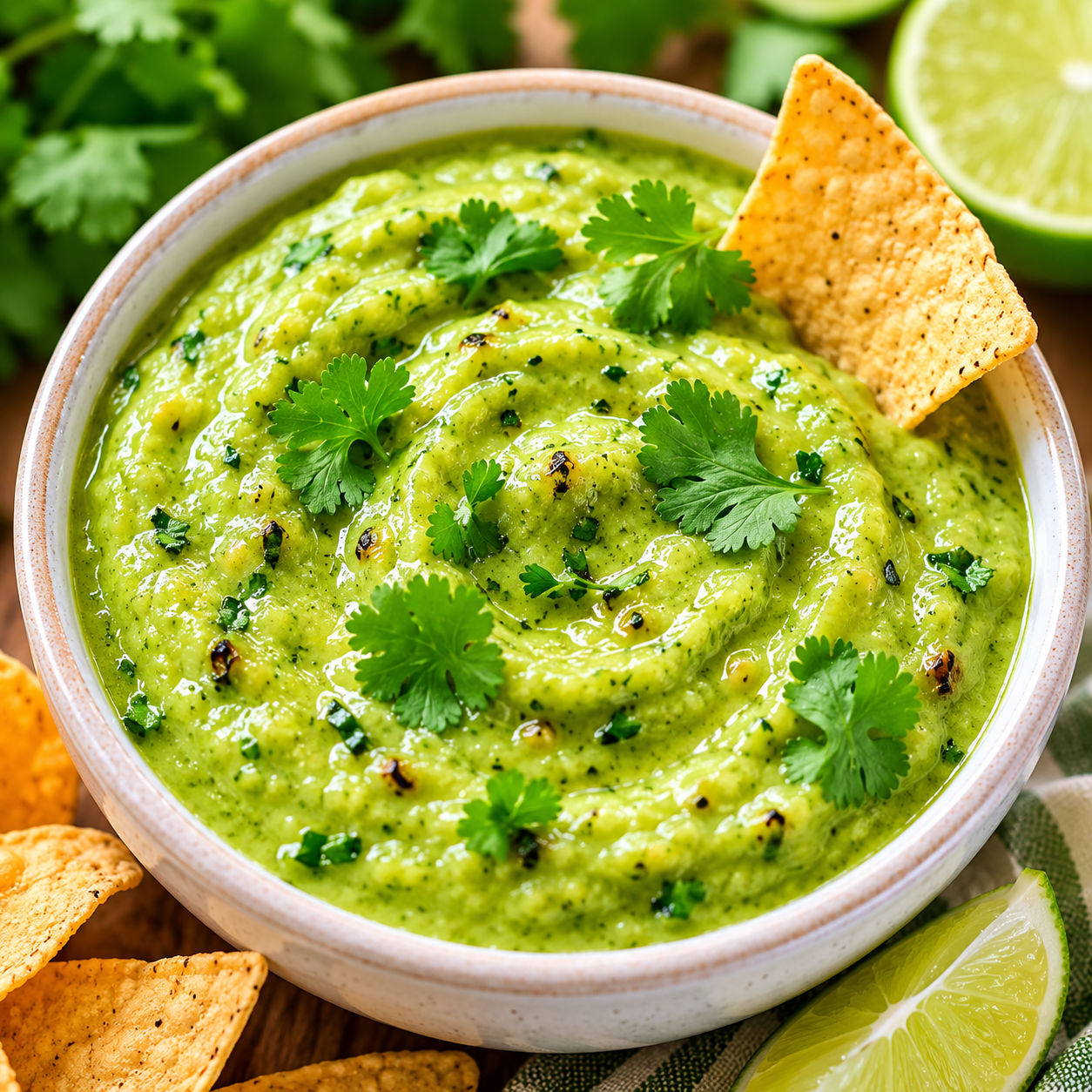
Roasted Tomatillo Avocado Salsa is what I make when regular salsa verde feels a little too sharp. The tomatillos still bring that clean green tang, but the avocado rounds it out into something creamy and mellow.
The roasting step matters. It softens the tomatillos, sweetens the onion, and gives the chiles a smoky edge that you cannot get from a raw blender salsa. Let the roasted vegetables cool before adding the avocado so the color stays fresh and the texture stays velvety.
The Green Salsa Lineup
Choose firm tomatillos with tight husks and ripe avocados that yield slightly when pressed. The salsa only has a few ingredients, so fresh lime juice and cilantro make a real difference.
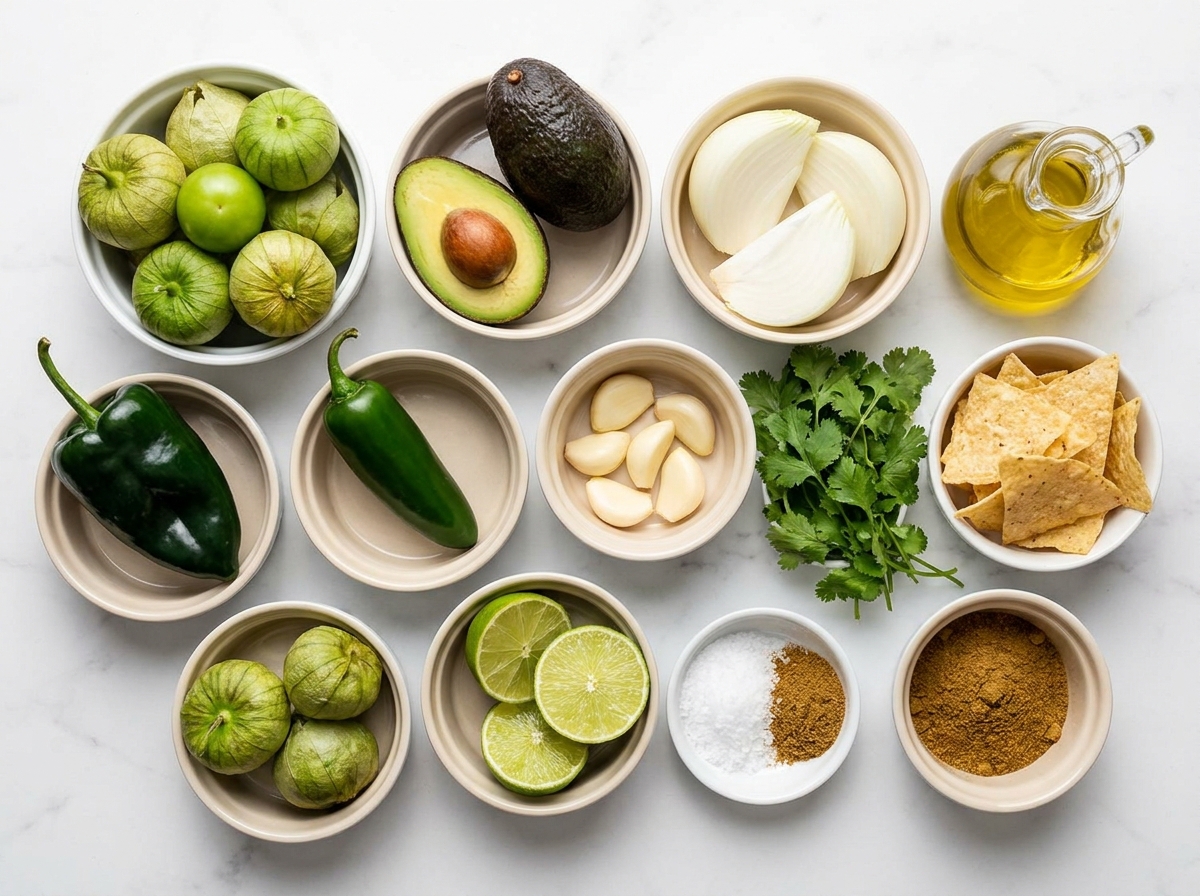
- Tomatillos. Bring the bright, tangy backbone that makes this salsa taste fresh even after roasting.
- Ripe avocados. Turn the salsa creamy without sour cream or dairy.
- White onion. Sweetens in the oven and gives the finished salsa body.
- Jalapeno and poblano. Add heat, green chile flavor, and a little smoky depth.
- Garlic. Roasts until mellow so it blends into the salsa instead of biting hard.
- Cilantro. Keeps the finished salsa lively and herbal.
- Lime juice. Brightens the avocado and helps slow browning.
- Olive oil and salt. Help the vegetables roast well and make the flavors taste complete.
Roast, Cool, Then Blend
- Prep the vegetables. Husk and rinse the tomatillos, then halve them with the onion, poblano, jalapeno, and garlic.
- Roast until blistered. Spread everything on a sheet pan with oil and salt, then roast until the tomatillos collapse and the chiles char in spots.
- Let the pan cool. Give the roasted vegetables 10 minutes off the heat so the avocado stays green and fresh.
- Blend the salsa. Add the roasted vegetables, avocados, cilantro, lime juice, cumin, and a splash of water to a blender. Blend until creamy.
- Adjust and serve. Taste for salt and lime. Thin with more water if you want it pourable for tacos.
Roasted Tomatillo Avocado Salsa Tips
The best texture comes from roasting the tomatillos until they slump and release some juice. Pale, barely cooked tomatillos taste grassy. Deeply charred tomatillos can taste bitter, so aim for blistered spots and soft centers. If you want a salsa closer to restaurant green sauce, blend it completely smooth. If you like more texture, pulse it and leave tiny flecks of roasted onion and chile.
Heat You Can Control
This recipe lands in the mild to medium range if you remove most of the jalapeno seeds. For more heat, leave the seeds in or swap the jalapeno for serrano. For less heat, use only the poblano and half a jalapeno. If you enjoy creamy green dips, this sits right between fresh tomatillo avocado salsa and avocado jalapeno creamy dip. The roasted vegetables make it deeper than both.
How To Serve It
Scoop it with tortilla chips, spoon it over tacos, or use it as a quick sauce for grilled meat. It is especially good with grilled salsa verde chicken because the avocado softens the chile heat. You can also loosen it with a tablespoon or two of water and drizzle it over burrito bowls, breakfast eggs, roasted potatoes, or enchiladas.
Storage Without Browning
Avocado salsa is best the day it is made, but leftovers can still taste good for 1-2 days. Use enough lime, move the salsa to a small airtight container, and press plastic wrap right onto the surface before adding the lid. The FDA has useful produce handling guidance if you want a refresher on rinsing tomatillos and herbs safely in the kitchen, see their produce safety guide.
Easy Ways To Change It
Add a handful of roasted pumpkin seeds for a nuttier salsa, or blend in a small splash of olive oil if you want a silkier dip. For a brighter version, add extra lime and a small handful of raw cilantro at the end. If you are building a salsa spread, serve this beside best homemade salsa ever so guests get one creamy green bowl and one classic red bowl.
FAQs
- Can I make roasted tomatillo avocado salsa ahead?
Yes, but it is best within the first day because avocado slowly darkens. Press plastic wrap directly onto the surface, cover the container, and refrigerate for up to 2 days.
- Do I need to peel tomatillos before roasting?
Remove the papery husks, then rinse the tomatillos well because they feel sticky underneath. You do not peel the green skin. It softens and blends smoothly after roasting.
- Can I use serrano instead of jalapeno?
Yes. Serrano makes a sharper, hotter salsa. Use one serrano for medium heat, or remove the seeds and ribs if you want the chile flavor without as much burn.
- Why did my salsa turn brown?
The avocado oxidized, or the roasted vegetables were still hot when blended. Cool the tomatillos and chiles first, use enough lime juice, and store the salsa with wrap touching the surface.
- What should I serve with this salsa?
It is great with tortilla chips, tacos, quesadillas, grilled shrimp, roasted vegetables, and eggs. It also works as a creamy sauce for chicken enchiladas or rice bowls.
- Can I make it without a food processor?
A blender works well and gives the smoothest texture. For a chunkier salsa, chop the roasted vegetables by hand and mash in the avocado, lime, cilantro, and salt.
