 Pin it
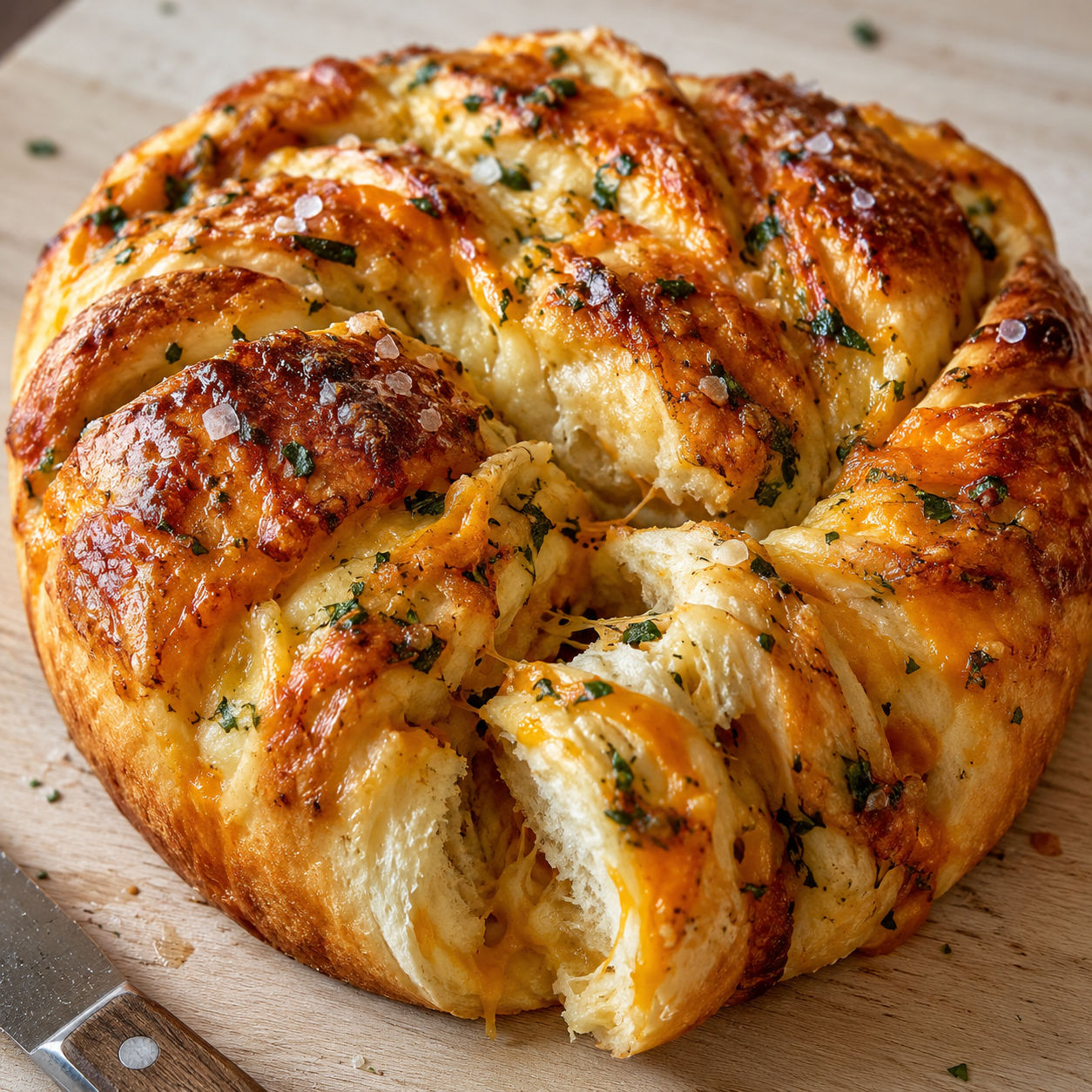
This is the loaf you bring to the table when you want everyone to pause before cutting in. The twisted strands show off ribbons of melted cheese and bright green herbs baked into a soft, eggy dough, and it tastes even better than it looks.
The technique is simpler than a braided challah and far more forgiving than laminated dough. You roll, fill, slice, and twist. A little cheese might tumble out, and that is fine. Those crispy bits on the parchment are the cook's reward.
The cheese and herb filling
This dough is enriched with milk and eggs so it bakes up soft and slightly sweet, a perfect foil for the sharp, savory filling. Buy a block of cheddar and grate it yourself. Bagged pre-shredded cheese is coated in starch that can make the filling gritty.
- Whole milk and eggs. They give the dough a tender, brioche-like crumb that stays soft for days.
- Instant yeast. A reliable rise that gets the dough fluffy without the longer wait of sourdough.
- Sharp cheddar cheese. The main flavor inside the swirl. It melts into distinct pockets rather than disappearing.
- Fresh herbs. A mix of parsley, basil, and thyme adds bright color and real aroma. Dried herbs work in a pinch but use half the amount.
- Garlic. Minced fine so it distributes evenly and roasts gently inside the bread rather than burning.
- Parmesan and mozzarella. Parmesan adds a salty, nutty edge and mozzarella gives you the soft, stretchy pull.
- Honey. Just a touch to feed the yeast and balance the savory filling.
Shape the twisted loaf
- Mix the dough. Combine the warm milk, yeast, and honey in a stand mixer bowl. Let it sit until foamy, about five minutes. Add the eggs, flour, and salt, then knead with the dough hook for four to five minutes until the dough is smooth and slightly tacky. Add the softened butter and knead until it disappears into the dough.
- First rise. Cover the bowl and let the dough rise in a warm spot for one to one and a half hours until doubled in size. A turned-off oven with the light on works perfectly.
- Make the filling. Stir together the softened butter, garlic, cheddar, mozzarella, parmesan, herbs, and red pepper flakes. It should look like a thick, fragrant paste.
- Roll and fill. Roll the dough into a 12 by 18 inch rectangle on a lightly floured surface. Spread the filling evenly, leaving a one-inch border along one long edge. Roll tightly from the opposite long edge and pinch the seam to seal.
- Slice and twist. Using a sharp knife, slice the log almost completely in half lengthwise, stopping about one inch from the top. Turn the halves so the cut sides face up, then cross the strands over each other to form a long twist. Coil the twist into a round loaf on a parchment-lined baking sheet. Tuck any escaped cheese back on top.
- Second rise and bake. Cover loosely and let rise for thirty to forty-five minutes until puffy. Bake at 350°F for thirty to thirty-five minutes until the crust is deep golden and the internal temperature hits 200°F. Brush with melted butter and sprinkle with flaky sea salt.
Why the twist matters
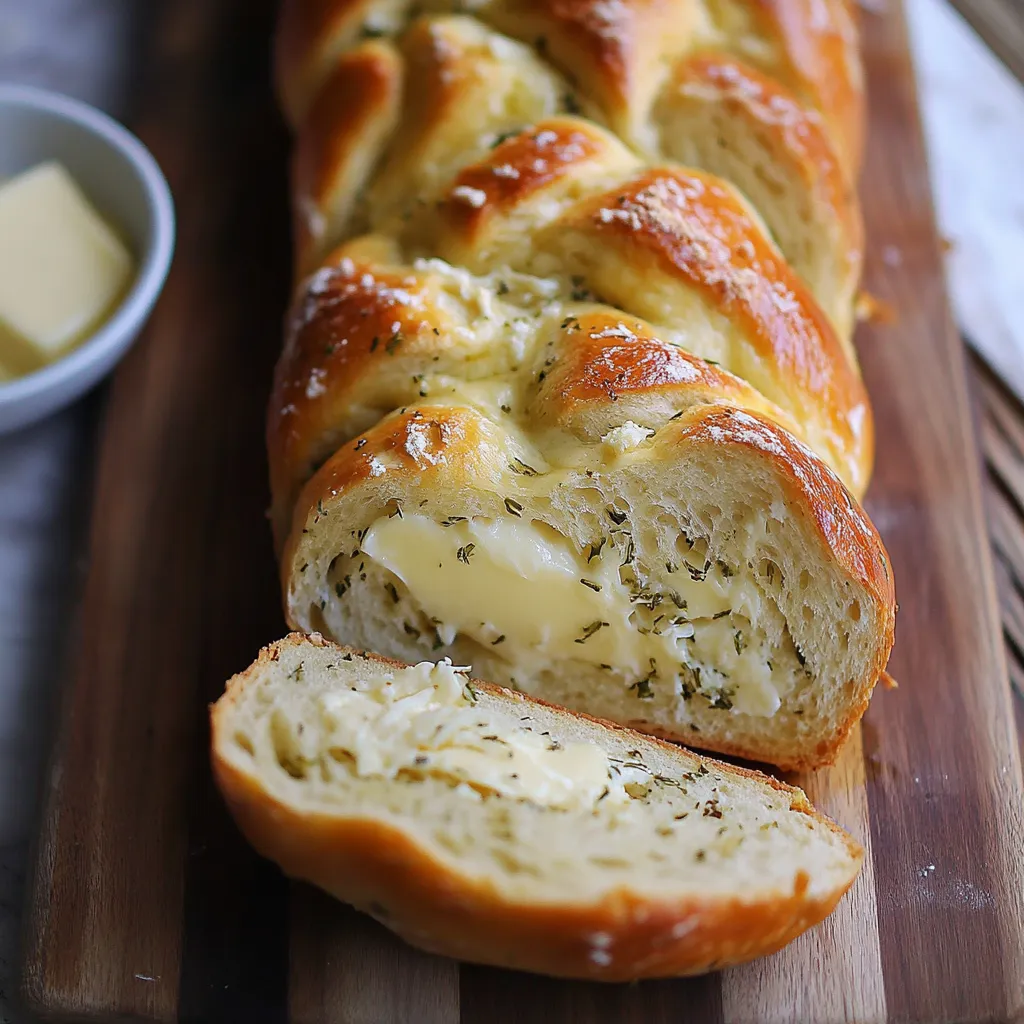
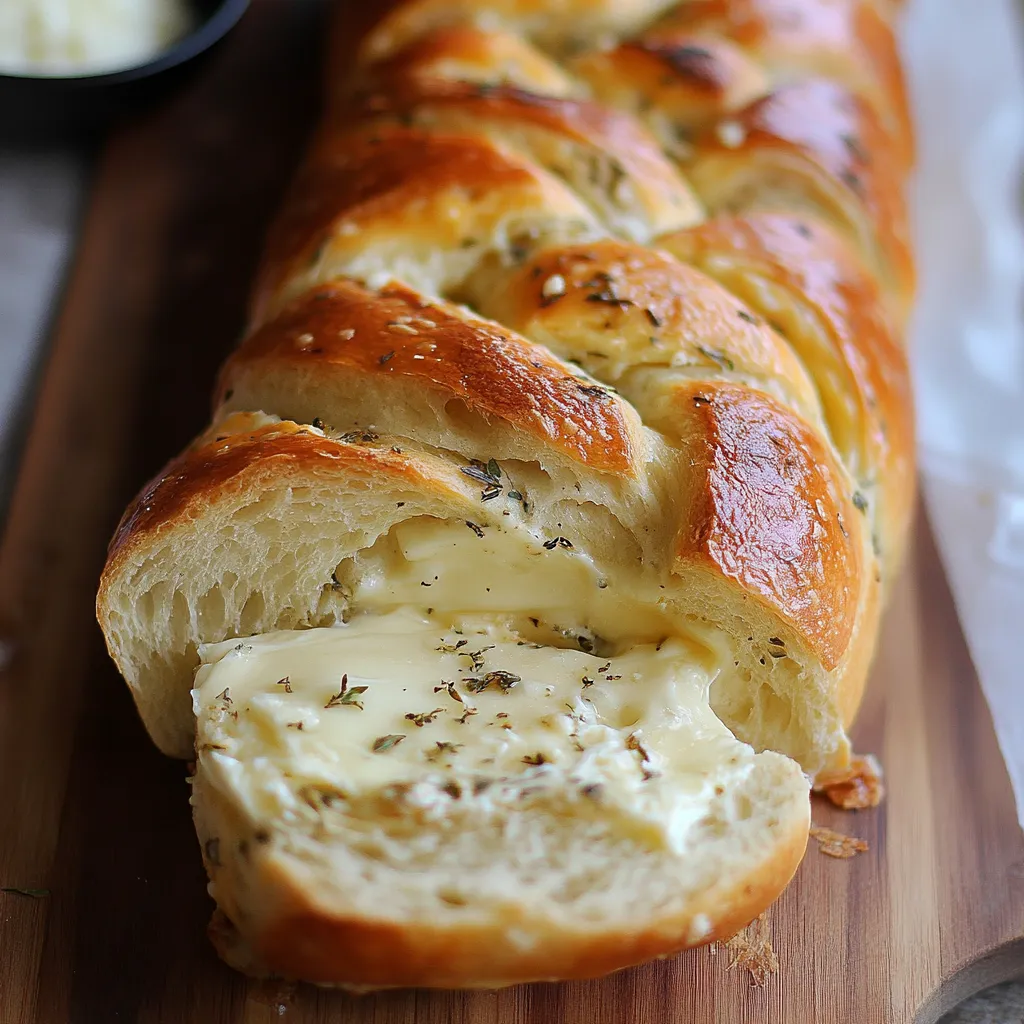
Turning the cut sides upward does two things. It exposes the cheese and herbs so they brown and bloom in the oven, and it locks the filling inside the strands so every slice shows a spiral instead of a plain seam. If you enjoy pull-apart breads, you will also like easy cheesy garlic bread and golden Hawaiian rolls with savory garlic butter and cheese.
Cheese swaps that still work
Sharp cheddar is the classic choice, but gruyere adds a nutty depth and pepper jack brings gentle heat. For a milder loaf, use all mozzarella and parmesan. Avoid very wet cheeses like fresh mozzarella balls. They release too much liquid and can make the dough soggy near the base.
Doneness and temperature
Color alone can fool you because the cheese browns early. The safest check is an instant-read thermometer inserted into the center of the dough. Bread is fully baked at 200°F. If the top is browning too fast, tent loosely with foil for the last ten minutes. For more on yeast baking, see the guides at King Arthur Baking.
Serving and storing
This bread is at its best twenty minutes out of the oven, while the cheese is still soft and the crust crackles. Serve it with a bowl of soup or alongside creamy garlic herb chicken pasta for a full dinner. Leftovers keep well in an airtight bag at room temperature for two days. Reheat wrapped in foil at 325°F for ten minutes to revive the crust.
FAQs
- Can I use active dry yeast instead of instant?
Yes. Activate it in the warm milk with the honey first and let it sit until foamy, about ten minutes. Then proceed with the recipe as written.
- What cheese works best for the swirl?
Sharp cheddar, gruyere, or a mix of mozzarella and parmesan all melt beautifully. Avoid wet fresh cheeses that release too much moisture.
- How do I keep the filling from leaking out?
Leave a clean one-inch border when spreading the filling, pinch the seam firmly, and do not overfill. A little leakage is normal and turns into crispy edges.
- Can I make the dough the night before?
Absolutely. After the first rise, refrigerate the covered dough overnight. Let it sit at room temperature for twenty minutes before rolling so it softens.
- How do I know when the bread is fully baked?
An instant-read thermometer should read 200°F in the center. The crust will be deep golden and sound hollow when tapped on the bottom.
- Can I freeze the baked loaf?
Yes. Cool it completely, wrap tightly in plastic and foil, and freeze for up to one month. Thaw at room temperature and reheat wrapped in foil.
- What if I only have dried herbs?
Use one-third the amount called for fresh, since dried herbs are more concentrated. Crumble them between your fingers to release their flavor.
