 Pin it
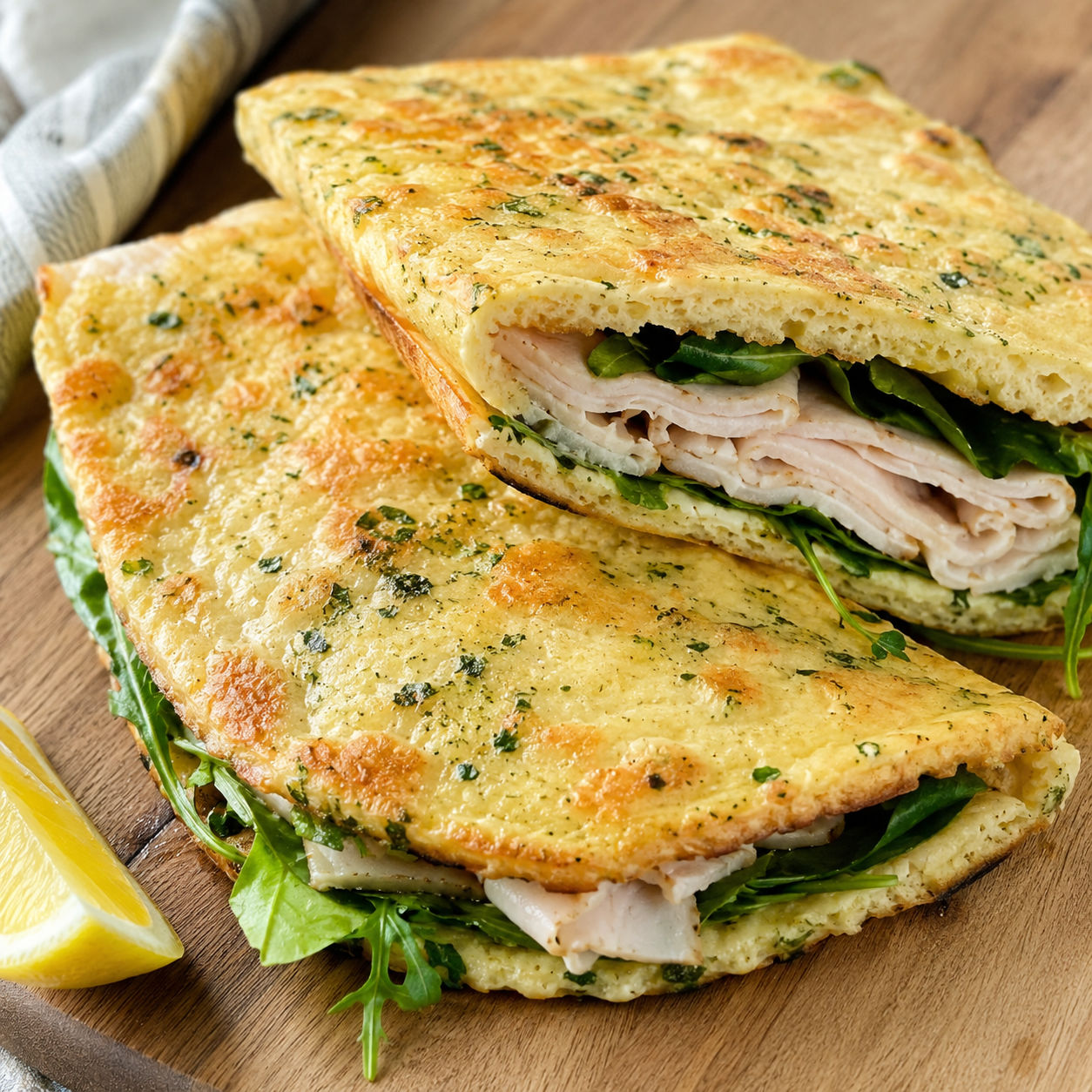
I make this flatbread when I want bread but do not want the carbs. It takes about five minutes to get into the oven and the ingredient list is almost embarrassingly short. The result is soft, pliable, and sturdy enough to hold a real sandwich without falling apart.
The trick is using a high-protein cottage cheese and spreading the batter thin and even. Once you get the method down, you can season it any way you like. It has become my go-to base for quick lunches and simple meal prep.
The two-ingredient base
This flatbread really is just cottage cheese and eggs. The cottage cheese brings protein and moisture while the eggs set the structure as it bakes. I like to add a pinch of garlic powder or Italian seasoning for savory flavor, but the plain version works just as well for sweet or savory fillings.
- Cottage cheese. Use a high-protein brand for the firmest texture. The extra protein absorbs moisture so the flatbread holds together instead of weeping in the fridge.
- Eggs. They bind the batter and give the flatbread its flexible, bread-like structure once cooled.
- Optional seasonings. Garlic powder, Italian seasoning, or a pinch of salt turn the neutral base into a savory wrap that pairs with deli meat or roasted vegetables.
Blend, spread, and bake
- Prep the pan. Line a half sheet pan with parchment paper and spray the top with oil. This prevents sticking and makes peeling the cooled flatbread effortless.
- Blend the batter. Add cottage cheese, eggs, and any seasonings to a food processor or blender. Run it until completely smooth with no visible curds.
- Spread it thin. Pour the batter onto the pan and use a spatula to push it nearly to the edges. Leave about a half-inch buffer because the batter spreads slightly as it bakes.
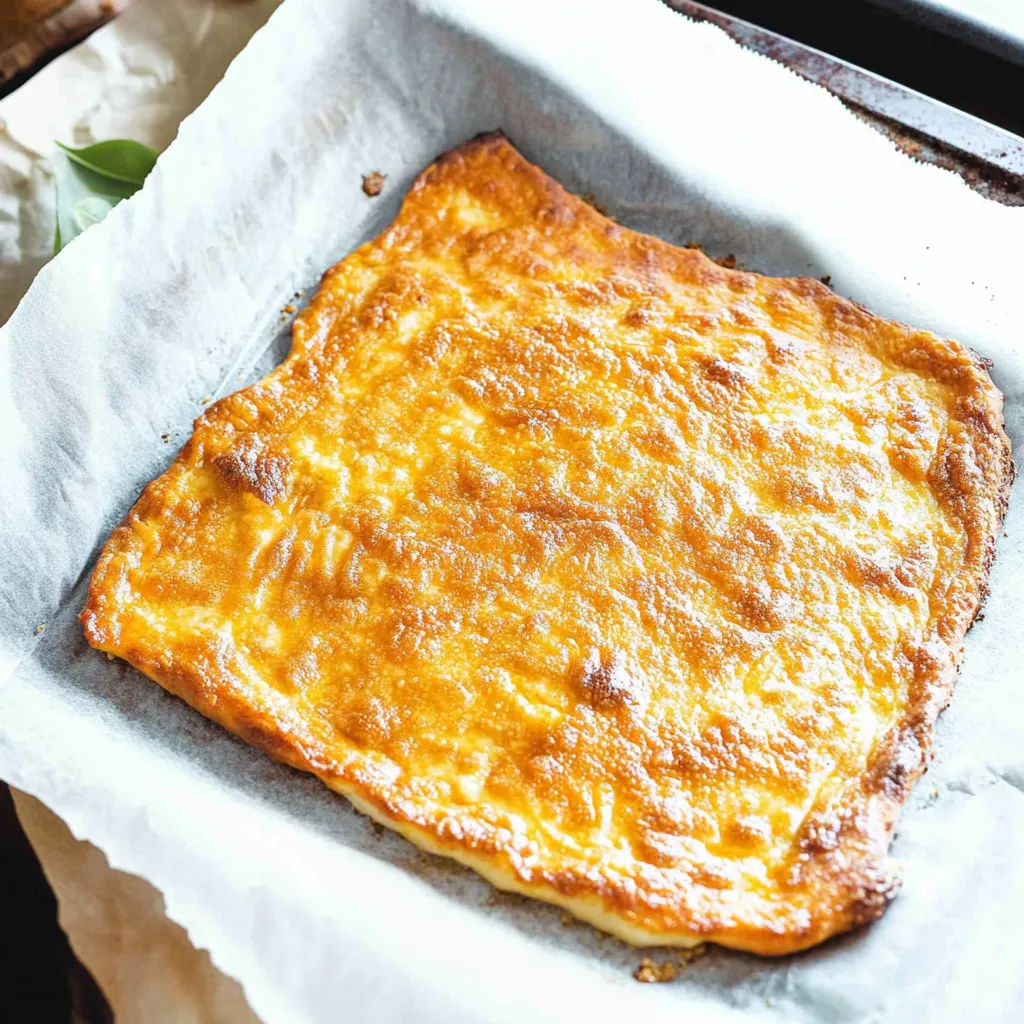
- Bake until golden. Bake at 350°F for 35 to 40 minutes. The surface should look set and lightly golden with no wet spots in the center.
- Cool completely. This is the hardest part. The flatbread must cool to room temperature before you peel it off the parchment or it will tear. For safe egg handling practices, see the FDA food-safety guidelines.

Why protein content matters
Not all cottage cheese behaves the same here. Lower-protein versions contain more whey, which leaves the flatbread softer and slightly wetter even after a full bake. If you can, reach for a brand with at least 13 grams of protein per half cup. The difference is a flatbread that rolls neatly instead of cracking at the edges.
Flavor swaps that work
Once you master the base, the variations are endless. Stir in grated parmesan and dried oregano for an herby flatbread, or add everything bagel seasoning on top before baking. For a breakfast twist, skip the garlic and pair the plain flatbread with scrambled eggs and avocado. If you are building a cottage cheese rotation, try Easy Cottage Cheese Cloud Bread for a lighter, puffier option, or Easy Cottage Cheese Egg Bake when you want something more filling. For snacking, 1-Ingredient Cottage Cheese Chips use the same core ingredient in a completely different form.
The cooling step is non-negotiable
Hot cottage cheese flatbread is fragile. The proteins need time to firm up and the residual steam needs to escape so the surface dries slightly. I usually let it sit on the pan for at least twenty minutes, then peel it gently from one corner. If it resists, give it another five minutes. Rushing this step is the main reason people end up with torn or gummy bread.
Storage and meal prep
Store slices in an airtight container in the fridge for up to four days. Reheat gently in a dry skillet for a minute per side to restore flexibility. You can also freeze individual pieces separated by parchment for up to one month. Thaw overnight in the fridge before using.
FAQs
- Can I use low-fat cottage cheese?
Yes, low-fat cottage cheese works fine. Just check that it is high in protein, since protein content matters more than fat for the final texture.
- Why is my flatbread soggy in the center?
The batter was likely too thick in the middle or the bake time was too short. Spread it as evenly as possible and add five extra minutes if the top looks pale. It also firms up as it cools.
- Can I make this in an air fryer?
I have not tested it in an air fryer. The large surface area of a sheet pan makes the oven the most reliable method for an even, thin result.
- What can I use this flatbread for?
It works as sandwich bread, a wrap for deli meat, a base for pizza toppings, or even cut into strips and toasted for dipping. It is sturdy enough to hold wet fillings once cooled.
- How long does it last in the fridge?
Keep it in an airtight container for up to four days. The texture stays best when reheated in a skillet rather than the microwave.
- Can I freeze cottage cheese flatbread?
Yes. Freeze pieces separated by parchment paper in a freezer bag for up to one month. Thaw overnight in the refrigerator.
- Is this recipe keto-friendly?
Yes. With about 3 grams of net carbs per serving, it fits comfortably into a keto or very low-carb eating plan.
- Do I need a food processor?
A food processor or blender both work. The goal is a completely smooth batter with no visible cottage cheese curds. A high-speed blender usually gets there fastest.
