 Pin it
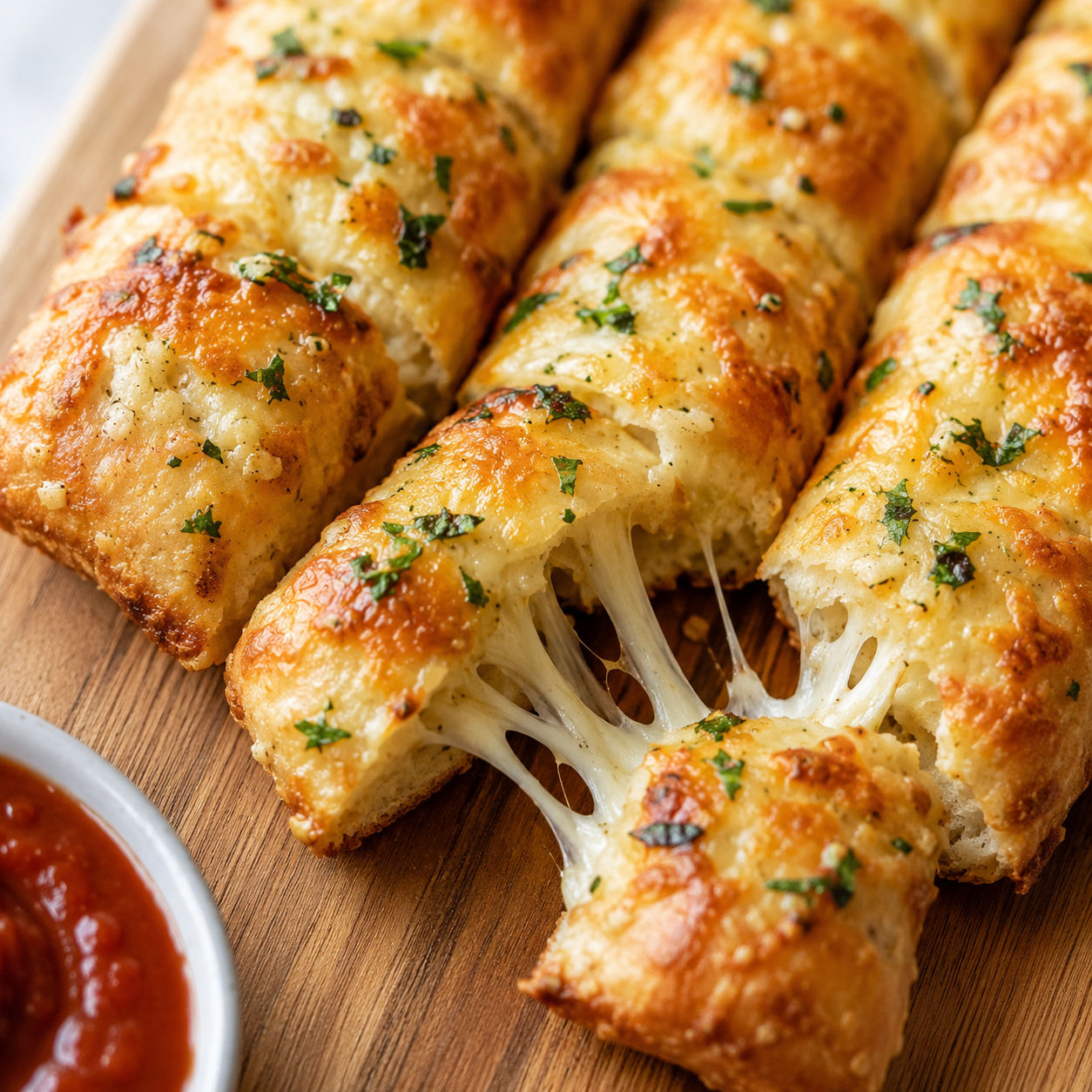
These breadsticks are what happens when garlic bread and pizza night collide. The dough is soft and slightly chewy, the cheese pulls in long strands, and the edges get just crisp enough to contrast the fluffy center.
I make these when I want something better than delivery but still easy enough to start after work. The dough needs just one short rest, and the topping is nothing more than melted butter, garlic, and a heavy hand of cheese.
You can shape the dough right in the pan. No rolling pin required, no fancy technique, just press it out with your fingertips.
What builds the chew and melt
This dough comes together with pantry basics. The yeast gives it lift, olive oil keeps the crumb tender, and a short rest is all the proofing you need. For the topping, real butter and fresh garlic carry the flavor, while low-moisture mozzarella gives you that pizzeria pull without turning soggy.
- All-purpose flour. The backbone of the dough. Bread flour works too if you want a chewier bite.
- Instant yeast. Skips the proofing step and gets the dough moving fast.
- Warm water and sugar. The sugar feeds the yeast and adds a hint of browning.
- Olive oil. Keeps the interior soft and adds a subtle richness.
- Unsalted butter. Melted with garlic, this is what makes the top taste like your favorite garlic bread.
- Fresh garlic and garlic powder. Fresh gives punch, powder keeps the flavor even across every bite.
- Low-moisture mozzarella. Shred it yourself from a block for the best melt. Pre-shredded bags contain starch that dulls the stretch.
- Parmesan. A salty, nutty layer underneath the mozzarella that adds depth.
- Italian seasoning. A quick blend of dried herbs that smells like a pizza shop.
Press top and bake
- Mix the dough. Stir warm water, sugar, and yeast into a large bowl. Add olive oil, salt, and two and a half cups of flour. Stir until a shaggy dough forms, then knead for five to seven minutes until smooth and stretchy.
- Let it rest. Drizzle a little oil over the dough, cover the bowl, and let it sit for fifteen to twenty minutes. This relaxes the gluten so the dough stretches easily.
- Shape in the pan. Oil a nine-by-thirteen-inch pan. Press the dough into an even layer about half an inch thick using your fingertips. If it springs back, wait three minutes and press again.
- Brush the garlic butter. Mix melted butter with minced garlic, garlic powder, Italian seasoning, salt, and pepper. Spread it all the way to the edges of the dough.
- Load the cheese. Scatter mozzarella evenly, then sprinkle parmesan. Press the cheese lightly into the dough so it adheres as it bakes.
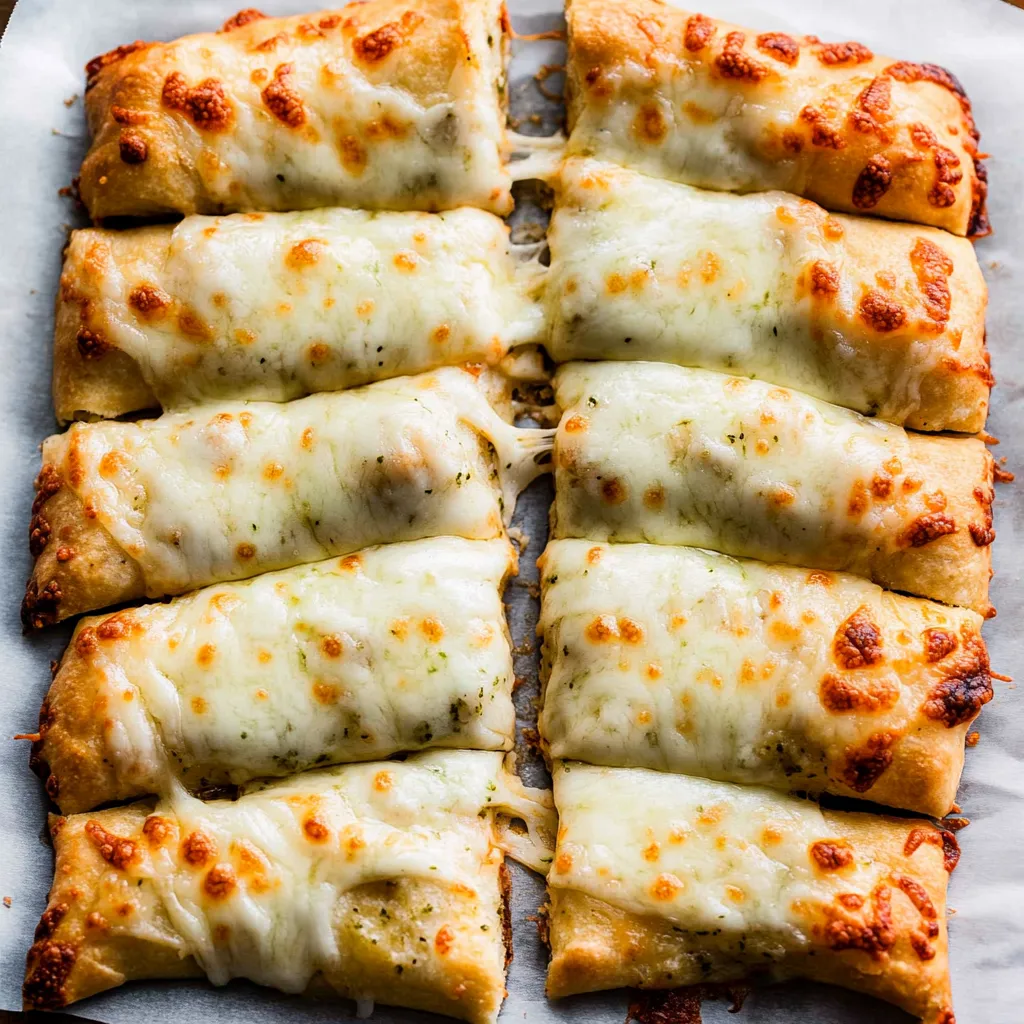
- Score and bake. Use a pizza cutter to lightly mark breadstick shapes without cutting through. Bake at 425°F for fourteen to eighteen minutes until the cheese is bubbly and the edges are golden.
- Slice and serve. Let the pan cool for five minutes, then slice fully along your score marks. Serve warm with marinara or ranch.
Why the dough rests
A full rise is not necessary here. Fifteen to twenty minutes is just enough to let the yeast start working and the gluten relax. That rest makes the dough easy to press into the pan without fighting back. If you skip it, the dough will keep shrinking and you will end up with uneven thickness. The breadsticks will still taste good, but some corners will be too thin and others too doughy. For a deeper dive into dough behavior, the bakers at King Arthur Baking cover yeast and flour science in plain language.
The cheese that melts best
Low-moisture, part-skim mozzarella is the standard for a reason. It melts into long strands without releasing pools of water that make the crust soggy. I like to blend it with parmesan for a saltier, more complex top. If you want a different direction, provolone or a mild cheddar can stand in, though they change the flavor profile. If you enjoy playing with cheese and dough, our cheesy garlic butter rollups use a similar approach in a different shape.
Shape without stress
You do not need a rolling pin or a pizza stone. A standard nine-by-thirteen baking pan and your fingertips are enough. Press from the center outward and keep the thickness as even as you can. Rustic edges are fine. They crisp up and become the pieces people fight over. If you are feeding a crowd, double the recipe and press the dough onto a half-sheet pan. Just rotate the pan halfway through baking so the back does not out-brown the front. For a fun twist on the same idea, try our cheesy taco breadsticks with seasoned beef and cheddar.
Serve them while hot
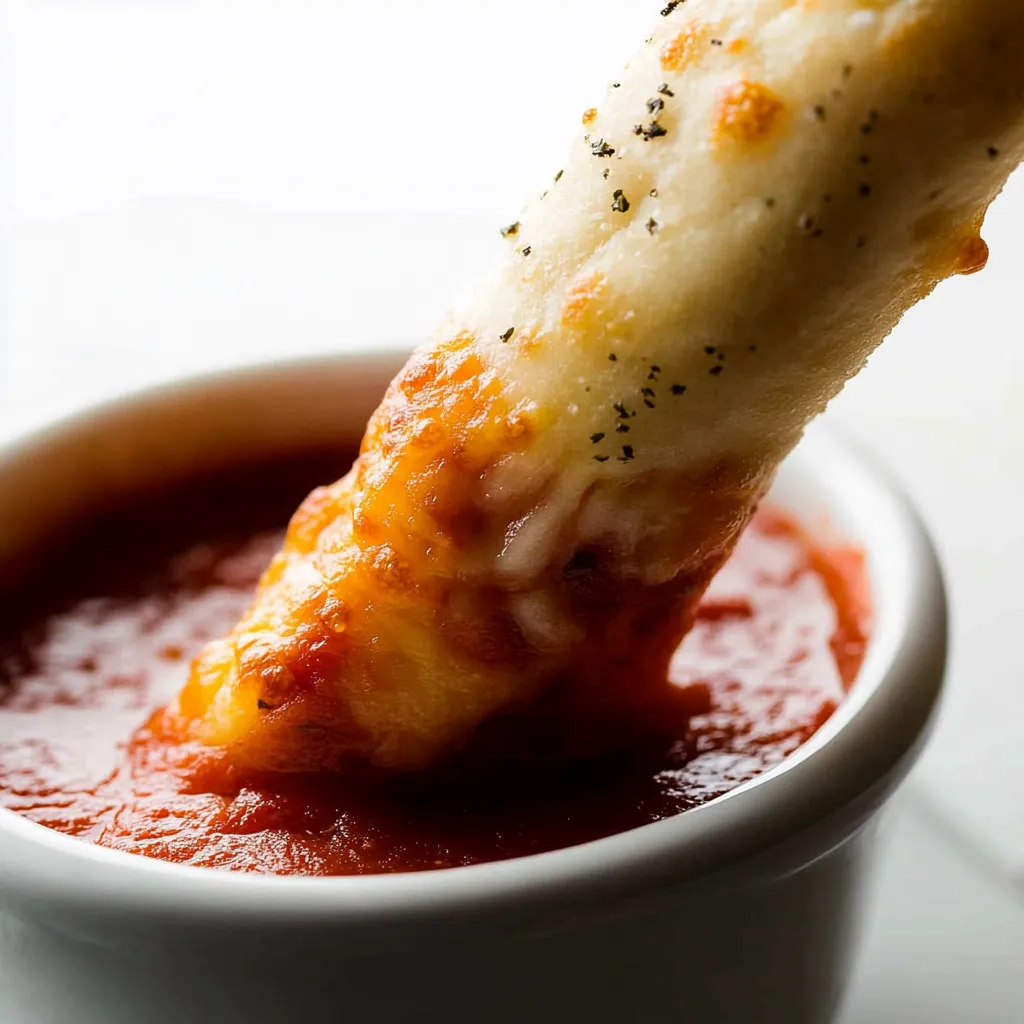
These breadsticks are at their best five to ten minutes out of the oven, when the cheese is still molten and the garlic butter is fragrant. Marinara is the classic dip, but ranch, garlic sauce, or even a swipe of pesto work well. We often serve them alongside a big salad or a bowl of soup to round out the meal. They also pair naturally with cheesy tortilla garlic bread on a snack table if you want variety.
Store and reheat right
Leftovers keep in an airtight container in the refrigerator for up to three days. You can also freeze baked breadsticks in a single layer, then transfer to a freezer bag for up to two months. Reheat straight from frozen at 375°F for ten to twelve minutes. If you need a simpler garlic bread fix on a busy night, our easy cheesy garlic bread skips the slicing step entirely.
FAQs
- Can I use store-bought pizza dough?
Yes. One pound of refrigerated pizza dough saves about fifteen minutes. Let it sit at room temperature for twenty minutes so it presses out easily, then proceed with the garlic butter and cheese steps.
- What cheese works best for breadsticks?
Low-moisture mozzarella is the standard for that classic stretch. Shred it yourself from a block for the smoothest melt. Parmesan adds salt and depth. Provolone or mild cheddar are fine substitutes if you want a different flavor.
- Can I make these ahead and freeze them?
You can freeze baked breadsticks for up to two months. Cool them completely, freeze in a single layer, then bag them. Reheat from frozen at 375°F until hot and crisp. You can also freeze the unbaked dough, though the texture is best when baked fresh.
- Why did my breadsticks turn out tough?
Over-kneading or adding too much flour makes the dough tight and the finished bread dense. The dough should feel soft and slightly tacky, not stiff. A short rest after kneading also keeps the final crumb tender.
- How do I reheat leftover breadsticks?
Use a 350°F oven or toaster oven for five to eight minutes. Add a light brush of butter if the tops look dry. Avoid the microwave, which softens the crust and firms the cheese.
- Can I add other toppings?
Sure. Crumbled cooked bacon, sliced jalapeños, or chopped spinach all work on top of the cheese. Just keep the additions light so the breadsticks still cook evenly in the center.
- Do I need a stand mixer?
No. A wooden spoon and your hands are enough. Mix the ingredients in a bowl until a shaggy dough forms, then knead on a lightly floured counter for five to seven minutes.
