 Pin it
This Easy Sourdough Naan Flatbread is my favorite way to turn a jar of discard into something warm, useful, and dinner-ready. The dough is soft but not fussy, and it cooks right on the stovetop.
You get the gentle tang of sourdough without waiting all day. Yogurt keeps the bread tender, baking powder gives it a quick lift, and a hot skillet makes those browned bubbles everyone reaches for first.
The Soft Naan Lineup
This dough needs simple ingredients, but each one matters. Use sourdough discard that smells pleasantly tangy, plain yogurt with some fat, and flour that can handle a little kneading without turning tough.
- All-purpose flour. Builds the structure of the flatbread while keeping it tender enough to fold.
- Sourdough discard. Adds mild tang and uses up starter that might otherwise sit in the fridge.
- Plain yogurt. Softens the dough and gives naan its tender bite.
- Warm milk. Hydrates the flour and helps the dough come together smoothly.
- Baking powder. Gives quick lift so the naan bubbles in the skillet without yeast.
- Olive oil or ghee. Adds richness and keeps the dough supple.
- Salt and honey. Balance the sourdough tang and round out the flavor.
- Garlic butter and cilantro. Finish the hot flatbreads with shine, aroma, and freshness.
Easy Sourdough Naan Flatbread Method
- Mix the dry base. Whisk the flour, baking powder, and salt in a large bowl so the lift and seasoning are evenly spread.
- Stir the wet ingredients. In another bowl, whisk the sourdough discard, yogurt, warm milk, oil, and honey until smooth.
- Make the dough. Add the wet mixture to the flour and stir until shaggy. Knead for 1-2 minutes until the dough is soft, adding a dusting of flour only if it sticks heavily.
- Let it rest. Cover the bowl and rest for 30-45 minutes. This relaxes the gluten so the dough rolls easily and cooks tender.
- Shape the naan. Divide into 8 pieces, roll each into a loose oval about 1/4 inch thick, and keep the remaining dough covered.
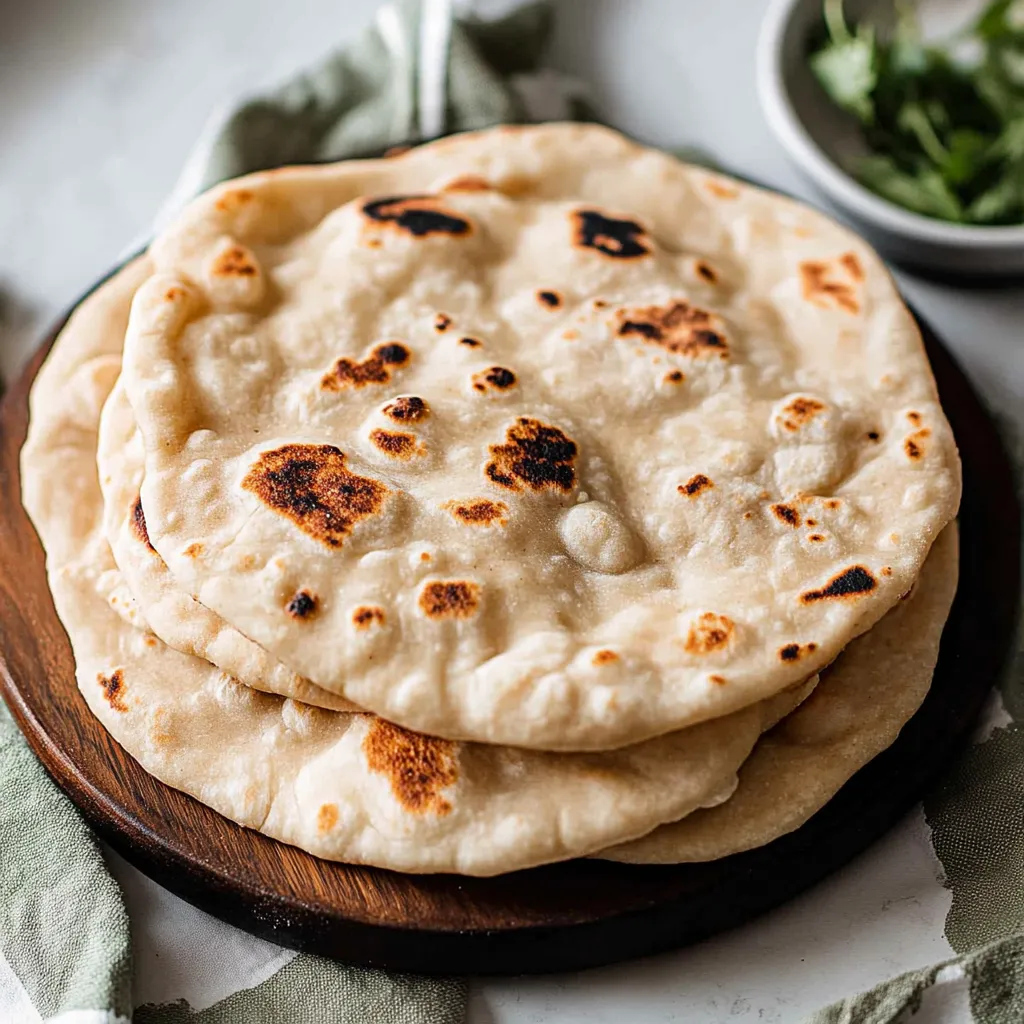
- Cook and finish. Cook one flatbread at a time in a hot dry skillet for 1-2 minutes per side, until puffed and spotted. Brush with garlic butter or ghee and wrap in a towel to keep warm.
Heat Makes The Bubbles
The skillet does more work than the recipe makes it sound like. Let it heat for several minutes before the first piece goes in. If the surface is ready, the dough should start forming small bubbles within the first minute. If it sits there pale and flat, wait longer before cooking the next one.
A cast iron skillet gives the best speckled browning, but a heavy stainless pan also works. Keep the pan dry. Oil in the skillet can fry the outside before the center has time to cook. Brush the fat on after cooking instead. King Arthur Baking uses a similar hot-skillet approach in its sourdough naan recipe, and that high heat is the part worth keeping no matter how you season the dough.
Discard Strength And Timing
Fresh discard gives a mild sourdough flavor. Older discard brings more tang and can make the dough looser, so hold back a tablespoon of milk until you see how it feels. The dough should be soft and easy to press, not pourable and not stiff like bagel dough.
If you keep a starter going, this is a good companion to whole grain sourdough starter because a stronger starter gives better flavor even in discard recipes. For another easy way to use extra starter, save sourdough discard focaccia bread for a day when you want a thicker, oven-baked loaf.
Ways To Serve It
Serve these flatbreads while they are still warm and bendy. They are great with lentil soup, chickpea curry, grilled vegetables, hummus, or a bowl of spiced ground beef. I also use them as quick wraps because they stay flexible after a short rest under a towel.
For a no-stress dinner, pile the warm naan beside dips and roasted vegetables. If you want to build on the same idea, try tzatziki chicken veggie naan pizza or compare it with easy homemade naan bread when you want a non-sourdough version. The garlic butter finish is optional, but it makes the edges glossy and gives the flatbread that fresh-from-the-pan smell.
Keeping Naan Soft Later
Let leftover naan cool completely, then store it in an airtight bag at room temperature for 1 day or in the fridge for up to 4 days. For longer storage, freeze the flatbreads with small pieces of parchment between them so they do not stick together.
Reheat in a dry skillet for 20-30 seconds per side, or wrap in foil and warm in a 300 F oven until flexible. A microwave works in a pinch, but cover the naan with a barely damp paper towel and keep the time short. Too much heat dries out the edges fast.
Summary
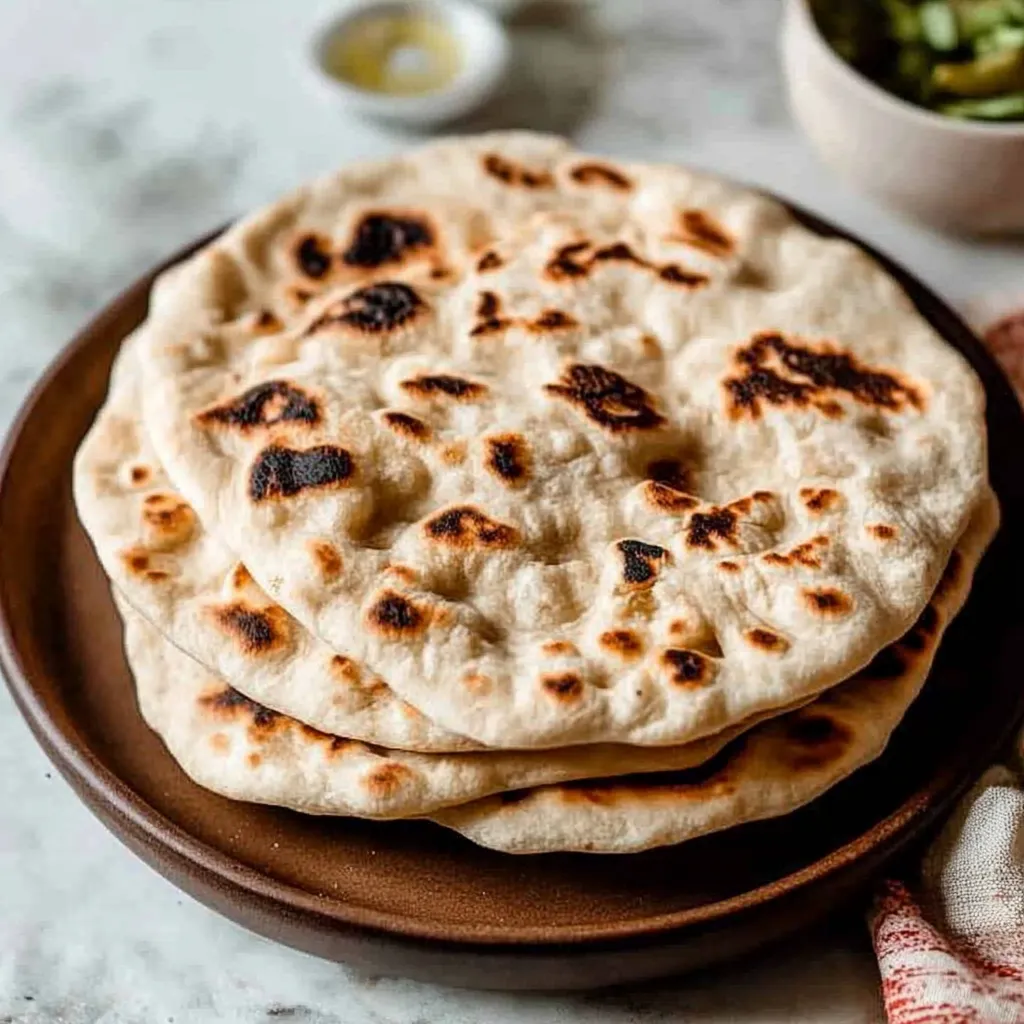
A simple sourdough discard flatbread cooked in a skillet until puffed, spotted, and tender enough for scooping, wrapping, or tearing at the table.
FAQs
- Can I make sourdough naan with discard instead of active starter?
Yes. Discard works well here because baking powder gives the dough extra lift. If your discard is very thick, add milk one teaspoon at a time until the dough feels soft and slightly tacky.
- Do I need yeast for this naan flatbread?
No. This version uses sourdough discard for flavor and baking powder for a quick rise. The texture is soft and chewy rather than tall and bready.
- Can I make the dough ahead?
Yes. Mix the dough, cover it, and refrigerate it for up to 24 hours. Let it sit at room temperature for 30 minutes before dividing and rolling so it is easier to shape.
- What can I use instead of yogurt?
Plain Greek yogurt, regular whole-milk yogurt, or dairy-free plain yogurt all work. If using Greek yogurt, you may need an extra splash of milk because it is thicker.
- Why did my naan turn stiff?
The pan may have been too cool, or the dough may have been rolled too thin. Cook over medium-high heat and pull each naan off the skillet as soon as both sides have browned spots.
- How should I serve sourdough naan flatbread?
Serve it warm with curry, hummus, baba ganoush, grilled chicken, or soups. It also makes a sturdy base for quick naan pizzas and lunch wraps.
