 Pin it
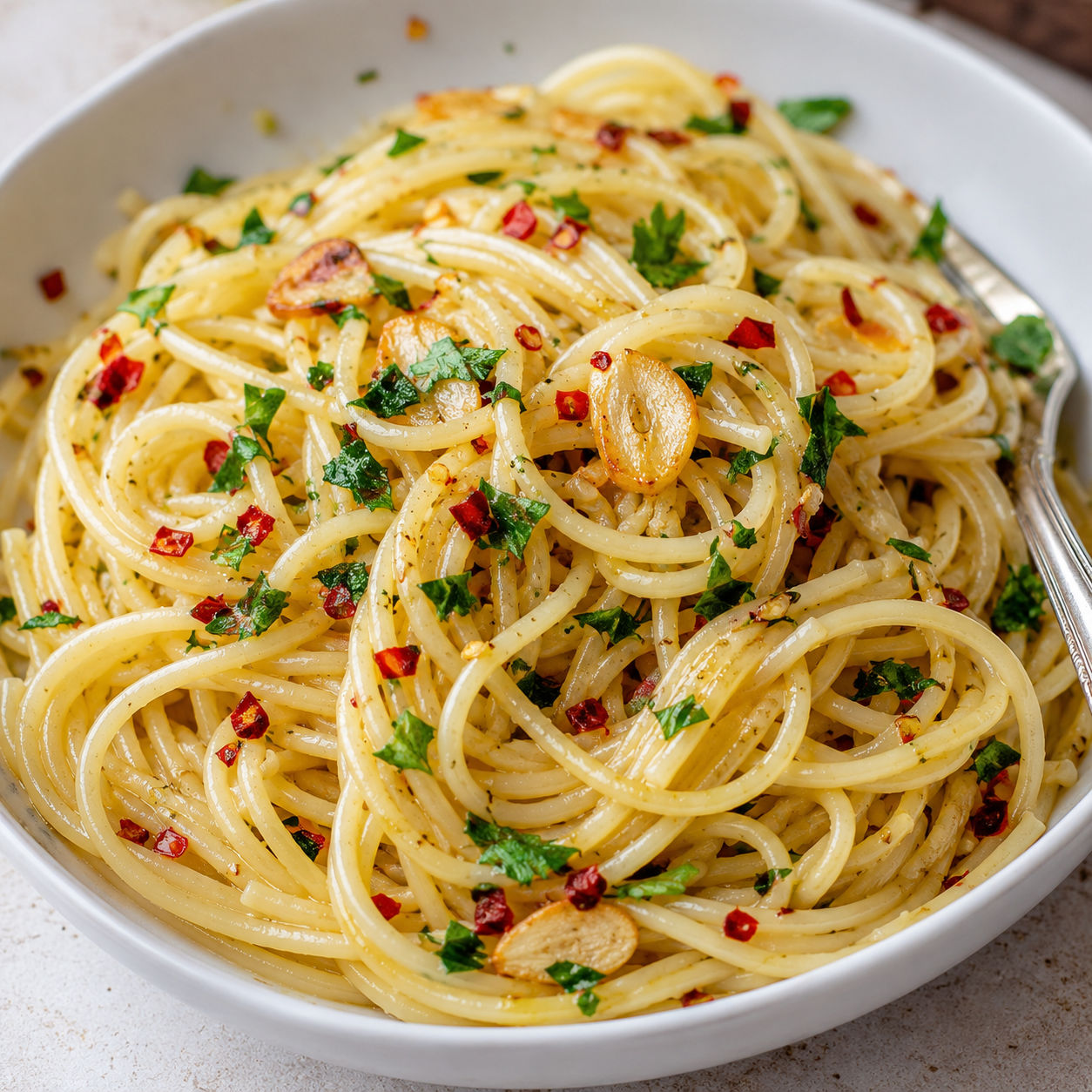
Spaghetti Aglio e Olio is the kind of dinner that proves a short ingredient list can still feel deeply satisfying. Garlic softens in olive oil, chili warms the pan, and a splash of pasta water turns everything glossy enough to coat each strand.
I make this when the fridge looks empty but the pantry can still pull its weight. The whole dish depends on timing, not fuss. Start the garlic while the spaghetti cooks and bring the pasta to the skillet a little shy of al dente.
The Pantry Lineup
Use the best olive oil you enjoy eating because it carries the whole sauce. The garlic should be fresh, firm, and sliced thin so it perfumes the oil without scorching.
- Spaghetti. Long strands hold the garlic oil well and give the dish its classic bite.
- Extra virgin olive oil. This is the sauce, so choose one that tastes fruity and smooth rather than harsh.
- Fresh garlic. Thin slices gently toast in the oil and give the pasta its deep savory smell.
- Red pepper flakes. A small pinch adds warmth without taking over the dish.
- Reserved pasta water. The starch helps the oil cling to the noodles instead of sliding to the bottom of the bowl.
- Parsley. Fresh parsley adds color and a clean finish after the rich oil.
- Kosher salt. Salted pasta water seasons the spaghetti from the inside.
Cook It Without Rushing
- Boil the spaghetti. Cook the pasta in well-salted water until it is about one minute shy of al dente. Reserve at least 1 cup of the starchy water before draining.
- Start the garlic oil. Warm the olive oil in a wide skillet over medium-low heat. Add the sliced garlic and cook slowly until the edges are pale gold and fragrant.
- Add gentle heat. Stir in the red pepper flakes for about 20 seconds. If the pasta is not ready yet, move the skillet off the heat so the garlic does not darken.
- Make the sauce cling. Add 1/2 cup pasta water to the skillet and swirl until the oil looks slightly cloudy and loose.
- Toss the pasta. Add the spaghetti and toss over low heat until the strands are glossy and just tender. Add more pasta water in small splashes if the pan looks dry.
- Finish and serve. Stir in parsley and taste for salt. Let the pasta sit for one minute, then serve while the sauce is still shiny.
Spaghetti Aglio e Olio Balance
The sauce should taste like garlic, olive oil, and pasta all at once. If it tastes oily, it probably needs more pasta water and more tossing. If it tastes dull, the pasta water may not have been salty enough. I like to salt the water boldly, then season the finished pan only after tasting. For a richer spaghetti night, try Garlic Parmesan Chicken Spaghetti, but keep this one clean and pantry-simple.
Why Pasta Water Matters
Plain oil will coat spaghetti for a minute, then slip away. Starchy pasta water changes that. It loosens the oil and helps it grab onto the noodles. Add it before the pasta goes in, then toss with energy. This is the same practical trick that makes simple skillet pastas work, including One Pan Spaghetti with Chard. The Mediterranean Dish also explains the classic garlic and olive oil method in its aglio e olio guide.
Swaps That Stay Simple
Linguine, vermicelli, or bucatini can stand in for spaghetti. Keep the sauce light so it can coat the pasta evenly. For heat, use fresh minced chili instead of flakes, but add it gently so it does not burn. Parmesan is common in many home kitchens, though it is not needed here. Leaving it out keeps the recipe vegan and lets the olive oil stay front and center. For a lighter vegetable-based option, Turkey Marinara Spaghetti Squash shows how spaghetti squash handles saucy toppings.
Serving It Right Away
This pasta waits for no one. Have bowls ready before you toss the spaghetti because the sauce is silkiest right off the heat. A little parsley on top is enough. Add a green salad or crusty bread if you want a fuller meal. If your table likes baked pasta, save that mood for Baked Pizza Spaghetti and keep this dinner quick.
Leftovers Without Dry Pasta
Store leftovers in an airtight container for up to three days. Reheat in a skillet, not a microwave if you can help it. Add a splash of water and toss over low heat until the noodles loosen. The flavor will still be good, but the texture is never quite as lively as fresh. If you know you will have leftovers, pull the pasta from the water extra firm so it has room to soften later.
Summary
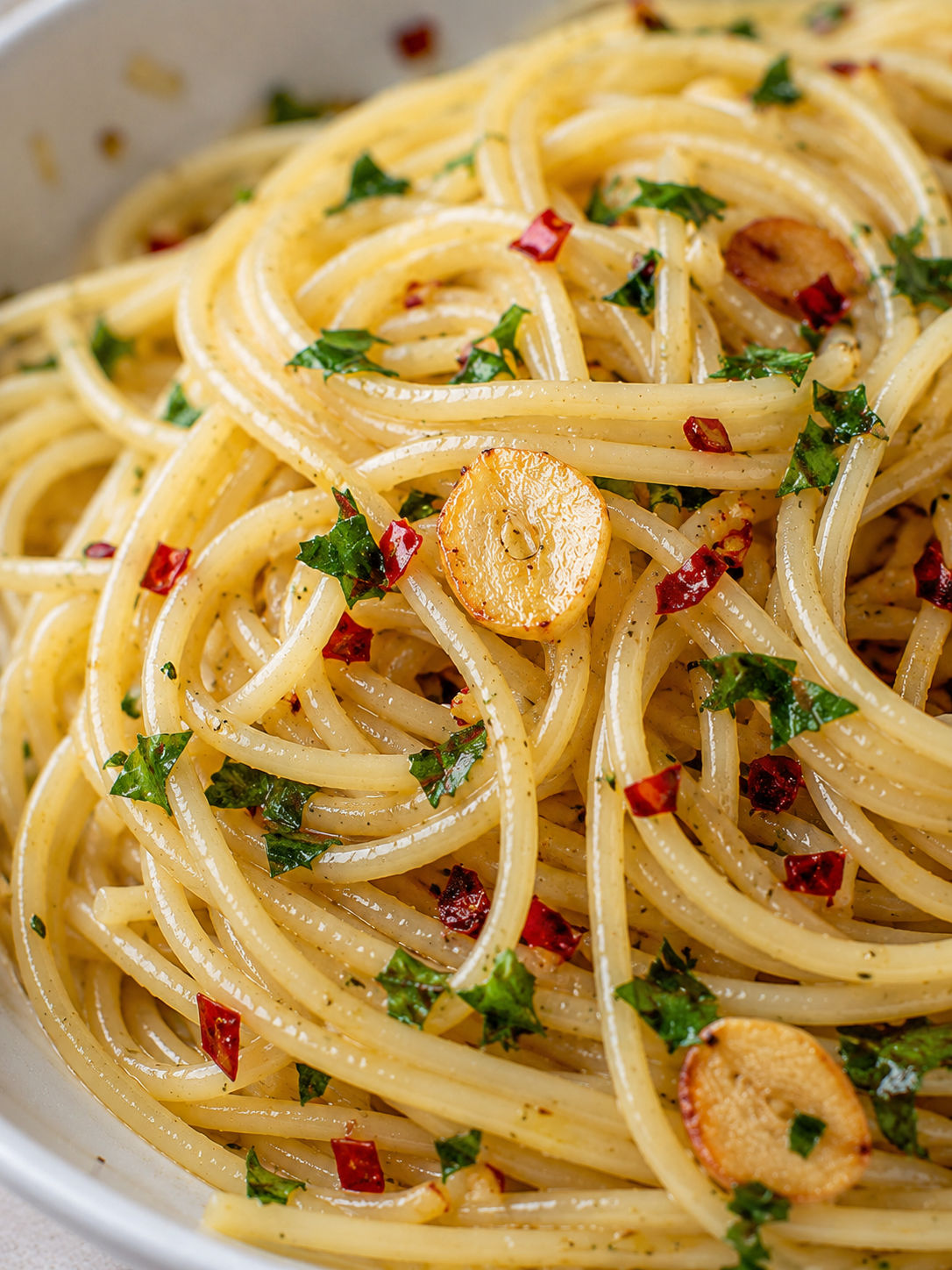
Serve this pasta right away while the sauce is loose and shiny. Leftovers keep, but this dish is at its best straight from the pan.

FAQs
- What does Spaghetti Aglio e Olio mean?
It means spaghetti with garlic and oil. Aglio is garlic and olio is oil in Italian. Chili flakes are common, though the simplest versions rely only on pasta, garlic, olive oil, salt, and pasta water.
- Can I use garlic powder instead of fresh garlic?
Fresh garlic is much better here because it flavors the oil as it cooks. Garlic powder can taste flat and gritty in such a simple sauce. If you must use it, add a small pinch off the heat and expect a different result.
- How do I keep the garlic from burning?
Slice the garlic evenly and cook it over medium-low heat. Pull the pan from the burner as soon as the edges turn pale gold. If the garlic turns dark brown, start over because the bitterness will spread through the oil.
- Can I make aglio e olio ahead?
It is best made right before serving. You can slice the garlic, chop parsley, and measure the oil earlier in the day. Cook and toss the pasta at the last minute so the sauce stays silky.
- What can I serve with this pasta?
A crisp salad, roasted vegetables, or simple garlic bread works well. If you want a heartier table, serve it beside grilled chicken or shrimp. Keep the sides simple because the pasta is clean and garlicky.
- Can I make this gluten-free?
Yes, use a good gluten-free spaghetti and watch the texture closely. Gluten-free pasta can move from firm to soft quickly. Save extra cooking water because some brands need more liquid to loosen the sauce.
