 Pin it
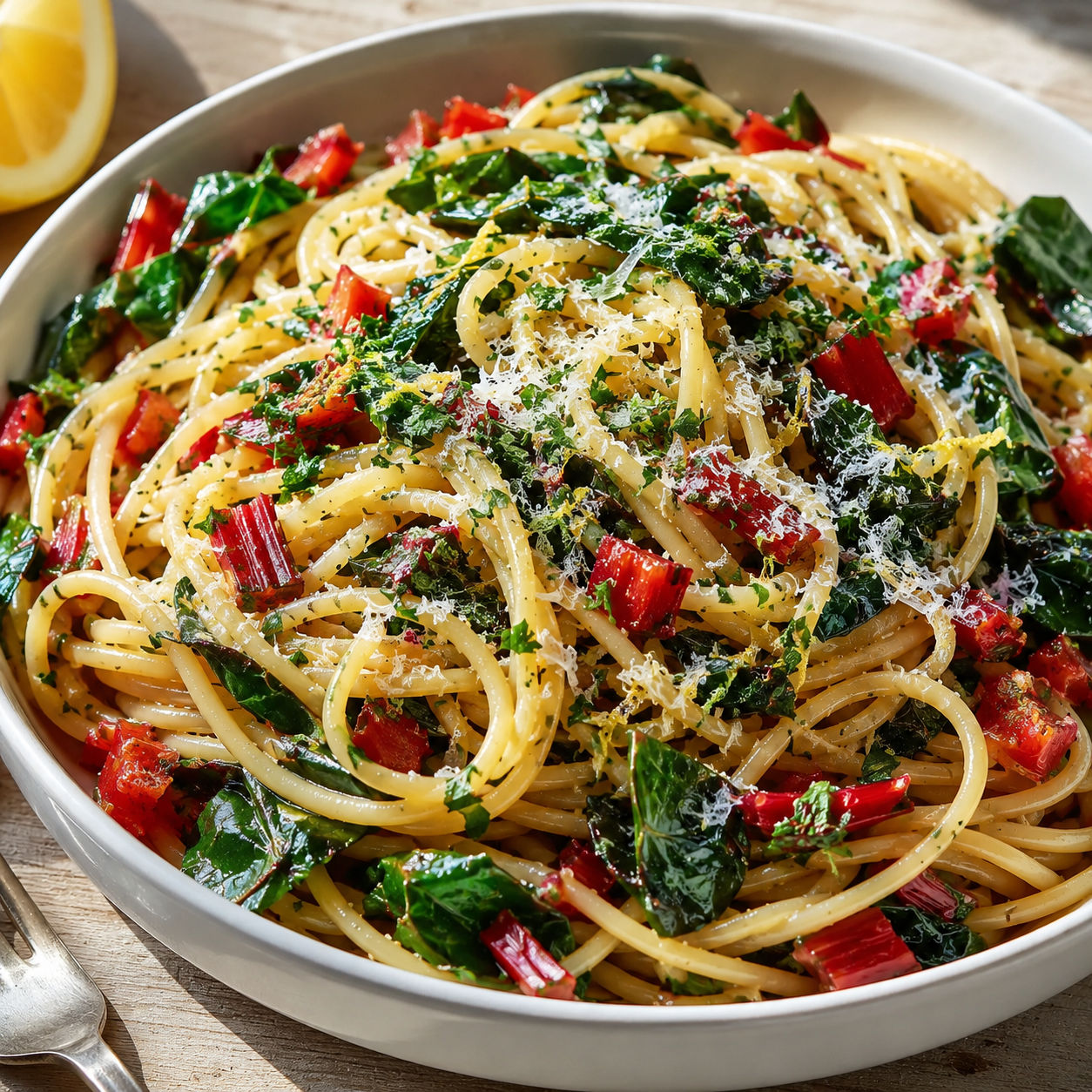
One Pan Spaghetti With Swiss Chard is the kind of dinner that looks more thoughtful than it feels to make. The pasta cooks in a shallow skillet with the greens, so you get tender spaghetti, silky olive oil, and garlicky chard without boiling a separate pot of water.
I like this best with rainbow chard because the stems bring color and a mild beet-like sweetness. Regular green Swiss chard works just as well. The key is adding the stems first, then folding in the leaves near the end so they stay soft instead of limp.
Garlicky Chard Pasta Staples
This dish is built from a short list, so each ingredient has to pull its weight. Choose chard with crisp stems and lively leaves, then use a wide skillet so the spaghetti has room to soften evenly.
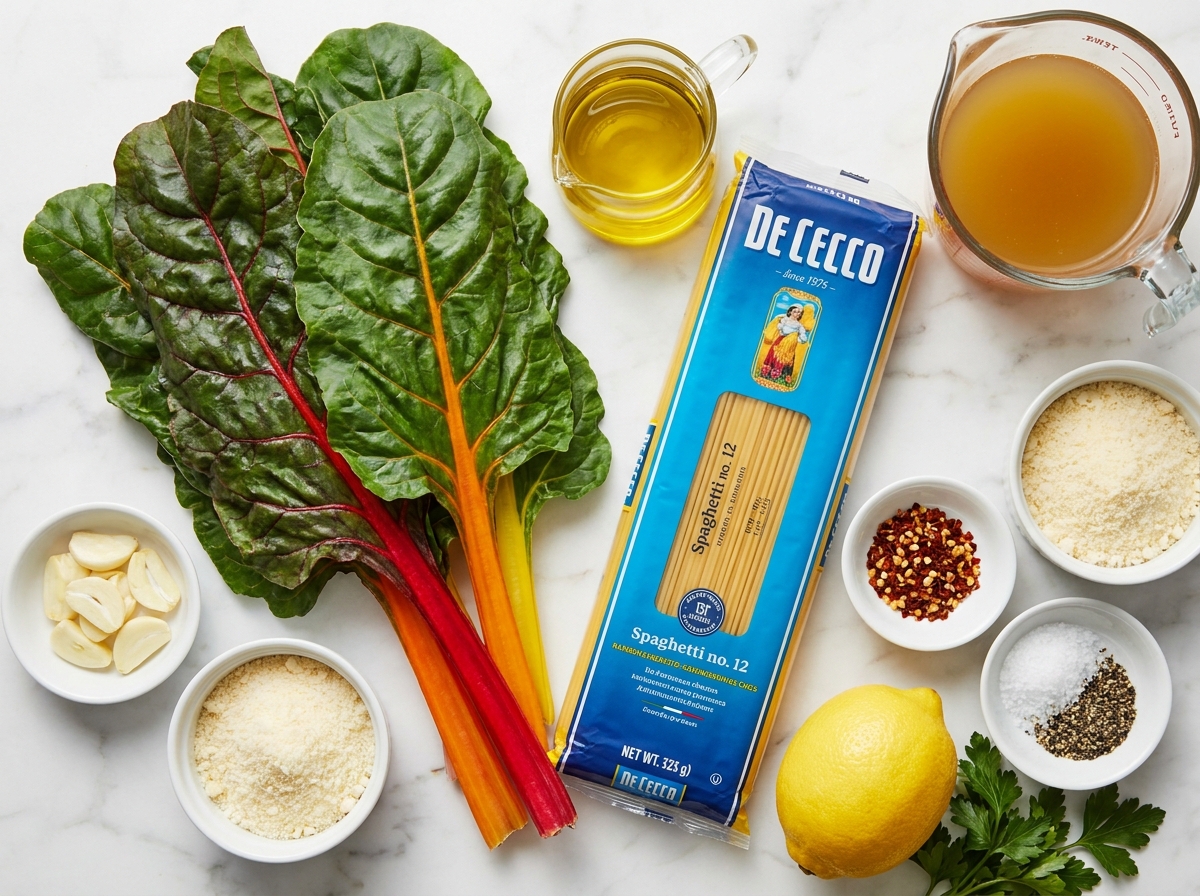
- Swiss chard. The stems add bite and the leaves melt into the pasta with an earthy, slightly sweet flavor.
- Spaghetti. Regular spaghetti works well because it releases enough starch to help the sauce cling.
- Garlic. It flavors the oil fast, so keep the heat moderate and do not let it brown.
- Olive oil. It forms the base of the light sauce and gives the finished pasta a smooth sheen.
- Vegetable broth. It cooks the spaghetti and adds more flavor than water alone.
- Parmesan cheese. It melts into the starchy liquid and gives the pasta a salty finish.
- Lemon. A small squeeze wakes up the greens and balances the richness.
- Red pepper flakes. They add gentle heat without taking over the pan.
One Pan Spaghetti Method
- Prep the chard. Rinse the leaves well, slice the stems thin, and cut the leaves into ribbons. Grit hides near the ribs, so take a minute here.
- Start the aromatics. Warm olive oil in a wide skillet, then cook the chard stems with garlic and red pepper flakes until the stems begin to soften.
- Simmer the spaghetti. Add broth, water, salt, and broken spaghetti. Keep the pan at a lively simmer and stir often as the noodles bend and sink into the liquid.
- Add the leaves. Fold in the chard leaves during the last few minutes. They should wilt into the pasta but still look green.
- Finish off heat. Stir in Parmesan, lemon juice, and a final drizzle of olive oil. Let it rest for a minute so the sauce turns glossy.
Why One Pan Works
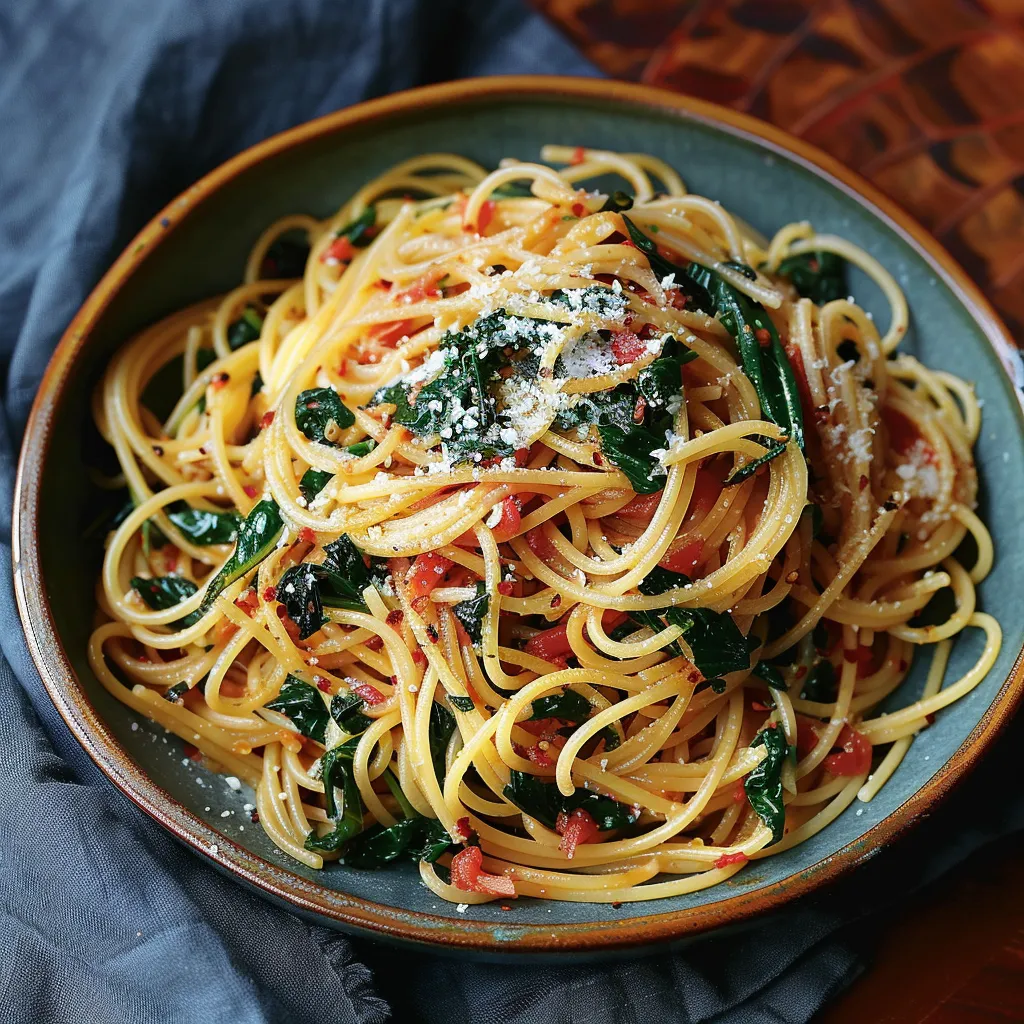
One-pan pasta works because the noodles release starch directly into the cooking liquid. Instead of draining that starch away, you keep it in the skillet and use it to make a light sauce. Stirring matters. It keeps the strands from clumping and helps the liquid turn glossy as it reduces.
This is not a heavy cream sauce. It is closer to the clean, garlicky style of Spaghetti Aglio e Olio, with chard giving it more body. If the skillet looks dry before the pasta is done, add hot water a few tablespoons at a time. If it looks soupy at the end, simmer uncovered for another minute before adding the cheese.
Treat Chard In Layers
Swiss chard has two textures in one bunch. The stems are firm and need a head start. The leaves cook quickly and should be added late. If you throw everything in at once, the leaves can turn dull before the stems are tender.
For the cleanest flavor, rinse the chard in a bowl of cold water and lift it out rather than pouring the sandy water back over it. The FDA has a helpful produce safety guide for washing and handling fresh greens at fda.gov. Do not worry about drying the leaves completely. A little clinging water helps them steam into the pasta.
Easy Add-Ins
White beans are my favorite add-in because they make the skillet feel more like a full meal without changing the cooking rhythm. Stir in one drained can during the last 3 minutes. Chickpeas work too, especially with extra lemon and black pepper.
For a richer pasta night, look at One Pot French Onion Pasta with Prosciutto or Spaghetti Spinach Sun-Dried Cream. This chard version stays lighter, but it can still handle toasted walnuts, pine nuts, crushed red pepper, or a spoonful of ricotta on top.
Storage And Reheating
This pasta is best right after cooking, while the sauce is loose and glossy. Leftovers still hold up well for lunch. Store them airtight in the refrigerator for up to 3 days. The spaghetti will absorb more liquid as it sits, so reheat it in a skillet with a splash of water or broth.
A microwave works in a pinch, but cover the bowl and stop once to stir. Add Parmesan after reheating, not before, if you want the freshest texture. For another family-friendly spaghetti dinner with a heartier sauce, try Rich Skillet Spaghetti with Classic Meat Sauce.
Make It More Vegetable-Forward
Chard already brings a generous amount of greens to the pan, but you can add more vegetables without making dinner complicated. Halved cherry tomatoes can go in with the leaves. Thin zucchini half-moons can cook with the stems. A handful of frozen peas works near the end.
For general vegetable guidance, MyPlate is a useful plain-language resource. In this recipe, the goal is simple. Keep the vegetable pieces small enough to cook in the same time as the pasta, and do not overload the skillet so the sauce can still reduce.
Summary
Keep the pan at a steady simmer, stir often, and finish with Parmesan and lemon once the spaghetti is al dente. That is how this one-pan pasta stays glossy instead of watery.
FAQs
- Can I use the Swiss chard stems in this pasta?
Yes. Slice the stems thin and cook them with the garlic for a few minutes before the pasta goes in. They soften nicely and add color, texture, and a mild earthy sweetness.
- What can I substitute for Swiss chard?
Kale, beet greens, spinach, or escarole can work. Kale needs a little more time, while spinach should go in at the very end because it wilts fast.
- How do I keep one-pan spaghetti from sticking?
Use a wide skillet and stir every couple of minutes, especially once the spaghetti starts to bend. Keep the noodles mostly covered by liquid and add a splash more hot water if the pan gets dry before the pasta is tender.
- Can I make One Pan Spaghetti With Swiss Chard vegan?
Yes. Skip the Parmesan or use a dairy-free Parmesan-style topping. Add toasted walnuts, pine nuts, or a spoonful of nutritional yeast for a savory finish.
- How long do leftovers keep?
Leftovers keep for up to 3 days in an airtight container in the refrigerator. Reheat them in a skillet with a small splash of water or broth to loosen the sauce.
- What should I serve with Swiss chard spaghetti?
A crisp salad, roasted vegetables, or warm garlic bread all fit well. For extra protein, add white beans, chickpeas, grilled chicken, or shrimp near the end.
