 Pin it
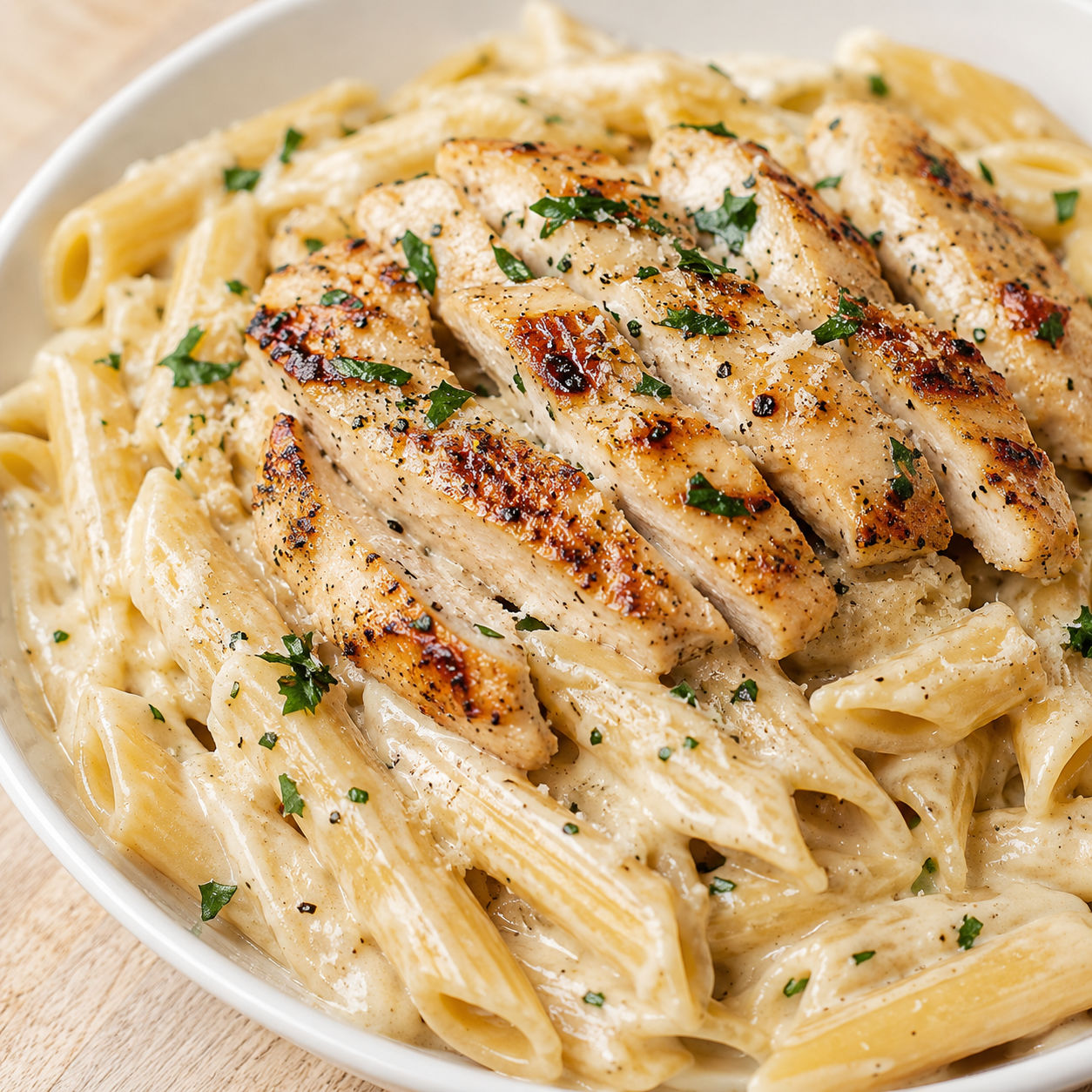
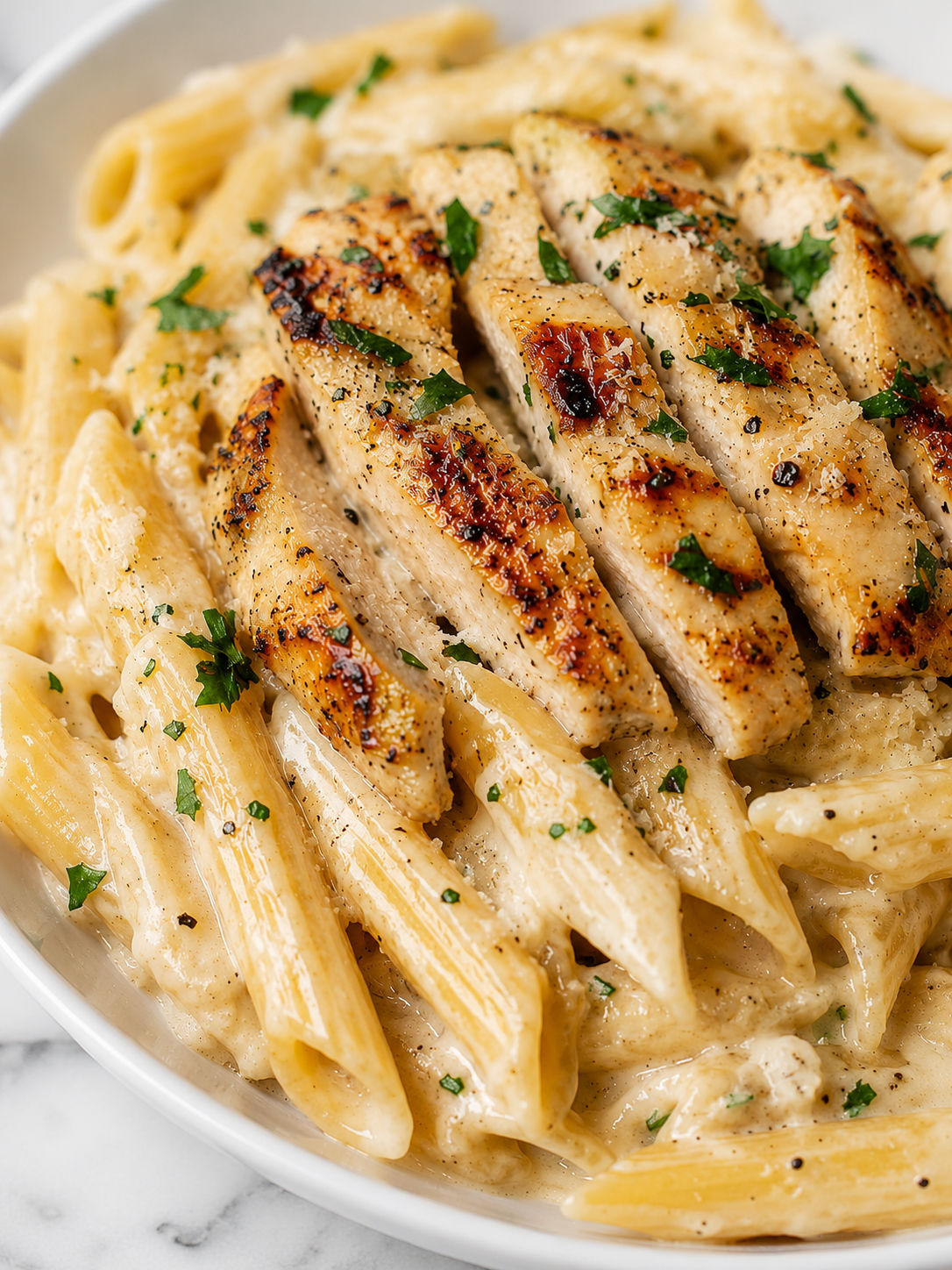
Creamy Chicken Pasta is the dinner I make when I want comfort without dragging out every pan in the kitchen. The chicken gets browned first, then the same skillet holds the garlic, cream, parmesan, and a splash of pasta water.
The sauce is rich, but it should still move. That is the goal here. You want tender chicken, pasta that holds the sauce, and a little brightness from lemon and parsley at the end.
Creamy Chicken Pasta Ingredients
This is a short, practical ingredient list. Use freshly grated parmesan if you can, since it melts smoother and gives the sauce a cleaner flavor.
Chicken breast cooks quickly here, but the main trick is cutting it evenly so every piece browns at the same pace.
- Chicken breast. Lean, quick-cooking protein that stays tender when browned fast and finished gently.
- Penne pasta. The ridges and tubes hold the cream sauce better than slick shapes.
- Olive oil and butter. Oil helps the chicken brown, while butter gives the sauce a softer flavor.
- Garlic. Adds the warm base note that makes the sauce taste cooked, not just creamy.
- Chicken broth. Loosens the pan bits and keeps the sauce from tasting too heavy.
- Heavy cream. Creates the rich body of the sauce and coats the pasta evenly.
- Parmesan cheese. Thickens the sauce and adds salty, nutty depth.
- Lemon and parsley. Freshen the finished dish so it does not feel flat.
Make Creamy Chicken Pasta
- Boil the pasta. Cook the penne in well-salted water until just al dente. Reserve 1 cup of pasta water before draining.
- Brown the chicken. Season the chicken pieces with salt, pepper, and Italian seasoning. Sear in olive oil until golden and cooked through, then move to a plate.
- Start the sauce. Melt the butter in the same skillet. Add garlic and cook just until fragrant, scraping up the browned bits.
- Simmer gently. Pour in chicken broth and cream. Let it bubble softly until slightly thickened.
- Melt the parmesan. Lower the heat and stir in the cheese a handful at a time. Add pasta water until the sauce looks smooth and glossy.
- Toss and finish. Return the chicken and pasta to the skillet. Toss with lemon juice and parsley, then serve while the sauce is loose and silky.
Why the Sauce Turns Silky
The best creamy chicken pasta does not rely on cream alone. Cream gives body, but pasta water is what helps the sauce cling. That starchy water loosens the parmesan and helps the fat, broth, and cheese come together. Add it slowly while tossing, not all at once.
The pan matters too. After the chicken browns, the skillet holds little browned bits that season the sauce. Pouring in broth releases them. This is why the sauce tastes deeper than a quick mix of cream and cheese. If you like this kind of skillet pasta, Creamy Garlic Chicken Penne uses the same idea with a stronger garlic finish.
Chicken That Stays Tender
Small, even pieces of chicken are easier to cook than thick whole breasts. Pat them dry, season them well, and give them space in the skillet. If the pan is crowded, the chicken steams and never picks up that golden edge.
Cook chicken until it reaches 165 degrees F. The safe minimum temperature is listed by FoodSafety.gov, and a quick-read thermometer makes this simple. Once the chicken is done, remove it from the skillet while the sauce comes together. Letting it sit in boiling cream is how tender pieces turn dry.
Easy Add-Ins That Fit
This base recipe is flexible. Stir in a handful of baby spinach at the end and let the heat wilt it. Add steamed broccoli if you want something closer to Creamy Broccoli Chicken Pasta. Peas are easy too, especially if you add them to the pasta water during the final minute of cooking.
For a fuller Alfredo-style finish, add a little more parmesan and skip the lemon. For a brighter version, add extra lemon zest and black pepper. A pinch of red pepper flakes also works, but keep it light so the cream sauce still tastes gentle.
Serving and Leftover Notes
Serve this pasta right away with a simple green salad or roasted vegetables. Cream sauces thicken quickly once they cool, so keep a little pasta water nearby until the plates are filled. If the sauce tightens in the skillet, a small splash brings it back.
Leftovers are still good, but they need gentle reheating. Warm them in a skillet over low heat with milk, broth, or water. Stir often and stop as soon as the pasta is hot. For a different cozy chicken pasta night, try One Pot Creamy Chicken Pasta or Homemade Chicken Alfredo Pasta.

FAQs
- What pasta shape works best for creamy chicken pasta?
Penne, rigatoni, fusilli, and rotini all work well because they catch sauce in their ridges and hollow centers. Long pasta works too, but short shapes are easier to toss with the chicken.
- Can I use chicken thighs instead of chicken breast?
Yes. Boneless skinless thighs are a good swap and usually stay juicier. Cut them into small pieces and cook until browned and fully cooked through.
- How do I keep the cream sauce from getting grainy?
Keep the heat gentle after adding the cream and parmesan. Boiling hard can make the dairy separate, so stir over medium-low heat and add pasta water as needed.
- Can I make creamy chicken pasta ahead?
You can cook the chicken and grate the parmesan ahead of time. For best texture, boil the pasta and finish the sauce right before serving because creamy pasta thickens as it sits.
- How long do leftovers keep?
Store leftovers in an airtight container in the fridge for up to 3 days. Reheat in a skillet with a splash of milk, broth, or water until the sauce loosens.
- Can I make this lighter?
Use half-and-half instead of heavy cream, but keep the heat low so it does not split. You can also add spinach, peas, or broccoli to stretch the sauce and add freshness.
