 Pin it
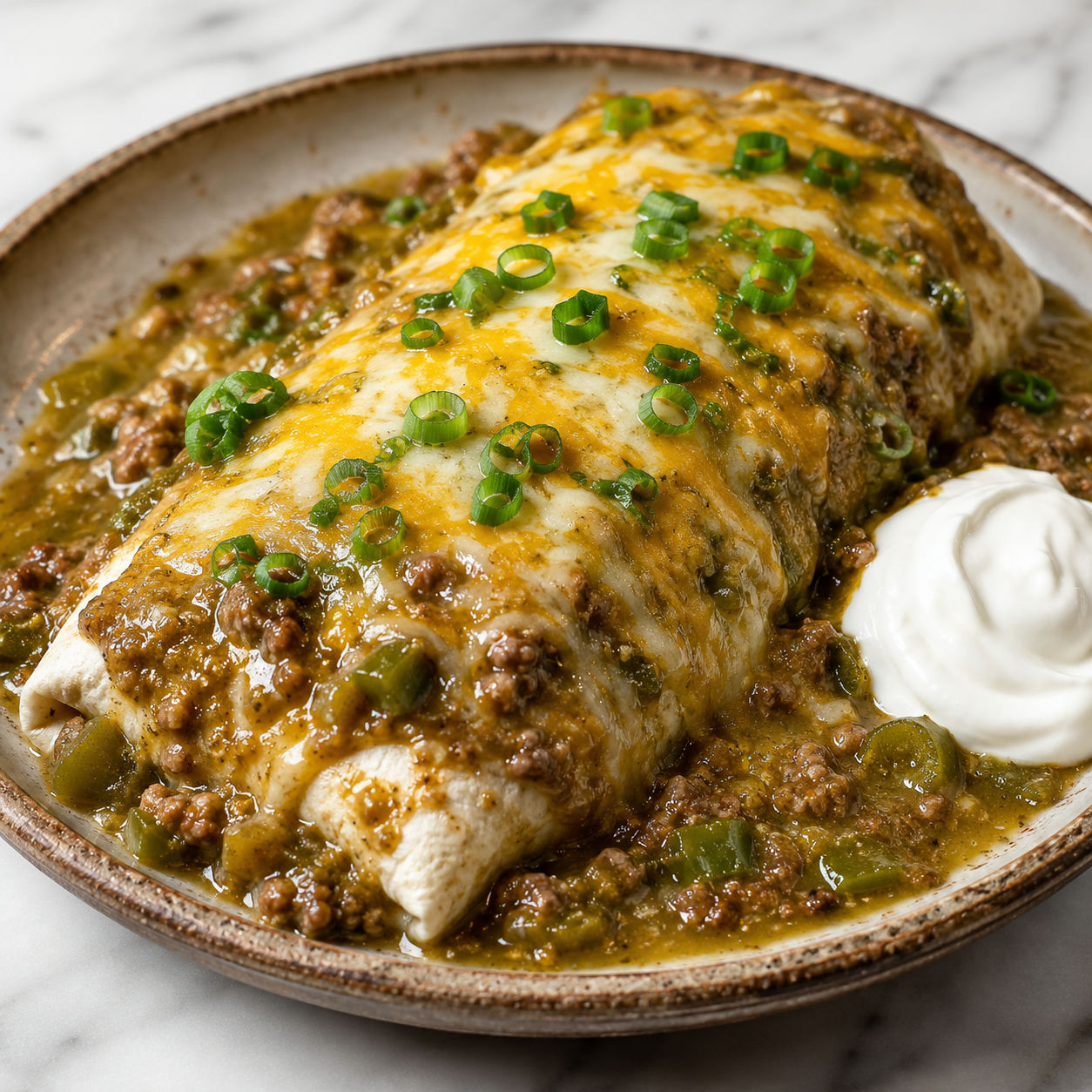
New Mexico has a way with green chile that is hard to explain until you taste it. This smothered burrito makes sense after one bite. A large flour tortilla rolled tight around refried beans and melted cheese, then buried under a thick ground beef green chile sauce that covers every inch of the surface. That sauce is the whole point.
If you have only ever used canned green chiles, this recipe might change that. Hatch chiles roasted over an open flame turn sweet and smoky in a way canned versions rarely match. Good fire-roasted canned chiles still make a solid sauce when fresh ones are not available, and this dish works beautifully either way.
The whole recipe takes about 50 minutes. Most of that is the sauce simmering on the stove while you do very little. Roll the burritos, ladle on the sauce, pile on the cheese, and dinner is done.
Inside the Sauce and the Burrito
The ingredient list divides cleanly into two parts: what fills the tortilla and what gets poured over the top. Both are short. The filling is mostly pantry staples. The sauce is where the real flavor comes from, so use the best green chiles you can find.
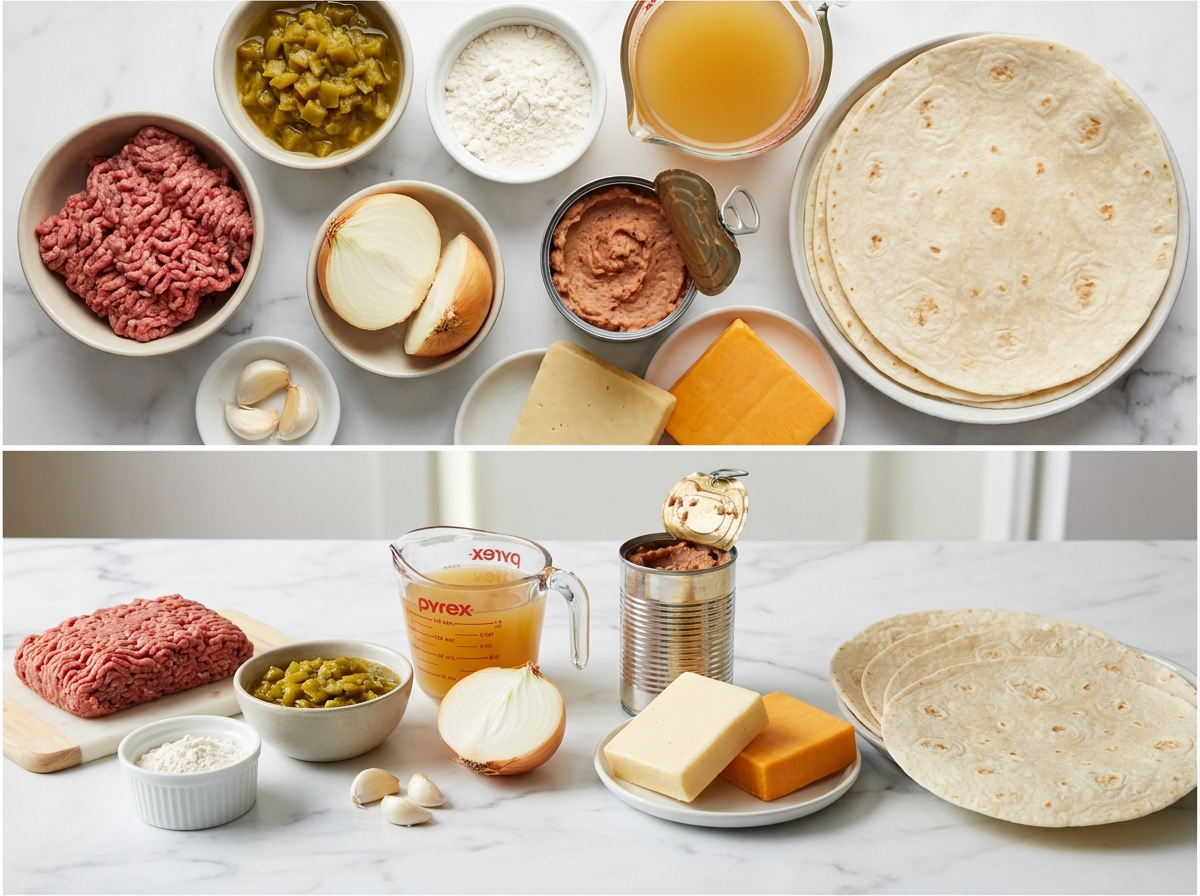
- Ground beef. Adds body and richness to the green chile sauce. An 80/20 blend gives the most flavor without needing extra fat in the pan.
- Roasted green chiles. The soul of the sauce. Hatch, Anaheim, or Pueblo chiles all work. Fresh-roasted is best. Fire-roasted canned chiles are a convenient and solid backup.
- All-purpose flour. Stirred into the browned beef before the liquid goes in, it acts as a built-in thickener that gives the sauce a smooth, gravy-like body.
- Chicken broth. The liquid base for the sauce. Low-sodium gives you better control over the final seasoning.
- Refried beans. The hearty filling that makes each burrito filling and satisfying. Canned pinto refried beans save time and taste great here.
- Large flour tortillas. Go for at least 10-inch size so there is enough surface to roll a full burrito without tearing the edges.
- Shredded cheese. Monterey Jack melts the cleanest. A cheddar-jack blend adds sharpness. Use some inside the burrito and more on top after smothering.
Building and Smothering the Burritos
- Brown the beef. Cook the ground beef in a wide skillet over medium-high heat, breaking it into small crumbles, until no pink remains and the meat is lightly browned, about 7 to 8 minutes. The USDA recommends cooking ground beef to an internal temperature of 160°F for safe consumption. Drain off all but a thin layer of fat from the pan.
- Add flour and aromatics. Sprinkle the flour over the cooked beef and stir constantly for 2 minutes to cook off the raw starch taste. Add the diced onion and minced garlic and cook another 3 minutes, stirring, until the onion softens.
- Build the sauce. Stir in the diced green chiles. Pour in the chicken broth and add the cumin, salt, and pepper. Bring to a boil, scraping up any stuck bits from the bottom of the pan.
- Simmer until thick. Reduce heat to medium-low and let the sauce simmer uncovered for 15 to 20 minutes, stirring occasionally, until it is thick enough to coat the back of a spoon.
- Warm the tortillas. Heat each tortilla in a dry skillet for 30 seconds per side, or microwave wrapped in a damp paper towel for 30 seconds. Pliable tortillas roll cleanly without cracking.
- Fill and roll. Spoon about 1/2 cup of refried beans down the center of each tortilla. Add a generous handful of shredded cheese. Fold in both sides, then roll firmly from the bottom up, keeping the filling tight inside.
- Smother and serve. Lay the burritos seam-side down on plates or in a shallow baking dish. Ladle the hot green chile sauce over each one until completely covered. Add more shredded cheese on top while the sauce is still hot so it melts right in. Serve immediately with sour cream, pico de gallo, or sliced jalapeños alongside.
Getting the Green Chile Right
The single most important variable in this dish is the chile itself. Roasted Hatch green chiles have a sweetness and mild smoky heat that is specific to their growing region in southern New Mexico. The Chile Pepper Institute at New Mexico State University tracks hundreds of named varieties. For this sauce, the classic medium-heat Hatch Big Jim or NM 6-4 are ideal.
To roast fresh chiles, place them directly over a gas burner set to high or under a broiler. Turn with tongs every couple of minutes until the skin blisters and chars all over, about 8 to 10 minutes total. Transfer to a covered bowl and let them steam for 10 minutes. The charred skin slips off easily once they cool slightly. Seed them and dice before adding to the pan.
Outside of Hatch season in late summer, fire-roasted canned green chiles from a brand like Hatch or 505 Southwestern are the practical year-round choice. They come pre-roasted and peeled and hold up well in a cooked sauce.
Why the Flour Step Works
Sprinkling flour directly over browned meat before adding liquid is an old and reliable technique. The residual fat in the pan carries the flour, and two minutes of constant stirring cooks off the raw starch taste. When the broth goes in, the flour-coated crumbles dissolve throughout the liquid and thicken the sauce from the inside out. No separate slurry, no lumps to chase down. Stir steadily for the first two minutes after the broth goes in to prevent any clumping in the corners of the pan.
If the finished sauce is thinner than you want, simmer it uncovered for another five minutes and let the liquid reduce. If it becomes too thick while sitting, a splash of broth loosens it right back up without affecting the flavor.
Swaps That Still Work
Ground pork makes a slightly richer, sweeter sauce than beef. A half-and-half blend works well too. For a leaner option, ground turkey holds up fine as long as you season it well, since it contributes less fat to carry the flavors. If you enjoy a red chile variation on the smothered burrito theme, these beef and bean burritos with Chimayo red chile follow a similar approach with a bolder, earthier sauce worth trying back to back. For something richer and creamier in the same family, the creamy chile Colorado burritos are another excellent option.
To go completely meatless, skip the ground meat and stir an extra cup of refried beans directly into the sauce along with vegetable broth. The flour still thickens it and the roasted chiles carry the dish on their own.
Storing and Reheating Leftovers
Store the sauce and the burritos separately when possible. The sauce keeps in the fridge for up to four days in a covered container and freezes well for up to three months. Thaw overnight in the fridge and reheat in a small saucepan over medium-low heat, adding a splash of broth if it has thickened too much while stored.
For the burritos, reheat them wrapped in foil in a 350°F (175°C) oven for 15 minutes, then pull them out, ladle on the hot reheated sauce, and add fresh cheese on top. The microwave works in a pinch but softens the tortilla more than the oven does.
What to Serve on the Side
Cilantro rice is the natural partner. Its freshness cuts through the richness of the sauce and rounds out the plate. A simple green salad with lime vinaigrette also works well. For toppings right on the burrito, sour cream and pico de gallo are the New Mexico classics. Sliced pickled jalapeños add a sharp acidity that lifts the whole dish without adding more heat from the chiles.
If you enjoy this style of green chile cooking, the smoked chicken and green chile burrito takes a similar smothered approach with a completely different protein. And if you want another great use for ground beef and roasted chiles together, the green chile picadillo is worth a spot in the rotation.
FAQs
- Can I use canned green chiles instead of fresh-roasted?
Yes. Look for fire-roasted canned green chiles for the best flavor. Brands like Hatch or 505 Southwestern are widely available and hold up well in a cooked sauce. Drain them before dicing so excess liquid does not thin out the sauce. Fresh-roasted chiles give a deeper, smokier result, but good canned chiles are a very practical backup any time of year.
- What cheese melts best on a smothered burrito?
Monterey Jack is the classic choice. It melts clean and creamy without separating or turning greasy. A cheddar-jack blend adds a sharper bite. If you can, buy a block and grate it yourself. Pre-shredded bags carry an anti-caking coating that slows melting and can leave a slightly grainy texture on top.
- Can I make this recipe vegetarian?
Yes. Skip the ground beef entirely. Stir an extra cup of refried beans directly into the sauce and use vegetable broth in place of chicken broth. The flour still thickens the mixture and the roasted green chiles carry plenty of flavor on their own. A diced poblano pepper added with the onion deepens the sauce further without any meat.
- How spicy is this dish?
Medium, depending on which chiles you use. Hatch green chiles range from mild to extra hot. Most grocery store versions are labeled mild or medium, so heat stays manageable. For a family-friendly version, go with mild chiles. If you want real heat, look for hot-variety Hatch chiles or stir a pinch of cayenne into the sauce at the end of simmering.
- Can I make the green chile sauce ahead of time?
The sauce is actually better the next day. The flavors settle and deepen overnight in the fridge. Make it up to two days ahead, store it in a covered container, and reheat gently in a saucepan over medium-low heat. Add a splash of broth if it has thickened too much while sitting.
- What tortillas work best for smothered burritos?
Use large flour tortillas, at least 10 inches across. Anything smaller makes a tight roll that splits at the seams once the sauce goes on top. Warm them in a dry skillet for 30 seconds per side before filling. Cold tortillas crack when rolled. Store-brand burrito-size flour tortillas work just as well as any specialty brand here.
- What do I do if the sauce comes out too thin?
Let it simmer uncovered for another five to ten minutes. The liquid will reduce and the sauce will thicken on its own as it cooks down. If you need it thicker quickly, mix one teaspoon of cornstarch with two teaspoons of cold water and stir it into the simmering sauce. It thickens within about a minute without changing the flavor.
