 Pin it
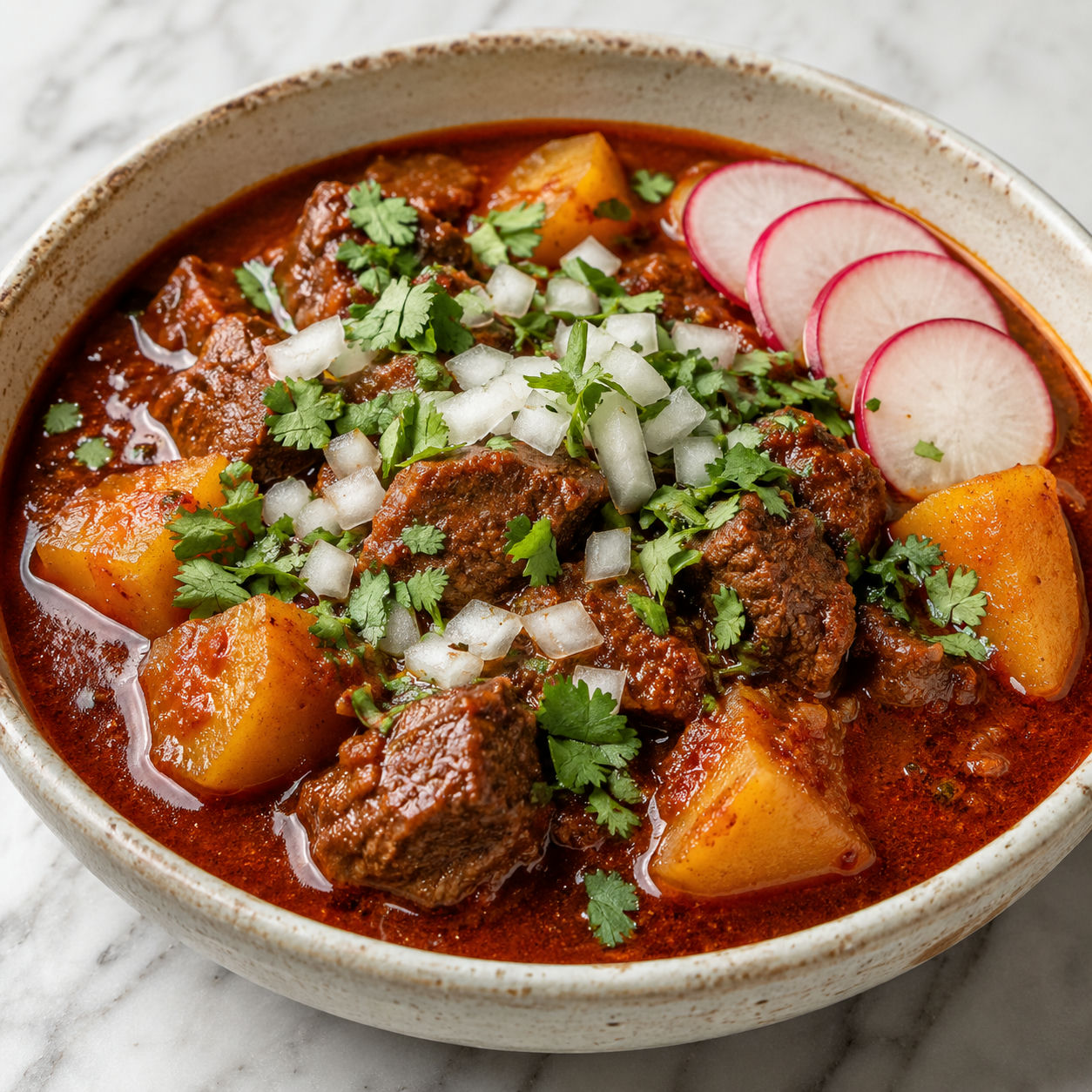
Carne con Papas Rojo fills the kitchen with a deep, earthy smell before you've even taken a bite. The sauce starts with dried guajillo and ancho chiles rehydrated in hot water, then blended smooth with garlic, onion, and tomato. The result is that brick-red, slightly smoky base that makes this stew taste like it cooked all day even when it hasn't.
The beef goes in after a hard sear, and the potatoes follow about halfway through so they stay intact rather than falling apart. By the time the lid comes off, the sauce has thickened around both, and the whole pot smells like it belongs on a grandmother's stove. It is a weeknight meal that feels like a Sunday one.
Chiles, beef, and potatoes worth choosing carefully
Dried guajillo chiles are the backbone of this sauce. Look for ones that are pliable rather than brittle, a sign they're still flavorful and haven't dried out past their prime. Ancho chiles add a darker, almost raisin-like sweetness that balances the guajillo without fighting it.
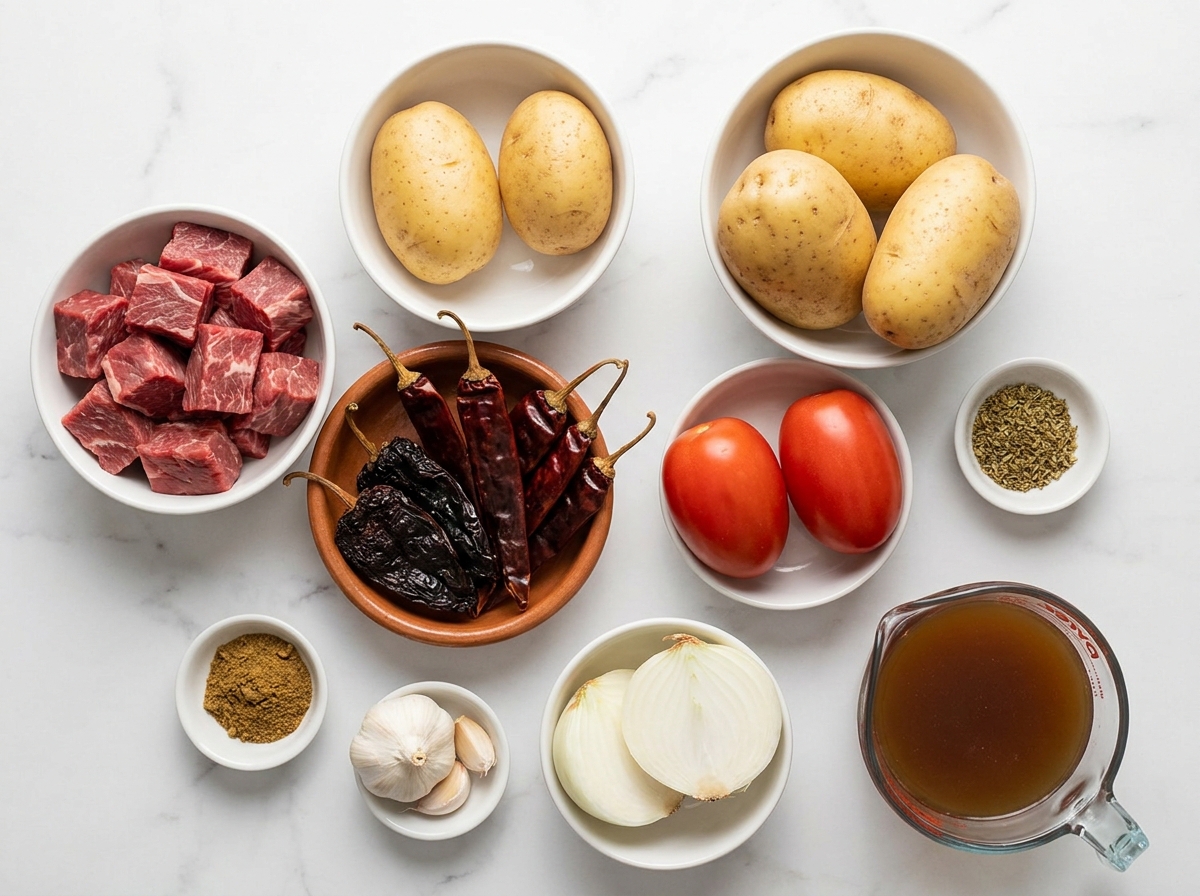
- Beef chuck (stew meat). Fat and collagen in chuck break down slowly during the simmer, keeping the meat tender and enriching the sauce at the same time.
- Yukon Gold potatoes. Hold their shape through the cook far better than russets, which can turn mealy. Their buttery texture absorbs the chile sauce beautifully.
- Dried guajillo chiles. Mild, fruity, and deeply red. They give this dish its signature brick color and earthy backbone. Five or six make a full-flavored sauce.
- Dried ancho chiles. Sweeter and darker than guajillos, with a subtle chocolatey undertone. Two add depth without overpowering the guajillo base.
- Roma tomatoes. They add body and a little acidity to the sauce that keeps it from tasting flat or one-dimensional.
- Beef broth. Use a good-quality broth. It forms most of the liquid base and carries the sauce flavor into the meat as the stew cooks.
- Cumin and Mexican oregano. The two spices that anchor the flavor. Mexican oregano is earthier and more citrusy than the Mediterranean variety, so use it if you have it.
Building the chile sauce and assembling the stew
- Rehydrate the chiles. Remove stems and seeds from the guajillo and ancho chiles. Place them in a saucepan, cover with water, bring to a boil, and simmer for 7 minutes until softened and pliable. Drain and let them cool slightly before blending.
- Blend the sauce. Add the softened chiles to a blender with the garlic, onion, Roma tomatoes, cumin, oregano, and 1 cup of beef broth. Blend on high for about 60 seconds until very smooth. For the silkiest result, strain through a fine-mesh sieve. Skip straining if you prefer a thicker, heartier texture.
- Sear the beef. Pat the beef cubes completely dry with paper towels. Season generously with salt and black pepper. Heat the oil in a large Dutch oven or heavy pot over medium-high heat. Sear the beef in batches without crowding the pan, about 3 minutes per side until browned on all sides. Remove to a plate and set aside.
- Toast the chile sauce. Pour the blended chile sauce directly into the same pot. It will bubble and spatter at first, so stand back and stir. Cook over medium heat for 5 to 6 minutes, stirring regularly, until the sauce deepens in color and smells toasted and fragrant.
- Simmer the beef. Return the seared beef to the pot. Add the remaining cup of beef broth, stir to coat, and bring to a gentle simmer. Cover, reduce heat to low, and cook for 20 minutes.
- Add the potatoes. Stir in the diced potatoes. Cover and continue simmering for 20 to 25 more minutes, until the potatoes are fork-tender and the beef pulls apart easily. Taste and adjust salt.
- Serve. Ladle into bowls or spoon alongside rice. Garnish with chopped white onion, fresh cilantro, and sliced radishes.
Why browning the beef before braising matters
Searing the beef before adding the sauce is not just about color. When the surface of the meat hits a hot pan, the Maillard reaction builds hundreds of flavor compounds that stay in the stew throughout the cook. A pale, unseared piece of beef simmered directly in liquid will taste noticeably flat by comparison.
The key is a dry surface and a genuinely hot pan. If the beef goes in wet, it steams instead of browns and you lose everything. Pat each piece dry with a paper towel right before it hits the oil, and give each piece space in the pan. Work in batches if needed. It adds five minutes to the process and makes a real difference in the final depth of the sauce. For safe internal temperatures when cooking beef, the USDA beef safety guide is a reliable reference.
Guajillo and ancho: what each chile brings
Guajillo chiles are long, smooth-skinned, and a deep reddish-brown. They're mild with a tangy, fruity quality and a slight tea-like finish. Five of them in the blender give this sauce its clean red color and gentle heat, sitting around 2,500 to 5,000 Scoville units.
Ancho chiles are dried poblano peppers. Wider and darker, they bring a sweet, almost chocolatey undertone that rounds the guajillo without taking over. Two anchos in the pot is the right balance. If you want real heat, two dried chile de árbol added to the soaking water will push the sauce from mild to genuinely spicy.
This same dried chile technique is what makes Carne Guisada and Chile Colorado so satisfying. All three dishes lean on rehydrated dried chiles for a depth you simply cannot get from fresh peppers or chile powder alone.
Swaps and variations worth knowing
No Yukon Golds? Red potatoes work almost as well and hold their shape even better. Russets will taste fine but can break down into the sauce over time, which gives a thicker, almost chowder-like result. Some cooks actually prefer it that way on a cold night.
Pork shoulder cut into cubes is a natural substitute for beef in this recipe. The cook time stays about the same, though pork releases more fat into the sauce, making it noticeably richer. For a quicker version of the same idea, Mom's Picadillo con Papa uses ground beef instead of stew meat and comes together in about 30 minutes.
Serving ideas and storage that actually work
The classic plate is the stew spooned over or next to a scoop of Arroz Rojo with warm corn or flour tortillas to soak up the sauce. A few sliced radishes, a handful of chopped white onion, and some fresh cilantro cut through the richness and brighten the whole plate.
Leftovers keep in the fridge for up to 4 days in a sealed container. The stew also freezes well for up to 3 months. The potatoes soften slightly after freezing but stay intact. Thaw overnight in the fridge and reheat gently on the stovetop with a splash of broth to bring the sauce back to its original consistency.
FAQs
- What cut of beef works best for Carne con Papas Rojo?
Chuck roast cut into 1.5-inch cubes is the best choice. It has enough fat and connective tissue to stay tender through the simmer without drying out. Beef stew meat labeled as chuck at the grocery store works fine. Avoid round roast for this one as it can turn dry and grainy under extended heat.
- Can I substitute the dried chiles with something easier to find?
Guajillo and ancho chiles are available in most grocery stores in the Latin foods aisle. If you genuinely cannot find them, a combination of 3 tablespoons mild red chile powder and 1 tablespoon ancho powder blended with the other sauce ingredients will get you reasonably close. The dried whole chiles have more depth and a fresher flavor that powder cannot fully replicate, but the powder version still makes a very good stew.
- How do I keep the potatoes from getting mushy?
Add the potatoes for the last 20 to 25 minutes of cooking, not at the beginning. Cut them into 1-inch cubes, uniform in size so they cook evenly. Yukon Golds hold their shape better than russets, which can turn mealy. Once a knife slides in easily with no resistance, pull the pot off the heat right away.
- Can I make Carne con Papas Rojo in a slow cooker?
Yes. Brown the beef and cook the blended chile sauce on the stovetop first, then transfer everything except the potatoes to the slow cooker. Cook on low for 6 to 7 hours. Add the diced potatoes in the last 90 minutes so they cook through without falling apart. The flavor is just as good and the beef turns out very tender.
- How do I store and reheat leftovers?
Cool the stew completely, then refrigerate in an airtight container for up to 4 days. The flavors deepen overnight so leftovers are often better the next day. Reheat gently on the stovetop over medium-low heat with a splash of beef broth to loosen the sauce, which thickens considerably in the fridge. The stew also freezes well for up to 3 months.
- What do you serve with Carne con Papas Rojo?
Warm flour or corn tortillas are the classic pairing. A scoop of Arroz Rojo and a side of whole pinto beans round the plate into a full meal. Chopped white onion, fresh cilantro, and a few sliced radishes scattered over the top right before serving add brightness and crunch that cut through the richness of the chile sauce.
- Can I make this dish with pork instead of beef?
Yes. Pork shoulder cut into cubes works very well and has a slightly sweeter flavor that pairs nicely with guajillo chile. The cook time is similar, though pork shoulder can take up to 50 minutes to fully tenderize depending on the size of the cubes. Taste and check at the 40-minute mark. Pork also releases more fat into the sauce, making it noticeably richer.
