 Pin it
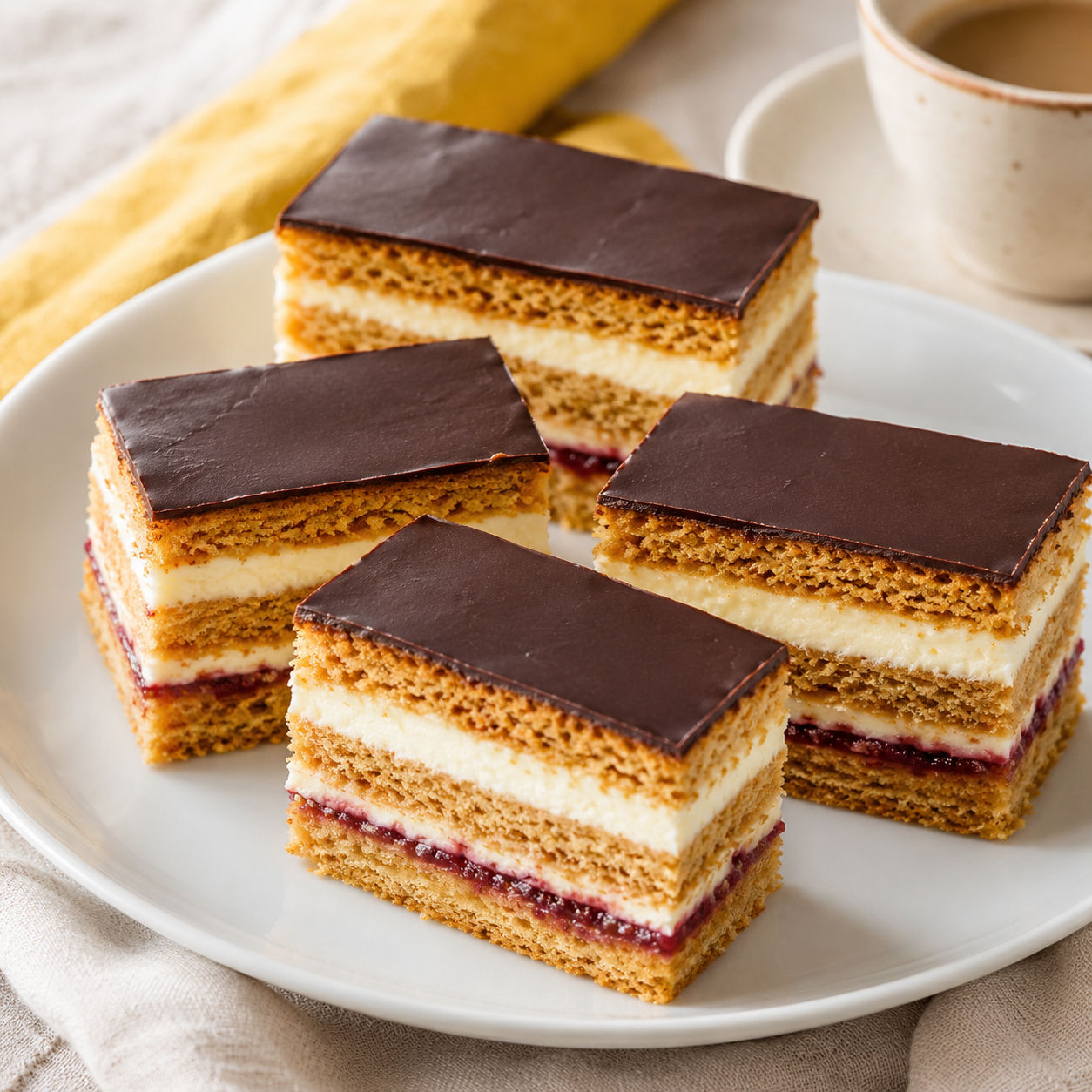
Slovakian Honey Cake Petit Fours are the kind of dessert that looks fancy because you did the patient work ahead of time. The honey dough bakes into thin, firm sheets, then softens overnight against vanilla cream and jam.
The small squares are rich, tidy, and made for coffee, holidays, and dessert trays. I like them best after a full day in the fridge, when the honey smell has settled into the cream and the chocolate top snaps just a little under the knife.
Slovakian Honey Cake Petit Fours Layers
The ingredient list is simple, but the texture depends on balance. Use real honey, room-temperature butter for the cream, and a thick jam that will not run when the cake is weighted.
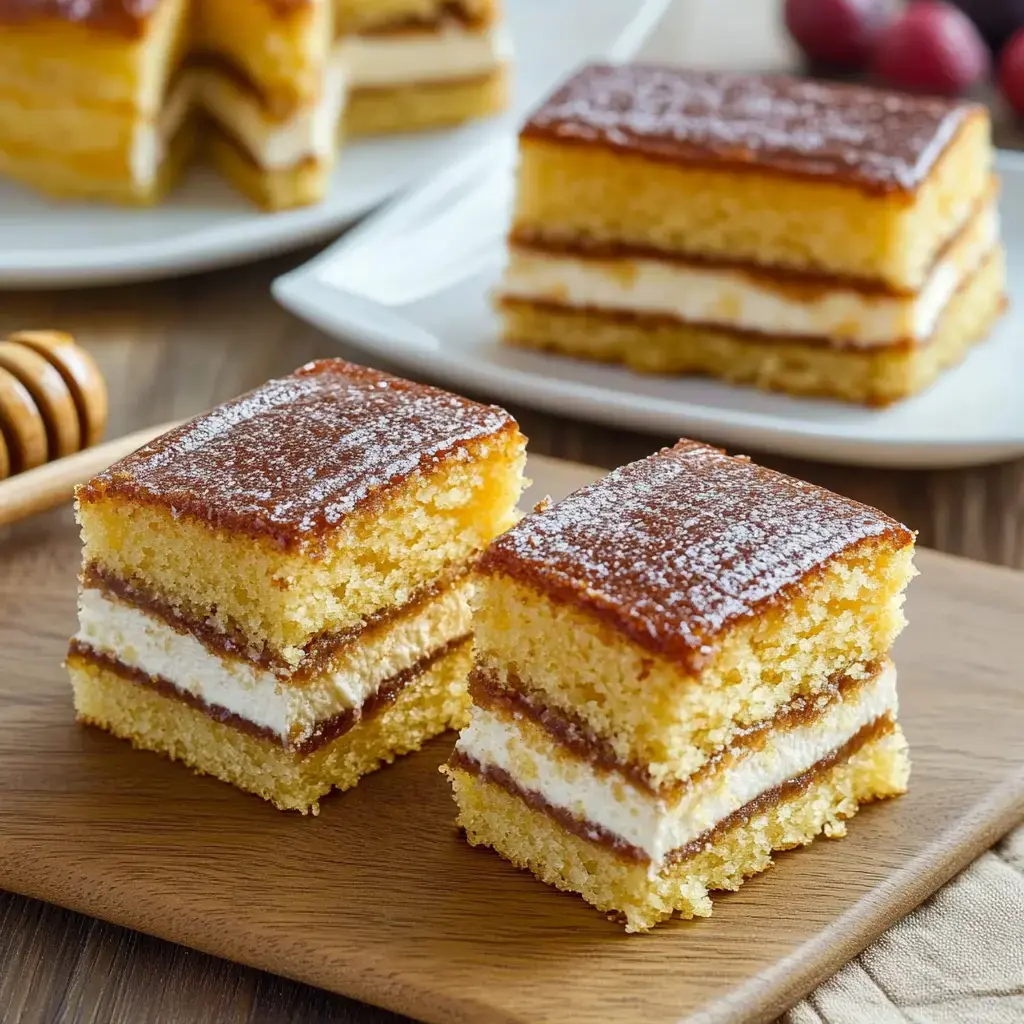
The honey sheets should be thin. They look almost too firm after baking, then turn tender once the filling has time to soak in.
- All-purpose flour. Gives the honey dough enough structure to roll thin and lift onto the tray.
- Honey. Adds the warm floral flavor that makes these slices different from a plain sponge cake.
- Butter. Softens the pastry and makes the vanilla filling rich without tasting heavy.
- Milk. Helps melt the dough mixture smoothly before the flour goes in.
- Egg. Binds the dough so the thin sheets bake sturdy instead of crumbly.
- Baking soda. Foams in the warm honey mixture and gives the sheets a lighter bite.
- Vanilla pudding cream. Turns the firm layers soft and creamy after the overnight rest.
- Tart jam. Cuts through the sweet cream and keeps the petit fours from tasting flat.
- Dark chocolate and cream. Make a glossy top that sets firmly enough for clean slicing.
Bake, Fill, Chill, Slice
- Warm the honey mixture. Melt sugar, butter, milk, honey, and egg over low heat while stirring. Add baking soda and pull the pan from the heat once it foams.
- Make the dough. Stir in part of the flour, then knead in the rest on the counter until the dough is smooth and warm.
- Roll thin sheets. Divide the dough, roll each piece very thin, and bake until lightly golden. Cool the sheets fully before filling.
- Cook the pudding base. Whisk milk, sugar, cornstarch, and vanilla over medium heat until thick. Cool it to room temperature so it blends cleanly with butter.
- Whip the cream. Beat softened butter with powdered sugar, then add the cooled pudding in spoonfuls until smooth.
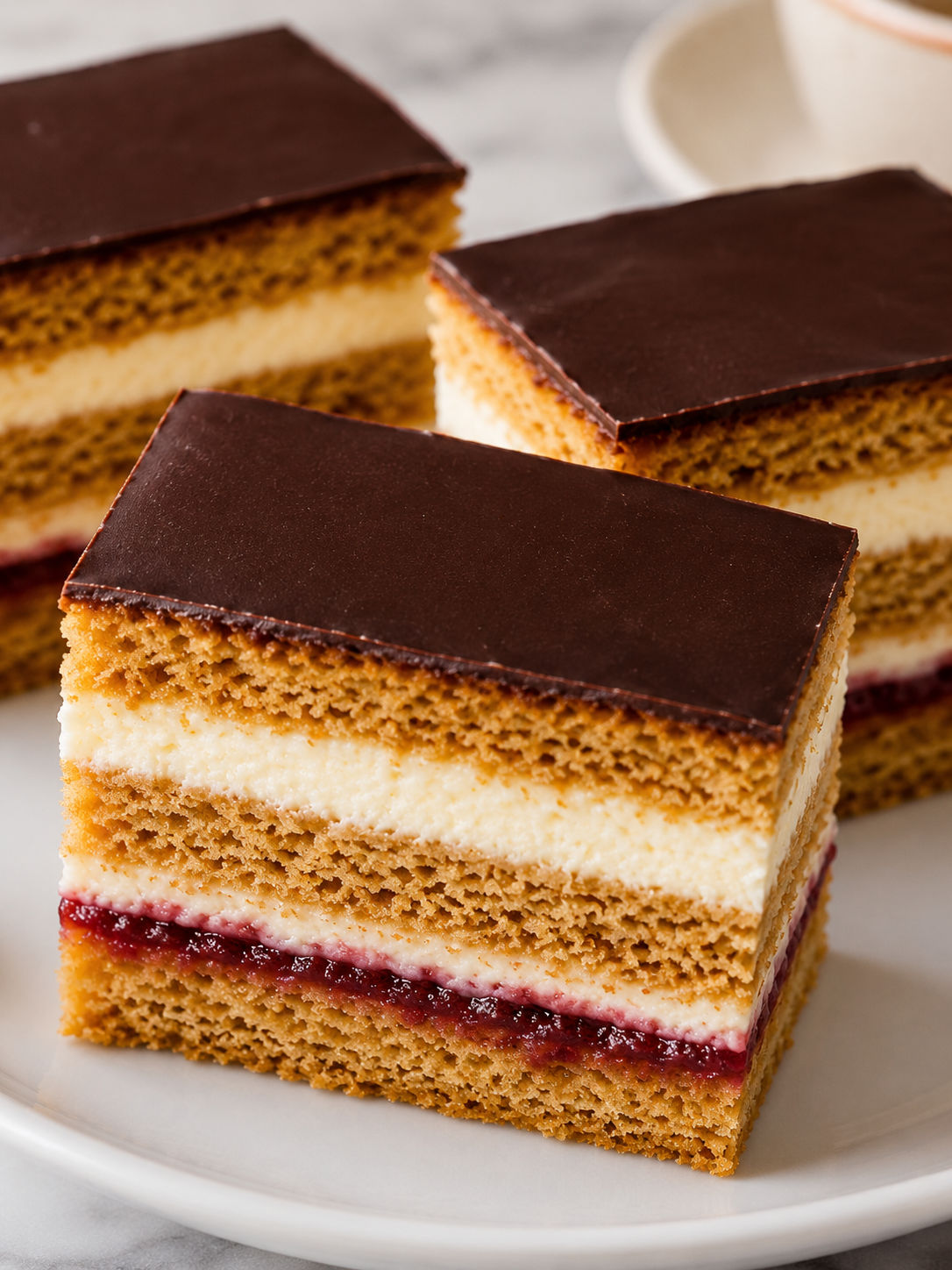
- Layer and press. Stack honey sheet, cream, honey sheet, jam, honey sheet, cream, and the last honey sheet. Cover and weight lightly overnight.
- Glaze and cut. Pour warm chocolate cream over the chilled cake. Let it set, trim the edges, and cut into small squares or rectangles.
The Thin-Sheet Secret
Rolling is the part that makes this recipe feel different from a regular cake. The dough should be warm, flexible, and thin enough that it almost shows the counter underneath. If it cools and starts cracking, let it sit near the warm stove for a minute before rolling again.
Bake the sheets on parchment so they slide off without tearing. They only need a light golden edge. Dark sheets taste dry and can bring a bitter note to the honey. The method is close to traditional Slovakian honey cake slices, where firm baked layers soften after filling.
Why The Cake Rests
The overnight chill is not optional. Right after assembly, the pastry layers are too firm and the filling has not settled. Gentle weight presses the stack flat, pushes the cream into the sheets, and helps the final pieces look tidy.
If you already like layered desserts, these sit nicely next to honey cake slices and German bee sting cake on a dessert table. They share that old-fashioned bakery feel, but these petit fours are easier to serve in small bites.
Jam Choices That Behave
Red currant is lovely if you can find it. Raspberry, apricot, and sour cherry also work because they bring acidity. The jam layer should be thin but complete, so every bite gets a little fruit against the cream.
Runny jam is the common problem. It seeps out when the cake is weighted and makes the layers slide. Use a thick preserve, or warm the jam in a small pan for a few minutes to cook off extra water. Let it cool before spreading.
Glazing Without Smudges
The glaze should be pourable, not hot enough to melt the filling. Bring cream just to a simmer, pour it over chopped chocolate, wait two minutes, then stir until glossy. Spread it with a light hand and stop once the top is covered.
For clean pieces, chill the glazed cake until the chocolate is set but not rock hard. A long knife dipped in warm water and wiped dry gives the neatest cuts. If the top cracks, let the cake stand at room temperature for five minutes before trying again.
Storage And Dessert Trays
Keep Slovakian Honey Cake Petit Fours in an airtight container in the fridge for up to four days. Because the filling is dairy-rich, follow chilled storage guidance like the USDA leftovers guide and do not leave them sitting out for long parties.
They are best served slightly chilled. Set them out for 10 minutes before serving so the cream softens. For a honey-themed dessert spread, pair them with honey pistachio baklava cheesecake or a lighter fruit option like baked pears with honey and walnuts.
FAQs
- What are Slovakian Honey Cake Petit Fours?
They are small layered honey cake squares based on Slovak medove rezy. Thin honey pastry sheets are filled with vanilla cream and jam, chilled under gentle weight, glazed with chocolate, and cut into small portions.
- Can I make the cake layers ahead?
Yes. Bake the honey sheets one day ahead and keep them wrapped once cool. Assemble the cake the next day, then chill it overnight so the firm layers soften into a sliceable dessert.
- What kind of jam works best?
Use a thick, tart jam such as raspberry, red currant, apricot, or sour cherry. A loose jam can slide when the cake is pressed, so simmer it briefly to thicken if needed.
- Why are my layers hard after baking?
That is normal at first. The honey sheets bake firm, then absorb moisture from the filling during the overnight rest. If they are still hard after chilling, give the cake another half day in the fridge.
- Can I skip the chocolate glaze?
You can, but the glaze gives the petit fours their clean finish and balances the cream. A dusting of cocoa or grated chocolate works for a softer look, though the top will not slice as neatly.
- How should I cut neat petit fours?
Chill the glazed cake until firm, then use a long sharp knife. Wipe the blade between cuts and trim the edges first. Small squares or narrow rectangles both work well.
