 Pin it
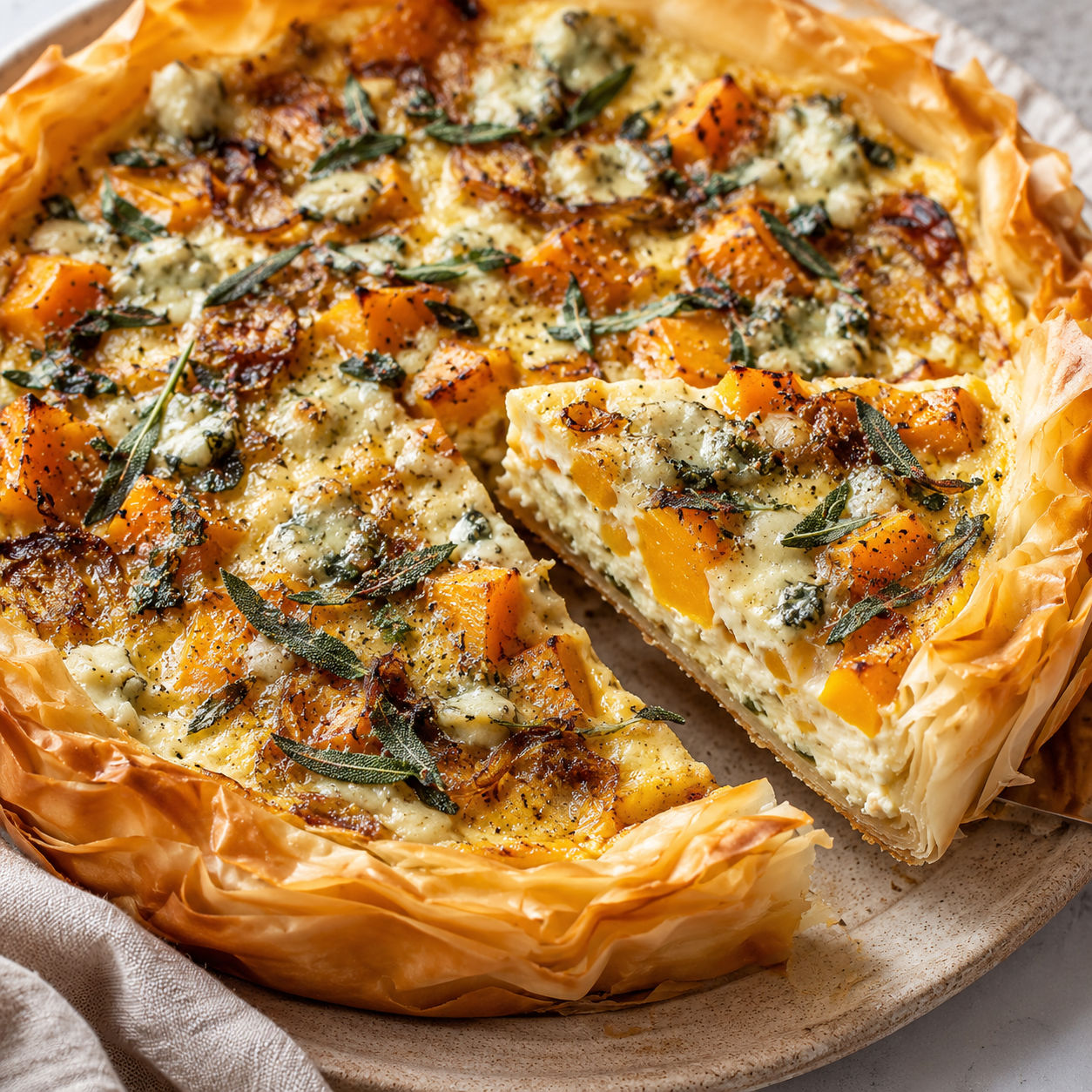
Roasted Pumpkin Quiche with Caramelized Onions, Gorgonzola, and Sage is the kind of savory pumpkin recipe that wins over people who only think of pumpkin as pie. The cubes roast until their edges turn golden, then they settle into a custardy filling with sweet onions and salty blue cheese.
I like this for brunch, but it also makes a quiet dinner with a green salad. The work is mostly hands-off. Let the onions take their time, keep the pumpkin in bite-size pieces, and the quiche bakes up with a crisp phyllo edge and a soft, creamy center.
The savory pumpkin lineup
Choose a small sugar pumpkin or butternut squash with firm flesh and no soft spots. Gorgonzola brings a salty edge, so keep the seasoning steady rather than heavy.
- Pumpkin. Roasting concentrates its sweetness and keeps the filling from turning watery.
- Yellow onions. Slow cooking turns them soft, jammy, and deeply sweet.
- Gorgonzola. A small amount gives the custard a sharp, creamy bite.
- Fresh sage. Its earthy flavor ties the pumpkin and blue cheese together.
- Eggs and half-and-half. They set into a tender custard that slices cleanly.
- Phyllo dough. Thin sheets bake into a crisp, flaky shell that feels lighter than pie crust.
- Olive oil. It helps roast the pumpkin, soften the onions, and crisp the phyllo layers.
Build the quiche in layers
- Caramelize the onions. Cook sliced onions in olive oil over medium-low heat until deep golden and soft, adding a splash of water when the pan looks dry.
- Roast the pumpkin. Toss the cubes with oil, salt, and pepper, then roast until tender with browned edges.
- Prepare the phyllo shell. Brush each phyllo sheet lightly with oil and layer the sheets into a greased 9-inch pie dish, rotating them so the overhang covers the rim.
- Mix the filling. Whisk eggs and half-and-half, then fold in the onions, pumpkin, Gorgonzola, and sage.
- Bake until set. Pour the filling into the shell and bake until the edges are golden and the center is just set, about 35-45 minutes.
- Rest before slicing. Let the quiche stand for at least 10 minutes so the custard firms up and the slices come out neat.
Why this roasted pumpkin quiche works
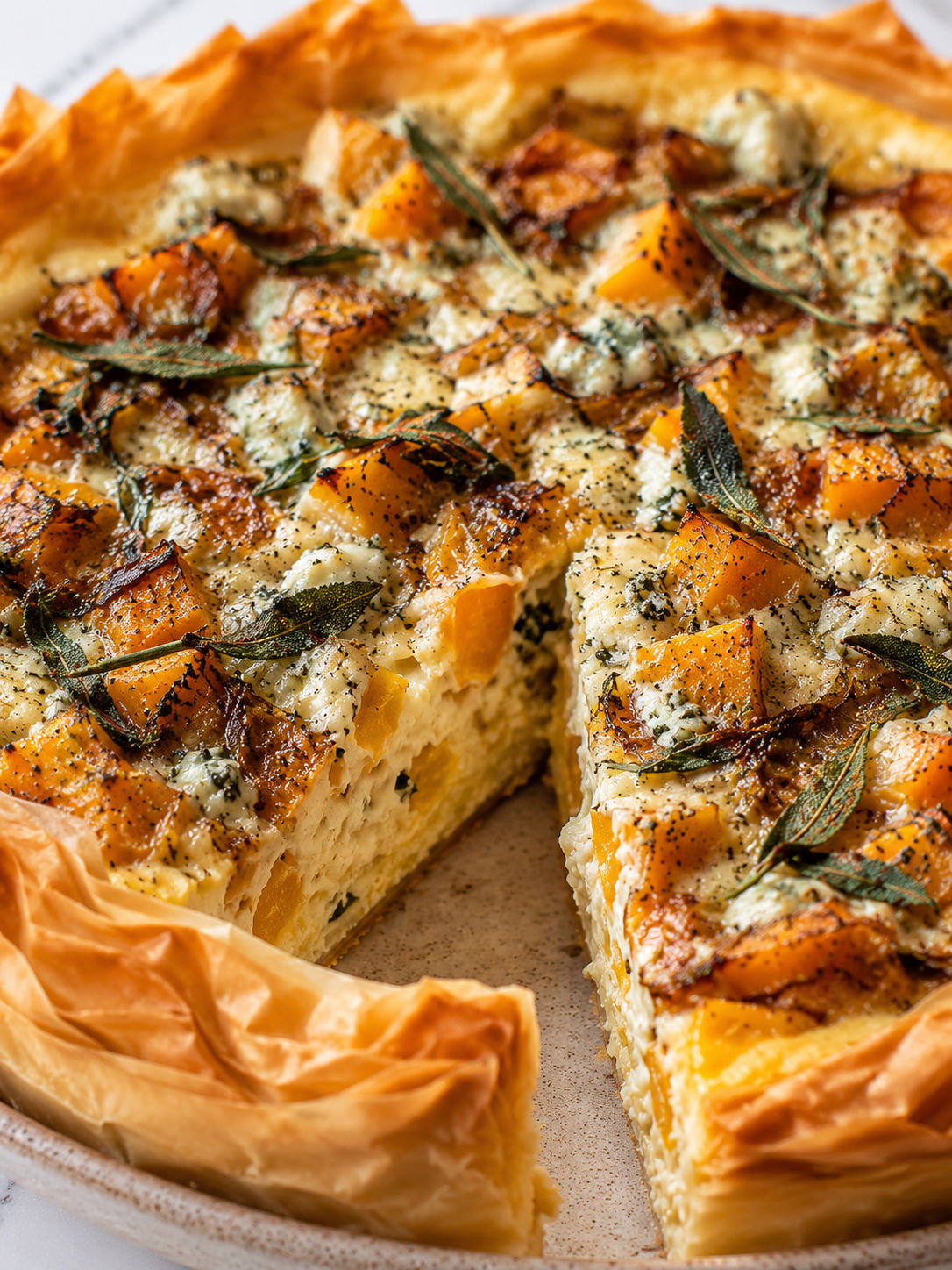
The flavor depends on taking water out before the custard goes in. Pumpkin has plenty of moisture, so roasting it first matters. The cubes should look matte on the surface with a few browned corners. If they are pale and soft, give them another 5-10 minutes.
The onions need the same patience. Deep caramelized onions are not just browned on the outside. They should be soft enough to almost melt into the egg mixture. That sweetness balances the Gorgonzola, which can taste harsh if the filling is rushed. If you like savory pumpkin dinners, try the same cozy flavor lane in pumpkin gnocchi with caramelized onion sauce.
Phyllo without the fuss
Phyllo looks delicate, but it is forgiving when layered. Keep the stack covered with a barely damp towel while you work so the sheets do not dry out. If one tears, place it in the dish anyway. Another sheet will cover it.
Brush lightly, not heavily. Too much oil makes the bottom greasy instead of crisp. The overhanging edges will brown faster than the center, so check the quiche after 25 minutes. If the rim is getting dark, loosely shield it with foil. For a softer, classic bite, use a blind-baked pie crust instead of phyllo.
Cheese and herb swaps
Gorgonzola is bold, so two ounces is plenty for a 9-inch quiche. If you are cooking for blue cheese skeptics, use half Gorgonzola and half goat cheese. Feta makes the filling saltier and crumbly. Gruyere makes it mellow and nutty.
Fresh sage is best because it blooms in the warm custard without turning dusty. Thyme also works. Rosemary is stronger, so chop it very fine and use less. For another sage-forward dinner, the ravioli with sage butter sauce has the same cozy fall feel in a faster format.
Serving it for brunch
Let the quiche cool for 10-20 minutes before cutting. Hot quiche can slump, while warm quiche slices cleanly and tastes more balanced. Serve it with peppery greens, sliced pears, or roasted vegetables.
For a bigger fall table, pair it with savory pumpkin pizza with caramelized onions or a simple side like roasted asparagus and carrots. If serving eggs to guests, the safe minimum temperature for egg dishes is 160°F according to FoodSafety.gov.
Storing clean slices
Leftovers keep well in the fridge for up to three days. Place cooled slices in an airtight container with parchment between layers if you stack them. The filling stays creamy, but the phyllo will soften over time.
For the best texture, reheat in a 325°F oven until warmed through. A toaster oven is even better for a single slice. Freezing is possible, but the custard can release water as it thaws. I only freeze it if I am saving small portions for quick lunches.
Summary
Serve this quiche warm or at room temperature with a crisp salad. It is especially good for fall brunches, holidays, and meatless dinners.
FAQs
- Can I use butternut squash instead of pumpkin?
Yes. Butternut squash works very well here because it roasts sweet and holds its shape. Cut it into small cubes so it cooks through before the quiche goes in the oven.
- Can I make this roasted pumpkin quiche ahead?
You can roast the pumpkin and caramelize the onions up to two days ahead. Store them separately in the fridge, then assemble and bake the quiche the day you plan to serve it for the crispest crust.
- What can I use instead of Gorgonzola?
Use goat cheese for a tangy but milder quiche, or feta if you want a salty bite without blue cheese flavor. Gruyere also works, though the quiche will taste nuttier and less sharp.
- How do I know when quiche is done?
The edges should be puffed and set, and the center should have a slight wobble rather than a wet slosh. For food safety, egg dishes should reach 160°F in the center.
- Can I use a regular pie crust?
Yes. Blind bake a 9-inch pie crust first so the bottom stays crisp. Brush the crust with a little beaten egg during the last minute of blind baking if you want extra protection against sogginess.
- How should I reheat leftovers?
Reheat slices in a 325°F oven or toaster oven until warm, about 10-15 minutes. The microwave works in a rush, but it softens the phyllo and can make the filling a little watery.
