 Pin it
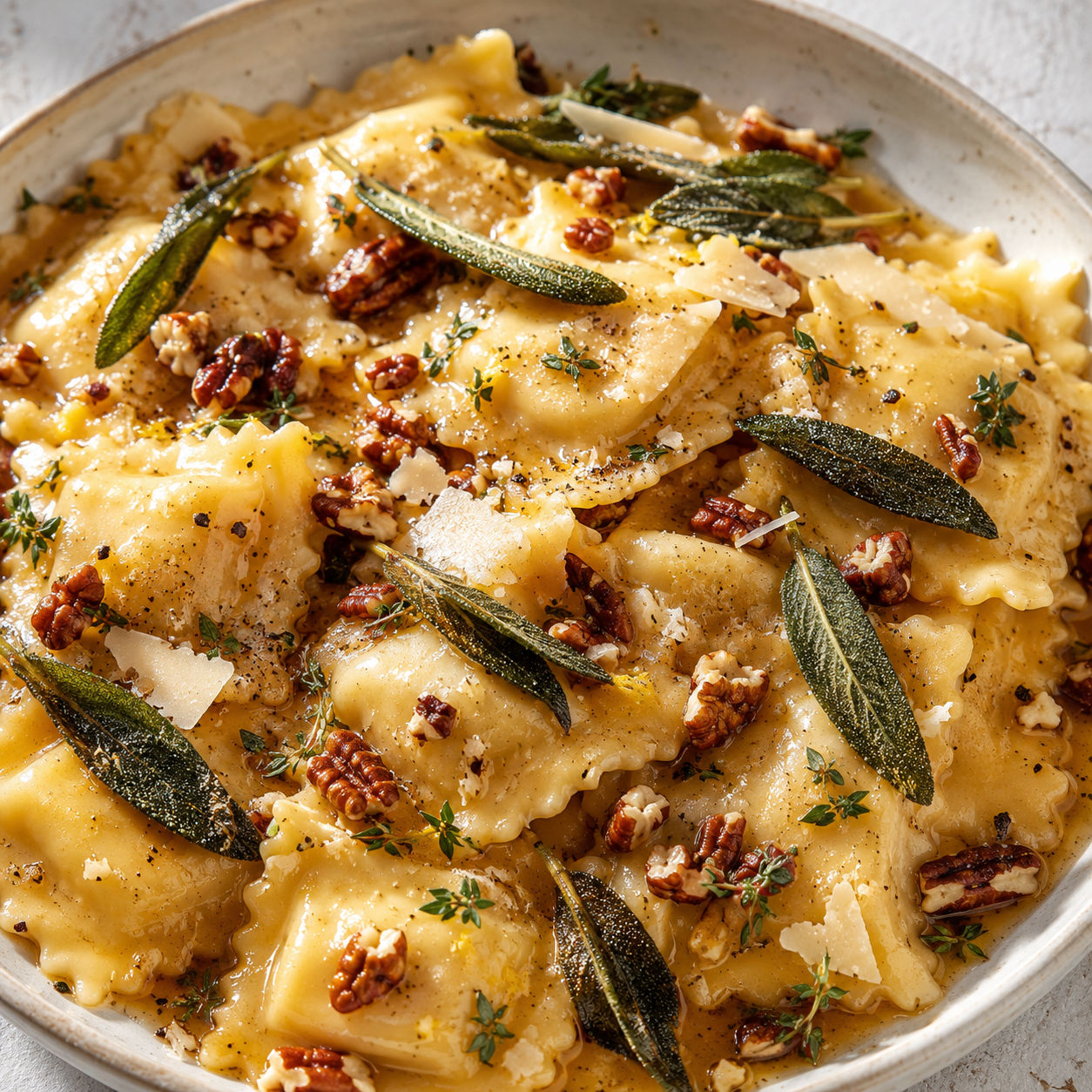
Ravioli paired with sage butter sauce is the kind of dinner that feels much richer than the work it takes. The sauce is only butter, herbs, lemon, and a handful of pantry extras, but it coats each pasta pillow with a nutty, glossy finish.
I like this best with refrigerated cheese or butternut squash ravioli because the sauce moves fast. Have everything chopped before the butter hits the pan. Once it starts smelling toasted and warm, dinner is almost done.
The Sage Butter Lineup
Choose ravioli with a filling that can stand up to browned butter. Cheese is classic, but squash and mushroom fillings taste especially good with sage.
Fresh sage matters here. The leaves crisp in the butter and leave behind a woodsy flavor that dried sage cannot quite match.
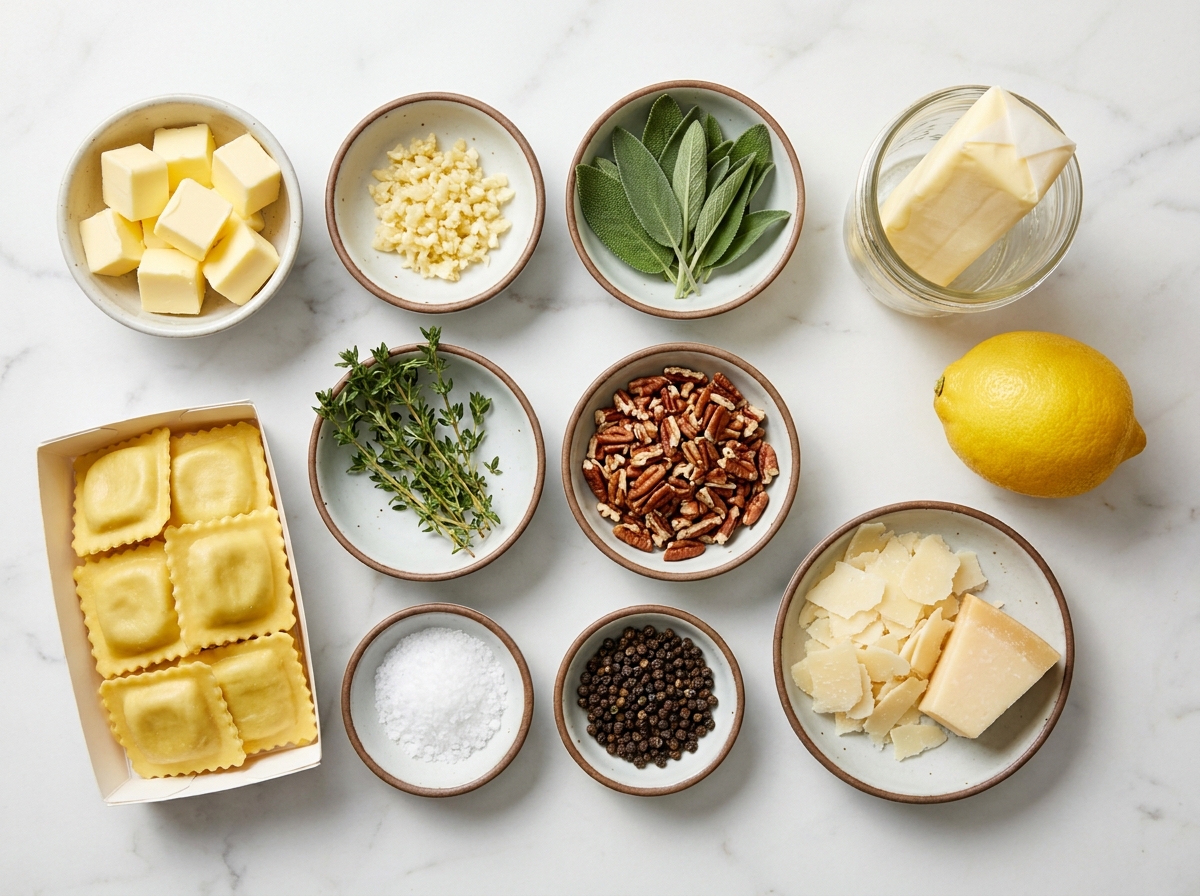
- Refrigerated ravioli. Tender pasta pockets make this a fast dinner and hold the glossy sauce in their edges.
- Unsalted butter. It browns into a nutty sauce and gives you control over the final salt level.
- Fresh sage leaves. They crisp in the butter and season the whole pan with a warm herbal aroma.
- Garlic. A little minced garlic adds savory depth without taking over the sauce.
- Lemon zest and juice. Lemon lifts the butter and keeps the dish from tasting heavy.
- Fresh thyme. A small amount rounds out the sage with a softer herbal note.
- Pecans. Chopped pecans add crunch and echo the toasted flavor of the butter.
- Parmesan. Shaved parmesan melts slightly on the hot ravioli and adds a salty finish.
Build The Brown Butter Ravioli
- Boil the ravioli. Cook the ravioli in salted water until just tender. Reserve a little pasta water, then drain carefully so the pieces stay intact.
- Crisp the sage. Melt butter in a large light-colored skillet over medium heat. Add the sage leaves and cook until they darken slightly and turn crisp, then move them to a paper towel.
- Brown the butter. Add garlic, lemon zest, thyme, and pecans to the foaming butter. Stir often until the butter smells nutty and the bits on the bottom turn amber.
- Coat the ravioli. Add the cooked ravioli and a splash of reserved pasta water. Toss gently for 1-2 minutes until the sauce clings.
- Finish bright. Stir in lemon juice, salt, and black pepper. Serve with parmesan and the crisp sage scattered over the top.
Watch The Butter Closely
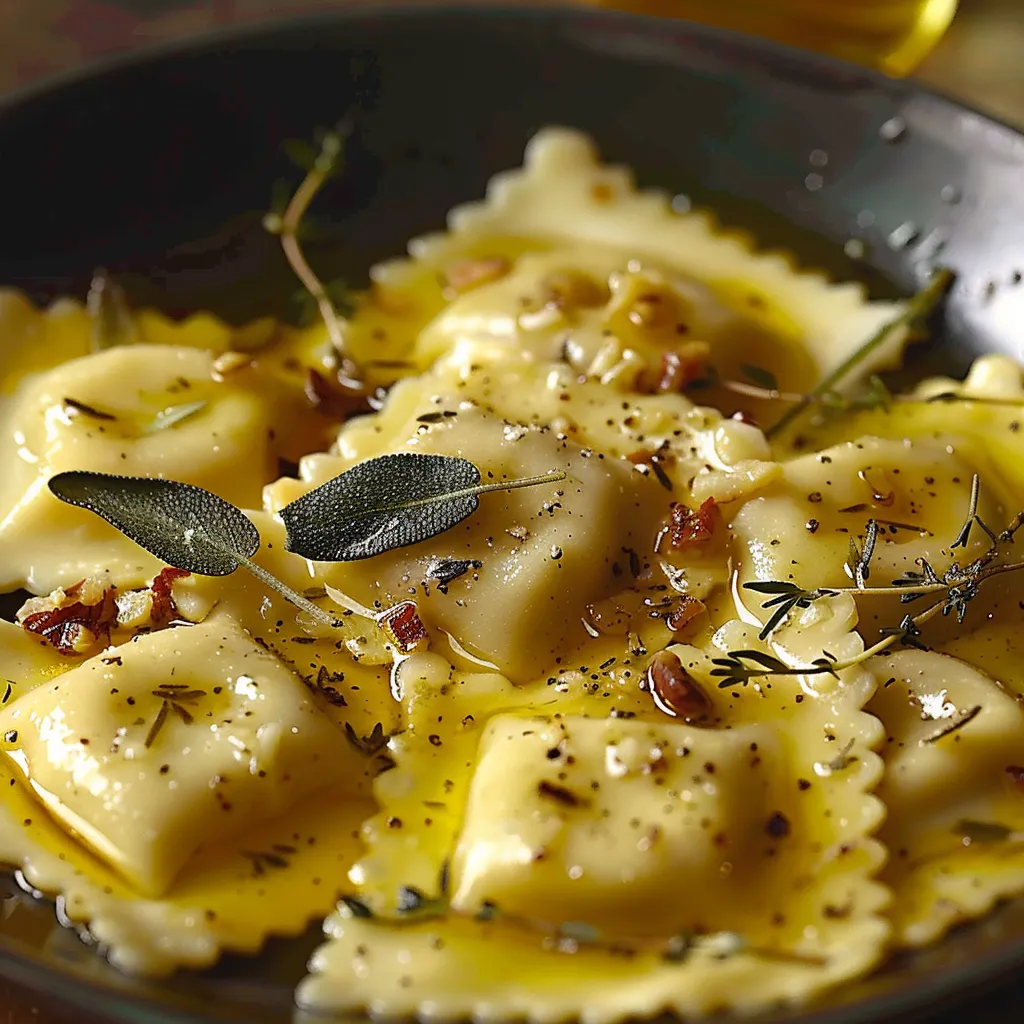
The sauce depends on catching the butter at the right moment. First it melts, then it foams, then the milk solids at the bottom begin turning golden. Stir and swirl the pan so those solids toast evenly. If you want a visual guide, Food Network has a clear brown butter walkthrough.
A pale skillet makes this much easier. A dark pan hides the color change, and brown butter can turn bitter fast. If the pan smells sharp or smoky, start over. There is no saving scorched butter in a simple sauce like this.
Ravioli Choices That Work
Cheese ravioli gives you the cleanest pairing. The filling is mild, so the sage butter tastes bold without fighting anything. Butternut squash ravioli leans sweeter and feels right for fall. Mushroom ravioli makes the sauce taste deeper and more savory.
If you want a seafood version, the same brown butter base is lovely with lobster ravioli with lemon butter sauce. For a lighter pasta night, try the bright vegetable approach in fresh ravioli with tomatoes, asparagus, garlic, and herbs.
Keep The Sauce Silky
Brown butter is mostly fat, so it needs help clinging to pasta. A tablespoon or two of starchy ravioli water loosens the sauce and helps it coat instead of pooling under the pasta. Add it after the ravioli goes into the skillet, then move everything gently with a wide spoon.
Do not boil the ravioli hard once it is in the butter. Filled pasta tears when it is pushed around too much. Think of it as folding, not stirring. If you love cozy butter sauces, sweet potato and sage-butter casserole uses the same herb in a different comfort-food direction.
Easy Swaps And Add-Ins
No pecans? Use walnuts, hazelnuts, toasted breadcrumbs, or pumpkin seeds. For nut allergies, breadcrumbs give the closest crunch. A pinch of red pepper flakes is good if you want heat, and a spoonful of mascarpone can make the sauce creamier.
You can also add roasted squash cubes, wilted spinach, or crisp pancetta. Keep add-ins modest so the ravioli stays the focus. For a richer pasta bake instead of a skillet dinner, million dollar cheese ravioli is the more indulgent route.
Store And Reheat Carefully
This dish is best right after tossing, when the butter is glossy and the sage is still crisp. Leftovers keep in the fridge for up to 3 days. The USDA gives practical guidance for safe leftover storage in its leftovers and food safety guide.
Reheat in a skillet over low heat with a splash of water. The sauce will loosen as it warms. Add fresh parmesan at the end, not before reheating, so it does not clump.
Summary
This quick ravioli dinner uses fresh sage, browned butter, garlic, lemon, pecans, and parmesan for a cozy pasta dish with crisp edges and a silky sauce.
FAQs
- What kind of ravioli works best with sage butter sauce?
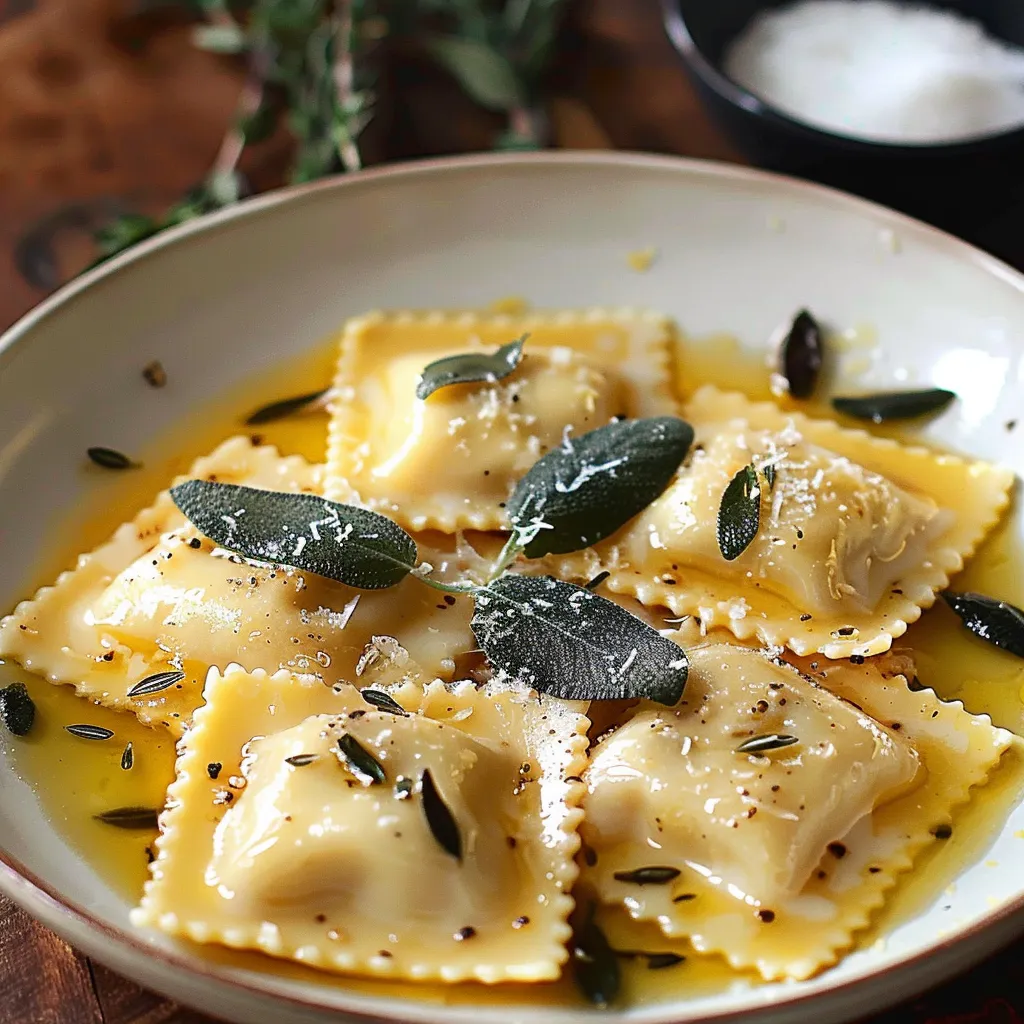
Refrigerated cheese ravioli is the easiest choice because it cooks quickly and lets the sage butter shine. Butternut squash, mushroom, spinach ricotta, or lobster ravioli also work well with the nutty butter and lemon.
- Can I use frozen ravioli?
Yes. Cook frozen ravioli straight from the freezer according to the package directions, then drain well. Add it to the sauce gently so the pasta does not split.
- Can I use dried sage instead of fresh?
Fresh sage is best because the leaves crisp in the butter and give the sauce a clean herbal flavor. Dried sage can season the butter in a pinch, but it will not give you the same crisp garnish.
- How do I keep brown butter from burning?
Use medium heat and a light-colored skillet so you can see the butter change. Pull the pan from the heat when the milk solids look amber and smell nutty, not dark or smoky.
- Can I make this without nuts?
Yes. Leave out the pecans and add toasted breadcrumbs or pumpkin seeds for crunch. You can also skip the crunchy topping entirely and finish with extra parmesan.
- How should I store leftovers?
Store leftovers in an airtight container in the fridge for up to 3 days. Reheat gently in a skillet with a splash of water because high heat can make the ravioli tough and oily.
