 Pin it
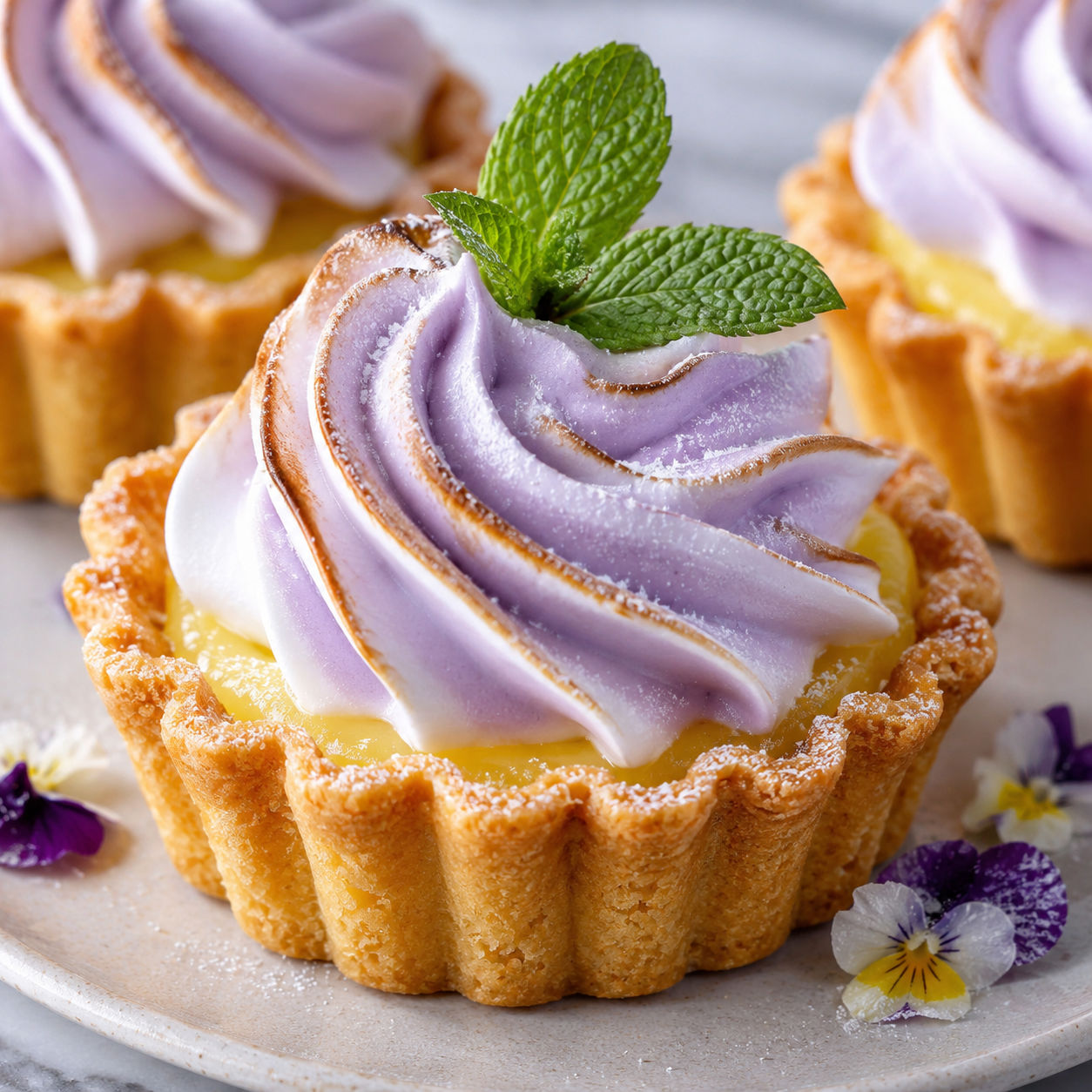
Mini Lemon Tart with Lilac Meringue is the kind of dessert that looks delicate but behaves well if you work in stages. The shells bake crisp, the curd sets glossy and tart, and the meringue pipes into soft purple peaks that toast at the edges.
I like these for spring birthdays, Easter tables, and small tea trays because each tart feels finished on its own. The lemon keeps the sweetness in check. The lilac color gives them that little bakery-window moment without needing complicated decoration.
Bright Shells And Purple Peaks
The ingredient list is simple, so fresh lemons and cold butter matter. Use gel color for the meringue because liquid color can loosen the foam.
- All-purpose flour. Gives the mini shells enough structure to hold the curd without crumbling too fast.
- Cold unsalted butter. Makes the pastry tender, crisp, and rich.
- Powdered sugar. Sweetens the shell and gives it a fine, short texture.
- Egg yolk. Helps the dough come together and adds color.
- Fresh lemons. Juice brings the tart bite, while zest adds bright citrus oil.
- Whole eggs. Thicken the curd into a smooth sliceable filling.
- Granulated sugar. Balances the lemon and stabilizes the meringue.
- Egg whites. Whip into the glossy topping once warmed with sugar.
- Lilac gel food coloring. Creates the soft purple meringue without thinning it.
- Mint or edible flowers. Add a fresh finish if you want a pretty garnish.
Bake, Fill, And Toast
- Make the dough. Rub cold butter into flour, powdered sugar, and salt until sandy, then mix in egg yolk and just enough cold water to bring it together.
- Chill the shells. Roll the dough, fit it into mini tart pans, prick the bases, and chill until firm so the pastry does not slump.
- Bake until crisp. Bake the shells at 350°F until pale golden at the edges, then cool them fully before filling.
- Cook the curd. Whisk lemon juice, zest, sugar, eggs, and butter over gentle heat until thick and glossy, then strain it for a smooth finish.
- Fill and chill. Spoon the curd into the cooled shells and chill until the surface is set.
- Whip the meringue. Warm egg whites and sugar over simmering water until the sugar dissolves and the mixture reaches 160°F, then whip to stiff glossy peaks with vanilla and lilac coloring.
- Pipe and toast. Pipe the meringue over each tart and toast with a kitchen torch until the ridges are lightly golden.
The Curd Should Shine
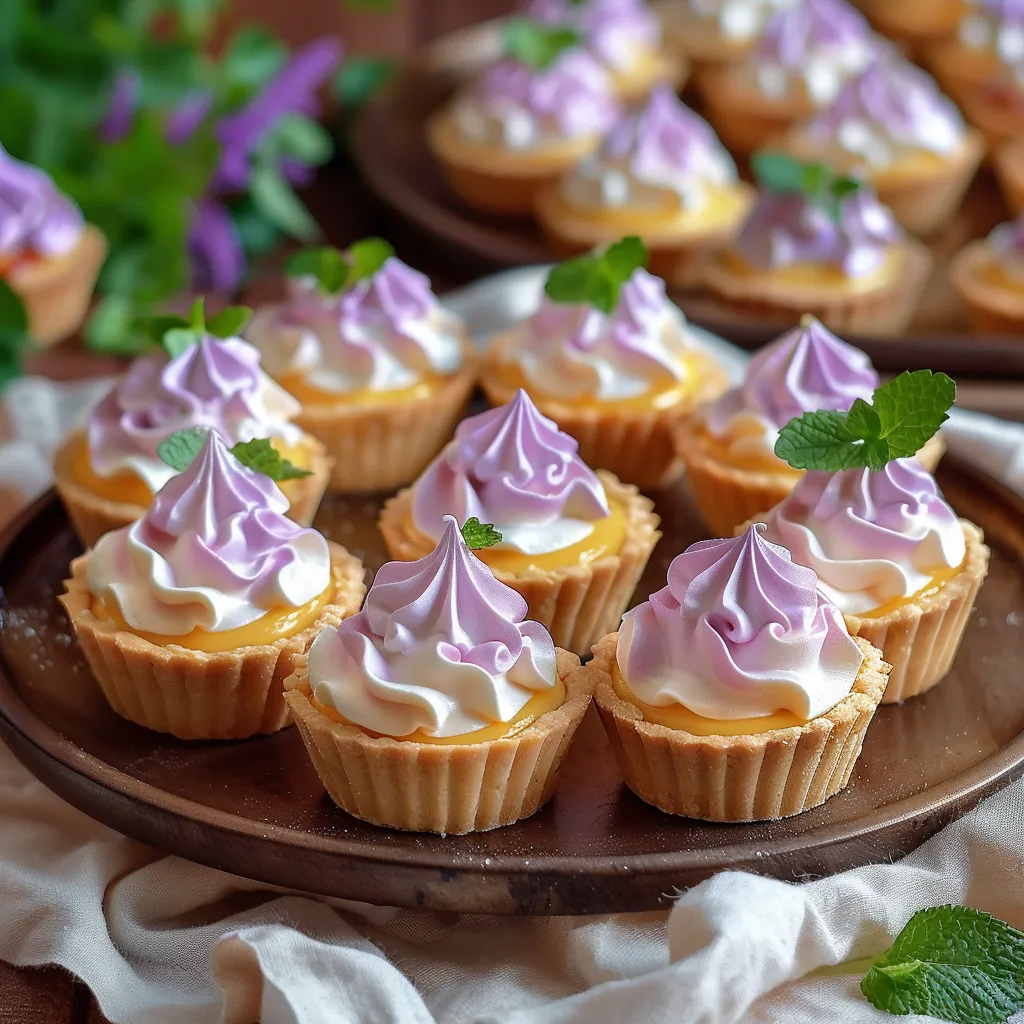
Lemon curd is ready when it thickens enough to coat a spoon and leaves a clear trail when you run a finger through it. Keep the heat moderate. Rushing it can scramble the eggs before the butter has a chance to make the filling smooth.
Straining is worth the extra bowl. It catches zest, tiny egg bits, and any uneven texture. If you love bright lemon desserts, the same sharp-sweet balance shows up in classic lemon bars and mini lemon curd tarts.
Why Swiss Meringue Helps
Swiss meringue is more stable than a quick French meringue because the egg whites and sugar are warmed before whipping. The sugar dissolves fully, the foam turns glossy, and the topping pipes with cleaner ridges. The FDA has helpful guidance on handling eggs safely in its egg safety guide.
Use a clean metal or glass bowl. Even a little grease can keep the whites from whipping. Add the lilac color at the end and start with less than you think. Pastel is prettier here than deep purple.
Make Them Party Ready
The best schedule is simple. Bake the shells the day before, make the curd while they cool, and store both separately. On party day, fill the shells, chill them until set, then pipe and toast the meringue close to serving.
If you are building a dessert tray, add something creamy and something darker for contrast. easy mini cheesecakes and a sliced chocolate raspberry tart make the lemon color pop.
Swaps That Work
Meyer lemons make a softer, sweeter curd. Regular lemons give a sharper bite. You can use a drop of violet gel coloring if you cannot find lilac. A small pinch of cream of tartar can help the meringue whip if your kitchen is humid.
For flavor, keep floral additions gentle. A tiny drop of vanilla is usually enough. Strong extracts can make these taste soapy, which is not what you want after all that careful pastry work.
Storage Without Soggy Shells
Assembled tarts are best the same day. If you have leftovers, refrigerate them loosely covered for up to 24 hours. The meringue will still taste good, but it may lose some height.
Unfilled shells can be frozen for up to 1 month. Lemon curd can be refrigerated for 3 days. Do not freeze the finished meringue topping because it weeps as it thaws.
Summary
Use freshly squeezed lemon juice, fully cooled shells, and a gently heated Swiss meringue for the neatest finish. The tarts are best eaten the day they are assembled.

FAQs
- Can I make Mini Lemon Tart with Lilac Meringue ahead of time?
Yes, but keep the parts separate for the best texture. Bake the tart shells up to 2 days ahead and store them airtight at room temperature. The lemon curd can be made 2 days ahead and chilled. Add the meringue on the day you serve.
- What makes the meringue lilac?
A tiny amount of lilac or violet gel food coloring gives the meringue its soft purple shade. It is mostly a visual detail, not a strong floral flavor. If you garnish with blossoms, use only edible unsprayed flowers.
- Can I use store-bought tart shells?
Yes. Bake or warm them according to the package, then cool completely before filling. Homemade shells taste more buttery, but store-bought shells make this recipe much faster for parties.
- Why is my lemon curd runny?
It probably needed a little more time over the heat. Cook it until it visibly thickens and coats the back of a spoon. It will set more as it chills, but it should not look watery when it leaves the pan.
- How do I keep meringue from weeping?
Use a Swiss meringue and make sure the sugar is fully dissolved before whipping. Pipe it onto cool curd, then toast lightly. Refrigeration can make meringue soften, so assemble close to serving when you can.
- Can I make these gluten-free?
Yes. Use a cup-for-cup gluten-free baking flour in the crust or use gluten-free tart shells. The dough may be a little more delicate, so chill it well before baking.
