 Pin it
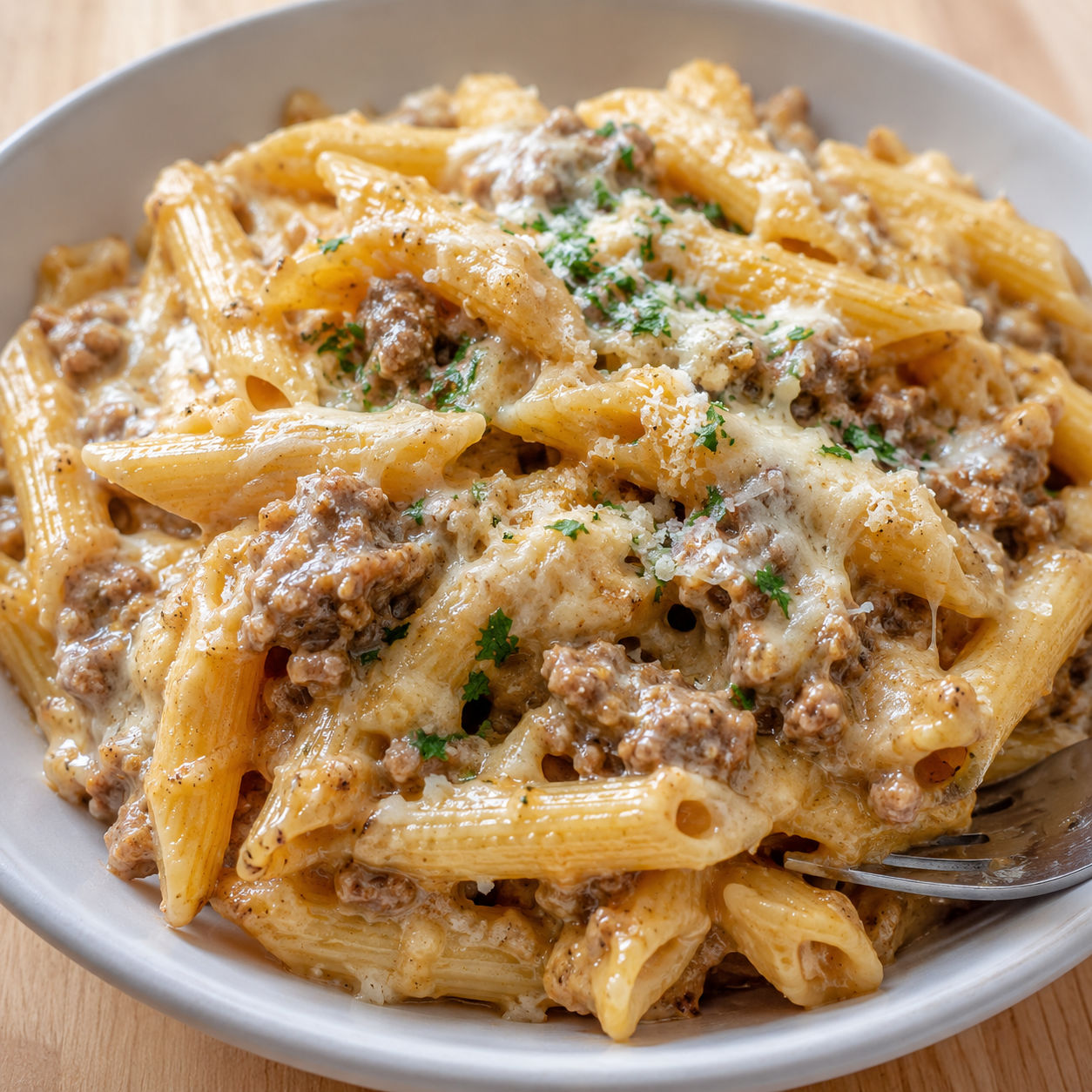
This is the skillet dinner I reach for when everyone is hungry and the clock is ticking. Penne holds up to a rich cream sauce, and browning the beef in butter instead of oil gives the whole dish a deeper, rounder flavor.
It comes together in one pan after the pasta pot, and the sauce is forgiving. If it thickens too much, a splash of the starchy pasta water brings it right back.
What goes into the skillet
Lean ground beef works, but 85/15 gives you enough fat to brown properly without drowning the pan. Use a block of parmesan you grate yourself; the pre-shredded bagged kind has anti-caking agents that can make the sauce grainy.
- Ground beef. 85/15 blend browns beautifully and keeps the meat moist.
- Penne. The ridges catch the creamy sauce in every tube.
- Butter. Unsalted lets you control the salt level as the sauce reduces.
- Garlic. Four cloves, minced fine, are the backbone of the flavor.
- Onion. A small yellow onion adds sweetness and depth.
- Heavy cream. Full-fat cream reduces into a velvety sauce without breaking.
- Beef broth. A splash adds savory backbone and thins the cream just enough.
- Mozzarella. Low-moisture shredded mozzarella melts into long, creamy strands.
- Parmesan. A salty, nutty finish that sharpens all the richness.
- Italian seasoning. Dried herbs tie the beef and cream together.
- Parsley. Fresh chopped parsley brightens the bowl right before serving.
How it all comes together
- Boil the penne. Cook 12 oz penne in well-salted water until just shy of al dente, about 9 minutes. Reserve 1/2 cup of the pasta water, then drain.
- Brown the beef. Melt 2 tablespoons of butter in a large skillet over medium-high heat. Add 1 lb ground beef and break it up with a wooden spoon. Cook until deeply browned, about 6 to 7 minutes. Season with salt, pepper, and Italian seasoning, then transfer to a plate.
- Sauté the aromatics. In the same skillet, melt the remaining 1 tablespoon of butter. Add the diced onion and cook for 2 minutes until soft. Add the minced garlic and cook for 30 seconds until fragrant. Do not let it brown.
- Simmer the sauce. Pour in 1 cup heavy cream and 1/2 cup beef broth. Bring to a gentle simmer and cook for 2 to 3 minutes until the liquid thickens slightly. Lower the heat.
- Melt the cheeses. Stir in 1 cup shredded mozzarella and 1/2 cup grated parmesan. Keep stirring until the cheeses melt into a smooth, glossy sauce. If it looks too thick, add a tablespoon of reserved pasta water.
- Toss and finish. Return the beef to the skillet along with the drained penne. Toss everything together over low heat for 1 to 2 minutes until the pasta is coated and the sauce clings. Sprinkle with fresh parsley and serve hot.
Why butter beats oil here
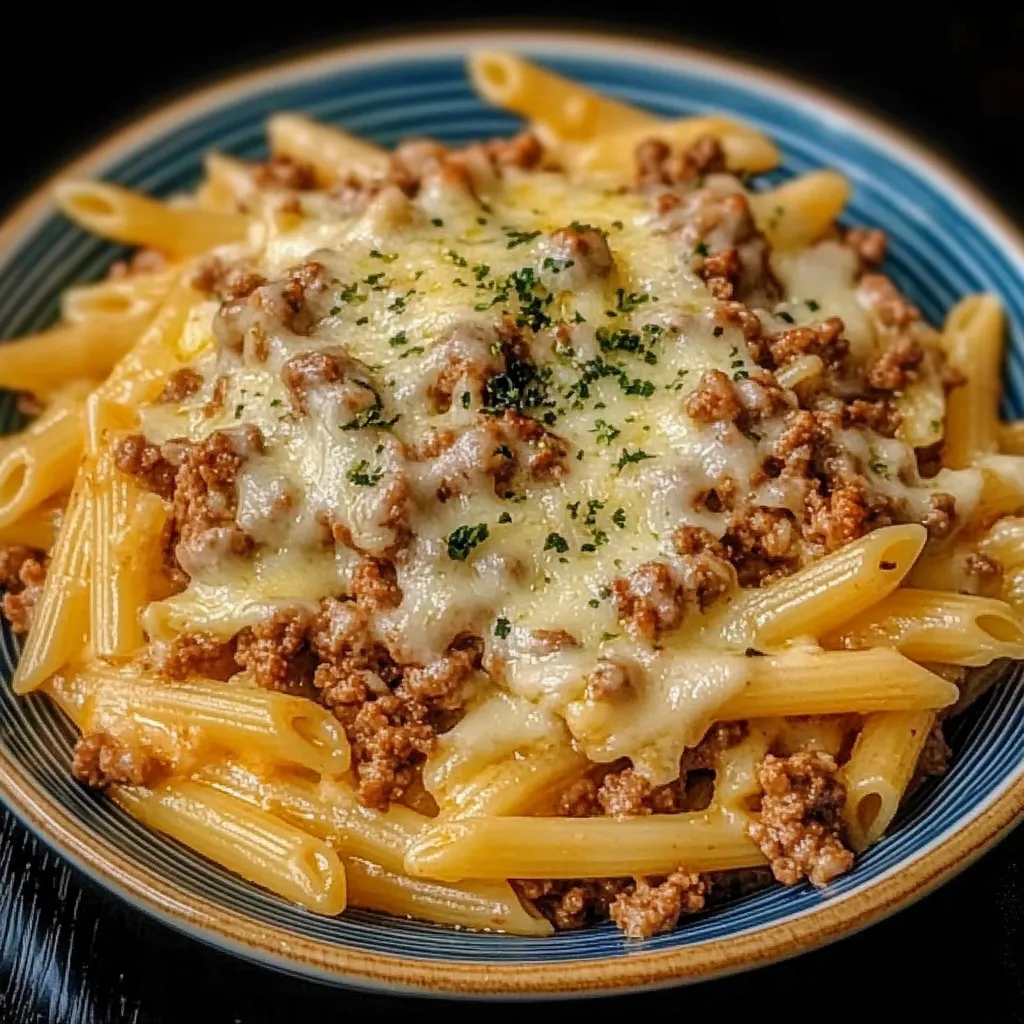
Browning ground beef in butter instead of olive oil adds a subtle richness that olive oil cannot match. The milk solids in the butter deepen as the meat browns, creating a savory crust that carries the garlic and cream later. If you prefer a leaner option, drain the fat after browning and add a fresh tablespoon of butter for the aromatics. The same technique works in garlic butter beef skillet recipes where the pan fond becomes the sauce base. For food safety, the USDA recommends cooking ground beef to 160°F. See their ground beef safety guidelines.
The right way to melt cheese
Dumping cold cheese into boiling cream causes it to seize or separate. The trick is to lower the heat to medium-low and add the cheese a handful at a time, stirring constantly until each batch disappears before you add the next. This keeps the mozzarella stretchy and the parmesan smooth. If you enjoy creamy beef pasta dishes, the same method is what makes creamy garlic beef pasta so silky.
Smart swaps that still deliver
Ground turkey or chicken work if you want a lighter plate, though you may need an extra tablespoon of butter for richness. Swap penne for rigatoni or ziti; any tube shape with ridges will grab the sauce. Stir in a few handfuls of baby spinach when you add the garlic, or fold in roasted red peppers for sweetness. For a baked version with a crunchy top, transfer everything to a dish, top with extra mozzarella, and run it under the broiler for 3 minutes. A similar bake approach shows up in cheesy beef rigatoni bake.
Storing and reheating leftovers
Keep leftovers in an airtight container in the refrigerator for up to 3 days. The sauce will thicken as it sits, so reheat gently in a skillet over medium-low heat with a splash of milk, cream, or even broth to loosen it. The microwave works in a pinch, but stir every 30 seconds to avoid hot spots that can make the beef tough and the sauce greasy.

FAQs
- Can I use pre-shredded cheese?
Pre-shredded mozzarella and parmesan contain anti-caking agents that can make the sauce grainy instead of smooth. Grate your own from a block for the creamiest result.
- What ground beef fat ratio works best?
85/15 is ideal. It browns well without leaving too much grease in the pan. If you use 90/10, add an extra tablespoon of butter so the meat does not dry out.
- Can I use a different pasta shape?
Yes. Rigatoni, ziti, or any short tube with ridges will catch the sauce nicely. Cook it just shy of al dente so it finishes softly in the skillet.
- How do I keep the cheese sauce from breaking?
Lower the heat before adding the cheese, then stir in a handful at a time. High heat or dumping it all at once can cause the fats to separate and turn greasy.
- Can I make this ahead of time?
Brown the beef and make the sauce up to a day ahead. Store them separately in the refrigerator, then warm the sauce while the pasta boils and combine at the last minute.
- How do I store and reheat leftovers?
Keep leftovers in an airtight container in the refrigerator for up to 3 days. Reheat gently in a skillet over medium-low heat with a splash of milk or broth to loosen the sauce.
- Can I freeze this pasta?
Freezing is not recommended. Dairy-based sauces tend to separate and become grainy when thawed. This dish is best eaten fresh or within a few days from the fridge.
