 Pin it
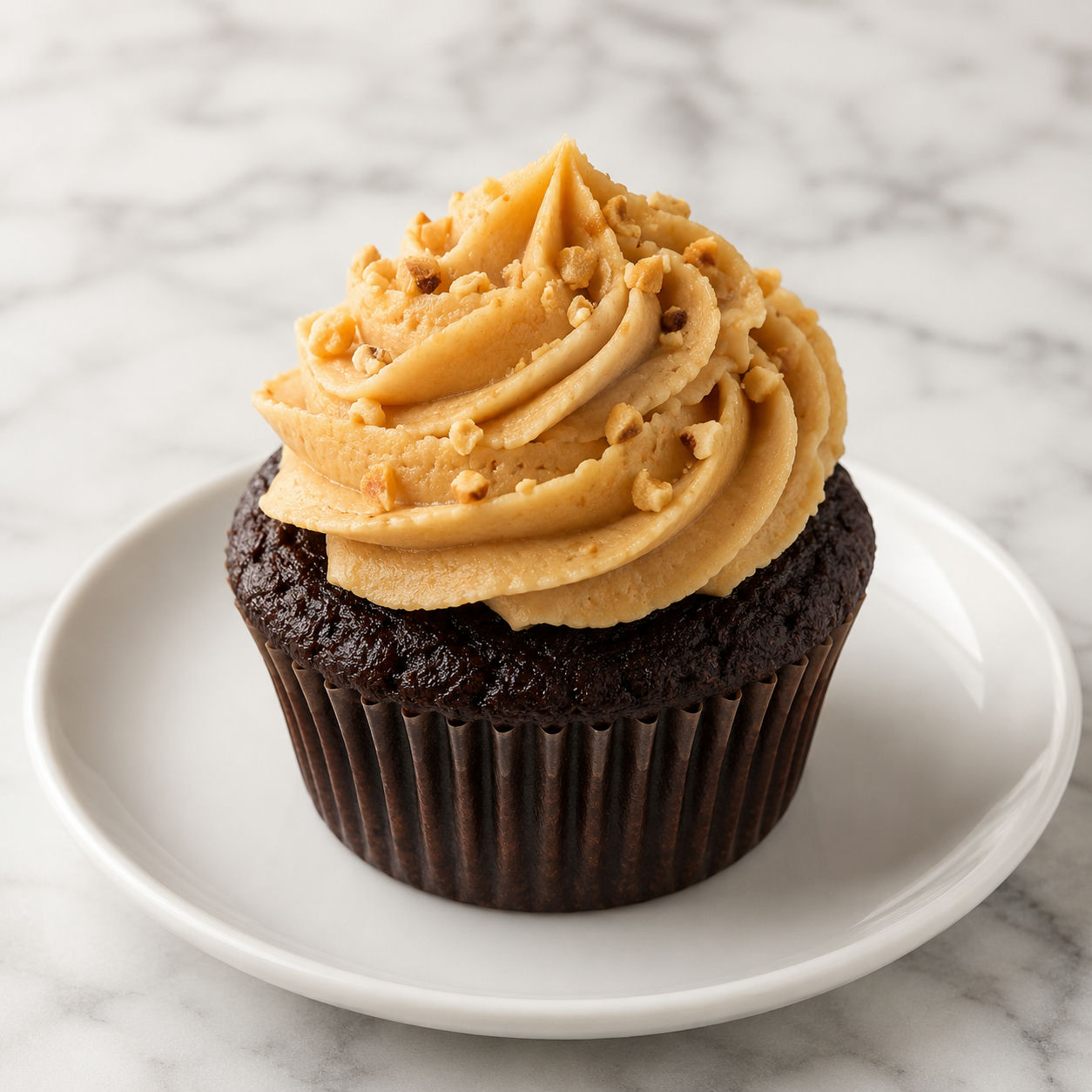
There are frostings that look impressive and frostings people actually ask for by name. This peanut butter frosting is firmly in the second category. A thick swirl of it on a dark chocolate cupcake is the kind of thing that disappears before everything else on the dessert table.
It takes about ten minutes, uses six ingredients you probably already have, and works for both piping and spreading. The ratio here keeps it sturdy enough to hold a clean swirl but not so stiff it tears through cake layers.
Six ingredients, one mixing bowl
The list is short enough to memorize after making this once. What matters most is the choice of peanut butter and the temperature of the butter, both of which affect the final texture more than anything else.
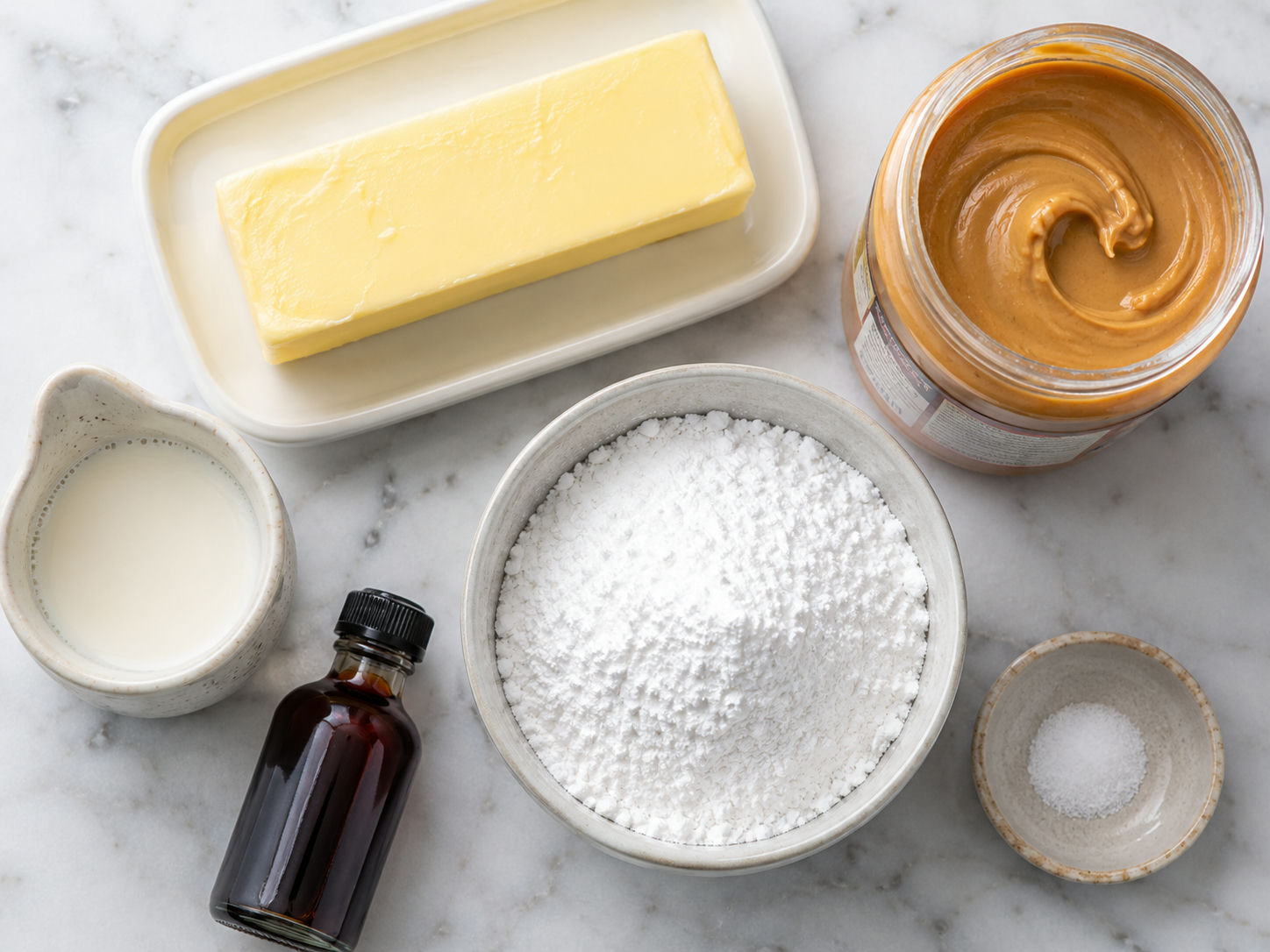
- Unsalted butter. The base of the frosting. It must be fully softened at room temperature so it beats up light and fluffy rather than lumpy or dense.
- Creamy peanut butter. Use a conventional brand rather than natural. The stabilizers in standard peanut butter keep the frosting smooth and prevent oily separation.
- Powdered sugar. Adds sweetness and gives the frosting its structure. Sift it before adding to avoid a gritty texture.
- Heavy cream. Loosens the frosting to the right consistency for piping or spreading. Whole milk works as a substitute, though cream gives a slightly richer result.
- Vanilla extract. Rounds out the peanut flavor without overpowering it. Even a small amount makes a noticeable difference in the final taste.
- Salt. Balances the sweetness and sharpens the roasted peanut flavor. Even a small pinch matters here.
Making it from start to finish
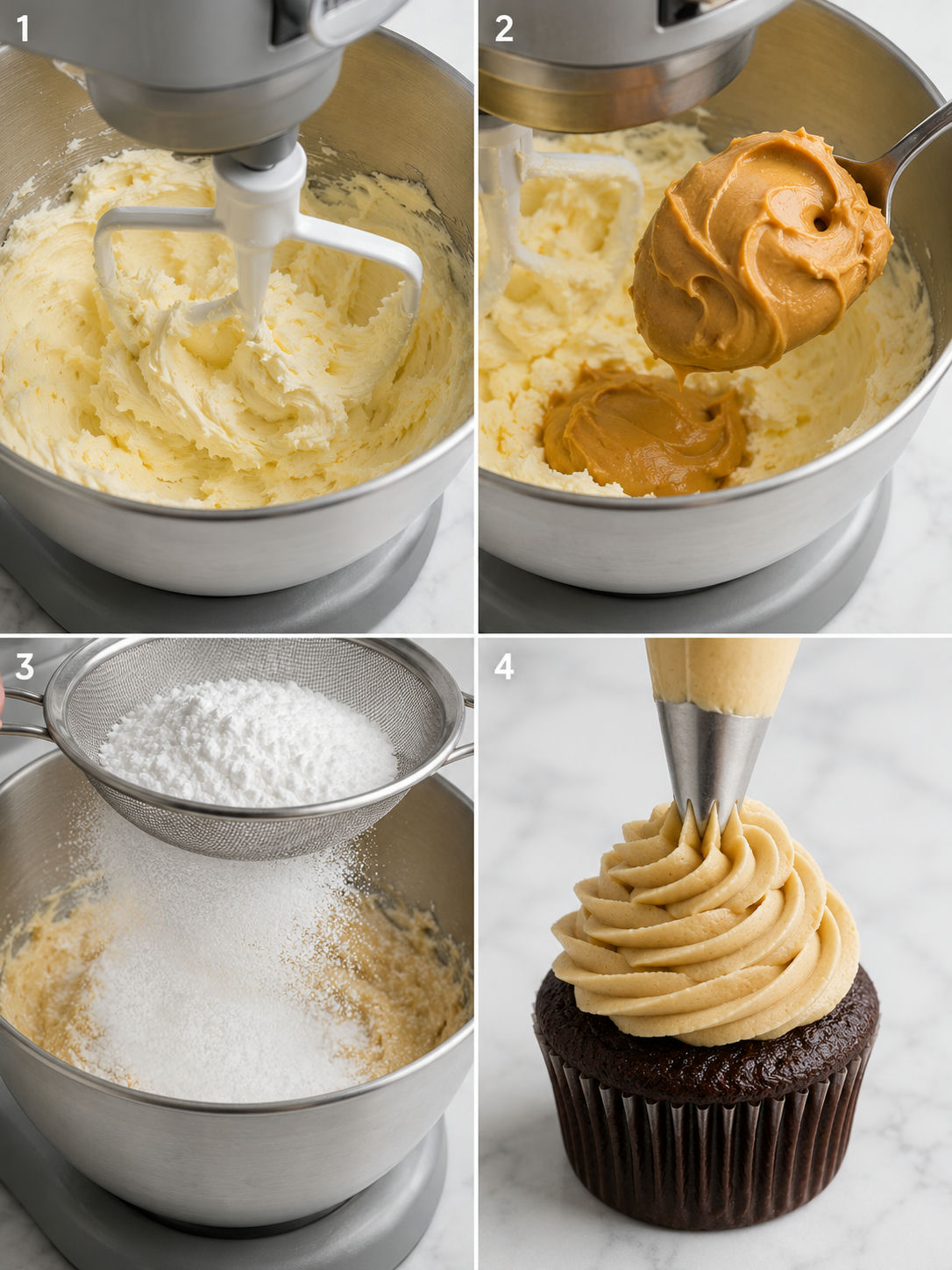
- Beat the butter. With a hand mixer or stand mixer fitted with the paddle, beat the softened butter on medium speed for 2 to 3 minutes until it turns pale and fluffy.
- Add the peanut butter. Add the creamy peanut butter and beat on medium for 1 minute until fully combined. Scrape down the sides of the bowl.
- Mix in the powdered sugar. Add the sifted powdered sugar one cup at a time on low speed, scraping down the bowl after each addition until no dry streaks remain.
- Adjust with cream. Add heavy cream one tablespoon at a time on low, then increase to medium-high and beat for 1 to 2 minutes until the frosting is fluffy and holds a peak.
- Add vanilla and salt. Beat in the vanilla extract and salt, taste, and adjust for sweetness or consistency as needed. Use immediately or refrigerate.
Getting the consistency right
The amount of cream determines whether you end up with a frosting that pipes or one that spreads. For stiff peaks and clean piped swirls on cupcakes, stop at 2 tablespoons of cream. The shape will hold and not slump. For spreading on a layer cake or a pan of brownies, add a third tablespoon. It becomes smoother to work with and glides across the surface without dragging crumbs.
If you add too much cream and the frosting goes soft, just mix in a few extra tablespoons of sifted powdered sugar to firm it back up. The fix takes about a minute.
What to frost with this recipe
The obvious pairing is chocolate cake and it genuinely never gets old. The bitterness of dark chocolate and the richness of peanut butter balance each other in a way that feels satisfying rather than heavy. The Soft and Moist Peanut Butter Cake was built with this frosting in mind and it is a reliable crowd pleaser.
This recipe also works beautifully on vanilla cupcakes, banana cake layers, and brownies. Spread it thick on a pan of Fudgy Peanut Butter Brownies and let it set for 20 minutes before cutting. For a peanut butter-forward chocolate layer cake, the Delicious Peanut Butter Chocolate Cake puts a similar pairing to work in a fully built recipe. The King Arthur Baking website is a useful reference for comparing the full range of frosting styles and buttercream approaches if you want to go deeper.
Storage and make-ahead tips
A frosted cake keeps well at room temperature for up to two days, covered loosely. In the fridge it stays good for five days. The frosting itself stores in an airtight container in the refrigerator for five days or in the freezer for up to three months.
To use refrigerated frosting, let it sit at room temperature for 30 minutes then beat briefly to restore the fluffy texture. According to FoodSafety.gov, buttercream-style frostings made with butter are safe at room temperature for up to two days.
Swaps and flavor variations
Crunchy peanut butter works fine and adds small bits of texture throughout the frosting. The rest of the recipe stays the same. For a saltier, more complex flavor, use salted butter and skip the added salt at the end, tasting as you go.
To make the frosting dairy-free, use a vegan stick butter (not a spread) and full-fat coconut cream in place of heavy cream. The result is slightly denser but still holds up for piping. For a chocolate peanut butter version, beat in 2 tablespoons of unsweetened cocoa powder with the first cup of powdered sugar. If you want to put that combination to full use, the Reese's Peanut Butter Earthquake Cake is a worthy project to frost.
FAQs
- Can I use natural peanut butter for this frosting?
You can, but it is not recommended. Natural peanut butter separates easily and the oil makes the frosting greasy and unstable. Stick with a conventional creamy brand like Jif or Skippy for a smooth, pipeable result that holds its shape at room temperature.
- How do I make the frosting thinner or thicker?
Add heavy cream or whole milk one tablespoon at a time to thin the frosting for spreading. Two tablespoons gives a good piping consistency. Three or more gives a softer spread. If you overshoot and it gets too loose, beat in a few tablespoons of sifted powdered sugar to firm it back up.
- Can I make peanut butter frosting ahead of time?
Yes. Store it in an airtight container in the refrigerator for up to five days. Before using, let it come to room temperature for about 30 minutes then beat briefly with a hand mixer to restore the fluffy texture. It comes back quickly.
- How much frosting does this recipe make?
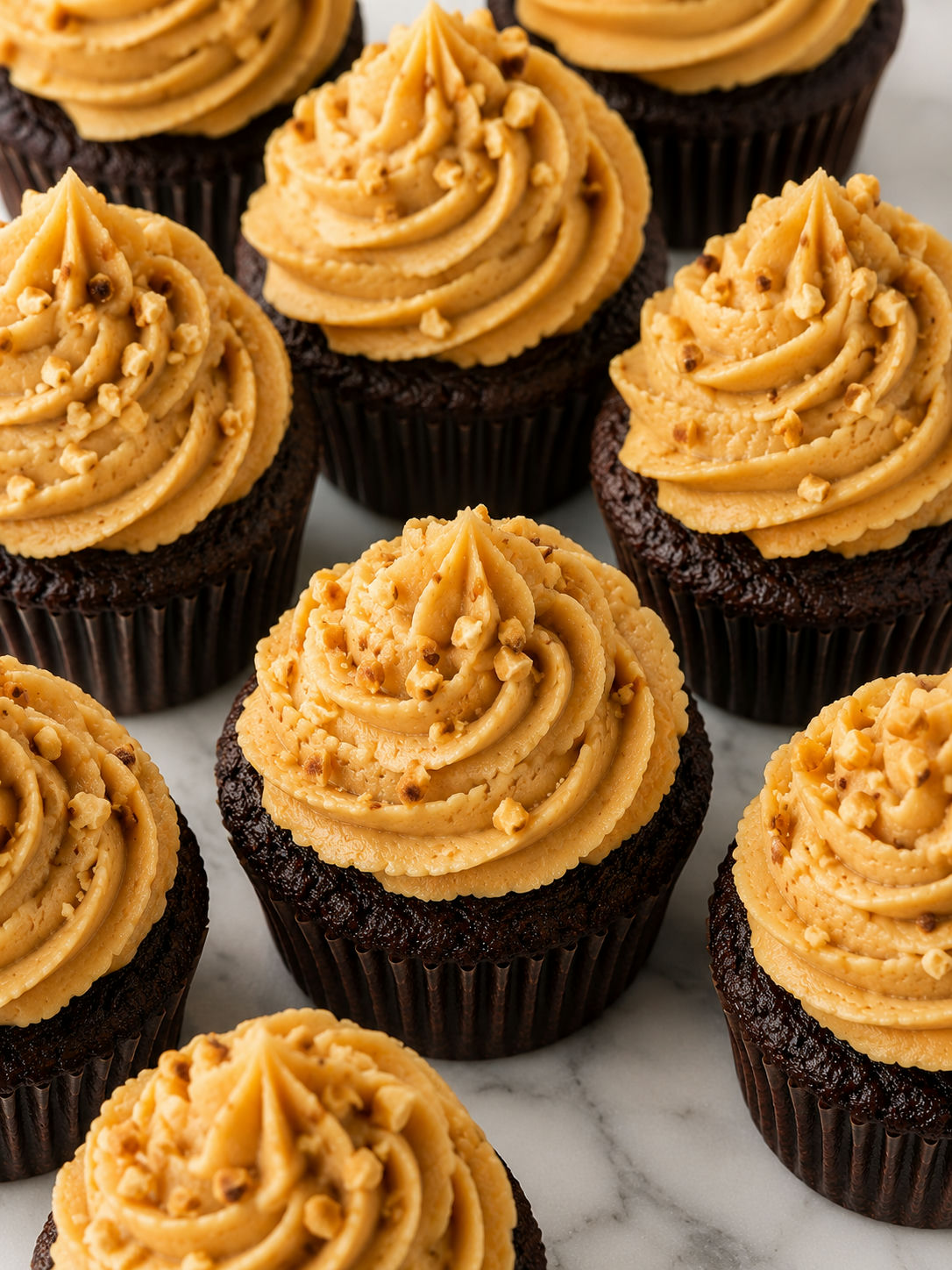
This batch frosts a two-layer 9-inch cake (top, sides, and filling between layers) or 24 standard cupcakes with a generous swirl. For a single-layer sheet cake or a pan of brownies, you will have leftovers. The recipe halves easily for smaller batches.
- Can I freeze peanut butter frosting?
Yes. Freeze it in an airtight container for up to three months. Thaw overnight in the refrigerator, then let it sit at room temperature and re-whip before using. The texture holds up well through a single freeze-thaw cycle.
- What desserts pair well with peanut butter frosting?
The classic move is dark chocolate cake or chocolate cupcakes. It is also great on banana cake, vanilla sponge, brownies, and cookie bars. For a full peanut butter experience in every layer, the Peanut Butter Cup Lava Cupcakes are a perfect match.
- Why is my peanut butter frosting grainy or lumpy?
Graininess almost always comes from powdered sugar that was not sifted before adding. Sifting breaks up clumps that would otherwise not dissolve fully. Lumps usually mean the butter was not soft enough before beating. Cold butter does not emulsify properly with the peanut butter, so make sure the butter is genuinely at room temperature before you start.
