 Pin it
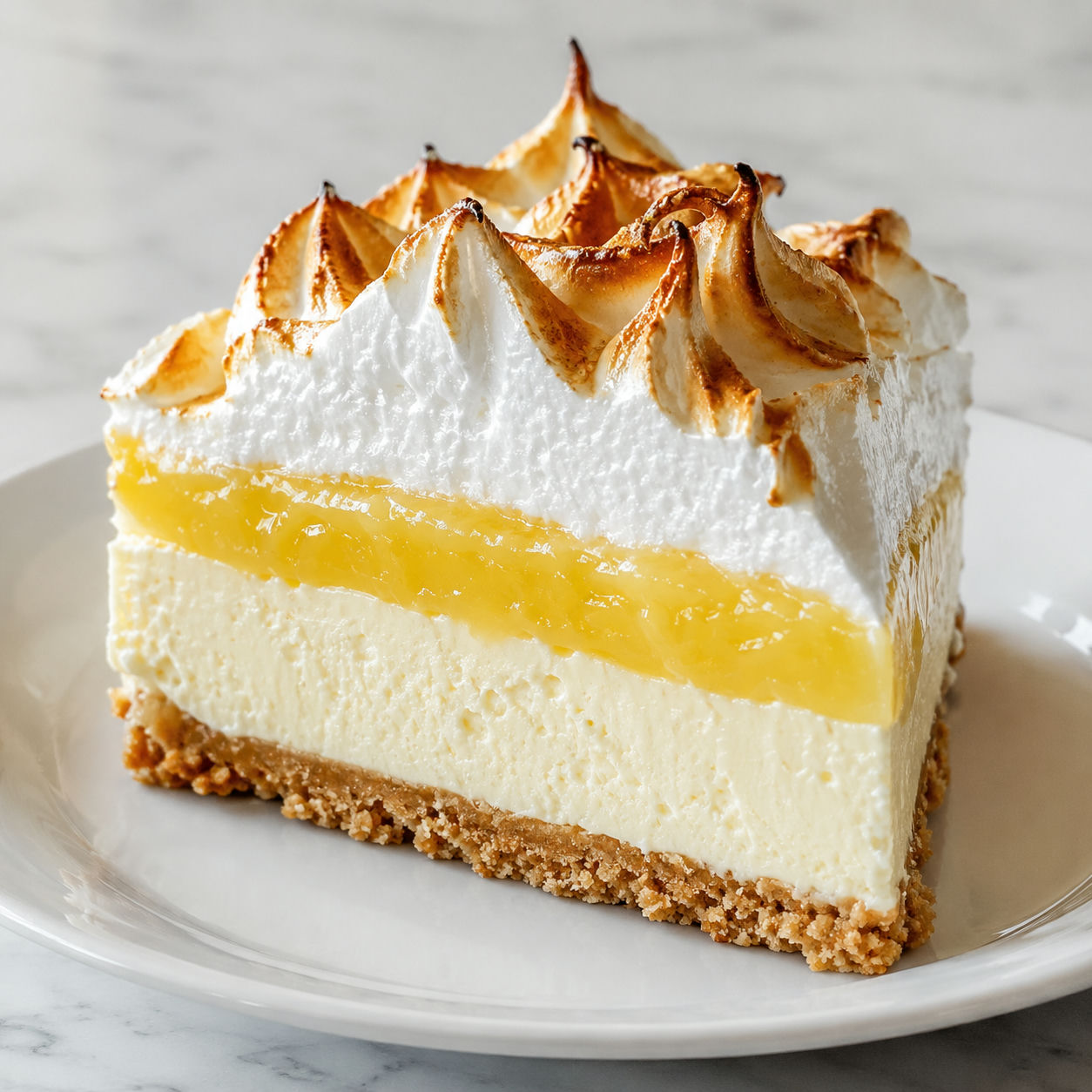
Lemon meringue pie and cheesecake are two things people argue about at dessert tables. This recipe stops the argument by combining them. You get the silky tang of a baked cheesecake, a layer of bright lemon curd, and a torched meringue crown. Every slice becomes a moment.
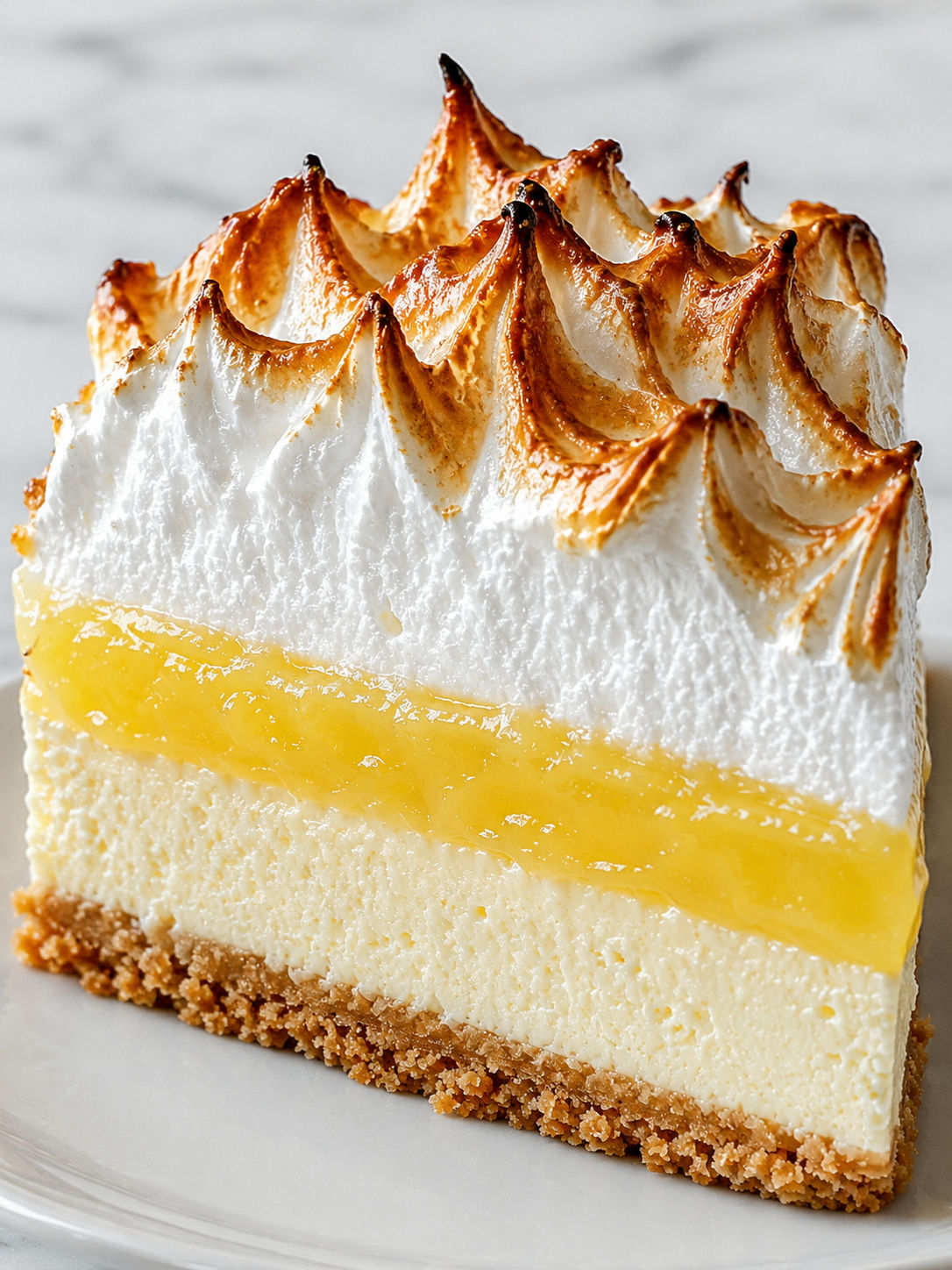
I first made this for a birthday dinner and it disappeared before I could photograph it. The four layers do the talking. Golden crust, creamy white filling, sunshine-yellow curd, and those toasted peaks on top. It takes patience but no advanced technique. A water bath, a little curd stirring, and a kitchen torch are all you need.
What fills each of the four layers
Two things matter most here. Fresh lemons and full-fat cream cheese. Bottled lemon juice flattens the flavor. Low-fat cream cheese makes the filling loose and prone to cracking under heat. Grab a zester and use it generously on all your lemons. The zest carries more punch than the juice alone.
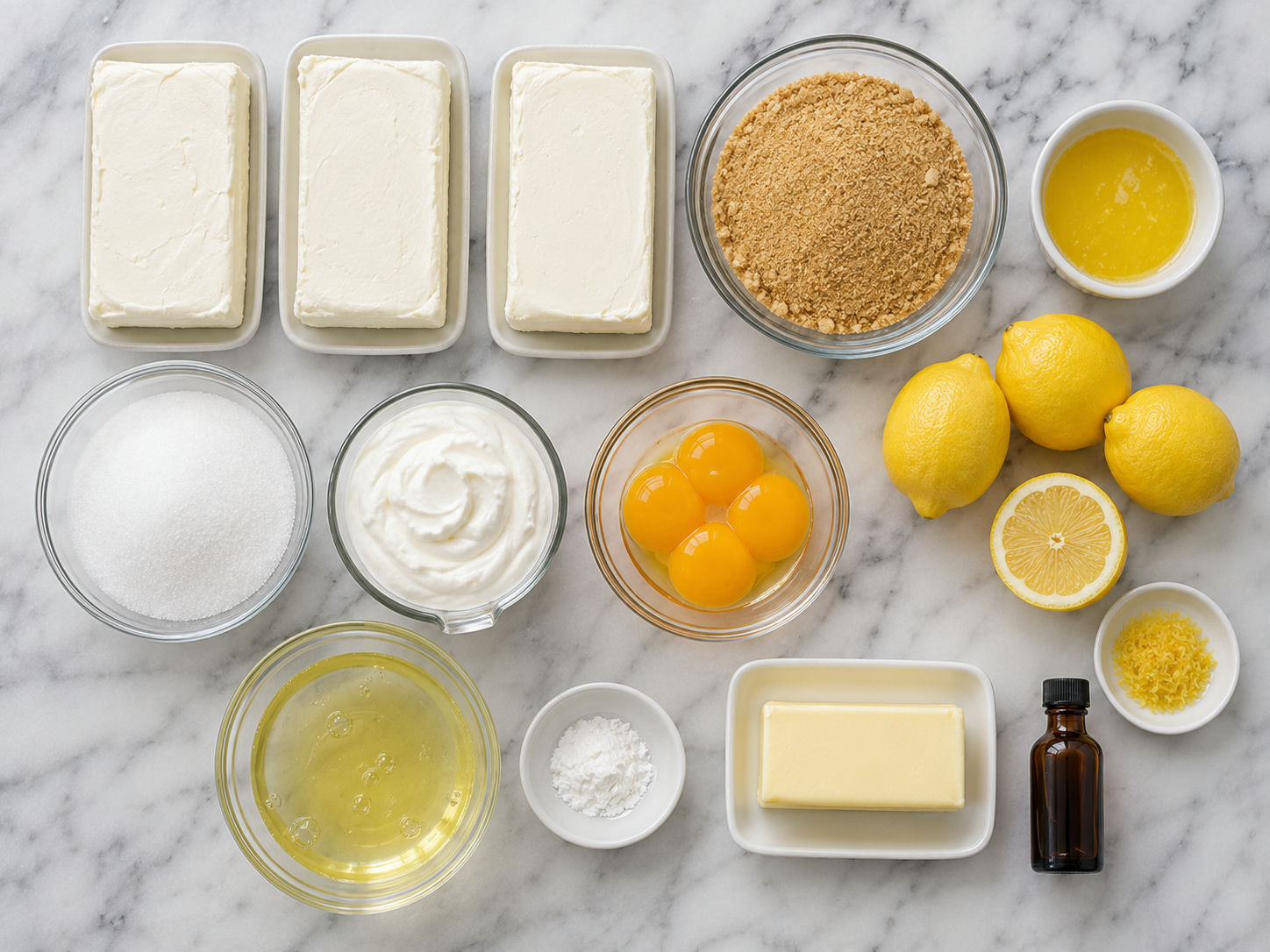
- Graham cracker crumbs. Combined with butter and sugar, they press into a firm, slightly sweet base that holds up under the filling without turning soggy.
- Full-fat cream cheese. The heart of the filling. It gives you that dense, rich body and the gentle tang that anchors the lemon.
- Lemon zest and fresh juice. Used in both the filling and the curd. The zest is where the real lemon flavor lives, so do not skip it.
- Sour cream. Lightens the texture just enough and keeps the filling from tasting too heavy or dense.
- Eggs. Whole eggs bind the filling. Extra yolks go into the curd and give it a glossy, thick consistency.
- Granulated sugar. Used across all four layers. Adjust the amount in the curd to taste if you prefer it more tart.
- Egg whites. Whipped with sugar into a stiff meringue. Room-temperature whites whip faster and to a higher volume than cold ones.
- Cream of tartar. Stabilizes the meringue so it holds its peaks and does not weep as quickly.
- Unsalted butter. Stirred into the lemon curd off the heat. It adds gloss and rounds out the sharpness.
Building the layers one at a time
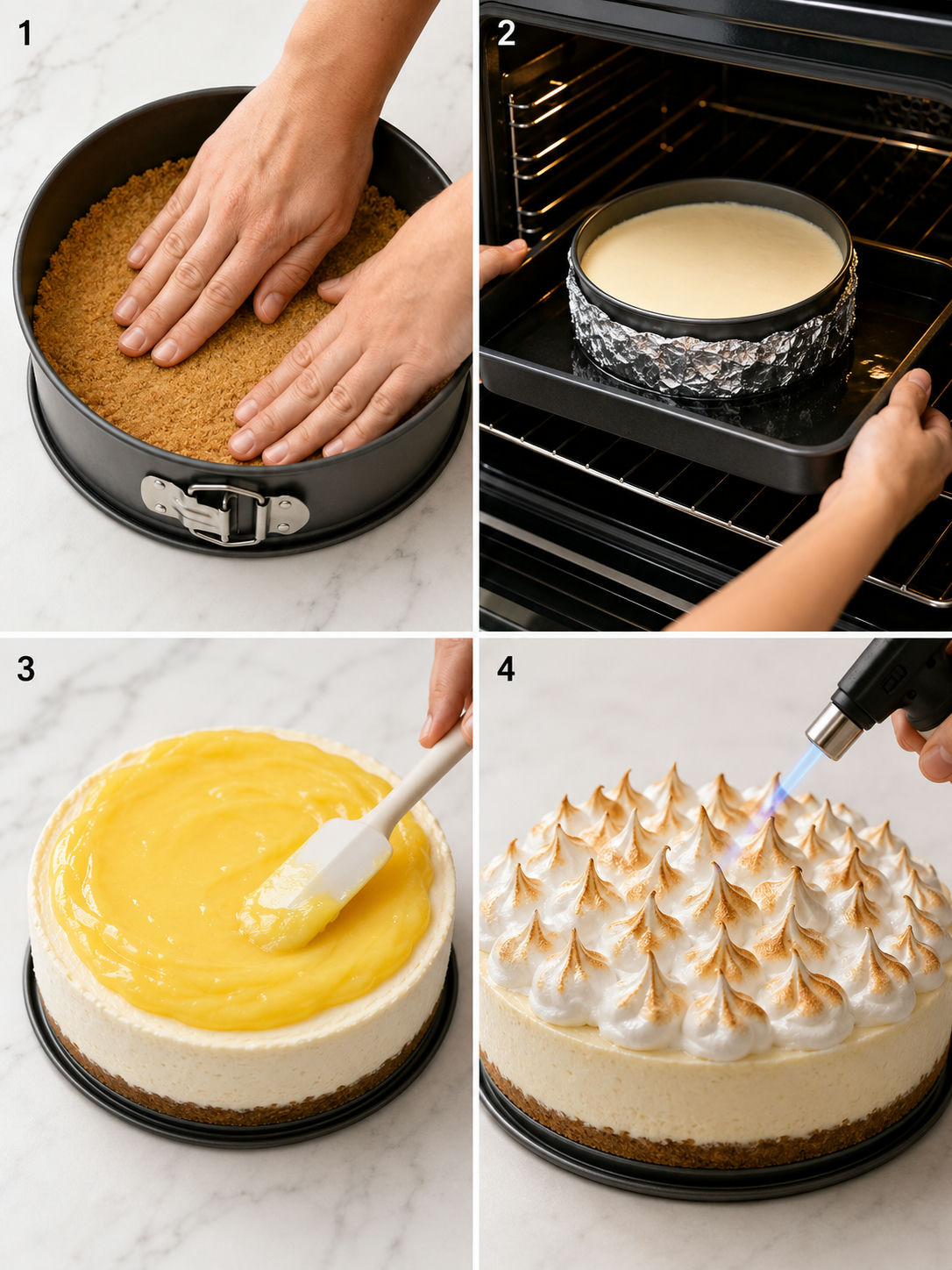
- Bake the crust. Preheat the oven to 325°F (160°C). Mix graham cracker crumbs, sugar, and melted butter until the mixture looks like wet sand. Press firmly into the bottom and slightly up the sides of a 9-inch springform pan. Bake for 10 minutes and set aside to cool.
- Make the cheesecake filling. Beat softened cream cheese and sugar on medium speed until completely smooth with no lumps, about 2 minutes. Reduce to low and add eggs one at a time, mixing just until each disappears. Stir in sour cream, lemon zest, lemon juice, and vanilla. Pour over the cooled crust.
- Bake in a water bath. Wrap the outside of the springform pan tightly in two overlapping layers of heavy-duty foil, folding the seam up high. Set the pan in a large roasting pan and fill with hot tap water halfway up the sides. Bake at 325°F for 60 to 65 minutes until the edges are set but the center still wobbles gently.
- Cool slowly and chill. Turn off the oven and crack the door open about an inch. Leave the cheesecake inside for 1 hour. Run a thin knife around the edge, then refrigerate uncovered for at least 4 hours or overnight until completely cold.
- Make the lemon curd. Whisk egg yolks, sugar, lemon juice, and lemon zest in a small saucepan over medium heat, stirring constantly until thick enough to coat the back of a spoon, about 8 to 10 minutes. Remove from heat and stir in the butter until glossy. Cool to room temperature, then spread evenly over the cold cheesecake.
- Whip the meringue. In a clean, grease-free bowl, beat egg whites and cream of tartar until foamy. Add sugar a tablespoon at a time and beat on medium-high until the meringue holds stiff, glossy peaks. Spread or pipe immediately over the lemon curd, sealing it all the way to the edges.
- Toast the meringue. Use a kitchen torch in slow circular passes until the peaks are golden brown all over. Alternatively, place the cheesecake on the top rack under a preheated broiler on high for 60 to 90 seconds, watching constantly. Serve right away or refrigerate until ready to slice.
Why the water bath is worth the effort
The water bath is the step most home bakers skip, and it is the reason most cheesecakes crack. Steam keeps the oven humid, which slows and evens the heat so the edges do not firm up while the center is still liquid. That steady, gentle cook is what gives you a smooth, unbroken top and that silky bite all the way through.
Wrapping the pan well is half the job. One pinhole in the foil lets water seep into the crust and turns it to paste. Use two overlapping sheets of wide, heavy-duty foil and fold the seam over the top edge of the pan. If you want extra insurance, slip the wrapped springform inside a large oven bag first, then set everything into the water.
Getting the meringue to behave
Meringue has a reputation for being fussy, but the problems are usually the same. A greasy bowl, underbeaten whites, or sugar added too fast. Wipe your bowl and beaters with a paper towel dampened with white vinegar before you start. Add the sugar slowly once the whites are foamy and opaque. The finished meringue should hold a stiff peak that does not droop when you lift the beater.
For egg safety, the USDA recommends that meringue reach 160°F internally. A thorough pass with a kitchen torch or a brief time under the broiler achieves this. See foodsafety.gov for guidance on safe handling of egg-based desserts.
The two mistakes that ruin the layers
The first mistake is spreading the lemon curd while the cheesecake is still warm. Warm filling causes the curd to sink and bleed into the surface instead of sitting in a clean, distinct layer. The cheesecake must be fully cold before you add anything on top. At least 4 hours in the fridge, and overnight is better.
The second mistake is overbaking the filling. A properly baked cheesecake looks underdone when it comes out of the oven. The center should wobble like set Jell-O, not slosh like liquid. It firms up completely during the slow cool. If you love lemon cheesecake in a lighter, no-bake form, the Lemon Cheesecake Mousse is a quick weeknight version worth trying.
Storing, serving, and what to bake next
Keep leftovers loosely covered in the fridge for up to three days. The meringue softens a little over time but the flavor stays bright. Do not freeze a cheesecake with meringue on it because meringue turns rubbery and weepy after thawing. If you want to freeze, do it before adding the curd and meringue, then add those layers after the cheesecake has thawed overnight in the fridge.
If you enjoy lemon meringue in handheld form, the Zesty Lemon Meringue Pie Cannolis bring the same flavor combination in a fun format. And if layered cheesecakes are your thing, the Boston Cream Pie Cheesecake follows a similar build but swaps the lemon for pastry cream and chocolate ganache.
FAQs
- Do I need a water bath for this cheesecake?
Yes, strongly recommended. The water bath creates a humid oven environment that bakes the filling gently and evenly. Without it, the edges cook faster than the center, which causes cracking and an uneven texture. Wrap the springform pan in two layers of heavy-duty foil before placing it in the water to keep the crust dry.
- Can I use store-bought lemon curd instead of making my own?
You can. A good-quality jarred lemon curd works fine and saves about 15 minutes. Taste it before spreading because some brands run very sweet. Stir in a little extra lemon zest or a squeeze of fresh juice to brighten the flavor if needed.
- Why is my meringue weeping?
Weeping (the watery layer between the meringue and curd) usually means the meringue was spread onto cold filling, the egg whites were underbeaten, or the meringue sat too long before toasting. Spread and torch it within a few minutes of whipping. Using superfine sugar instead of standard granulated also helps it dissolve fully and hold longer.
- How do I know when the cheesecake filling is done baking?
The filling is done when the edges look set and matte but the center two to three inches still wobble gently when you shake the pan. It should not slosh, just a slow, jelly-like jiggle. It finishes setting as it cools and chills. If the whole top looks firm and dry in the oven, it is likely overbaked.
- Can I make this cheesecake ahead of time?
Yes, and it actually improves overnight. Bake the cheesecake up to two days ahead and keep it refrigerated. Make the lemon curd the same day or one day ahead. Add the meringue and torch it a few hours before serving, or right before bringing it to the table.
- What if I do not have a kitchen torch?
Use your oven broiler on high. Spread the meringue, slide the cheesecake under the broiler on the top rack, and watch it closely for about 60 to 90 seconds. Pull it out the moment the peaks turn golden. The broiler works well but is less precise than a torch, so stay at the oven the whole time.
- Can I freeze lemon meringue cheesecake?
Freeze the baked cheesecake without curd or meringue, wrapped tightly in plastic wrap and foil, for up to two months. Thaw it overnight in the fridge, then add the lemon curd and meringue fresh before serving. Meringue does not freeze well and turns rubbery and weepy after thawing.
