 Pin it
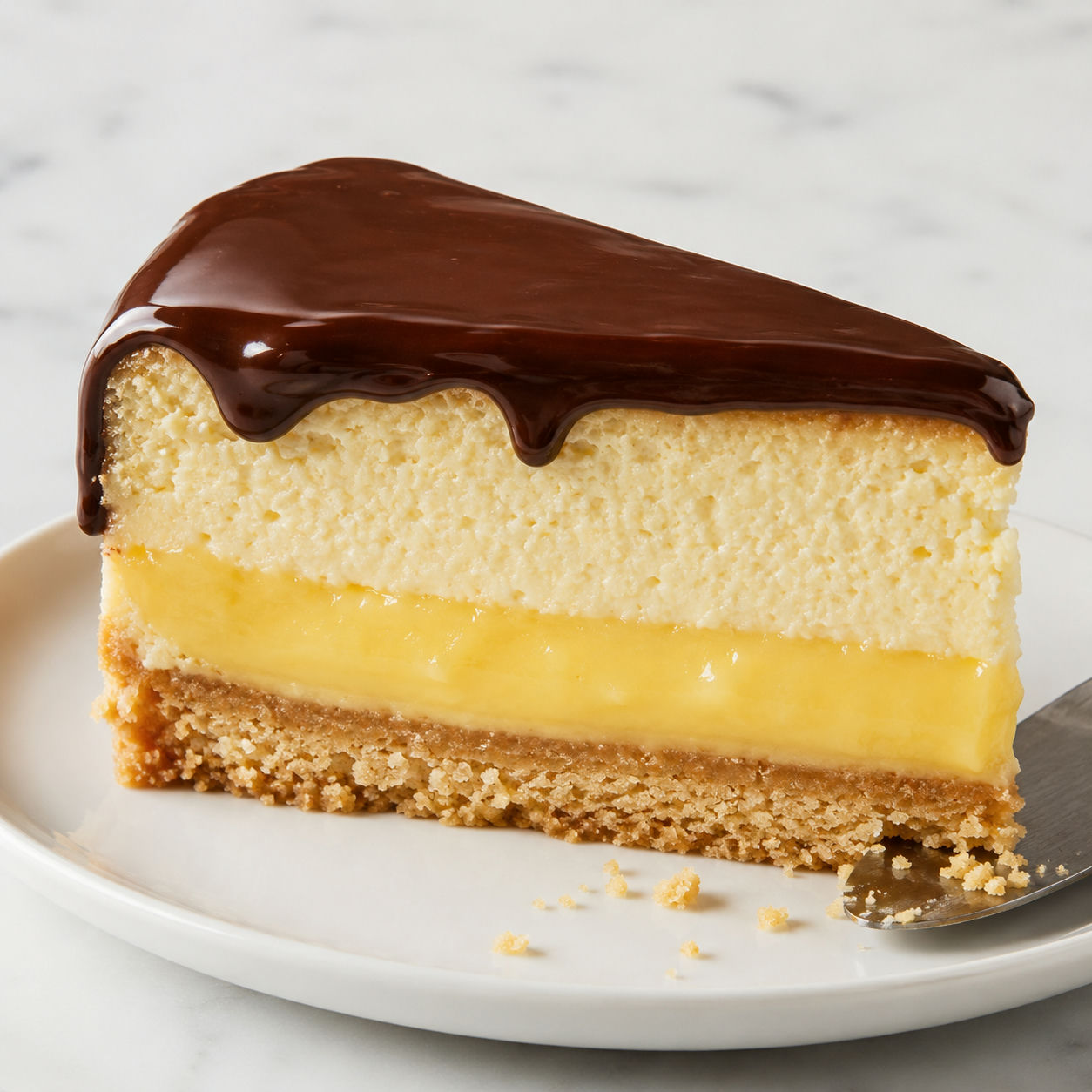
Boston Cream Pie Cheesecake takes the best parts of the old bakery dessert and gives them a cold, creamy cheesecake base. You still get vanilla custard and a glossy chocolate top, but the bite is denser and smoother.
I like this for celebrations because most of the work happens the day before. The crust bakes quickly, the cheesecake chills overnight, and the final custard and ganache make it look like it came from a dessert case.
The Layers That Matter
Use full-fat cream cheese, real vanilla, and good chocolate here. Since the flavors are simple, each layer needs to taste clean and rich.
The custard should be thick enough to mound on a spoon, and the ganache should pour slowly rather than run like syrup.
- Vanilla cookies. They make a sweet, crisp crust that fits the Boston cream flavor better than a plain crumb base.
- Unsalted butter. It binds the crust and keeps the salt level under control.
- Cream cheese. Full-fat blocks give the cheesecake its smooth body and clean tang.
- Sour cream. A little loosens the filling and keeps it from tasting heavy.
- Eggs. They set the cheesecake and thicken the pastry cream.
- Whole milk. The base of the pastry cream, rich enough to taste creamy without being greasy.
- Cornstarch. It thickens the custard so it holds on top of each slice.
- Semi-sweet chocolate. It gives the ganache a balanced cocoa bite against the sweet custard.
- Heavy cream. It melts with the chocolate into a shiny topping that cuts cleanly after chilling.
Bake, Chill, And Finish
- Prepare the pan. Wrap the outside of a springform pan in foil and line the bottom with parchment so the cheesecake releases neatly.
- Make the crust. Mix cookie crumbs with butter, press firmly into the pan, and bake until fragrant so it stays crisp under the filling.
- Mix the filling. Beat the cream cheese and sugar smooth first, then add sour cream, vanilla, and eggs on low speed to avoid whipping in excess air.
- Bake gently. Set the pan in a water bath and bake until the edges are firm and the center still has a soft wobble.
- Cool slowly. Let the cheesecake rest in the turned-off oven, then chill until fully cold before adding toppings.
- Cook the custard. Whisk the milk mixture with egg yolks and cornstarch until thick, then cover it directly on the surface while it cools.
- Add ganache. Spread the pastry cream over the cheesecake, pour on warm ganache, and chill until the top is set.
Boston Cream Pie Cheesecake Basics
Classic Boston cream pie is built from soft cake, vanilla custard, and chocolate glaze. This cheesecake keeps that same idea but swaps the cake layers for a baked vanilla cheesecake. If you want to see the classic flavor in smaller portions, try the Boston Cream Pie Cupcakes or the Easy Boston Cream Pie Cookies.
The main thing to protect is contrast. The crust should be crisp, the cheesecake should be cold and creamy, the custard should sit in a soft layer, and the ganache should slice without cracking into shards. That comes from chilling each layer before moving on.
Keep The Filling Creamy
Start with room-temperature cream cheese. Cold cream cheese leaves tiny lumps that do not disappear once the eggs are added. Beat the cream cheese and sugar until smooth, then slow the mixer down. After the eggs go in, mix only until the streaks are gone.
A water bath is worth the small fuss. It surrounds the pan with steady heat and helps the cheesecake bake without a dry edge. The FDA has practical guidance on handling eggs safely in custards and baked desserts, including storage temperatures, in its egg safety guide.
Custard Without Panic
Pastry cream sounds more formal than it is. Whisk the sugar and cornstarch with the yolks first so the mixture turns smooth. Then add the hot milk slowly. Once everything goes back into the pan, keep whisking until it bubbles and thickens.
Press plastic wrap right against the surface while it cools. That stops a skin from forming. If you like custard-heavy desserts, the Vanilla Custard Cream Squares are another good bake to keep nearby.
Ganache That Slices Clean
Ganache should be warm and fluid when you pour it, not hot. If it is steaming, it can loosen the custard. If it is too cool, it will mound instead of flowing over the top.
Semi-sweet chocolate gives a good balance. Bittersweet works if your crowd likes a stronger cocoa flavor. Milk chocolate is softer and sweeter, so use a little less cream if you choose it. The classic Boston cream pie formula uses pastry cream and chocolate topping too, as shown in this traditional Boston cream pie recipe.
Make Ahead And Storage
This cheesecake is best made in stages. Bake the cheesecake the day before, chill it overnight, and make the pastry cream while it cools. The next day, spread on the custard and ganache. That schedule gives every layer time to firm up.
Store leftovers covered in the refrigerator for up to four days. Freeze plain cheesecake slices before the custard and ganache if you want a longer make-ahead option. For another rich chilled dessert, the Pistachio Cream Cheesecake follows the same make-ahead spirit.
Serving Smart Slices
Take the cheesecake out of the fridge about 15 minutes before slicing. It should still be cold, but the ganache will soften slightly and the vanilla flavor will come through better. Small slices are right here because the dessert is rich.
Coffee is the easiest pairing. For a dessert table, set it beside fruit or something nutty like Pecan Pie Cheesecake Bars. The mix of creamy, crisp, and chocolate desserts gives guests choices without making you bake three complicated cakes.
Summary
This make-ahead cheesecake has the familiar Boston cream pie flavors of vanilla custard and chocolate ganache, with a rich baked cheesecake underneath.
FAQs
- Can I make Boston Cream Pie Cheesecake ahead of time?
Yes. Bake and chill the cheesecake one day ahead, then add the pastry cream and ganache the day you plan to serve it. The finished cheesecake also holds well in the fridge for about 24 hours.
- Can I use instant pudding instead of pastry cream?
You can use thick vanilla pudding in a pinch, but homemade pastry cream gives a cleaner slice and richer flavor. If using boxed pudding, make it with less milk than the package suggests so it sets firmly on top.
- Why did my cheesecake crack?
Cracks usually come from overmixing after the eggs go in, baking too hot, or cooling too quickly. A water bath and a slow cool in the turned-off oven help the center settle gently.
- How do I know the cheesecake is baked?
The edges should look set and the center should still jiggle slightly when you nudge the pan. It will finish setting as it cools and chills.
- Can this recipe be gluten-free?
Yes, use gluten-free vanilla cookies or gluten-free graham crackers for the crust. Check the chocolate and cornstarch labels too, since brands vary.
- What should I serve with it?
Serve small slices with coffee or cold milk. Fresh raspberries or sliced strawberries are good alongside the chocolate and custard without making the dessert feel heavier.
