 Pin it
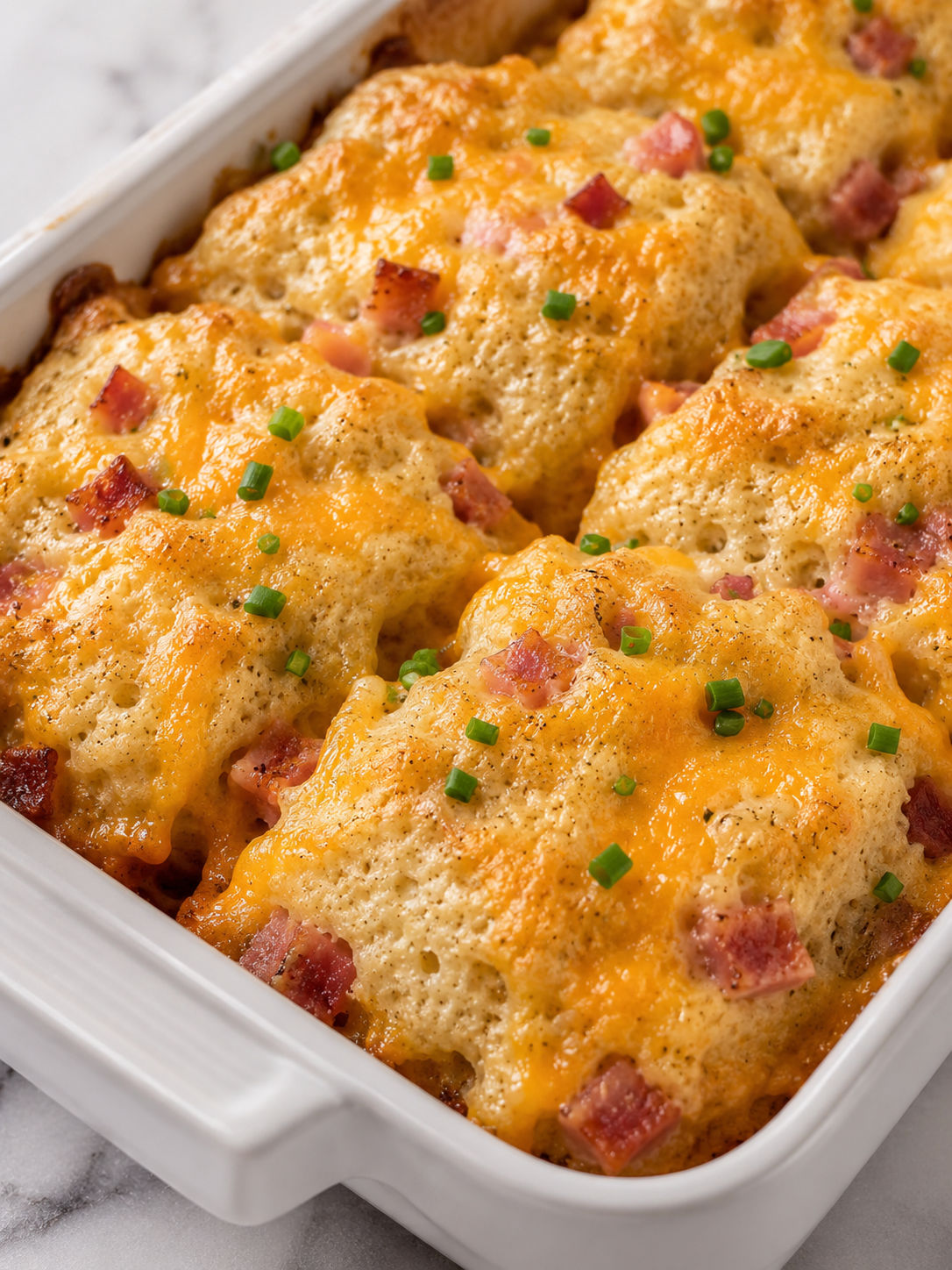
Ham and Cheese Butter Swim Biscuits are what I make when I want homemade biscuits without the folding, rolling, or flour all over the counter. The dough is stirred in one bowl, spread into a pan of melted butter, and baked into soft, savory squares with crisp buttery edges.
The ham makes them hearty enough for breakfast or brunch, and the cheddar melts into little pockets through the crumb. They are especially good warm from the pan, when the bottom is still sizzling and the top springs back under your finger.
Ham and Cheese Butter Swim Basics
The ingredient list is short, so each one matters. Use cold buttermilk, real butter, a flavorful ham, and cheese you would enjoy eating on its own.
- All-purpose flour. Gives the biscuits enough structure to bake into neat squares without turning tough.
- Baking powder. Lifts the wet dough quickly in a hot oven, which keeps the crumb tender.
- Granulated sugar. A small spoonful rounds out the tang of the buttermilk without making the biscuits sweet.
- Buttermilk. Makes a thick, sticky dough and brings the classic biscuit flavor.
- Diced ham. Adds salty, meaty bites through the biscuit instead of sitting only on top.
- Sharp cheddar cheese. Melts into savory pockets and browns lightly at the edges.
- Salted butter. Forms the buttery base the dough bakes in, giving the bottom its crisp, rich crust.
Bake Them In Butter
- Heat the oven. Set the oven to 450°F and grease an 8-inch or 9-inch square baking dish so the buttery edges release cleanly.
- Mix the dry base. Whisk the flour, baking powder, sugar, and a little pepper in a bowl. This spreads the leavening evenly before the wet ingredients go in.
- Stir in buttermilk. Add the buttermilk and mix just until a sticky dough forms. Stop when no dry flour patches remain.
- Fold in ham and cheese. Gently stir in the diced ham, cheddar, and chives so the dough stays light.
- Add dough to butter. Pour melted butter into the baking dish, then spread the dough over it. Some butter will pool around the sides and over the top.
- Score and bake. Cut the dough into 9 squares before baking. Bake until deeply golden, set in the center, and crisp around the edges.
The Sticky Dough Matters
This dough should look wetter than rolled biscuit dough. That is the point. It needs enough moisture to spread in the pan and steam up into a soft crumb while the butter fries the edges. If it looks dry or crumbly after stirring, add another tablespoon or two of buttermilk.
Measure flour with a light hand. Spoon it into the cup and level it off rather than packing it down. King Arthur Baking has a useful flour measuring guide if your biscuits often turn out dense.
Getting Golden Edges
The high oven temperature is not a typo. Butter swim biscuits need strong heat so the outside sets fast and the butter bubbles up around the dough. A glass or ceramic dish works well because you can see the butter at the sides, but metal also works if you start checking early.
Score the dough before baking. The cuts will not stay perfectly open, but they guide the biscuits into tidy squares later. If the top browns too quickly, cover the dish loosely with foil and keep baking until the middle is done.
Smart Swaps For Brunch
These are easy to bend toward whatever is in the fridge. Pepper jack adds heat. Swiss gives them a ham-and-cheese-sandwich feel. A spoonful of chopped chives or scallions makes the pan smell fresher without much work.
If you like this style of biscuit, try the sweet side with Blueberry Butter Swim Biscuits or make a heartier morning pan with Sausage Cheese Butter Swim Biscuits. For another ham-and-cheese bake, Savory Ham and Cheese Bread Rolls are a good make-ahead option.
Serving Them Warm
Serve these straight from the pan with scrambled eggs, a green salad, or a bowl of soup. They also make a sturdy brunch side beside Ham and Cheese Egg Cups. For dinner, split one and tuck in a fried egg or a little mustardy greens.
The biscuits are rich, so I like something sharp or fresh on the plate. Pickles, sliced tomatoes, fruit salad, or a simple vinaigrette all help balance the butter and cheese.
Storing Leftovers Safely
Let leftovers cool, then pack them in an airtight container and refrigerate. The USDA recommends using refrigerated leftovers within 3 to 4 days, and their leftovers safety guide is a good reference for timing.
Reheat the biscuits in a 300°F oven until warm. The microwave works in a hurry, but it softens the buttery crust. If freezing, wrap individual squares and reheat from thawed for the best texture.
Summary
Serve these biscuits warm with eggs, soup, salad, or a simple fruit bowl. They also reheat well in the oven, which brings back the buttery edges better than the microwave.

FAQs
- Can I use self-rising flour for Ham and Cheese Butter Swim Biscuits?
Yes. Use the same amount of self-rising flour and leave out the baking powder. Taste your ham and cheese before adding extra salt since self-rising flour already contains salt.
- What kind of ham works best?
A ham steak or leftover baked ham works well because it dices neatly and has good texture. Thin deli ham can be used, but chop it small and separate the pieces so they do not clump in the dough.
- Can I make these biscuits ahead?
They are best shortly after baking, but you can bake them earlier in the day and rewarm them at 300°F until hot. For the best texture, avoid mixing the wet dough too far ahead because the baking powder starts working once it touches the buttermilk.
- Why is my biscuit center doughy?
The center usually needs more time if the top browned before the inside set. Tent the pan loosely with foil and keep baking until a toothpick comes out without wet batter and the center springs back.
- Can I use another cheese?
Yes. Sharp cheddar gives the strongest flavor, but Swiss, pepper jack, Monterey Jack, or smoked gouda all work. Avoid very wet fresh cheeses because they can make the crumb heavy.
- How should I store leftovers?
Cool the biscuits, then refrigerate them in an airtight container for up to 4 days. Reheat in a low oven or air fryer so the buttered edges crisp again.
