 Pin it
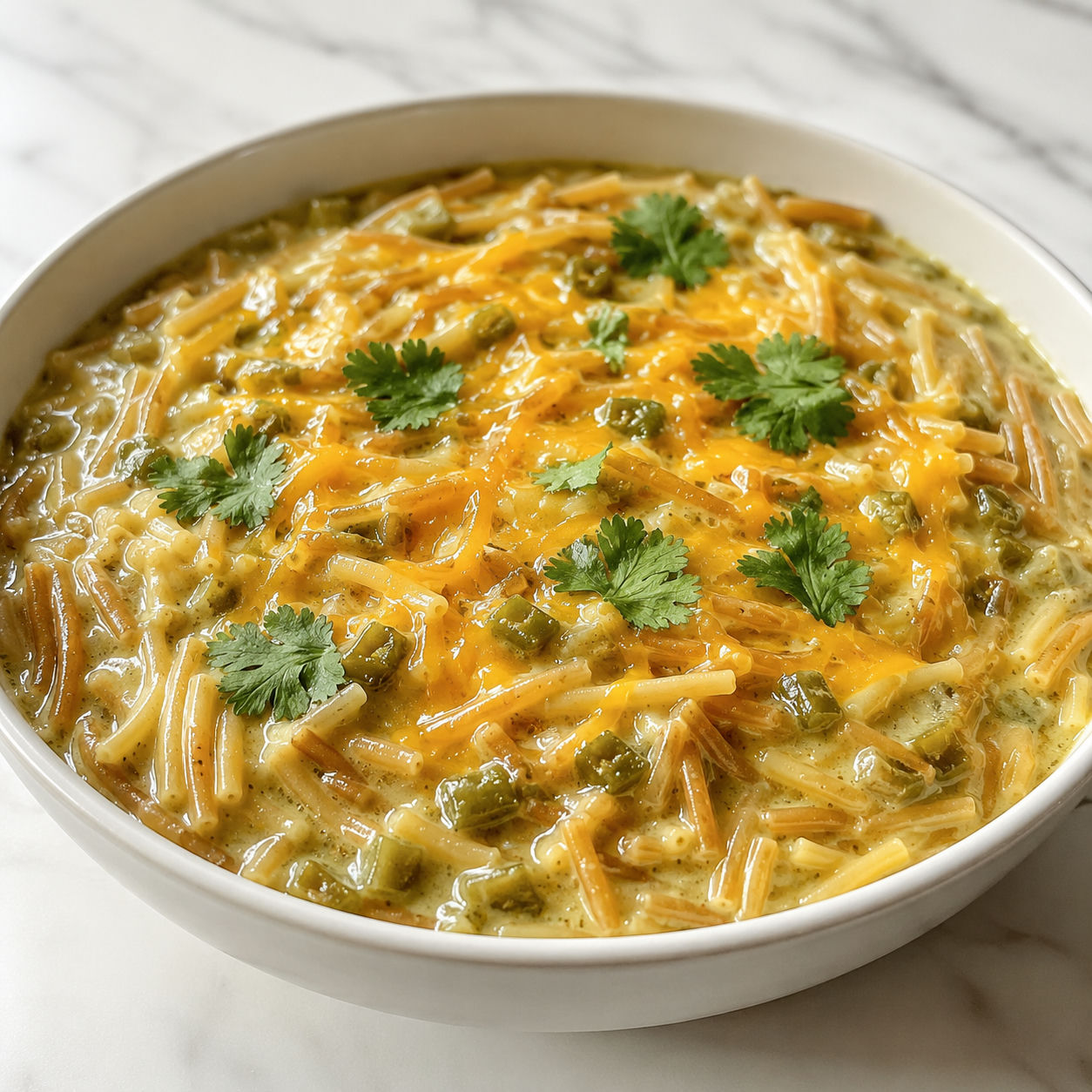
Fideo has always been a workhorse dish in Mexican-American kitchens. The dry noodles go into hot oil first, where they toast until golden and nutty, and that step alone sets the dish apart from any ordinary pasta dinner. This green chile and cheese version swaps the usual tomato broth for a pale, smoky cream sauce built from roasted chiles and two kinds of cheese.
The result is rich without being heavy, a little smoky from the chiles, and deeply satisfying in the way only one-pan comfort food can be. It works as a weeknight side dish, a meatless main with vegetable broth, or the base for whatever protein you have around. Thirty minutes start to finish and one pan to wash.
Everything That Goes in the Pan
The ingredient list is short and honest. Good roasted green chiles carry most of the flavor here, so they are the one thing worth seeking out. Everything else is a pantry staple or easy to find at any grocery store.
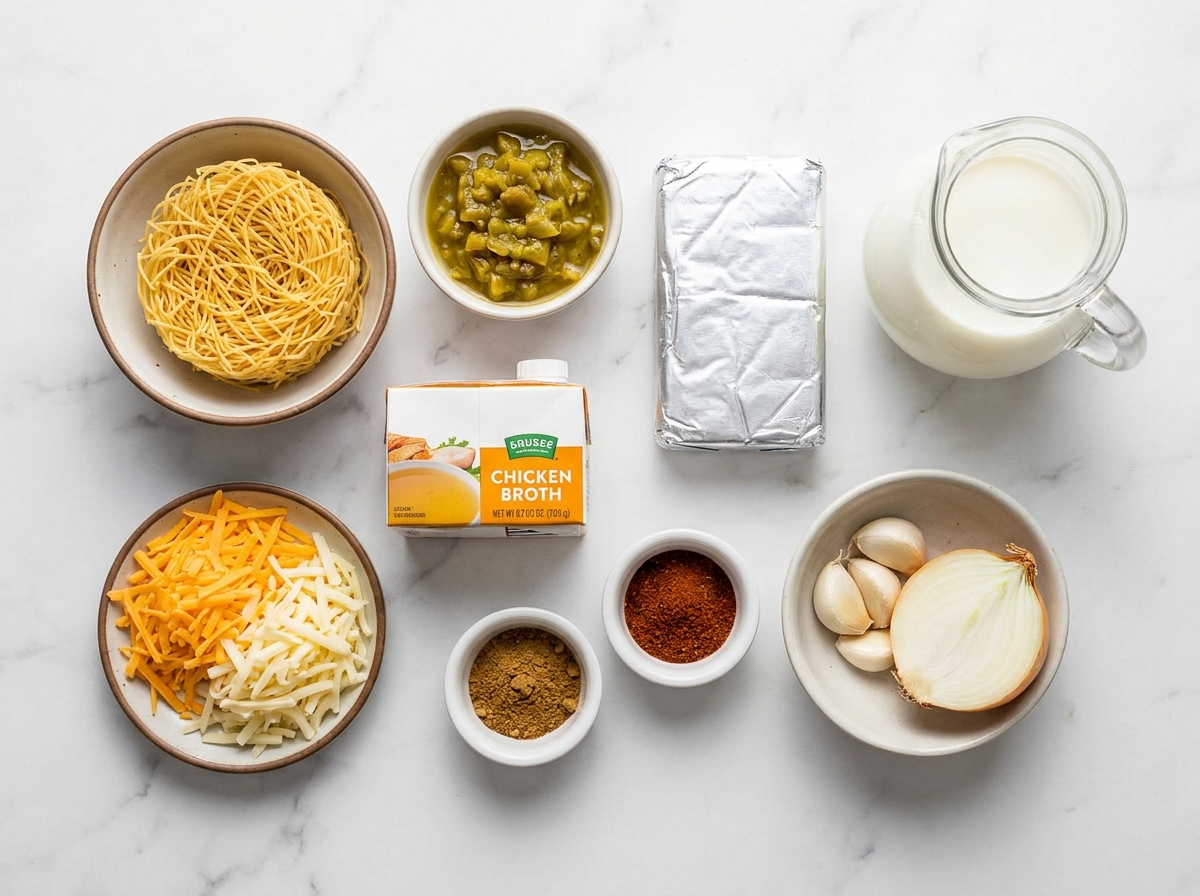
- Fideo pasta. Thin, short noodles that toast quickly in oil and absorb the sauce beautifully as they cook.
- Olive oil. The fat for toasting. A neutral vegetable oil works too.
- Onion and garlic. The aromatic base. Dice them small so they soften fast and blend into the sauce without any big pieces.
- Roasted green chiles. The flavor anchor of this dish. Hatch chiles from New Mexico are the gold standard, but Anaheim and poblano chiles are solid alternatives.
- Chicken broth. Carries the pasta through cooking and adds savory depth. Use vegetable broth for a meatless version.
- Whole milk or half-and-half. Whole milk gives a light creaminess. Half-and-half makes the sauce noticeably richer.
- Cream cheese. Adds body and a gentle tang. Soften it before it goes in so it melts evenly without lumping.
- Shredded cheddar or Monterey Jack. Melts into the sauce and finishes on top. A blend of both is the best choice.
- Cumin and chili powder. Warm, earthy spice that ties the green chile flavors together without competing with them.
How to Make Creamy Fideo
- Toast the fideo. Heat olive oil in a large skillet over medium heat. Add the dry fideo noodles and stir constantly for 3 to 4 minutes until deep golden brown and nutty-smelling. Watch them closely. They go from pale to golden fast.
- Cook the aromatics. Add the diced onion directly to the toasted noodles. Stir and cook for 2 to 3 minutes until softened. Add the minced garlic and cook another minute.
- Add chiles and spices. Stir in the chopped roasted green chiles, cumin, and chili powder. Cook for 1 minute so the spices bloom in the oil.
- Pour in the broth. Add the chicken broth and bring the mixture to a steady simmer, scraping up any toasted bits from the bottom of the pan.
- Build the cream sauce. Lower the heat to medium-low. Stir in the milk and the cubed cream cheese. Stir slowly and steadily until the cream cheese melts fully into the liquid, about 2 to 3 minutes.
- Melt in the cheese. Add the shredded cheddar and Monterey Jack in two batches, stirring after each until completely melted and the sauce is smooth.
- Simmer until tender. Let the pasta cook in the sauce, stirring every couple of minutes, for 8 to 10 minutes until the noodles are tender and the sauce is thick and creamy. Add a splash of broth if it tightens too fast.
- Season and serve. Taste and adjust salt and black pepper. Serve hot straight from the pan, topped with extra shredded cheese and fresh cilantro.
Why the Toasting Step Matters
Every real fideo recipe starts with toasting the dry noodles in oil. This is the move that makes fideo taste completely different from boiled pasta. The noodles brown quickly at medium heat, and that color brings a nutty, almost caramel depth that stays in the dish even after the liquid goes in and the pasta softens into the sauce.
Stir constantly and stay at the pan. The noodles can go from golden to burned in about thirty seconds once they get going. Pull them off the heat or add the onions immediately the moment they hit a deep amber color to stop the cooking.
Picking the Right Green Chiles
Hatch green chiles from New Mexico are the classic choice for this dish. They have an earthy, mildly smoky flavor with a heat level that ranges from mild to hot depending on the variety and growing season. The Chile Pepper Institute at New Mexico State University is the definitive resource if you want to learn about specific varieties and heat ratings before you shop.
Anaheim chiles are milder and easier to find year-round at most grocery stores. Poblano chiles roast beautifully and add a deeper, slightly earthier note to the sauce. Good fire-roasted canned green chiles are the most practical option for most of the year, and they produce a genuinely delicious dish. Hatch chiles are also the key ingredient in the authentic Mexican green chile stew on this site, worth making any time you have a good batch on hand.
Keeping the Cream Sauce Smooth
There are two enemies of a smooth cream sauce: heat that is too high and cheese that goes in too cold. High heat causes the proteins in cheddar to seize and separate from the fat, leaving a greasy pool with rubbery clumps floating in it.
What works is straightforward. Lower the heat to medium-low before any dairy goes in. Let the cream cheese sit at room temperature for 10 minutes so it melts in cleanly. Add the shredded cheese in small handfuls and stir after each addition before adding more. If the sauce tightens faster than you can stir, a small splash of warm broth loosens it right back out.
Variations Worth Trying
For a vegetarian version, use vegetable broth in place of chicken broth. For gluten-free, look for rice vermicelli or gluten-free thin pasta and toast it the same way in the same amount of oil.
Pepper Jack in place of Monterey Jack adds heat without changing anything else. A spoonful of sour cream stirred in at the very end adds tang and a slightly looser texture to the sauce. Diced tomatoes added with the chiles brighten the flavor and cut through some of the richness. If you like this style of creamy chile-and-cheese pasta, the creamy poblano Gouda mac and cheese uses a similar approach with a different chile, and the goulash de chile verde con queso is another hearty one-pan option built around the same flavor pairing.
Storing and Reheating This Dish
Fideo absorbs the cream sauce as it sits, so leftovers will be considerably thicker by the next day. Store them in an airtight container in the refrigerator for up to 3 days, following standard refrigerator food safety guidelines for cooked dishes.
To reheat, put the fideo in a skillet with a generous splash of broth or milk and warm over medium-low heat, stirring often, until hot and creamy again. The microwave works in a pinch but tends to dry the noodles and can break the sauce. Avoid freezing as dairy-based sauces generally separate after thawing. If you want a version that holds up better for meal prep and reheating, the green chile cheese baked pasta is a great make-ahead option with similar flavors.
FAQs
- Can I use canned green chiles instead of fresh roasted ones?
Yes. Fire-roasted canned green chiles work well here. Drain them thoroughly before adding. They are more mellow than freshly roasted Hatch chiles but still give the dish real flavor. One standard 4-ounce can is roughly half a cup chopped, so use two cans to reach a full cup.
- What is fideo pasta and what can I substitute?
Fideo is a very thin, short pasta similar to broken vermicelli. You will find it in the Mexican or international aisle of most grocery stores, often labeled "fideo seco." If you cannot find it, break thin spaghetti or angel hair into 1-inch pieces. The toasting step works exactly the same way with either option.
- How do I stop the cheese sauce from getting grainy?
Low heat is the answer. High heat causes the proteins in cheddar to seize and separate from the fat, leaving a broken sauce. Lower the heat to medium-low before adding any dairy. Use softened cream cheese rather than cold from the fridge. Add shredded cheese in small batches, stirring after each. If the sauce starts to look greasy, pull the pan off the heat and stir in a small splash of cold milk.
- Can I make this recipe vegetarian?
Yes. Swap the chicken broth for the same amount of vegetable broth and nothing else changes. The green chile and cheese flavors come through just as clearly, and the toasted noodles give the dish plenty of body and depth on their own.
- Can I add protein to this fideo?
Easily. Shredded rotisserie chicken stirred in once the pasta is tender is the simplest option. Diced cooked chorizo adds a smoky note. Ground beef or turkey browned with the onions and drained before building the sauce works well too. Stir any protein in at the end so it does not overcook in the sauce.
- How spicy is this recipe?
It depends on which chiles you use. Mild Hatch or Anaheim chiles produce a dish most kids will eat without complaint. Medium Hatch chiles add a real background heat. For something genuinely spicy, use hot Hatch chiles or stir in a diced roasted jalapeño with the green chiles. You can also keep the base mild and let everyone add hot sauce at the table.
- How do I store and reheat leftover fideo?
Store leftovers in an airtight container in the refrigerator for up to 3 days. The fideo keeps absorbing the sauce as it sits and will be much thicker the next day. Reheat on the stovetop over medium-low heat with a generous splash of broth or milk, stirring often, until warmed through. This dish does not freeze well because the dairy sauce tends to separate after thawing.
