 Pin it
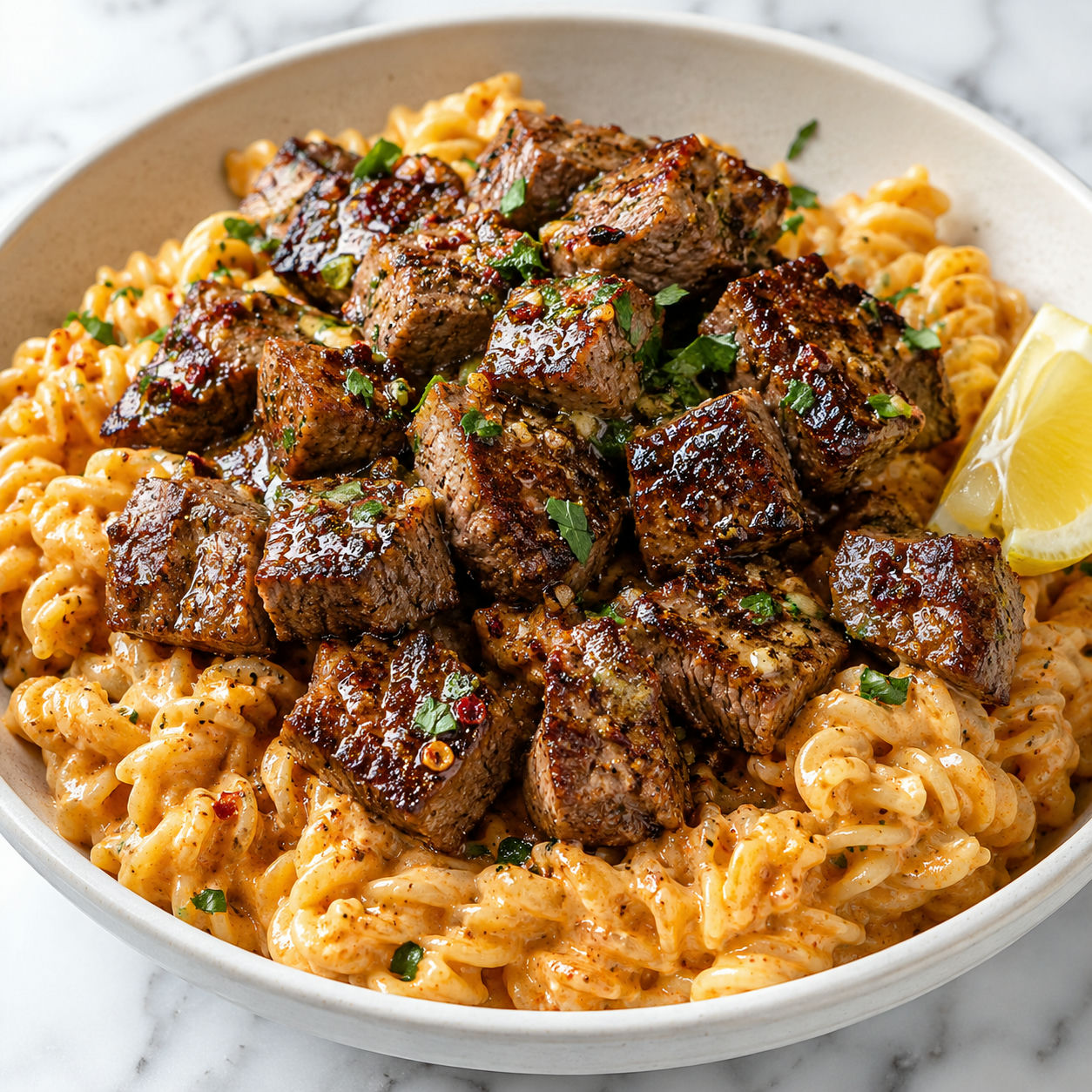
This dish does two things at once and neither half feels like an afterthought. The steak bites come out of a screaming-hot pan with a dark, butter-basted crust and a pink center. The rotini underneath is coated in a Cajun Alfredo that carries real heat and real creaminess without one drowning out the other.
One skillet handles both components. After the steak bites rest, the Cajun Alfredo builds in the same pan and picks up the browned bits left behind. That fond is free flavor that a clean pan would have cost you. Start to finish takes about 35 minutes.
The spiral pasta shape matters more than it sounds. Rotini and cavatappi trap cream sauce in their twists, so every forkful comes loaded rather than just lightly coated.
What Goes Into Both Components
Two ingredient lists, one skillet. Buy the best sirloin you can find and use freshly grated Parmesan from a block rather than the shelf-stable pre-grated kind. The difference in the sauce is noticeable.
- Sirloin steak. Cut into 1-inch cubes for fast, even searing with maximum browned crust on every piece.
- Unsalted butter. Used twice, once to finish the steak and once as the Alfredo base, so you control the salt at each stage independently.
- Garlic. Minced and added to both the steak finish and the sauce, the double presence gives this dish its defining savory backbone.
- Cajun seasoning. The paprika, onion, cayenne, and herb blend that turns plain cream into something with real personality.
- Heavy cream. The base of the Alfredo, it thickens naturally with heat and no flour or roux needed.
- Parmesan. Freshly grated melts without clumping and adds the salty, nutty body the sauce needs to cling to every twist of pasta.
- Rotini pasta. The tight spirals trap Cajun Alfredo sauce so you get sauce in every bite, not just on the surface.
- Fresh thyme. A small amount tossed with the finished steak bites adds an herbal note that cuts through the richness without fighting the Cajun heat.
Sear First, Build the Sauce Second
- Cook the pasta. Boil the rotini in generously salted water until just shy of al dente, about 8 minutes. Reserve 1/2 cup of the starchy cooking water before draining.
- Dry and season the steak. Pat the cubed sirloin completely dry with paper towels, then toss with salt, black pepper, and garlic powder. A dry surface browns. A wet one steams.
- Sear in batches. Heat olive oil in a cast iron skillet over high heat until shimmering. Add the steak cubes in a single layer without crowding. Sear 1 to 2 minutes per side until deeply browned. Work in two batches to keep the pan temperature high.
- Finish with garlic butter. Drop the heat to medium, add the butter and minced garlic, and toss the steak bites to coat for about 30 seconds. Add the thyme, toss once more, then remove to a plate to rest.
- Build the Cajun Alfredo. In the same pan over medium heat, melt the remaining 2 tablespoons of butter. Add the garlic and cook for 30 seconds until fragrant. Pour in the heavy cream and bring to a gentle simmer, stirring, for 3 to 4 minutes until slightly thickened.
- Add Parmesan and season. Pull the pan off the heat and whisk in the freshly grated Parmesan until fully melted. Stir in the Cajun seasoning, smoked paprika, and cayenne. Taste and adjust salt.
- Toss and serve. Return the pan to low heat. Add the drained rotini and a splash of the reserved pasta water, tossing until fully coated. Spoon into bowls and pile the garlic butter steak bites on top with a scatter of fresh parsley.
The Sear That Makes the Steak
Dry the steak cubes completely before they go near the pan. Surface moisture turns to steam at high heat, and steam gives you gray, soft meat instead of a brown crust with any real texture. Paper towels, a few passes, genuinely dry. That thirty seconds of prep makes a bigger difference than any seasoning adjustment.
The pan has to be hot before anything goes in. Cast iron holds heat when cold meat hits the surface, which is why it outperforms stainless for this kind of fast sear. Once the cubes are down, leave them alone. They release on their own after a full minute when the crust has formed. Moving them early tears the crust off. According to Serious Eats' complete guide to pan-searing steak, the Maillard browning reaction needs direct, dry contact with a hot surface. The FoodSafety.gov safe temperature chart puts the minimum safe internal temperature for beef at 145°F, which for a bite-sized seared cube means a pink but fully safe center.
Getting the Cajun Heat Right
Cajun seasoning blends vary a lot between brands. Some lean heavy on salt, others put cayenne front and center. Taste yours before cooking. If it is on the salty side, pull back on seasoning the pasta water and hold off adding extra salt to the sauce until you taste at the very end.
Two tablespoons in this recipe gives you warmth that builds through the meal without being punishing. The quarter teaspoon of cayenne on top of that adds another step of heat. Cut both in half for a version that still has character but suits milder palates. The smoked paprika is worth keeping in either case because it rounds out the cream sauce in a way that sweet paprika does not.
Swaps That Keep the Dish Intact
Ribeye works in place of sirloin and adds more fat and flavor. New York strip is a solid middle option. Avoid anything labeled stew beef because those cuts need long, slow cooking to become tender and will stay chewy after a quick sear at high heat.
For the pasta, cavatappi and fusilli are the best substitutes for rotini because they share the spiral shape that grabs sauce. Penne works in a pinch. If you prefer a milder cream sauce on steak without the Cajun heat, the garlic butter steak bites with Parmesan cream sauce is a great alternative that runs the same skillet method. And for a version with chicken in place of steak, creamy Cajun chicken and sausage Alfredo uses the same sauce approach with different proteins.
Timing Both Components Together
Start the pasta water first. It takes longer to come to a boil than anything else in this recipe. Get it on the back burner, salt it generously when it boils, and drop in the rotini. While the pasta cooks, prep the steak cubes and get the cast iron heating. By the time the pasta needs draining, the steak bites are resting and you are almost done building the Alfredo sauce.
The 35-minute estimate holds if you move with purpose. Nothing has to sit and wait for long because the components are designed to finish close together. For a related recipe that takes a slightly different approach to the same flavor combination, the garlic butter steak with Cajun pasta version is worth trying side by side.
Storing and Reheating Without Regrets
Alfredo sauce thickens considerably once it cools. Leftovers keep airtight in the fridge for up to three days. Reheat the pasta in a skillet over low heat with a splash of cream or whole milk, stirring constantly until the sauce loosens and becomes glossy again. The microwave tends to overheat it unevenly, which causes the fat to separate and leave you with an oily, broken sauce.
The steak bites reheat better away from the pasta. A hot dry skillet for about a minute warms them through without pushing them past medium. If they are already mixed in with the pasta, keep the heat low and cover the pan for a minute or two rather than blasting it on high.
FAQs
- What cut of steak works best for the bites?
Sirloin is the easiest choice because it stays tender at high heat without much fat trimming. Ribeye has more marbling and adds extra richness. New York strip lands in the middle. Avoid chuck or stew beef, those cuts need long, slow cooking to soften and will stay tough after a quick two-minute sear.
- Can I use a different pasta shape?
Any spiral or ridged shape catches the Cajun Alfredo sauce well. Cavatappi, fusilli, and gemelli are all good substitutes for rotini. Penne and rigatoni work too, though they hold slightly less sauce per piece than the spirals do. Long pasta like fettuccine or spaghetti is fine but you lose the sauce-grabbing advantage.
- How do I keep the Alfredo sauce from breaking or going grainy?
Pull the pan fully off the heat before you whisk in the Parmesan. Cream that is still at a rolling boil when the cheese goes in can cause it to seize. Using freshly grated Parmesan from a block also helps a lot. The anti-caking agents in pre-shredded or shelf-stable Parmesan resist melting smoothly into cream sauces.
- Can I substitute the heavy cream?
Half-and-half works but produces a thinner sauce that is more likely to separate when the Parmesan is added. Whole milk is even thinner and not recommended here. If you want a slightly lighter version, use half heavy cream and half whole milk, then simmer the sauce a minute or two longer before adding the cheese to compensate.
- How spicy is this dish and how do I adjust the heat?
With 2 tablespoons of Cajun seasoning and 1/4 teaspoon of cayenne, the heat builds through the meal but is not punishing. Mild eaters can halve the Cajun seasoning and skip the cayenne entirely. For more fire, add an extra 1/4 teaspoon of cayenne or a pinch of red pepper flakes when you build the cream sauce.
- Can I substitute the sirloin for chicken?
Yes. Slice boneless chicken thighs into bite-sized pieces, season the same way, and sear in the same high-heat method until cooked through, about 3 to 4 minutes per side. The Cajun Alfredo sauce works just as well with chicken as it does with steak, and the rest of the recipe stays the same.
- How do I store and reheat leftovers?
Store the steak bites and pasta in separate airtight containers in the fridge for up to three days. Reheat the pasta in a skillet over low heat with a splash of heavy cream or whole milk, stirring until the sauce loosens. Rewarm the steak bites in a hot dry pan for about a minute. The microwave works in a pinch but the Alfredo sauce tends to separate under uneven heat.
