 Pin it
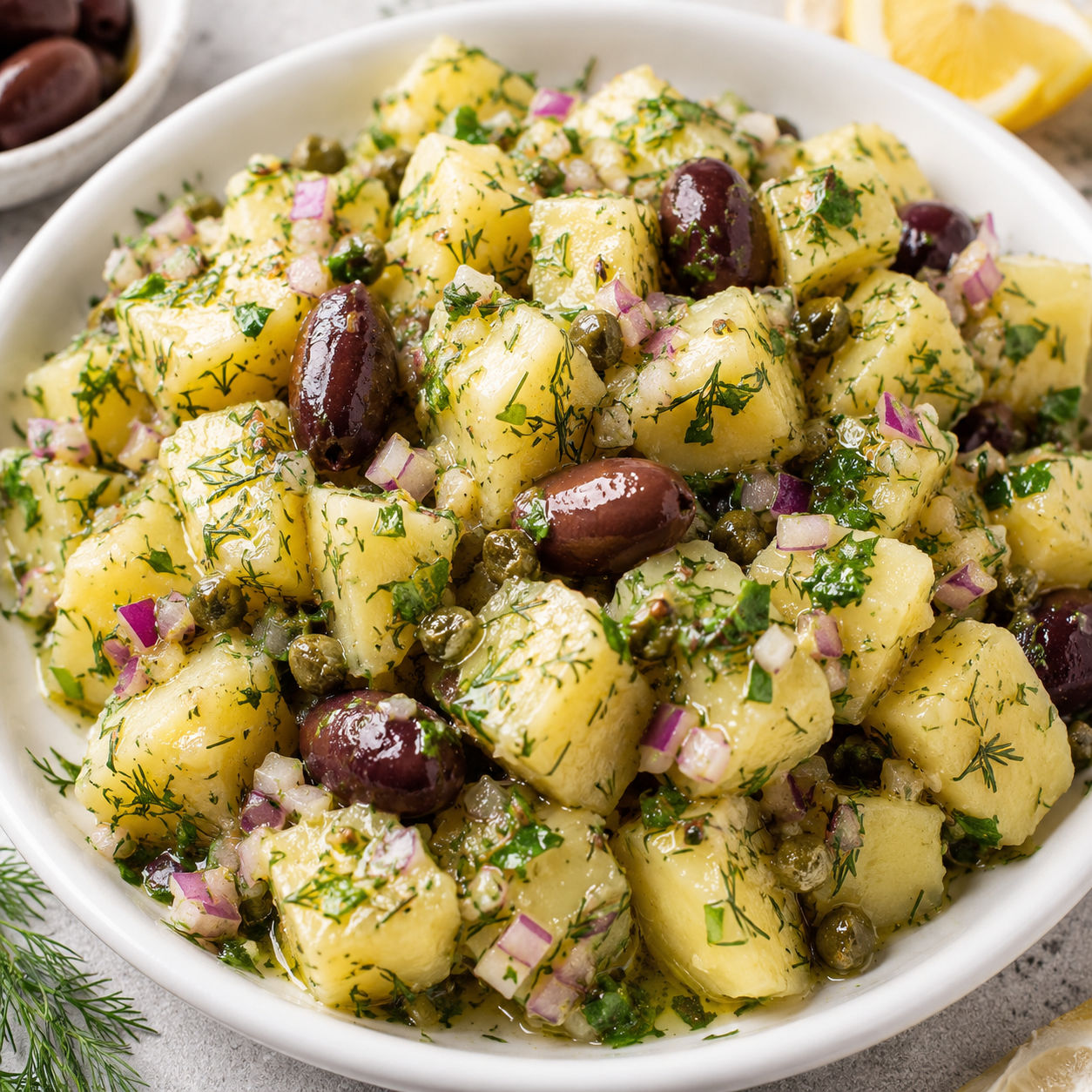
Greek Potato Salad is what I want next to grilled chicken, fish, or a table full of mezze. It is bright instead of heavy, with olive oil, lemon, oregano, and herbs doing the work that mayonnaise usually does.
The small trick is timing. Dress the potatoes while they are still warm, then let them sit long enough to drink in the garlicky vinaigrette. The edges soften, the centers stay tender, and every bite tastes clean and sharp.
Greek Potato Salad Basics
Choose potatoes that stay creamy without crumbling. The dressing is simple, so use a good olive oil, fresh lemon, and herbs that still smell lively when you chop them.
Capers and Kalamata olives bring the salty bite that makes this taste Greek without needing a creamy dressing.

- Yukon Gold potatoes. They cook up tender and buttery while still holding their shape.
- Extra-virgin olive oil. The body of the dressing and the reason the salad tastes rich without mayonnaise.
- Lemon juice and zest. They brighten the potatoes and keep the flavor clean.
- Red wine vinegar. A small splash sharpens the dressing and balances the olive oil.
- Garlic. Grated garlic perfumes the dressing without leaving harsh chunks.
- Dried oregano. Rub it between your fingers before adding it to wake up the aroma.
- Red onion and scallions. They add crunch, color, and a gentle onion bite.
- Dill and parsley. Fresh herbs make the salad taste light and green.
- Capers. Their briny pop cuts through the potatoes.
- Kalamata olives. They finish the salad with deep, salty flavor.
Toss It While Warm
- Cook the potatoes. Cut the potatoes into large bite-size pieces and simmer them in salted water until tender, about 12-16 minutes.
- Make the dressing. Whisk olive oil, lemon juice, lemon zest, vinegar, garlic, oregano, salt, and pepper until glossy.
- Dress the warm potatoes. Drain the potatoes well and toss them with most of the dressing while they are still warm so they absorb the flavor.
- Add the crunch. Fold in red onion, scallions, capers, olives, dill, and parsley with a gentle hand.
- Rest and finish. Let the salad sit for at least 30 minutes, then taste and add the remaining dressing, more lemon, or salt as needed.
Why Warm Potatoes Matter
Warm potatoes are more open and thirsty than cold ones. When you toss them with lemony olive oil right after draining, the dressing settles into the surface instead of sliding to the bottom of the bowl. That is the difference between a bright potato salad and a bowl of plain potatoes with dressing around them.
Do not rush straight from boiling to serving. Give the salad at least 30 minutes to rest. The garlic softens, the onion loses its sharp edge, and the herbs perfume the oil. If you like potato sides with lemon and oregano, the same flavors show up in Greek roast potatoes with lemon and feta, just in a warmer roasted form.
Keep The Dressing Sharp
This Greek Potato Salad should taste vivid, not oily. Start with the listed lemon and vinegar, then adjust after the salad rests. Potatoes mute acid as they sit, so what tastes strong at first often tastes right later.
Use fresh lemon juice rather than bottled. Add the zest too if the lemon is unwaxed, because it gives the dressing a clean citrus smell without adding more sourness. For a more classic Greek profile, skip mustard and sugar. Olive oil, lemon, vinegar, oregano, and garlic are enough. If you want a creamier American-style side next to it, red skinned potato salad gives you that softer picnic feel.
Smart Add-Ins
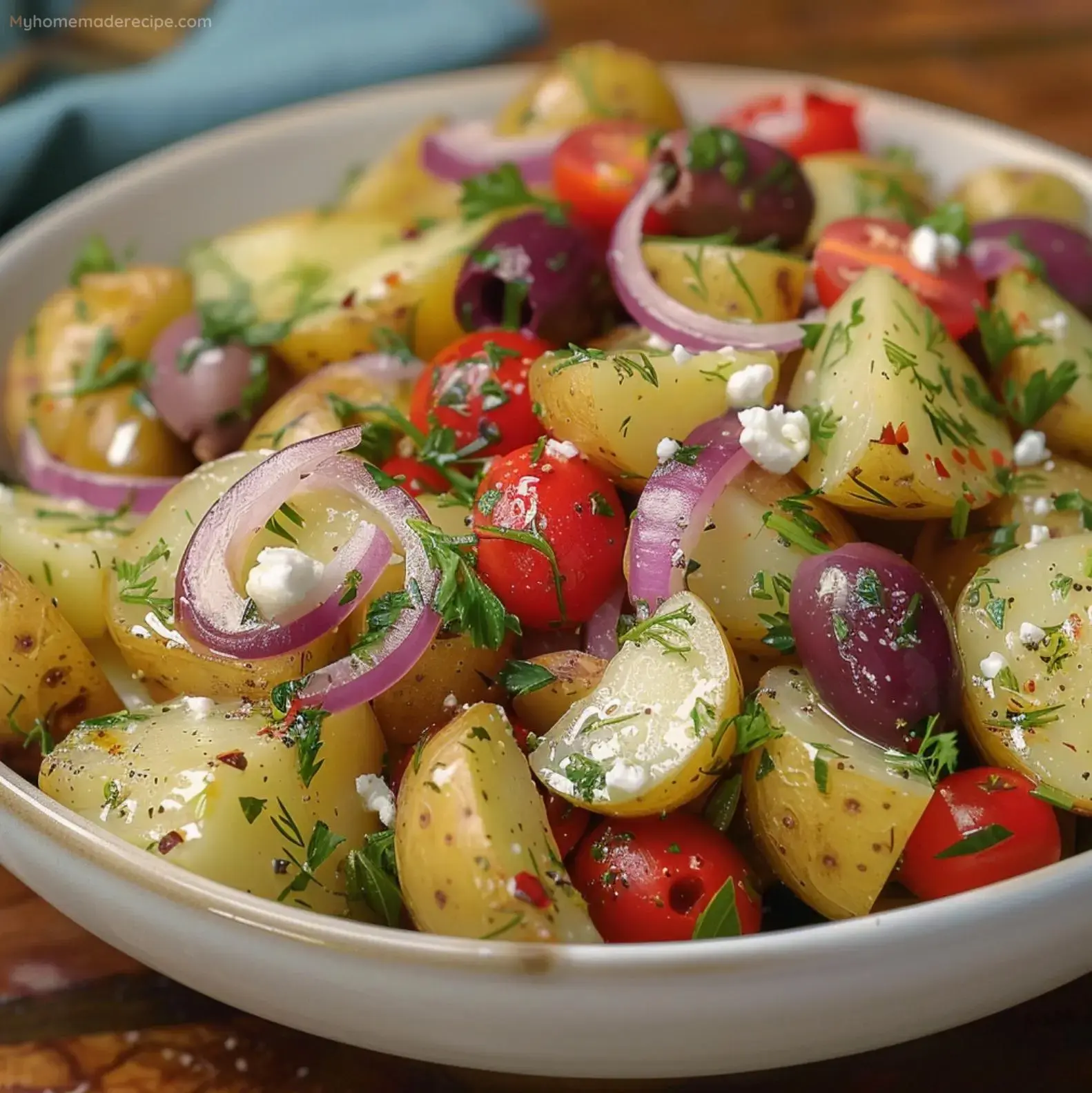
The base recipe is dairy-free and vegan, which makes it useful for mixed gatherings. If that is not a concern, a handful of crumbled feta is excellent. Add it at the end, after the potatoes have cooled a little, so it stays distinct.
Cherry tomatoes, cucumber, roasted red peppers, or chopped arugula can stretch the salad into a light lunch. Keep watery vegetables modest, since they can loosen the dressing. For a pasta version with similar briny flavors, try Greek pasta salad. If you want the full cucumber, tomato, feta, and olive plate, classic Greek salad is the obvious partner.
Storage And Picnic Notes
Store leftovers in an airtight container for up to 4 days. The olive oil may firm up in the refrigerator, so let the salad sit out briefly and stir before serving. A fresh spoonful of lemon juice brings it back to life.
Because this salad has no mayo, eggs, or dairy in the base recipe, it travels better than creamy potato salad. It still needs basic food safety. Keep it chilled before serving and avoid leaving it out for long stretches in hot weather. FoodSafety.gov's food safety basics are a useful refresher for cooling, chilling, and serving food safely.
What To Serve Beside It
This salad is built for grilled food. Serve it with chicken souvlaki, lamb chops, salmon, burgers, or roasted vegetables. It also fits neatly into a mezze dinner with hummus, cucumbers, warm pita, olives, and a bowl of tzatziki.
If you are making it for a cookout, set out extra lemon wedges and a small bottle of olive oil. Potato salad that sits on a table can dull a little, and a quick finish makes it taste freshly mixed again. I like it best at room temperature, when the herbs smell strongest and the potatoes taste creamy rather than cold.
Summary
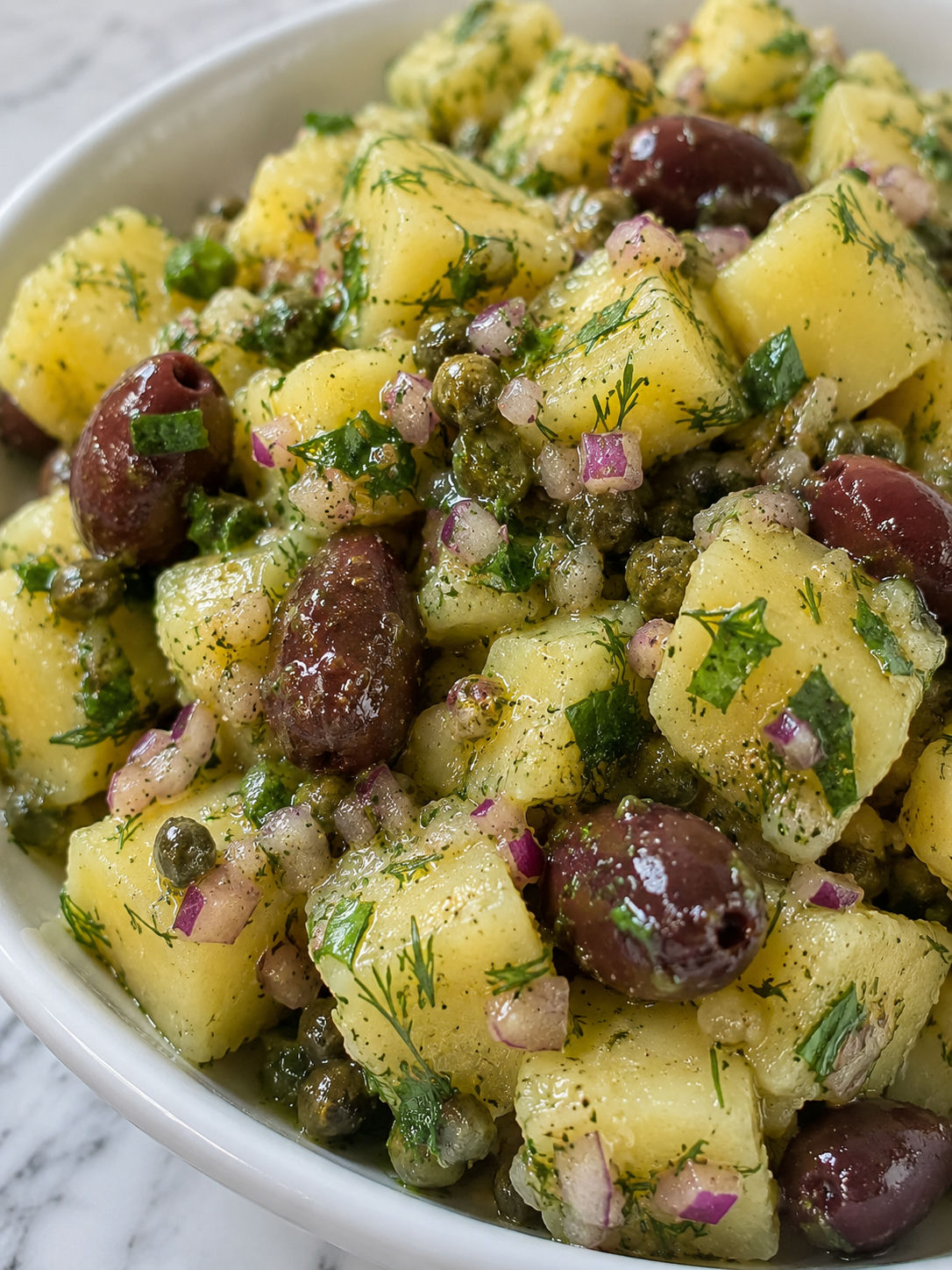
This salad is best served slightly warm or at room temperature, with extra lemon and herbs right before serving.
FAQs
- Can I make Greek Potato Salad ahead of time?
Yes. Make it up to one day ahead and keep it covered in the fridge. Let it sit at room temperature for 20-30 minutes before serving, then refresh it with a little lemon juice, olive oil, and fresh herbs.
- What potatoes are best for Greek Potato Salad?
Use waxy potatoes such as Yukon Gold, red potatoes, or small new potatoes. They hold their shape after simmering and have a creamy bite. Russets can work in a pinch, but they break down more easily.
- Can I add feta cheese?
Yes. Crumbled feta is a good add-in if you want a saltier, richer salad. Add it after the potatoes cool slightly so it stays in small creamy pieces instead of melting into the dressing.
- Is Greek Potato Salad served warm or cold?
It can be served warm, room temperature, or chilled. The best texture comes from dressing the potatoes warm, then letting the salad rest for at least 30 minutes. For picnics, keep it chilled until serving time.
- How do I keep the potatoes from falling apart?
Simmer them gently instead of boiling hard. Drain as soon as a knife slides through with light resistance. Fold the dressing in with a wide spoon so the pieces stay intact.
- What do you serve with Greek Potato Salad?
Serve it with grilled chicken, lamb, fish, gyros, or a simple Greek salad. It also works as part of a mezze spread with hummus, pita, cucumbers, and roasted vegetables.
