 Pin it
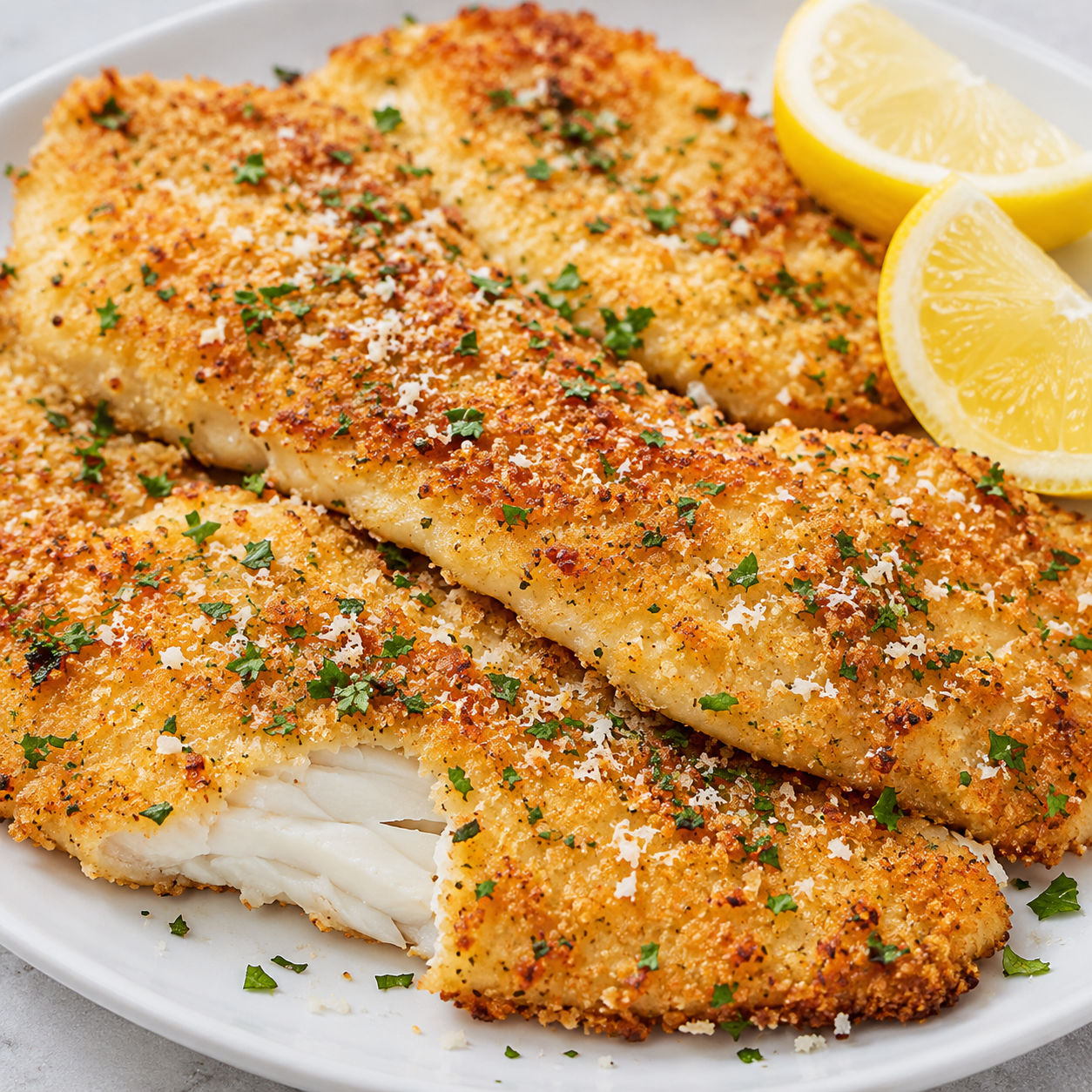
Easy Garlic Parmesan Flounder is the kind of fish dinner that feels calmer than pan-frying. The fillets are delicate, so the oven does the work while the topping gets crisp and the fish stays soft underneath.
The flavor is simple in a good way. Parmesan brings salt and nuttiness, garlic gives the crust a savory edge, and lemon keeps the whole plate bright.
The Crisp Garlic Lineup
Choose thin, fresh-smelling flounder fillets with no strong fishy odor. Freshly grated Parmesan melts into the crumbs better than the shelf-stable kind and gives the topping a cleaner flavor.
- Flounder fillets. Mild white fish stays tender and flaky under the hot oven heat.
- Parmesan cheese. Adds salty, nutty flavor and helps the topping brown.
- Panko breadcrumbs. Gives the crust a light crunch without heavy breading.
- Fresh garlic. Brings a savory bite that works well with lemon and fish.
- Lemon zest and juice. Brightens the rich cheese and makes the fish taste clean.
- Olive oil. Helps the crumbs crisp and keeps the fish from sticking.
- Parsley. Adds a fresh finish after baking.
- Salt and black pepper. Seasons the mild fish and balances the Parmesan.
Bake It Without Fuss
- Heat the oven. Set the oven to 425 F and line a rimmed sheet pan with parchment. Brush the parchment with a little olive oil so the fish lifts cleanly.
- Dry and season. Pat the flounder dry with paper towels, then season both sides with salt and pepper. This keeps the fish from steaming under the topping.
- Mix the crust. Stir Parmesan, panko, garlic, lemon zest, parsley, and olive oil in a shallow bowl until the crumbs look lightly moistened.
- Press and bake. Lay the fillets on the pan and press the crumb mixture over the top. Bake for 12-15 minutes until the fish flakes and the crust is golden.
- Finish with lemon. Squeeze lemon juice over the hot fish and serve right away, while the top is still crisp.
Easy Garlic Parmesan Flounder Timing
Flounder cooks fast because the fillets are thin. Start checking at 12 minutes if your pieces are small. The center should turn opaque and separate into soft flakes when nudged with a fork. If the topping browns before the fish is done, move the pan to a lower rack for the last few minutes.
The safest cue is temperature. Fish should reach 145 F, which matches the FoodSafety.gov minimum temperature chart. A thin instant-read thermometer is useful here because flounder can go from silky to dry quickly.
Keep The Crust Attached
The crust sticks best when the fish is dry and the crumbs are lightly coated with oil. Do not pile on a wet paste. You want damp crumbs that can be pressed into place with your fingertips. A parchment-lined pan helps too, since delicate flounder can tear if it catches on bare metal.
Use freshly grated Parmesan if you can. It has better moisture and texture than powdery cheese from a can. Panko gives a crisper finish than fine breadcrumbs, but a mix of both works if that is what you have. The method is close in spirit to Parmesan Crusted Chicken Garlic, only faster and gentler because fish needs less time.
Good Swaps For Mild Fish
Sole is the closest swap for flounder. Tilapia, whiting, cod, or snapper also work, but the bake time changes with thickness. For cod, plan closer to 15-18 minutes and check the center. For very small fillets, look early and use less topping so the fish does not get buried.
If you like a richer seafood dinner, the same garlic Parmesan idea pairs nicely with Garlic Parmesan Baked Shrimp or Creamy Garlic Butter Baked Salmon with Parmesan Sauce. For buying and storing seafood safely, the FDA seafood guide is a good plain-language reference.
Sides That Make Sense
This fish likes simple sides with a little acid or crunch. Roasted asparagus, green beans, lemon rice, or a chopped salad all work. If you want something cozy, add Roasted Garlic Butter Parmesan Potatoes. The potatoes can roast first, then the fish can slide into the hot oven at the end.
For a lighter plate, serve the flounder with Cheesy Garlic Parmesan Cauliflower and extra lemon wedges. Skip heavy sauces. The crisp topping and tender fish already have enough going on, and a squeeze of lemon usually does more than a creamy sauce would.
Leftovers Stay Best Recrisped
Store leftover flounder in an airtight container in the fridge for up to 2 days. The fish will still taste good after that, but the crust softens and the texture gets more fragile. Reheat it on a parchment-lined sheet pan at 350 F for 8-10 minutes. An air fryer also works at 325 F for a few minutes, as long as you lift the fish gently.
A microwave is fast, but it makes the topping soggy and can toughen the fish. If you know you will have leftovers, keep a little lemon on hand for serving. The fresh juice wakes up the Parmesan and makes reheated fish taste brighter.
Summary
This baked flounder is best served right away while the crumb topping is crisp and the fish is moist.
FAQs
- How do I know when flounder is done?
Flounder is done when it flakes easily with a fork and looks opaque in the thickest part. For food safety, fish should reach 145 F at the center.
- Can I use frozen flounder fillets?
Yes. Thaw them overnight in the fridge or under cold running water if they are sealed. Pat them very dry before topping, because extra moisture softens the crust.
- Can I make Easy Garlic Parmesan Flounder gluten-free?
Yes. Use gluten-free panko or crushed gluten-free crackers in the same amount. Parmesan does most of the flavor work, so the swap is easy.
- What can I use instead of flounder?
Any thin mild white fish works well. Try sole, tilapia, whiting, or snapper, and watch the thickness since thicker fillets may need a few extra minutes.
- Can I prep this ahead?
You can mix the Parmesan topping a day ahead and keep it covered in the fridge. Add it to the fish right before baking so the crumbs stay dry and crisp.
- What should I serve with garlic Parmesan flounder?
It is great with roasted potatoes, steamed green beans, lemony rice, or a crisp salad. Keep the sides simple so the fish stays the main focus.
