 Pin it
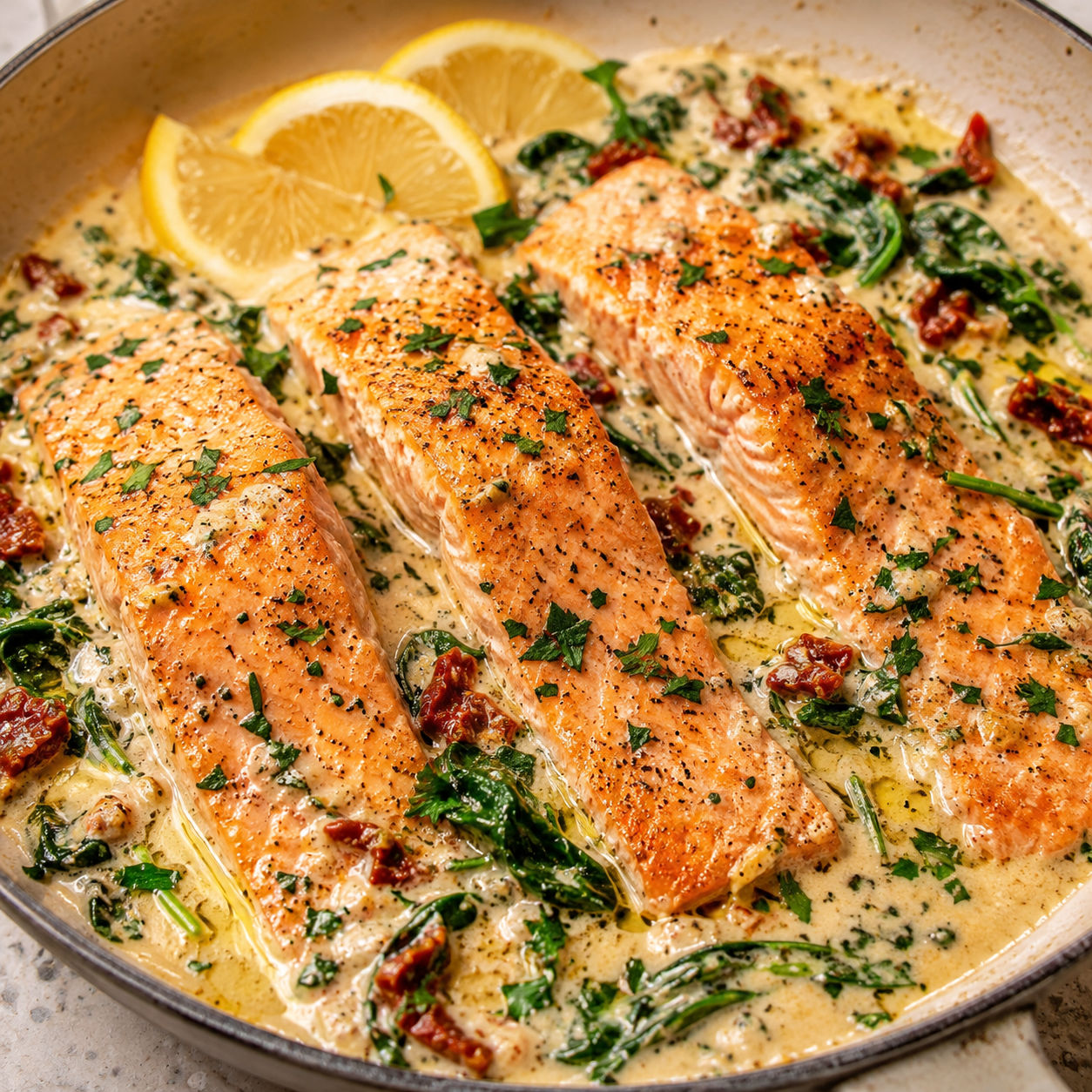
Creamy Garlic Butter Baked Salmon with Parmesan Sauce is rich without being fussy. The salmon bakes under butter, garlic, and thyme until the edges are tender and lightly golden.
The sauce is the part people remember. It starts in the same skillet with shallot and garlic, then turns silky with cream, parmesan, lemon, spinach, and sun-dried tomatoes.
Creamy Garlic Butter Salmon Lineup
Choose center-cut salmon fillets that are close in thickness so they bake evenly. Freshly grated parmesan melts cleaner than bagged cheese and gives the sauce a smoother finish.
- Salmon fillets. The main protein. Skin-on or skinless both work, but similar thickness matters most.
- Butter. Carries the garlic and keeps the salmon moist while it bakes.
- Garlic. Used in the butter and the sauce for a deep savory base.
- Fresh thyme. Adds a light herbal note that does not overpower the fish.
- Shallot. Softens into the sauce and gives gentle sweetness.
- Heavy cream. Makes the parmesan sauce silky and spoonable.
- Parmesan cheese. Thickens the sauce and adds salty, nutty flavor.
- Baby spinach. Wilts into the sauce and balances the richness.
- Sun-dried tomatoes. Add color, tang, and a little chew.
- Lemon. Brightens the cream so the dish does not taste heavy.
Bake Then Spoon The Sauce
- Season the salmon. Pat the fillets dry, season with salt and pepper, and set them in an oven-safe skillet or baking dish.
- Add garlic butter. Scatter butter, smashed garlic, and thyme around the salmon so the butter melts into the fish as it bakes.
- Bake until flaky. Bake at 425°F for 10-12 minutes, depending on thickness. Pull the salmon when it flakes easily and still looks moist.
- Start the sauce. Move the salmon to a plate. Set the skillet over medium heat, add a little butter, shallot, and minced garlic, and cook until fragrant.
- Simmer gently. Add cream, parmesan, spinach, sun-dried tomatoes, and lemon juice. Stir over low heat until the cheese melts and the spinach softens.
- Finish in the skillet. Slide the salmon back into the sauce and spoon the cream over the top. Add parsley and a little more black pepper before serving.
Keep The Sauce Smooth
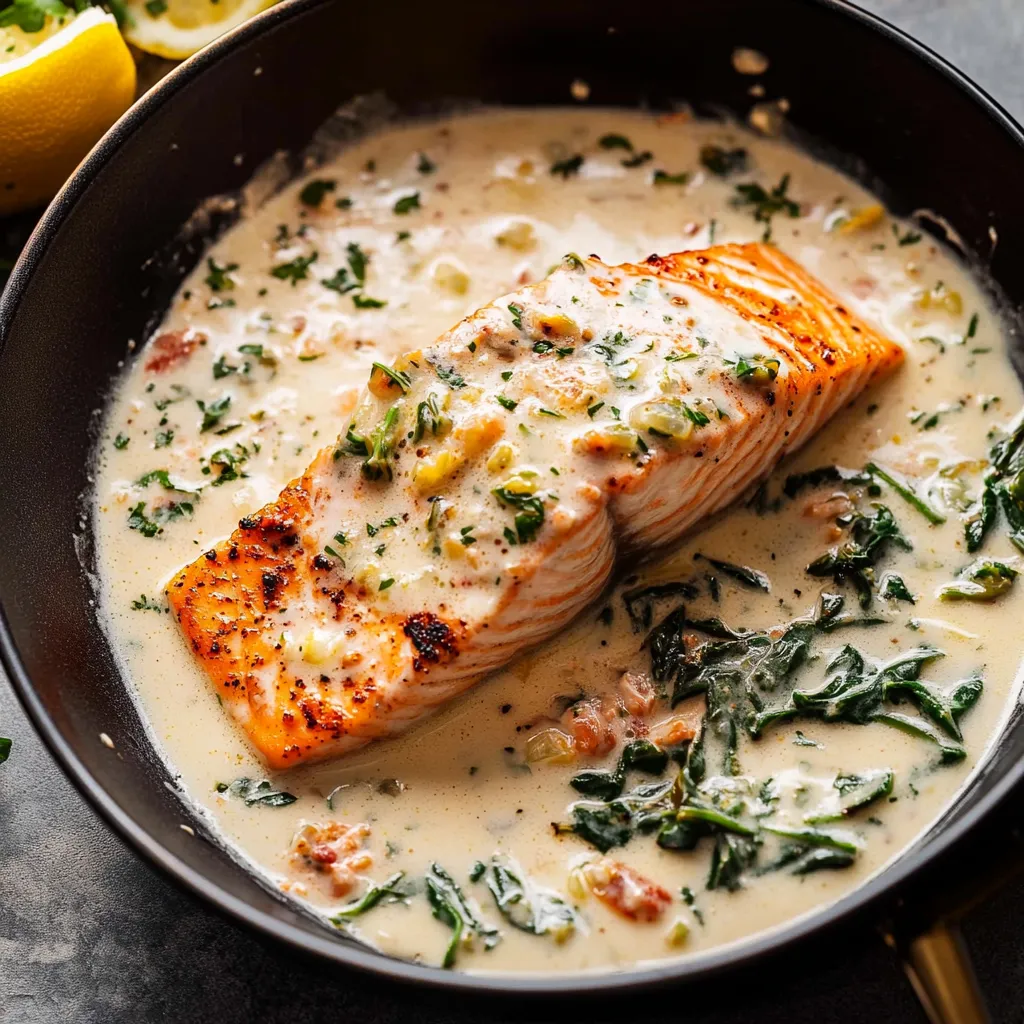
Parmesan sauce needs gentle heat. If the cream boils hard, the cheese can turn grainy and the butter may separate. Let the cream steam and bubble softly at the edges, then add the parmesan in small handfuls while stirring. If the pan feels too hot, pull it off the burner for a minute.
A splash of broth or warm water can loosen a thick sauce. Add it slowly. You want the sauce to coat a spoon, not sit like dip. If you enjoy this style of rich pan sauce, the same creamy garlic idea shows up in Baked Salmon Creamy Spinach Sauce.
The Salmon Timing Window
Salmon changes fast near the end of cooking. Thin tail pieces can be done in 8 minutes, while thick center cuts may need closer to 13. Check early by pressing the thickest part with a fork. It should separate into flakes but still look juicy.
The FDA seafood-safety guide lists 145°F as the safe cooking temperature for fish. Many cooks pull salmon a little earlier for a silkier center, then let carryover heat finish the job. Use your thermometer and your comfort level.
Swaps That Fit The Skillet
No thyme? Use parsley, dill, or a small pinch of Italian seasoning. Swap spinach for chopped kale, but give kale an extra minute in the sauce so it softens. Sun-dried tomatoes can be replaced with roasted red peppers for a sweeter flavor.
For a lighter sauce, use half cream and half low-sodium chicken broth. It will not be quite as plush, but it still works. If you want the garlic butter flavor without cream, try Garlic Butter Baked Salmon another night.
What To Serve With It
This dish likes something simple underneath it. Spoon it over rice, or let the sauce run into mashed potatoes. Pasta also works, especially fettuccine or penne. For a smaller plate, serve it with roasted asparagus, green beans, or a lemony salad.
If you want a side that echoes the parmesan and garlic, Creamy Parmesan Garlic Pasta makes the meal more generous. For a surf-and-turf dinner, the sauce style also pairs well with Garlic Butter Steak Bites with Parmesan Cream Sauce.
Leftovers Without Dry Fish
Store leftover salmon and sauce in an airtight container for up to 2 days. Reheat it gently in a covered skillet over low heat with a spoonful of water or cream. The microwave works in short bursts, but it can dry the salmon if you rush it.
Cold leftovers are useful too. Flake the salmon over salad greens or tuck it into a rice bowl with cucumber and lemon. Keep the sauce separate if you know you want clean pieces of fish the next day.
Summary
Serve this salmon straight from the skillet with rice, pasta, roasted potatoes, or crisp green vegetables.
FAQs
- Can I use frozen salmon?
Yes. Thaw it overnight in the fridge, then pat it very dry before seasoning. Extra moisture makes the garlic butter watery and slows down browning.
- Can I use half-and-half instead of heavy cream?
Half-and-half works, but the sauce will be thinner and more likely to split if it boils. Keep the heat low and add the parmesan gradually.
- How do I know when baked salmon is done?
The salmon should flake easily at the thickest part and look moist in the center. For official food-safety guidance, fish is considered cooked at 145°F.
- Can I make the parmesan sauce ahead?
You can prep the garlic, shallot, cheese, spinach, and tomatoes ahead. Make the sauce right before serving because cream sauces taste smoother when fresh.
- What should I serve with creamy garlic butter salmon?
Rice, pasta, mashed potatoes, roasted asparagus, or a simple salad all work well. Choose something mild because the parmesan sauce is already rich.
- Can I make this low carb?
The salmon and sauce are naturally low in carbs. Serve it with cauliflower mash, zucchini noodles, or roasted green vegetables instead of pasta or potatoes.
