 Pin it
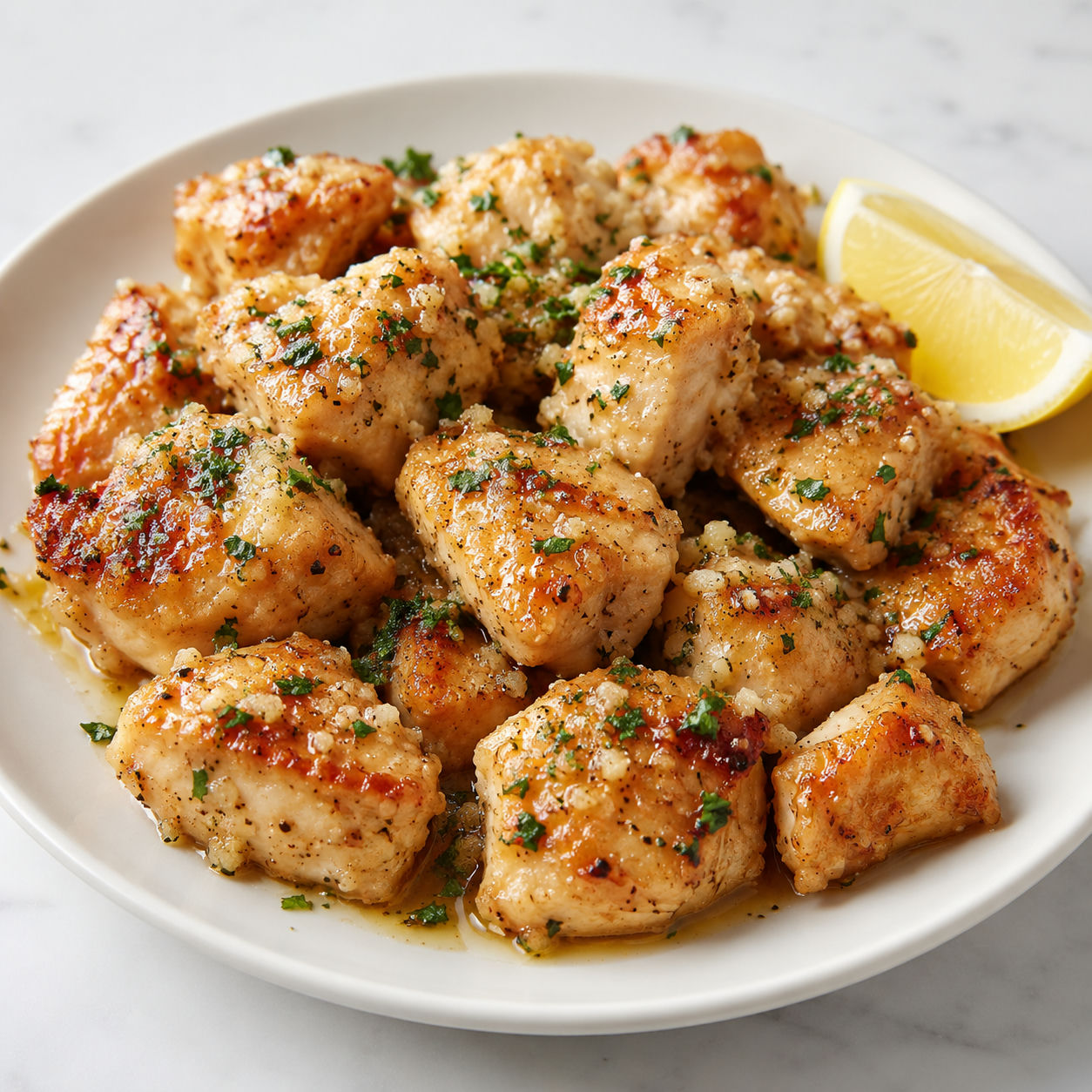
Garlic Parmesan Chicken Bites are what I make when I want chicken that tastes like more effort than it took. The pieces brown quickly in a hot skillet, then get coated in a garlicky butter sauce with a shower of parmesan.
The key is not fancy. Dry chicken, a wide pan, and enough space between the pieces make the difference. If the chicken steams, you lose those golden edges.
Serve these over pasta, tuck them into wraps, or pile them beside roasted vegetables. They also disappear fast with toothpicks and a small bowl of warm marinara.
What Makes These Bites Work
Use fresh garlic, real parmesan, and chicken pieces that are close in size. The ingredient list is short, so each one has a job. Grate the parmesan yourself if you can because it melts into the butter better than powdery pre-grated cheese.
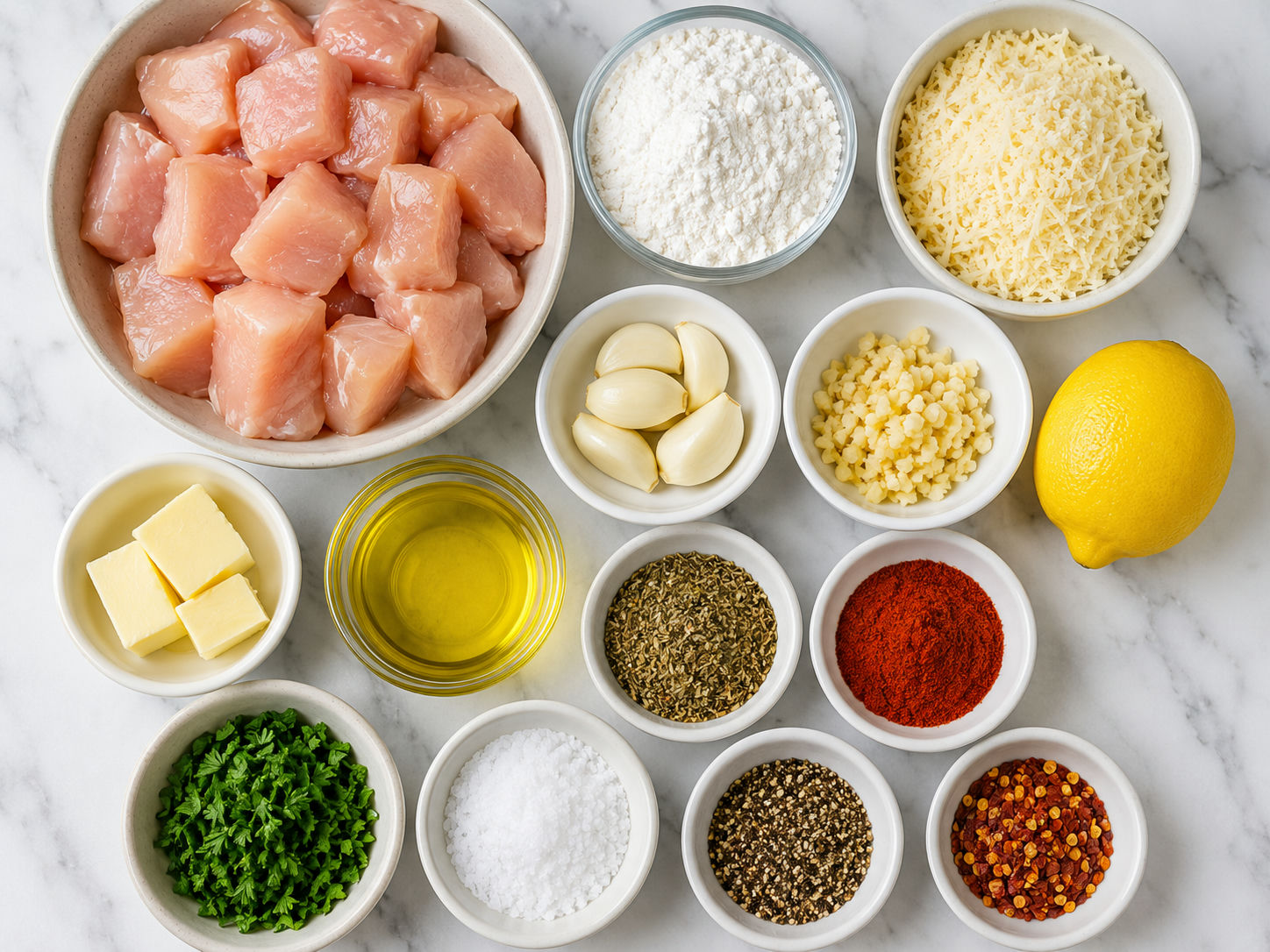
- Boneless chicken breast. Cooks fast and gives you tender, lean bites when cut evenly.
- All-purpose flour. Adds a thin coating that helps the edges brown and cling to the butter sauce.
- Italian seasoning. Gives the chicken a simple herb base without needing a long marinade.
- Paprika. Adds warm color and a mild savory note.
- Olive oil. Helps the chicken sear before the butter goes in.
- Unsalted butter. Carries the garlic and coats every piece with a glossy finish.
- Fresh garlic. Gives the sauce its main aroma, cooked just long enough to lose its raw bite.
- Parmesan cheese. Adds salty depth and a lightly nutty finish.
- Parsley and lemon. Freshen the skillet and keep the butter from feeling heavy.
Garlic Parmesan Chicken Bites Method
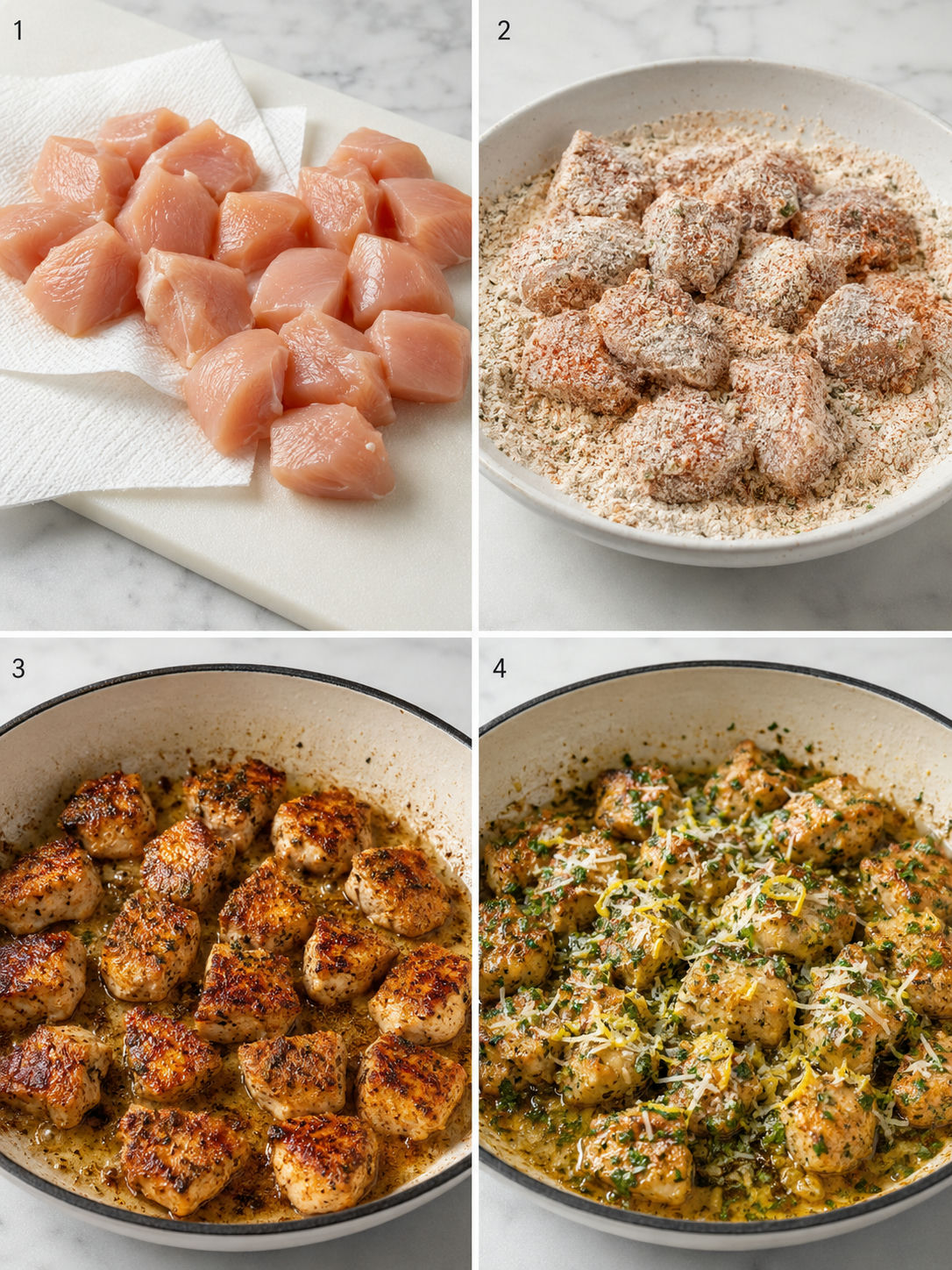
- Cut and dry the chicken. Slice the chicken into 1-inch pieces and pat them dry with paper towels. Dry surfaces brown faster.
- Season the coating. Toss flour with Italian seasoning, paprika, salt, and pepper, then coat the chicken lightly. Shake off extra flour so it does not clump in the pan.
- Sear in batches. Heat olive oil in a wide skillet and add the chicken in a single layer. Cook 3-4 minutes per side until golden and cooked through.
- Make the garlic butter. Lower the heat and add butter to the skillet. Stir in garlic for 30-60 seconds until fragrant but not browned.
- Toss with parmesan. Return the chicken to the pan and toss to coat. Take the skillet off the heat, add parmesan, parsley, and lemon, then stir until glossy.
Getting A Real Sear
The pan needs to be hot before the chicken goes in. A stainless steel or cast iron skillet does the best job because it holds heat after the cold chicken hits the surface. If you use nonstick, it will still work, but the browning may be softer.
Cook in two batches if your skillet is crowded. It feels slower, but it usually saves time because the chicken browns instead of releasing liquid. Leave the pieces alone for the first few minutes. That quiet contact with the pan is what builds the crust.
For safety, chicken should reach 165°F in the center according to the USDA safe-temperature chart. An instant-read thermometer is the easiest way to check without cutting every piece open.
The Garlic Butter Finish
Garlic belongs near the end because the pan is already full of heat from searing. Lower the burner before the butter and garlic go in. Stir until the garlic smells sweet and warm, then stop before it turns dark.
Add the parmesan off the heat or with the burner very low. High heat can make cheese clump instead of coating the chicken. A spoonful of hot water or chicken broth loosens the sauce if it tightens in the pan.
If you like this flavor but want something oven-baked, try Crispy Garlic Parmesan Oven Chicken. For a saucier dinner, these bites also fit right next to Garlic Butter Chicken with Creamy Parmesan Pasta Delight.
Swaps That Still Taste Right
Chicken thighs are the easiest swap. They take a little longer but stay juicy and handle reheating better. Cornstarch can replace the flour if you want a lighter coating. Use half as much because it grabs moisture quickly.
For heat, add red pepper flakes with the garlic or finish with a pinch of cayenne. For a brighter skillet, add extra lemon zest right before serving. A tablespoon of finely chopped sun-dried tomatoes also works if you want a richer, slightly tangy finish.
If you are serving these as appetizers, make the pieces a touch smaller and reduce the cooking time. They pair well with ranch, marinara, or the creamy garlic dipping style used in Grilled Chicken Bites with Creamy Garlic Dipping Sauce.
Serving Without Extra Work
For dinner, spoon the chicken over buttered noodles, rice, or mashed potatoes so the garlic butter has somewhere to land. Roasted green beans, broccoli, asparagus, or zucchini all balance the richness without much fuss.
For a snack board, serve the bites with toothpicks, lemon wedges, and a warm dipping sauce. They are also good tucked into soft rolls with a little mozzarella, which is why the flavor lines up nicely with Garlic Parmesan Chicken Sliders on Hawaiian Rolls.
If you need a side that keeps the garlic parmesan theme going, baked potato wedges are a strong choice. The crisp edges and fluffy centers make the meal feel complete without adding another sauce.
Storing And Reheating
Store leftovers in an airtight container in the refrigerator for up to 3 days. The coating softens as it sits, but the flavor holds well. I like to save a little extra parsley and lemon for reheating so the chicken tastes fresh again.
Reheat gently in a skillet over medium-low heat with a small pat of butter or a splash of water. Stir just until warmed through. The microwave works when you are in a hurry, but use short bursts so the chicken does not turn tight and dry.
Freezing is fine for meal prep, though the parmesan coating will be less glossy after thawing. Freeze in a flat layer, then reheat from thawed in a covered skillet until hot.
FAQs
- Can I use chicken thighs instead of chicken breast?
Yes. Boneless, skinless thighs work very well and stay juicy. Trim any larger pockets of fat, cut them into 1-inch pieces, and cook them until they reach 165°F in the center.
- How do I keep the chicken bites juicy?
Cut the pieces the same size and avoid overcooking them. Pull the chicken from the pan as soon as it is cooked through, then toss it back into the garlic butter off the heat or over very low heat.
- Can I make Garlic Parmesan Chicken Bites ahead?
You can cut and season the chicken up to one day ahead. Cooked leftovers keep well for 3 days, but the best texture comes right after searing.
- What can I use instead of flour?
Cornstarch gives a lighter crisp edge and makes the recipe gluten-free if the rest of your ingredients are certified gluten-free. You can also skip the coating, though the chicken will brown a little less.
- What should I serve with chicken bites?
They are great with buttered noodles, rice, mashed potatoes, roasted vegetables, or a crisp salad. For an appetizer plate, serve them with toothpicks and a small bowl of ranch, marinara, or garlic dip.
- Why did my garlic taste bitter?
Garlic burns quickly in a hot skillet. Lower the heat before adding it, stir for only 30-60 seconds, and add the chicken back before the garlic gets dark brown.
